


Central Asian Shepherd Dog
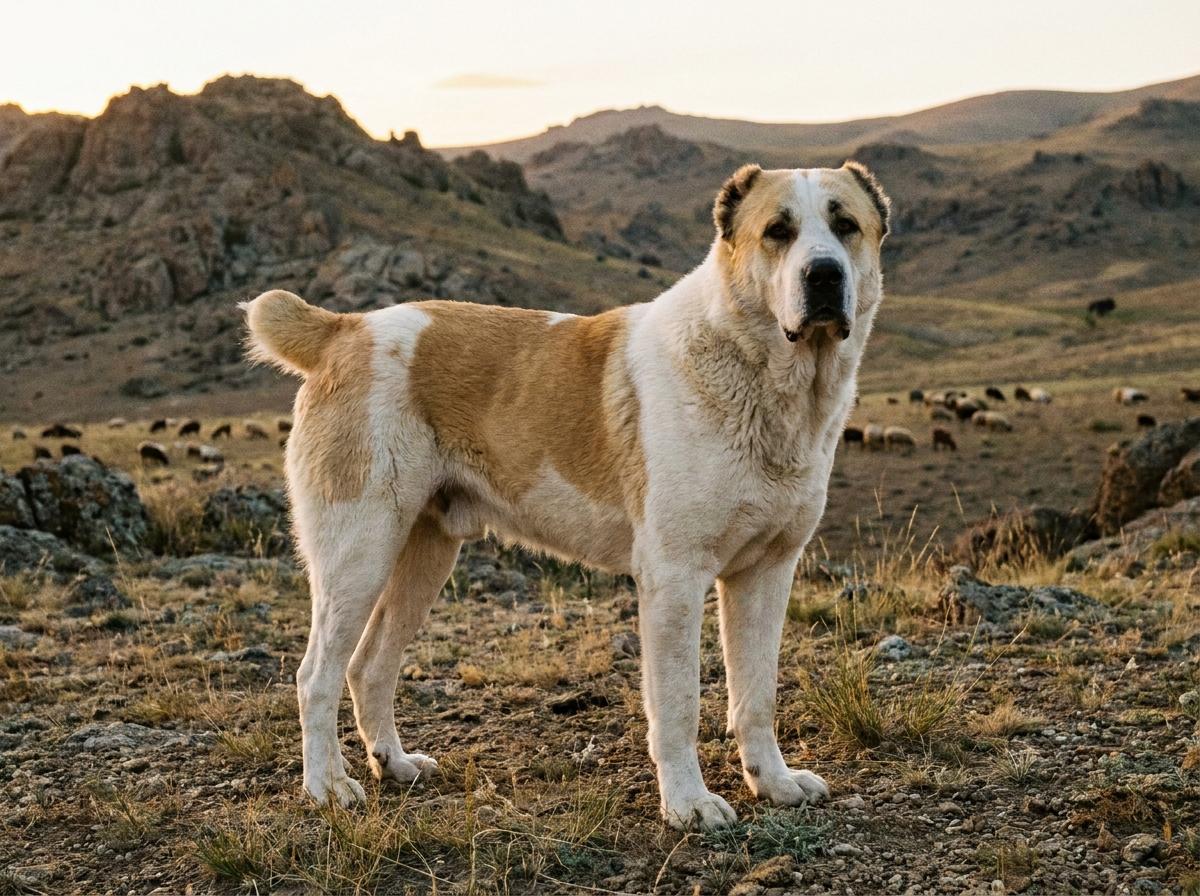
The Central Asian shepherd dog, also known as the Alabai or Central Asian Ovcharka, is a large livestock guardian from the steppe and mountain regions of Central Asia. Rather than a narrowly created modern breed, it developed from regional guardian dogs used to protect sheep, camps, and property across places such as Turkmenistan, Kazakhstan, Uzbekistan, Kyrgyzstan, and neighboring areas. Typical dogs are heavy-boned, broad-headed, and strongly muscled, with short to medium double coats in many colors. Traditional ear and tail cropping is still seen in some countries of origin, though laws and customs differ elsewhere.
This is a serious working guardian, not a casual oversized pet. Mature dogs can be territorial, independent, and calm until they decide a boundary has been crossed, so secure fencing and experienced handling are essential. Puppies need careful social exposure to livestock, family routines, visitors, and veterinary handling without encouraging indiscriminate friendliness. Growth should be managed slowly, with attention to hips, elbows, feet, and weight. Breeders and rescues commonly screen homes for guardian-dog experience, legal restrictions, and a realistic plan for containment, because poor placement can create safety problems for people, other dogs, and the dog itself.
Colors: Apricot, Bicolor, Black, Black and Tan, Black and White, Black Mask, Blue, Blue and Tan, Blue Merle, Blue Roan, Blue Tick, Brindle, Brown, Brown and Tan, Brown and White, Chocolate, Cream, Dapple, Domino, Fawn, Fawn and White, Gold, Gray, Harlequin, Irish Marked, Liver, Liver Mask, Mantle, Mask, Merle, Mottled, Parti-Color, Piebald, Red, Red and White, Red Merle, Red Roan, Red Tick, Reverse Brindle, Roan, Sable, Saddle, Silver, Speckled, Spotted, Tan, Ticked, Tricolor, Tuxedo, White, Yellow