




Chinese Shar-Pei
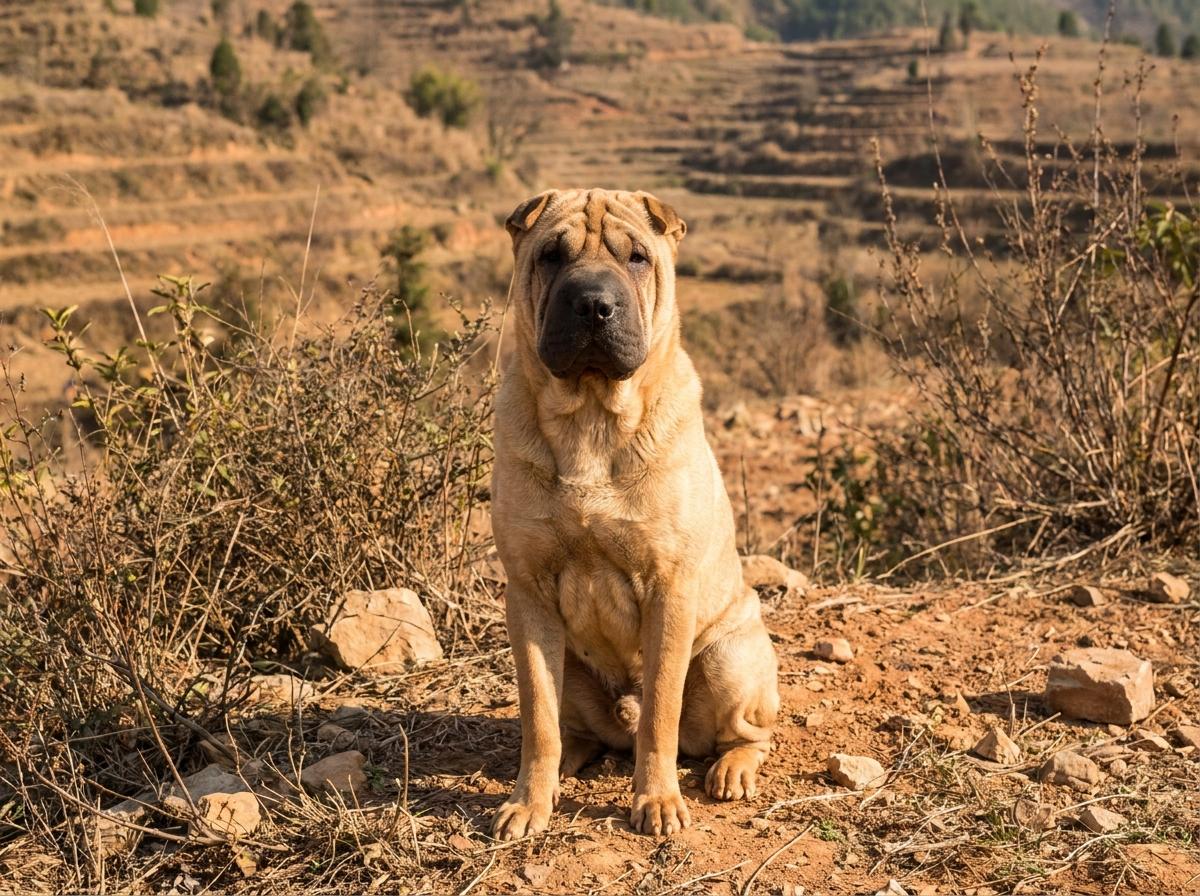
The Chinese shar-pei is a medium-sized dog from southern China, especially associated with Guangdong, where loose-skinned farm and guard dogs were used for watch work, hunting, and fighting. The name refers to the harsh, sandpapery coat, a defining trait along with a broad muzzle, small ears, a high-set tail, and a blue-black tongue. Puppies show heavy wrinkling, but healthy adults should retain enough skin to show breed type without excessive folds that interfere with eyes, movement, or comfort. Modern lines may look heavier and shorter-muzzled than older, more athletic village types.
Practical care centers on managing a strong-willed, reserved dog without letting suspicion become reactivity. Early socialization, calm handling, and clear household rules are important, as many Shar-Pei are selective with unfamiliar dogs. The breed has specific health concerns, including entropion, ear canal problems, skin infections, allergies, and Shar-Pei fever, which can be associated with amyloidosis. Responsible breeders screen and track family health instead of selecting only for wrinkles. The short coat is easy to brush, but skin and ears need regular observation, and the breed is generally better suited to informed owners than casual impulse buyers.
Colors: Apricot, Bicolor, Black, Black and Tan, Black and White, Black Mask, Blue, Blue and Tan, Blue Merle, Blue Roan, Blue Tick, Brindle, Brown, Brown and Tan, Brown and White, Chocolate, Cream, Dapple, Domino, Fawn, Fawn and White, Gold, Gray, Harlequin, Irish Marked, Isabella, Liver, Liver Mask, Mantle, Mask, Merle, Mottled, Parti-Color, Piebald, Red, Red and White, Red Merle, Red Roan, Red Tick, Reverse Brindle, Roan, Sable, Saddle, Silver, Speckled, Spotted, Tan, Ticked, Tricolor, Tuxedo, White, Yellow