Dingo
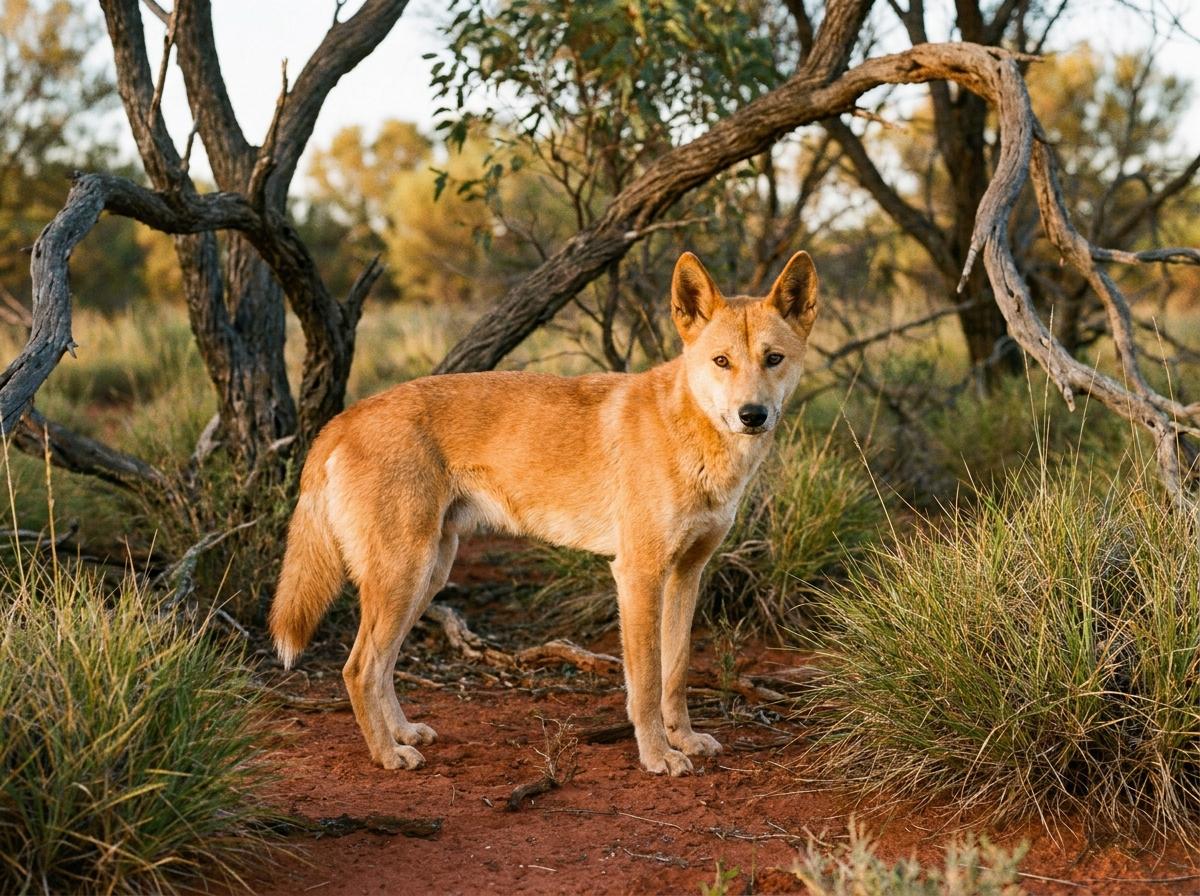
The dingo is a free-living dog of Australia, sometimes treated as Canis dingo, Canis familiaris dingo, or a form within domestic dogs. It is lean and athletic, with a wedge-shaped head, upright ears, a brush tail, and a coat often sandy ginger, though black-and-tan, cream, white, and other forms occur. Dingoes are not a conventional breed; they are wild canids with deep Aboriginal cultural associations and a long place in Australian ecosystems.
Keeping dingoes is regulated or prohibited in many places, and animals in human care are usually managed by licensed sanctuaries, zoos, education facilities, or specialist permit holders. Secure fencing, denning space, enrichment, low-stress handling, and strict separation from domestic dogs are common management priorities. Conservation work also deals with hybridization, genetic testing, livestock conflict, and public attitudes toward predator control. Anyone encountering a captive-bred dingo advertised as a pet should check local law, containment expectations, and socialization history before assuming it will behave like a companion dog.
Colors: Albino, Apricot, Bicolor, Black, Black and Tan, Black and White, Black Mask, Blue, Blue and Tan, Blue Merle, Blue Roan, Blue Tick, Brindle, Brown, Brown and Tan, Brown and White, Chocolate, Cream, Dapple, Domino, Fawn, Fawn and White, Gold, Gray, Grey, Harlequin, Irish Marked, Leucistic, Liver, Liver Mask, Mantle, Mask, Melanistic, Merle, Mottled, Parti-Color, Piebald, Red, Red and White, Red Merle, Red Roan, Red Tick, Reverse Brindle, Roan, Sable, Saddle, Silver, Speckled, Spotted, Tan, Ticked, Tricolor, Tuxedo, White, Yellow