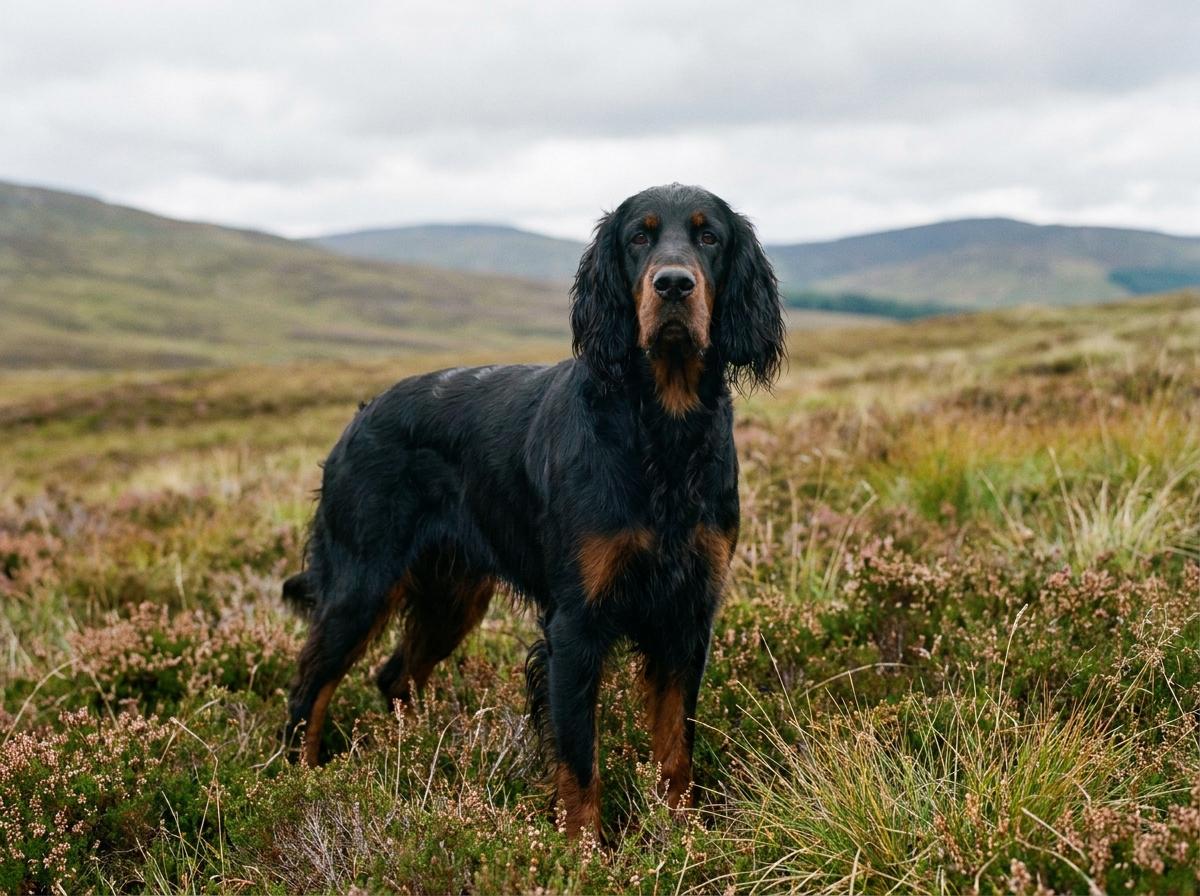
Gordon Setter
The Gordon setter is the largest and most substantial of the setter breeds, developed in Scotland as a gun dog for locating grouse and other gamebirds. It is closely associated with the kennels of the Dukes of Gordon, although black-and-tan setters existed before the modern breed was fixed. Gordons are recognizable by a glossy black coat with tan points, a strong head, low-set feathered ears, and a deep body built for patient work over rough moorland rather than sprinting. Compared with many field pointers and setters, they often work deliberately and stay connected to the handler.
Good homes for Gordon setters provide daily off-leash running where safe, structured training, and enough mental work to satisfy a hunting dog. Feathering mats around ears, legs, tail, and feet if neglected, and ears need regular checks after wet cover. Many are warm house dogs, but they mature slowly and can become vocal or stubborn if under-exercised. People seeking a puppy should ask about hip and elbow screening, eye testing, thyroid concerns, and bloat awareness, along with whether the line is bred mainly for field, hunting, or show temperament.
Colors: Apricot, Bicolor, Black, Black and Tan, Black and White, Black Mask, Blue, Blue and Tan, Blue Merle, Blue Roan, Blue Tick, Brindle, Brown, Brown and Tan, Brown and White, Chocolate, Cream, Dapple, Domino, Fawn, Fawn and White, Gold, Gray, Harlequin, Irish Marked, Liver, Liver Mask, Mantle, Mask, Merle, Mottled, Parti-Color, Piebald, Red, Red and White, Red Merle, Red Roan, Red Tick, Reverse Brindle, Roan, Sable, Saddle, Silver, Speckled, Spotted, Tan, Ticked, Tricolor, Tuxedo, White, Yellow