

Hawaiian Poi Dog
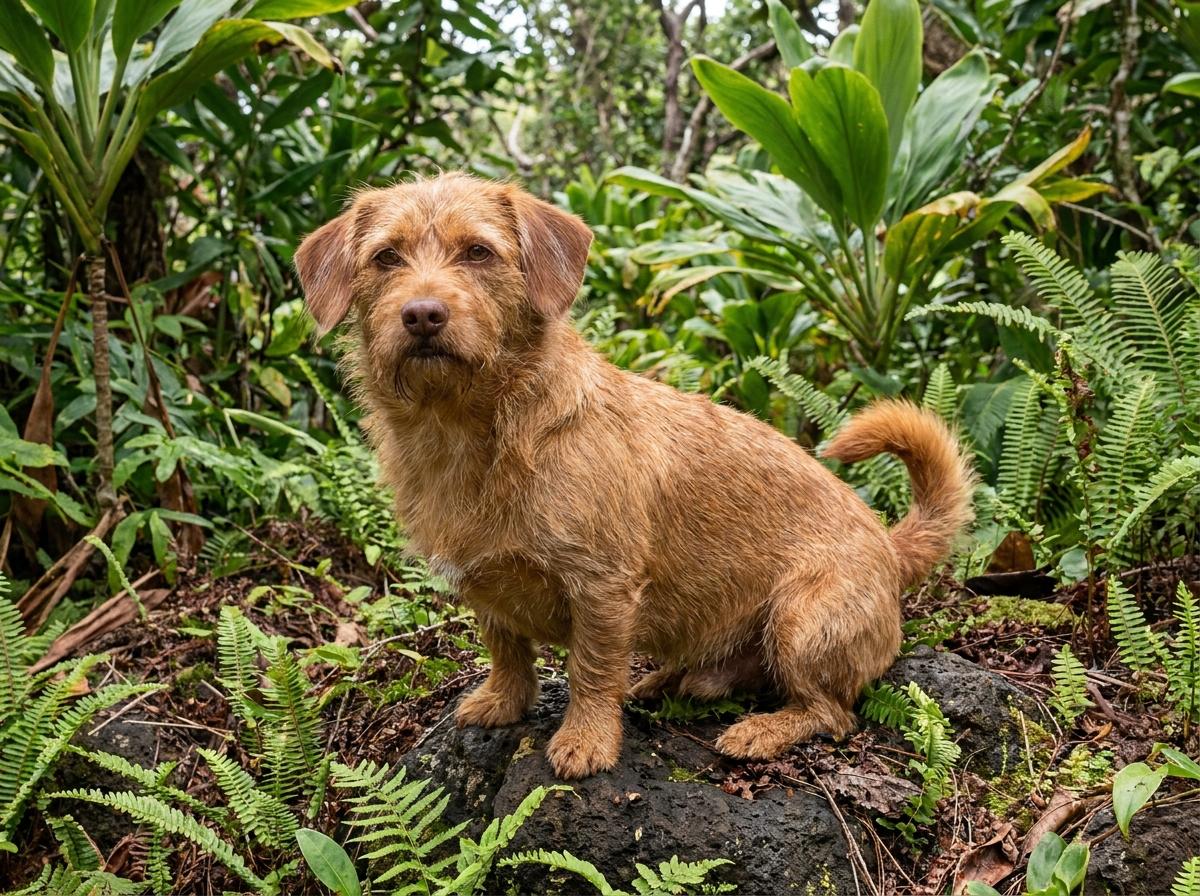
The Hawaiian poi dog was a now-extinct dog landrace associated with Native Hawaiian households before and after European contact. Descended from Polynesian dogs brought by early voyagers, it was described as a small to medium, heavy-bodied, short-legged dog kept around villages and fed largely on poi, the taro paste that gave the dog its English name. Accounts also connect these dogs with childhood protection, ritual use, and food, so the label refers as much to a cultural animal as to a standardized breed.
No pure Hawaiian poi dogs are known to survive; imported dogs interbred with local animals during the nineteenth century, and later attempts to recreate a poi-like dog could not recover the original population. For owners and buyers, modern dogs advertised as poi dogs should be understood as Hawaiian mixed dogs or tribute-type projects unless their background is clearly explained. The breed is mainly relevant to historians, Indigenous cultural work, museum collections, and discussions of how island dogs changed after colonization.
Colors: Albino, Apricot, Bicolor, Black, Black and Tan, Black and White, Black Mask, Blue, Blue and Tan, Blue Merle, Blue Roan, Blue Tick, Brindle, Brown, Brown and Tan, Brown and White, Chocolate, Cream, Dapple, Domino, Fawn, Fawn and White, Gold, Gray, Grey, Harlequin, Irish Marked, Leucistic, Liver, Liver Mask, Mantle, Mask, Melanistic, Merle, Mottled, Parti-Color, Piebald, Red, Red and White, Red Merle, Red Roan, Red Tick, Reverse Brindle, Roan, Sable, Saddle, Silver, Speckled, Spotted, Tan, Ticked, Tricolor, Tuxedo, White, Yellow