Icelandic Sheepdog
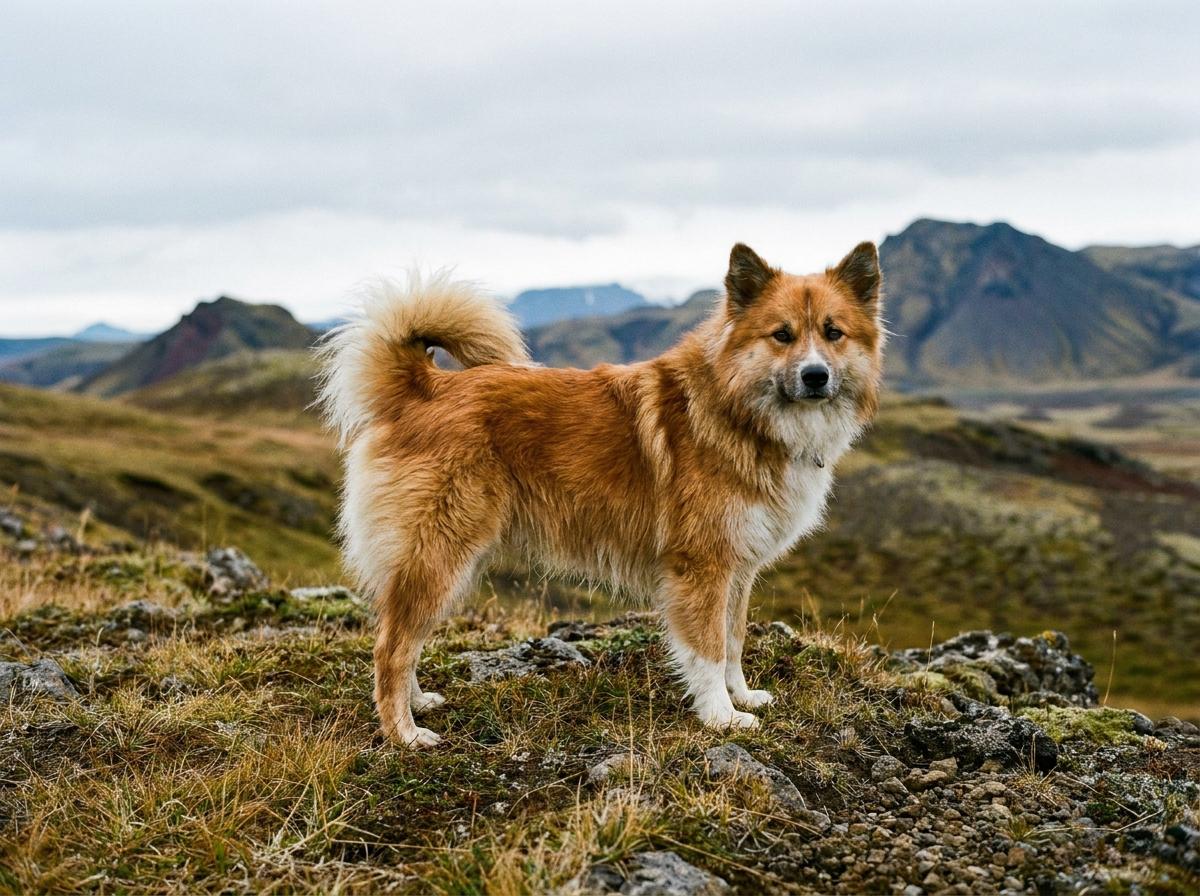
The Icelandic sheepdog is Iceland's native spitz breed, descended from Nordic farm dogs brought by settlers during the Viking age. Compact, cheerful, and weatherproof, it has prick ears, a curled tail, a thick double coat, and a wide range of colors usually broken by white markings. Many dogs also have single or double dewclaws on the hind legs. On Icelandic farms, the breed helped gather sheep, move horses, and alert people to birds of prey or wandering livestock.
The same alert nature makes the Icelandic sheepdog vocal, so training for quiet, recall, and polite greeting should begin early. It generally thrives as a close household dog rather than a kennel-only worker, but it still needs daily exercise and tasks that use its herding brain. The coat sheds heavily during seasonal changes and benefits from regular brushing without trimming away weather protection. The breed survived severe population bottlenecks, so responsible breeding places real weight on health testing, sound temperament, and maintaining diversity within registered lines.
Colors: Apricot, Bicolor, Black, Black and Tan, Black and White, Black Mask, Blue, Blue and Tan, Blue Merle, Blue Roan, Blue Tick, Brindle, Brown, Brown and Tan, Brown and White, Chocolate, Cream, Dapple, Domino, Fawn, Fawn and White, Gold, Gray, Harlequin, Irish Marked, Liver, Liver Mask, Mantle, Mask, Merle, Mottled, Parti-Color, Piebald, Red, Red and White, Red Merle, Red Roan, Red Tick, Reverse Brindle, Roan, Sable, Saddle, Silver, Speckled, Spotted, Tan, Ticked, Tricolor, Tuxedo, White, White and Black, White and Brown, White and Gray, White and Red, White and Tan, Yellow