



Kintamani
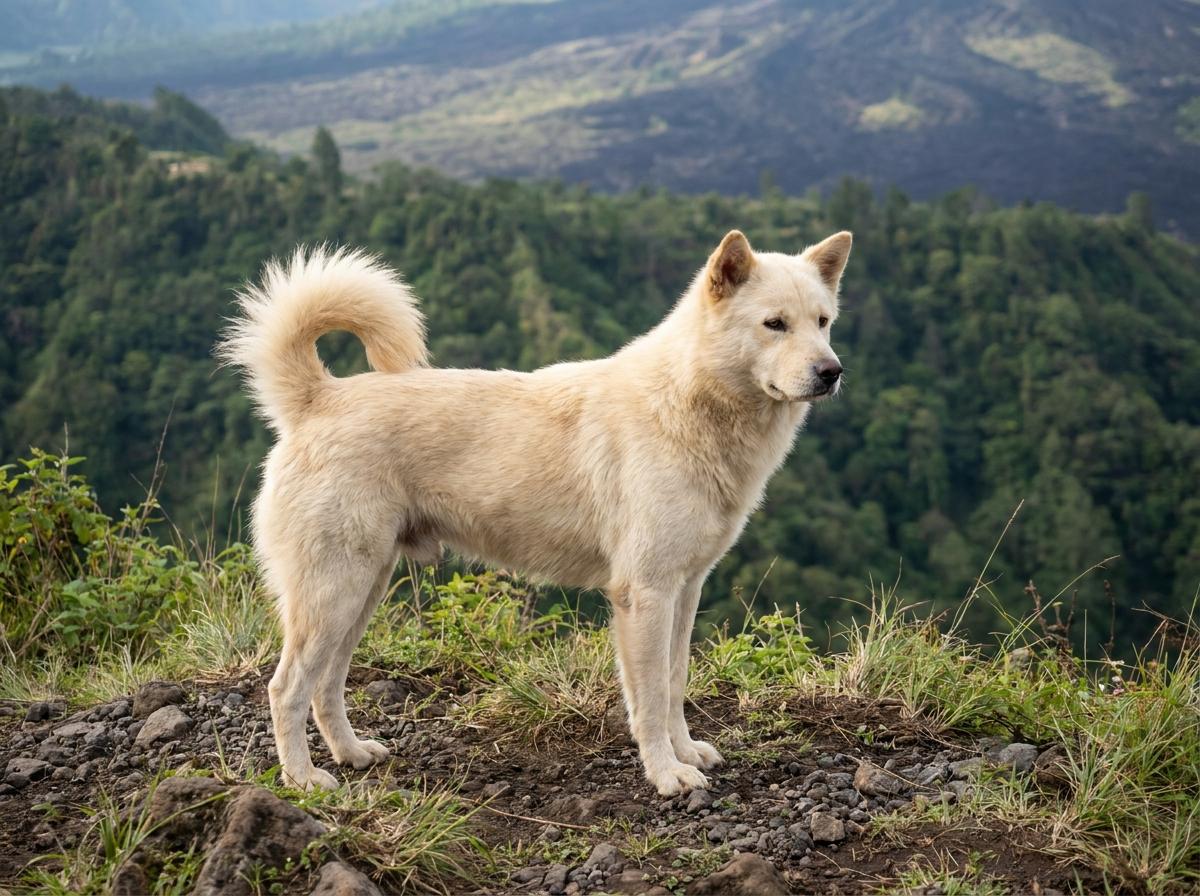
The Kintamani, often called the Kintamani-Bali dog, is an Indonesian spitz-type dog from the Kintamani region of Bali. It developed from local village and mountain dogs and is now recognized in some kennel systems as Indonesia's native breed. A typical Kintamani is medium-sized, agile, and alert, with a wedge-shaped head, erect ears, a plumed or curled tail, and a weather-resistant coat. White is especially familiar, though other colors occur depending on the standard and line.
In homes, the Kintamani is usually valued as a watchful companion with enough independence to need patient training. Early socialization is useful because some are reserved with strangers or territorial around the property. The coat benefits from brushing, particularly during shedding, and the breed needs regular exercise rather than constant confinement. Outside Bali and Indonesia, genuine Kintamani dogs may be difficult to find, so buyers should pay attention to documentation, breeder knowledge, and import rules. Conservation-minded breeding aims to preserve the local type without turning it into an exaggerated show dog.
Colors: Albino, Apricot, Bicolor, Black, Black and Tan, Black and White, Black Mask, Blue, Blue and Tan, Blue Merle, Blue Roan, Blue Tick, Brindle, Brown, Brown and Tan, Brown and White, Chocolate, Cream, Dapple, Domino, Fawn, Fawn and White, Gold, Gray, Grey, Harlequin, Irish Marked, Leucistic, Liver, Liver Mask, Mantle, Mask, Melanistic, Merle, Mottled, Parti-Color, Piebald, Red, Red and White, Red Merle, Red Roan, Red Tick, Reverse Brindle, Roan, Sable, Saddle, Silver, Speckled, Spotted, Tan, Ticked, Tricolor, Tuxedo, White, Yellow