Kromfohrlander
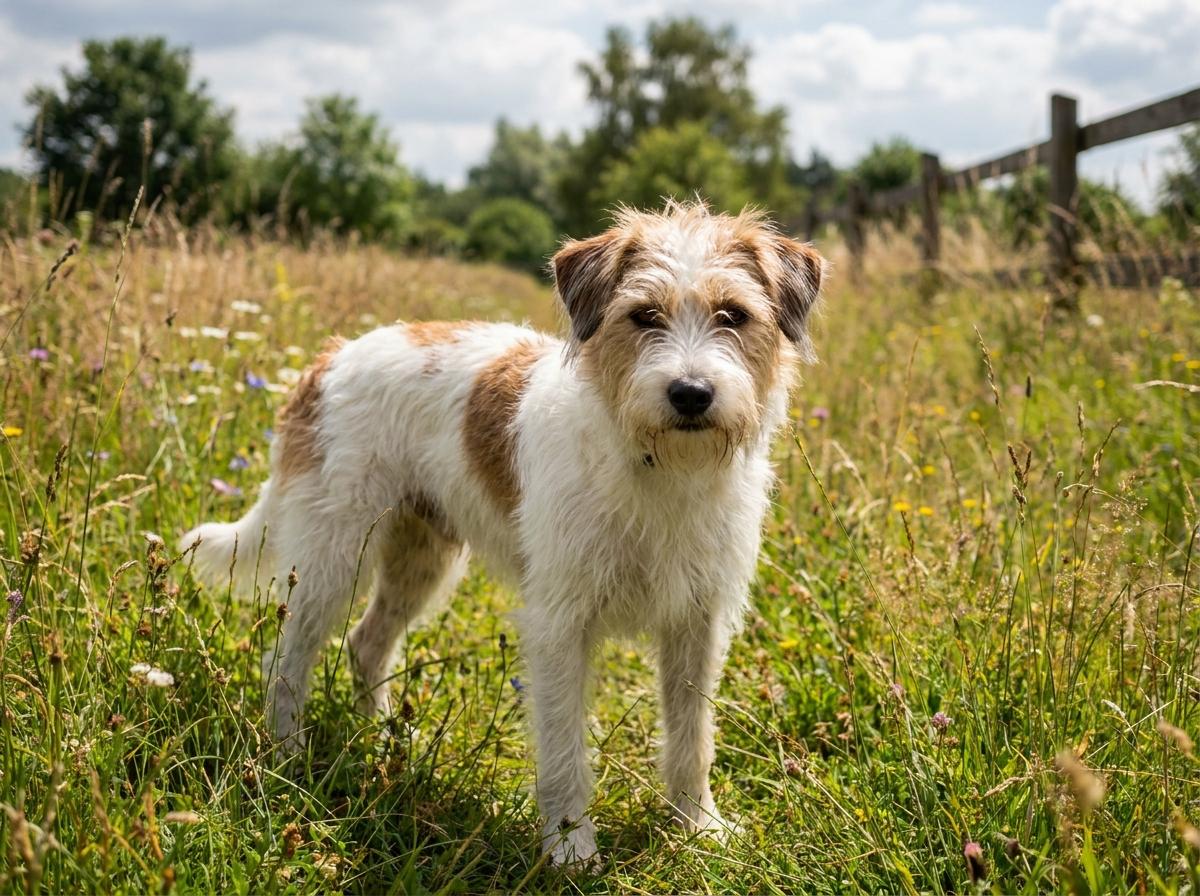
The Kromfohrlander is a rare German companion dog developed after the Second World War, with breed history commonly traced to a stray military mascot named Peter and local terrier-type dogs. It is a small to medium dog, longer than tall, usually white with tan, red, or brown markings. Two coat varieties are recognized in many standards: smooth-haired and rough-haired, the latter with a wiry texture and beard. Unlike many terriers, the Kromfohrlander was selected mainly for companionship, though it remains lively, alert, and playful.
Most Kromfohrlanders are happiest living close to their people and can be uncomfortable if left alone for long stretches. Reward-based training, visitors introduced at a sensible pace, and daily walks or play help keep their quick minds settled. Grooming depends on coat type; rough coats may need hand-stripping or careful trimming, while smooth coats are simpler but still shed. The breed's small gene pool makes health transparency important. Prospective owners should ask about patellas, eyes, epilepsy history, footpad problems, and any registry-backed efforts to widen genetic diversity.
Colors: Apricot, Bicolor, Black, Black and Tan, Black and White, Black Mask, Blue, Blue and Tan, Blue Merle, Blue Roan, Blue Tick, Brindle, Brown, Brown and Tan, Brown and White, Brown with White Markings, Chocolate, Cream, Dapple, Domino, Fawn, Fawn and White, Gold, Gray, Harlequin, Irish Marked, Liver, Liver Mask, Mantle, Mask, Merle, Mottled, Parti-Color, Piebald, Red, Red and White, Red Merle, Red Roan, Red Tick, Reverse Brindle, Roan, Sable, Saddle, Silver, Speckled, Spotted, Tan, Ticked, Tricolor, Tuxedo, White, White and Brown, White and Tan, Yellow