

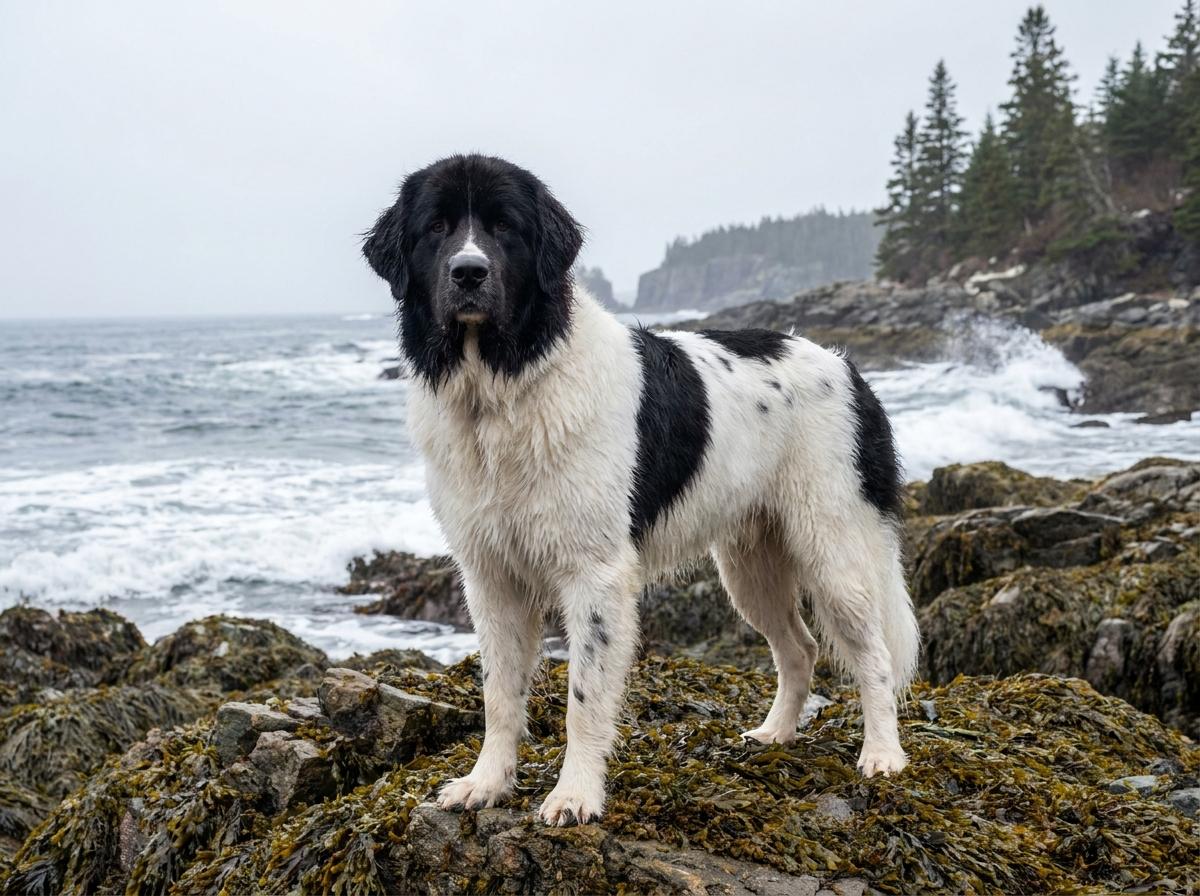
Landseer
Landseer can mean two closely related things in dogs: the black-and-white Newfoundland color pattern, and in much of continental Europe, the Landseer European Continental Type, a separate giant breed. Both trace to the historic Newfoundland water dogs made familiar in paintings by Sir Edwin Landseer. The European type is usually taller and a little lighter on the leg than the massive Newfoundland, with a white base coat, black patches, a dark head often broken by a white blaze, heavy bone, and a water-resistant double coat.
Families keep Landseers as large companions and capable water dogs, but their size shapes every part of care. Puppies need slow, controlled growth, traction on floors, and training before they are too strong to manage. Regular brushing is needed, especially during seasonal shedding, and many dogs drool after drinking. Responsible breeding pays attention to hips, elbows, heart health, cystinuria risk, temperament, and clear registry language so buyers know whether they are getting a Newfoundland variety or a European Continental Type Landseer.
Colors: Albino, Apricot, Bicolor, Black, Black and Tan, Black and White, Black Mask, Blue, Blue and Tan, Blue Merle, Blue Roan, Blue Tick, Brindle, Brown, Brown and Tan, Brown and White, Chocolate, Cream, Dapple, Domino, Fawn, Fawn and White, Gold, Gray, Grey, Harlequin, Irish Marked, Leucistic, Liver, Liver Mask, Mantle, Mask, Melanistic, Merle, Mottled, Parti-Color, Piebald, Red, Red and White, Red Merle, Red Roan, Red Tick, Reverse Brindle, Roan, Sable, Saddle, Silver, Speckled, Spotted, Tan, Ticked, Tricolor, Tuxedo, White, Yellow