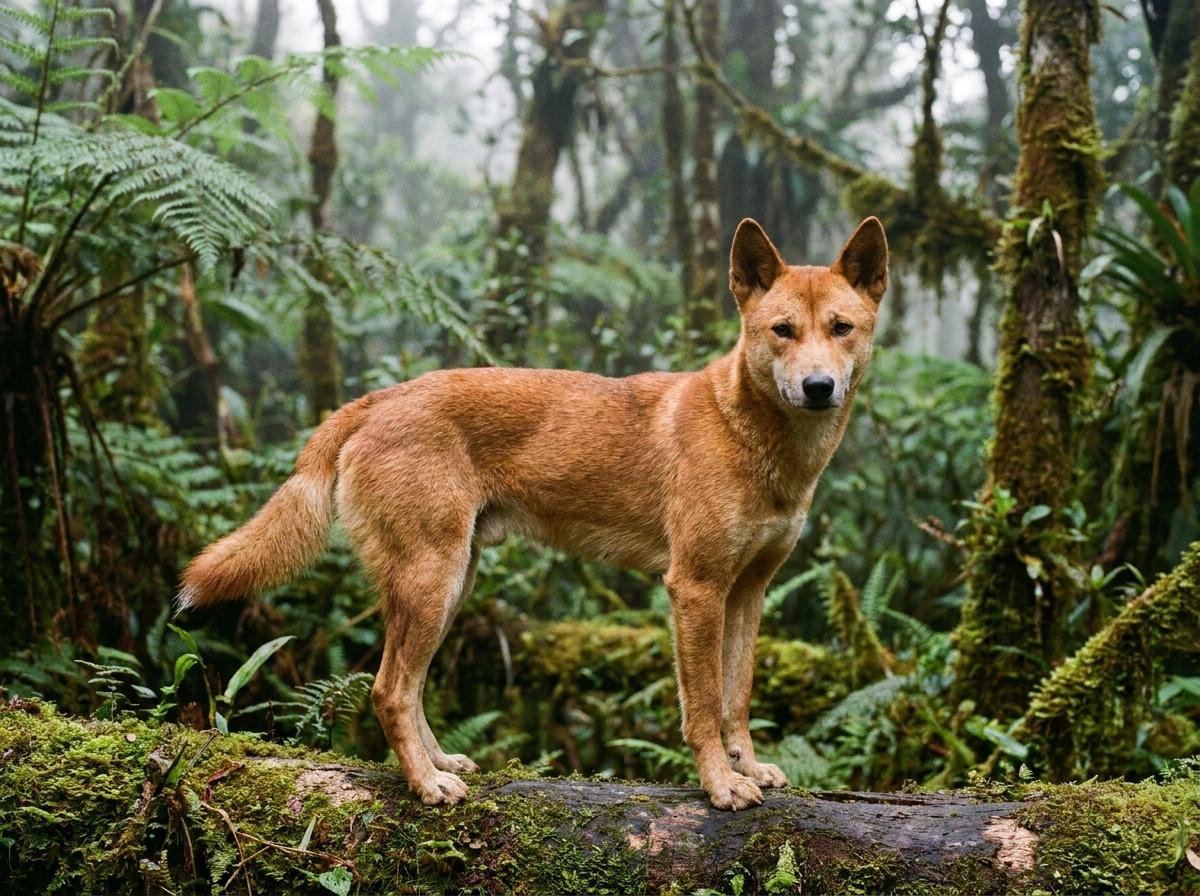
New Guinea Singing Dog
The New Guinea Singing Dog is a rare, primitive dog population associated with the highlands of New Guinea and with captive conservation programs outside the island. Its name comes from its unusual vocalizations, which can include drawn-out, changing howls rather than ordinary barking alone. These dogs are usually compact, flexible, foxlike in outline, and often red, sable, or tan with white markings. Their status is discussed in both domestic-dog and wild-canid contexts, so careful writing should avoid treating them as an ordinary household breed.
Management is closer to sanctuary, research, and specialist conservation care than mainstream pet ownership. New Guinea Singing Dogs tend to be agile, escape-minded, cautious with unfamiliar handling, and highly responsive to their environment. Secure containment, low-stress routines, and informed socialization matter more than casual obedience goals. Breeding decisions in captive populations must consider pedigree depth, genetic diversity, and the difference between preserving a distinct canid population and producing unusual companion animals. For most visitors, the important takeaway is that the singing dog is a conservation-sensitive dog type, not a fashionable wolflike pet.
Colors: Albino, Apricot, Bicolor, Black, Black and Tan, Black and White, Black Mask, Blue, Blue and Tan, Blue Merle, Blue Roan, Blue Tick, Brindle, Brown, Brown and Tan, Brown and White, Chocolate, Cream, Dapple, Domino, Fawn, Fawn and White, Gold, Gray, Grey, Harlequin, Irish Marked, Leucistic, Liver, Liver Mask, Mantle, Mask, Melanistic, Merle, Mottled, Parti-Color, Piebald, Red, Red and White, Red Merle, Red Roan, Red Tick, Reverse Brindle, Roan, Sable, Saddle, Silver, Speckled, Spotted, Tan, Ticked, Tricolor, Tuxedo, White, Yellow