

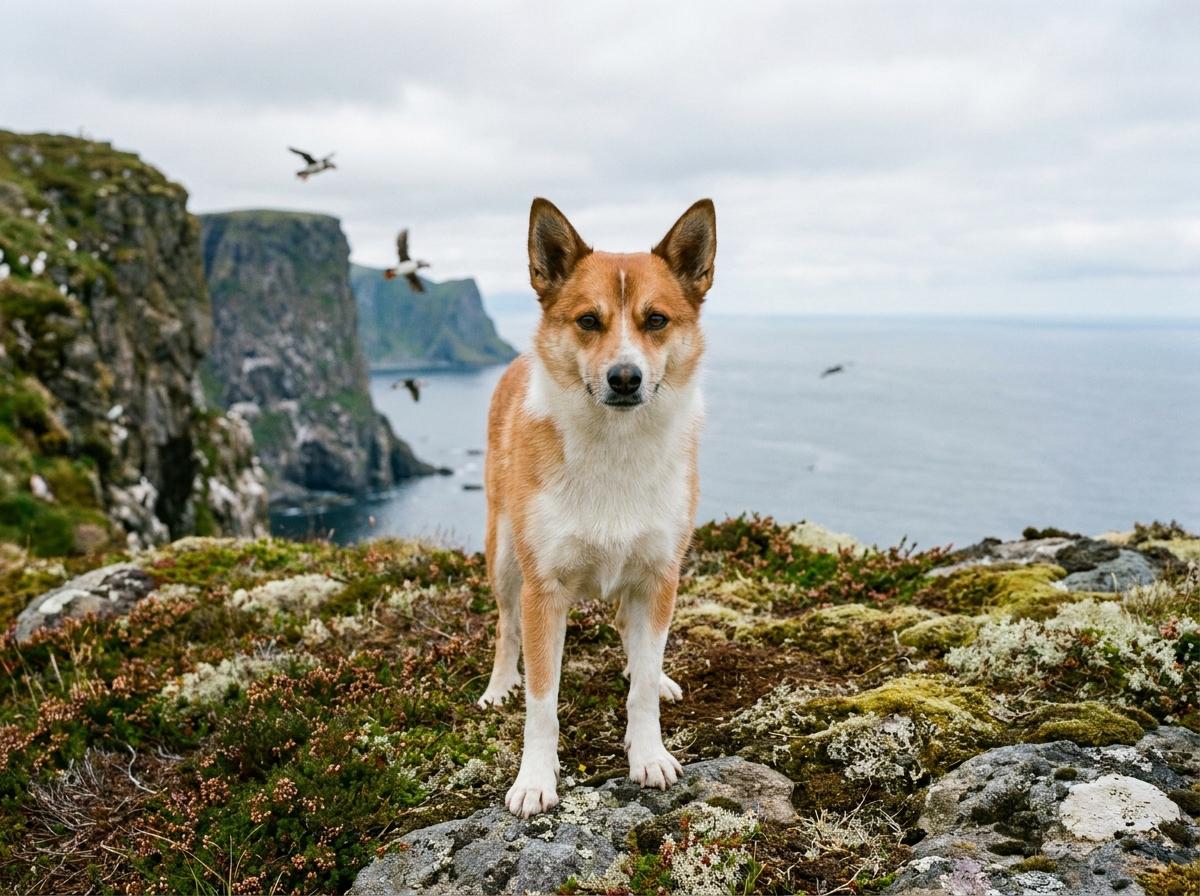
Norwegian Lundehund
The Norwegian Lundehund is a small spitz from the islands and cliffs of coastal Norway, where it was used to reach puffin nests before that work ended. Its anatomy reflects that narrow job: extra toes, unusual shoulder flexibility, a neck that bends farther than most dogs, and ears that can fold closed against debris and weather. The breed is usually red-brown to fawn with white markings and a dense, practical coat.
Care requires more planning than the dog's size suggests. Lundehunds can be lively, agile, and independent, and digestive disease grouped under Lundehund syndrome is a serious breed concern. Owners need secure fencing, patient training, moderate exercise, and a veterinarian willing to learn the breed's risks. Breeding programs must balance type, genetic diversity, and health because the population passed through severe bottlenecks. For buyers, the extra toes should be less important than breeder experience, honest health history, and a realistic plan for long-term management.
Colors: Apricot, Bicolor, Black, Black and Tan, Black and White, Black Mask, Blue, Blue and Tan, Blue Merle, Blue Roan, Blue Tick, Brindle, Brown, Brown and Tan, Brown and White, Chocolate, Cream, Dapple, Domino, Fawn, Fawn and White, Gold, Gray, Harlequin, Irish Marked, Liver, Liver Mask, Mantle, Mask, Merle, Mottled, Parti-Color, Piebald, Red, Red and White, Red Brown, Red Merle, Red Roan, Red Tick, Reverse Brindle, Roan, Sable, Saddle, Silver, Speckled, Spotted, Tan, Ticked, Tricolor, Tuxedo, White, White and Fawn, White and Red Brown, Yellow