

Nureongi
Nureongi (누렁이) is a Korean word for a yellow dog, and that is close to the whole of what it means. It describes the medium-sized, short-coated, yellow to fawn native-type dogs of the Korean peninsula. It does not describe a standardized breed. There is no nureongi breed standard, no herdbook, and no kennel club anywhere that recognizes the name, so two dogs both called nureongi can differ from each other far more than two Korean Jindos would.
The word carries a difficult history as well. These are the dogs most associated with South Korea’s dog meat trade, which the country is now closing down. A special act promulgated in February 2024 prohibits breeding, slaughtering, distributing and selling dogs for human consumption, and its central prohibitions take effect three years after promulgation, in February 2027. Most people who search the word today are not researching an industry, though. They are meeting one of these dogs as a companion, usually through a rescue, a shelter, or an overseas adoption.
That is who this page is written for. Below you will find what the word means and what it does not mean, what the dogs actually look like, what the law says, and the practical side of adopting and living with one. Because no registry stands behind the name, the records you keep yourself are the only history one of these dogs will ever have, which makes them worth more here than they would be for a pedigree breed.

Browse listings, public profiles, breeders, or add your animal.
What “nureongi” actually means
누렁이 is an ordinary Korean color word, not a breed name. The anthropologist Anthony Podberscek, writing on dog and cat keeping in South Korea in the Journal of Social Issues, glosses the term as yellow animal and describes the dogs it refers to as mid sized, short haired and yellow coated, and as animals not normally kept as pets in Korea.
Two things follow from that, and both matter if you are trying to work out what dog you are actually looking at.
The first is that the label is descriptive, so it is elastic. A yellow farm dog, a yellow village dog and a yellow mixed-breed rescue can all be called nureongi by different people on different days, and none of those uses is wrong in Korean. The name reports a color and a rough body type. It does not report ancestry.
The second is that the category is social as much as biological. The anthropologist Julien Dugnoille’s study of dogs and cats in South Korea, published by Purdue University Press, argues that the line between a companion animal and a livestock animal there has been porous rather than fixed, with individual dogs moving across it in both directions. The same dog could be a family pet in one household and a farm animal in another. Treating nureongi as a fixed biological class misreads what the word has been doing.
Type, not breed, and why that distinction is not pedantry
South Korea does have recognized native dog breeds. The Korea Jindo Dog holds an international breed standard from the Fédération Cynologique Internationale, standard number 334, placed in the spitz and primitive types group, and the same breed appears in the American Kennel Club’s Foundation Stock Service under the name Korean Jindo Dog. A written standard means an agreed description of size, coat, structure and temperament, and a registry means a record of which dogs are which.
Nureongi has none of that. There is no standard to measure a dog against and no body that maintains a record, so “nureongi” tells you a dog is yellow and roughly Korean in type, and stops there.
Genetic work on Korean dogs has concentrated on the standardized breeds rather than on the yellow landrace. The genome-wide survey of Korean dogs published in PLOS ONE by Choi and colleagues in 2017 sampled Jindo, Poongsan and Donggyeong lines and found Korean breeds sitting close to Chinese breeds and representing one of the basal East Asian dog lineages. It did not sample village or landrace dogs. So anyone telling you confidently what a nureongi is genetically, or that the type is an ancestor of the Jindo, is going beyond what has been published.
Dogs carrying a name that no registry stands behind are common, and Creatures covers several of them. The Gull Terrier is a Punjabi landrace that no major kennel club registers, so a buyer gets a type rather than a pedigree, and the type varies a good deal from line to line. The Xiasi dog is a Chinese hunting landrace with no international studbook and no registry-issued pedigree, which leaves every claim about an individual dog resting on whoever makes it. Nureongi sits further along that same line. Those two at least name a recognizable working type, while nureongi reports a color.
What a nureongi type dog looks like
Because there is no standard, any description here is a description of a tendency rather than a specification. Individual dogs vary, and mixed ancestry is normal rather than exceptional.
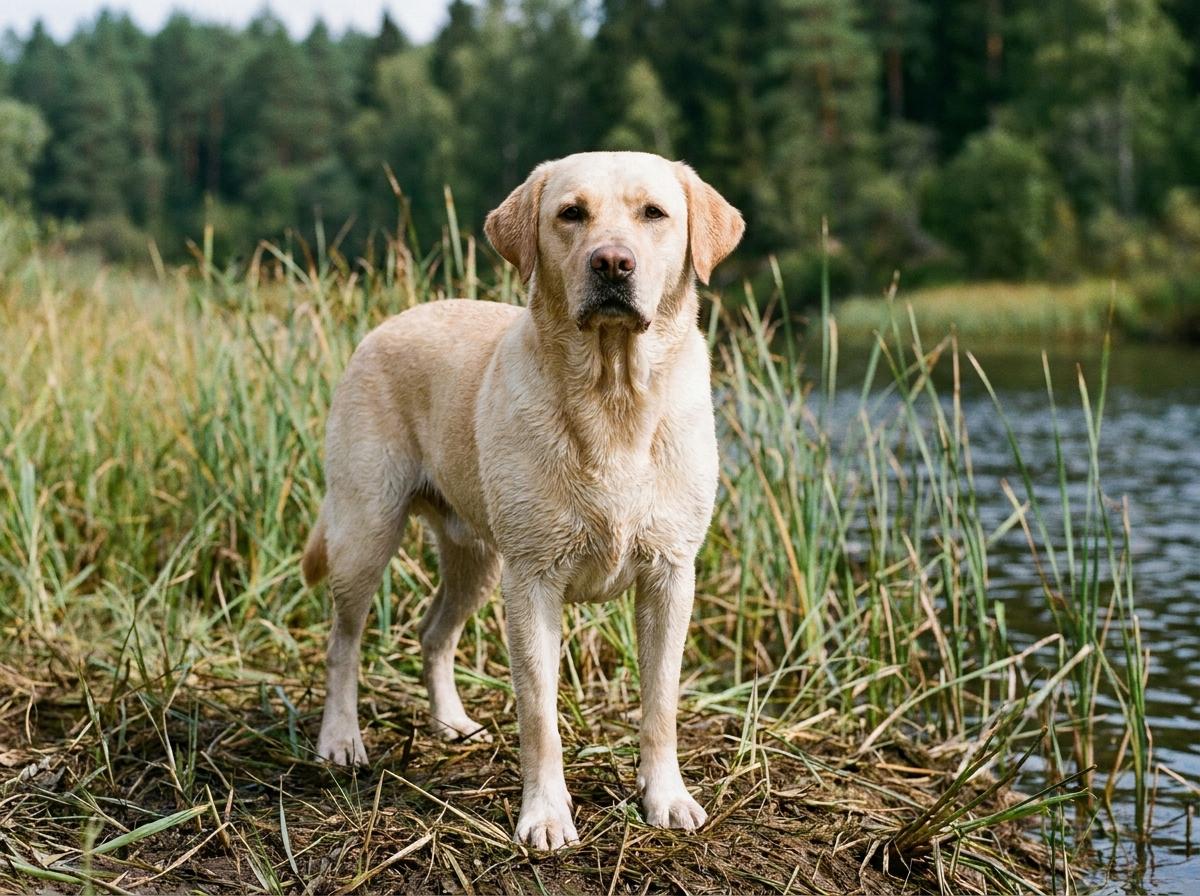
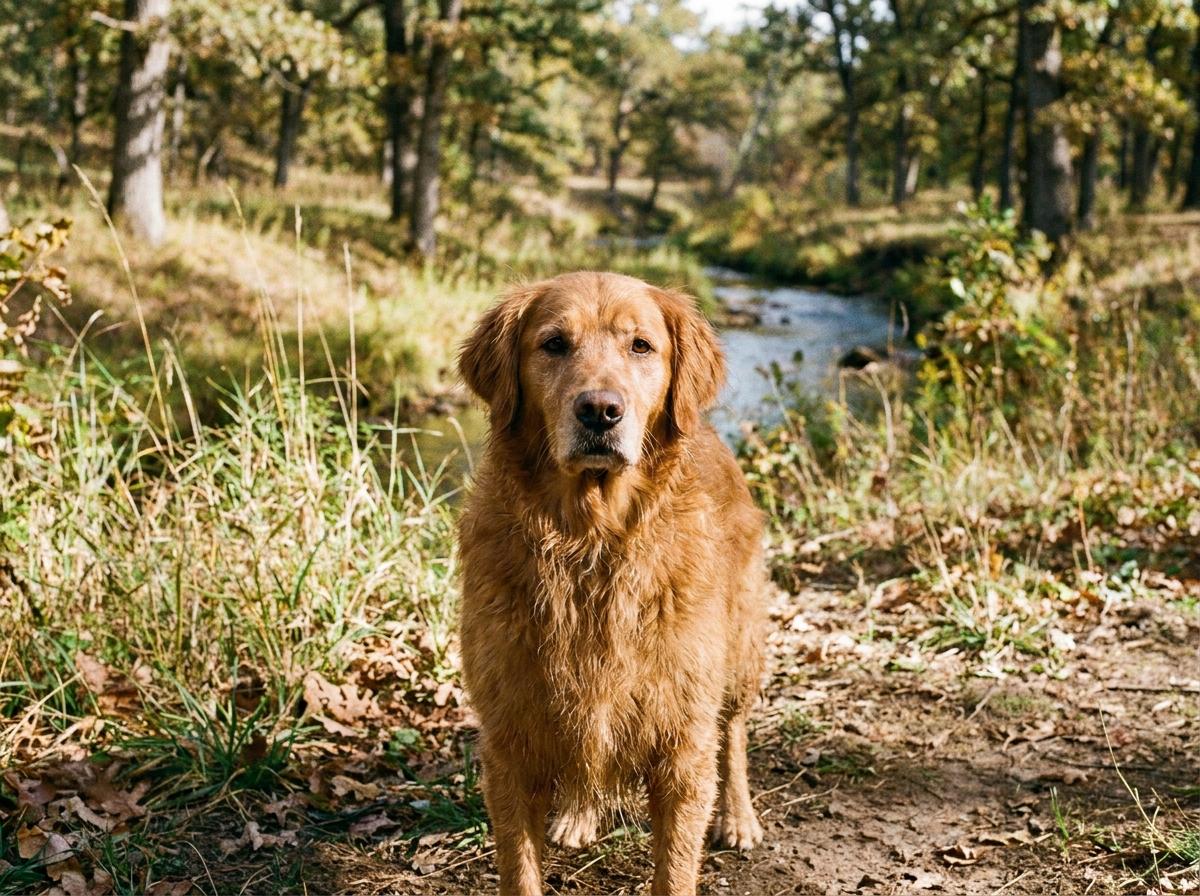
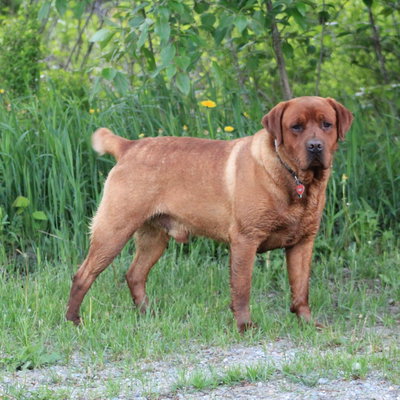
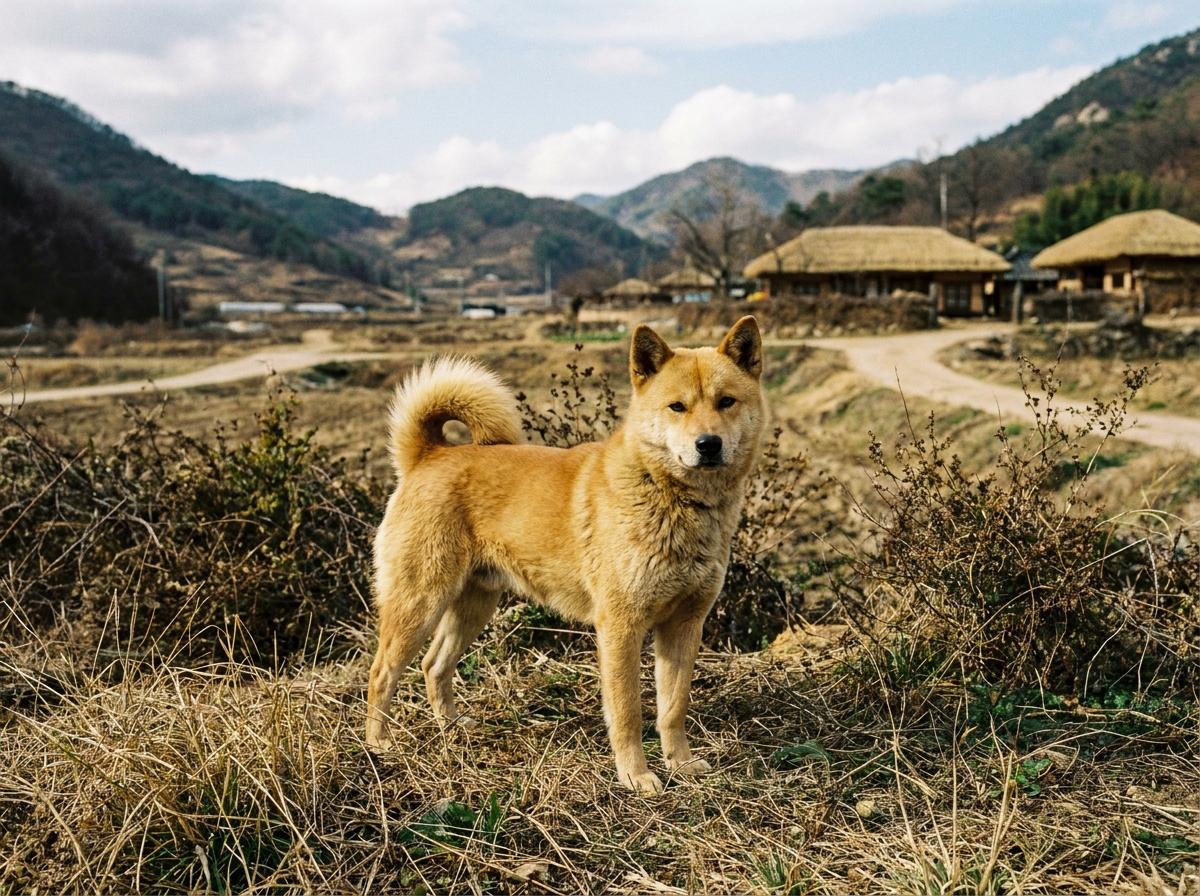
- A short, dense, close-lying coat, usually in a warm yellow, tan or fawn, often paler on the throat, chest and underside.
- A darker shading over the muzzle in many dogs, which reads as a soft mask against the lighter body color.
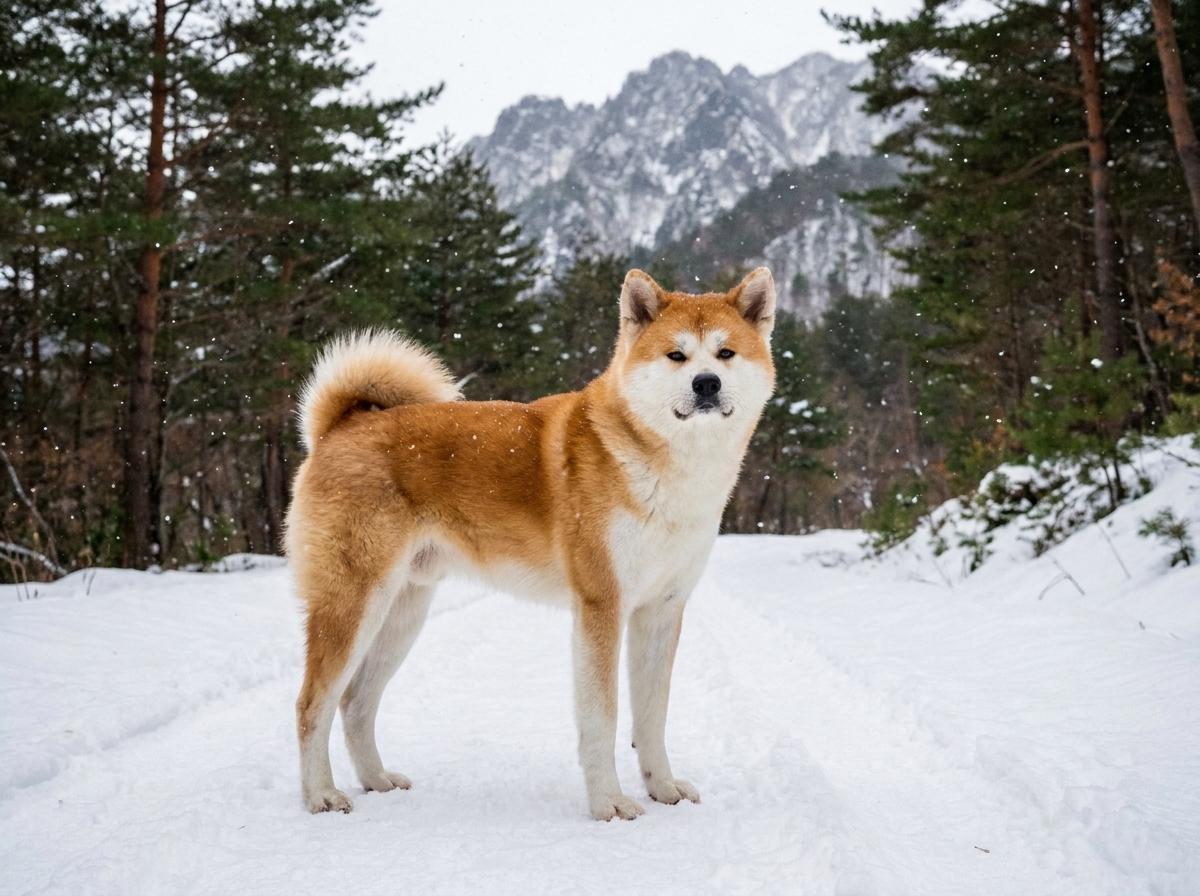
- Upright triangular ears and a broad, wedge-shaped head that tapers to a moderate muzzle, the general East Asian native dog outline.
- A thick tail carried in a loose sickle or curl toward the back rather than hanging straight down.
- A medium build, deep through the chest, with straight legs and a functional rather than exaggerated frame. Sizes reported for these dogs vary widely and no reliable measured range has been published, so treat specific height and weight figures you see quoted with caution.

If a dog in front of you has drop ears, a long coat, a straight low tail or a very different build, it is not disqualified from the label, because there is nothing to be disqualified from. That is the honest position. A DNA test will tell you about ancestry; the word nureongi will not.
The trade, the law, and what changed
This is the part most readers arrive with questions about, so here is the factual position, without detail nobody needs.
Dogs have been farmed and eaten in South Korea, and the yellow native-type dogs described above were the ones most commonly used. Podberscek’s work in the Journal of Social Issues sets out the history and the public attitudes behind the practice, including how strongly it became entangled with arguments about national identity. Dugnoille’s book covers the same ground ethnographically.
What the 2024 special act does
South Korea’s National Assembly passed a dedicated law to end the practice. In the official English rendering published by the Korea Legislation Research Institute, it is the Special Act on the Termination of Breeding, Slaughter, and Distribution of Dogs for Consumption, Act No. 20195, promulgated on 6 February 2024. Its provisions are worth reading in outline, because the shape of the law explains why 2027 keeps appearing in coverage.
- Article 5 prohibits raising, breeding or slaughtering dogs for human consumption, and prohibits distributing or selling dog meat or food containing it.
- Article 10 required businesses already operating to report themselves within three months and to file a closure or transition plan within six months.
- Articles 11 and 12 commit the state and local governments to supporting those businesses, both in closing and in moving to a different line of work.
- Article 14 provides that when a closure order is issued, the authority also orders the owner to take the measures needed for the proper breeding, management or protection of the animals held, including transferring them.
- Article 17 sets the penalties: up to three years in prison or a fine of up to 30 million won for slaughtering a dog for consumption, and up to two years or 20 million won for breeding, distributing or selling.
The act’s addendum sets a staggered commencement. Most of the law took effect six months after promulgation, several articles took effect immediately, and Articles 5 and 17, the prohibition and the penalties, take effect three years after promulgation, which falls in February 2027. That three-year gap is the transition window, and it is why the law is often described as passed but not yet fully in force.
What that means for the dogs
Registered operations have been closing across the transition period, with government support attached to closure and to changing business. Reported counts of farms closed and dogs remaining circulate widely, but they come from news summaries and campaign material rather than from a primary published dataset we can point you at, so no figure is quoted here. What the law itself provides is clear enough: closure comes with an obligation to arrange proper care or transfer of the animals held, not simply to shut a gate.
The practical consequence for readers outside Korea is that rescue and rehoming organizations, in Korea and abroad, have been moving dogs of this type into homes for years, and continue to. That is where nearly everyone reading this will actually encounter a nureongi.
Adopting a nureongi type dog

Adopting one of these dogs is, mechanically, an ordinary adoption of a medium-sized dog with an unusual amount of paperwork and an unknown early history. Three things are worth getting right.
Ask what the organization actually knows. A good rescue will tell you plainly which parts of a dog’s history are recorded and which parts are inferred. Age is often an estimate. Vaccination and treatment dates should be documented. Behavior notes should describe what the dog has been observed doing, in whose care, and for how long, rather than offering a personality summary. Vagueness here is not a scandal, but it should be named as vagueness.
Understand the import rules if the dog is traveling to you. In the United States these changed materially. The final rule published in the Federal Register on 13 May 2024, Control of Communicable Diseases; Foreign Quarantine: Importation of Dogs and Cats, took effect on 1 August 2024. It requires every dog arriving from any country to carry an ISO-compatible microchip, to be at least six months old on arrival, and to have a CDC Dog Import Form submitted before travel. Dogs arriving from countries the CDC classifies as high risk for dog-maintained rabies face additional requirements, so check the current country classification and the current forms on the CDC’s dog importation pages before you commit to a transport. Rules in other countries differ and change.
Plan the first veterinary visit before the dog arrives, not after. A dog with an unknown or partial history needs a full examination, a parasite screen, and a vaccination plan built from whatever record does exist. Imported dogs deserve particular care on this point: Cornell University’s College of Veterinary Medicine has written about canine brucellosis in imported dogs and about the biosecurity gaps that let pathogens move across borders with animals, and the infection is transmissible to people. Ask the organization what screening was done, and ask your veterinarian what else they want to run. This is a conversation for a veterinarian who can examine the animal, not for an article.
Living with a nureongi type dog

Temperament, honestly
There is no breed standard, so there is no breed temperament, and any page that gives you one is inventing it. What a given dog is like depends on its individual genetics, on how much gentle handling and social contact it had while young, and on what has happened to it since.
Some dogs of this type settle into home life quickly and unremarkably. Others arrive with very little experience of houses, stairs, traffic, doorways, handling or strangers, and need time to build it. Neither outcome tells you anything about “the breed”, because there is no breed. It tells you about one dog’s history.
The useful posture is to plan for a slow start and be pleasantly surprised. Give the dog a quiet space it can retreat to, keep the first weeks small and predictable, and let it approach people rather than the other way around. If a dog shows fear, guarding, or any behavior that worries you, get a qualified veterinary behaviorist or a credentialed trainer involved early rather than working it out from the internet. Behavior problems in dogs with unknown histories are a professional’s job, and they respond far better to early help than to late help.
Exercise, containment and daily care
Treat this as a medium-sized, alert, moderately active dog until the individual tells you otherwise. Daily walks, sniffing time, and something to do beat distance for distance’s sake, especially in a dog still learning what the world is.
Containment deserves a specific mention. A dog that is new to a home, unsure of its people, and not yet reliably recalled is a flight risk, and a frightened dog can clear or dig under fencing that would hold a settled one. A well-fitted harness, a secure collar with identification, a registered microchip, and a properly fenced garden checked for gaps are worth sorting before the dog arrives rather than after the first escape.
Health and veterinary care
Nothing about this type calls for exotic care. It calls for ordinary, well-documented care, done properly from a standing start.
The Merck Veterinary Manual’s guidance on routine health care for dogs covers the framework: an annual examination for a healthy adult and more frequent visits for seniors, core vaccinations including rabies, distemper and parvovirus on the schedule your veterinarian sets, annual fecal testing for intestinal parasites, year-round heartworm prevention, and regular dental care. For a dog whose early life is unknown, the first year of that program is also a baseline: it establishes what normal looks like for this animal so that a change can be spotted later.
Because there is no breed here, there is no breed-linked disease list to hand you either. That is not the same as freedom from inherited disease. You do not have a documented type-specific risk list; inherited risks may still be present and simply unknown, and you also do not get the early warning that a breed history provides. Your veterinarian’s examination findings and your own observations are what you have, which is a good argument for writing them down.
Records matter more when there is no registry
For a registered breed, a dog arrives with a paper trail: a pedigree, a registration number, sometimes health test results on the parents. A nureongi type dog arrives with none of that. Whatever the rescue hands over, plus whatever you record from the day you take the dog home, is the entire documented life of that animal.
That record is worth building deliberately, and it is not a filing exercise. It is the thing that answers real questions later.
- What was the estimated age on arrival, and who estimated it? Everything from vaccination scheduling to senior screening hangs off this, and an estimate labelled as an estimate is far more useful than a birthday nobody can support.
- What vaccinations and treatments came with the dog, on what dates? Titre decisions, boosters and travel paperwork all need the actual dates.
- What did the first full examination find? Weight, body condition, dental state, skin, gait, and anything the veterinarian flagged for watching.
- What has changed since? Weight over time, appetite, mobility, lumps, and any behavior that shifted and when.
You can create a free animal profile on Creatures and keep all of that in one place, including photographs, veterinary visits, medications and reminders. For a dog with no registry behind it, that profile is the closest thing to a pedigree it will ever have, and it travels with the animal if it ever changes hands.
Frequently asked questions
Is nureongi a dog breed?
No. It is a Korean word describing a yellow, medium-sized, short-coated native-type dog. No kennel club recognizes it, and there is no breed standard or herdbook. The recognized Korean breeds are separate animals, and the Korea Jindo Dog is the best documented of them, with an FCI standard and a place in the AKC Foundation Stock Service.
What does the word mean?
Roughly “the yellow one”. It is an everyday color description rather than a breed name, which is why it gets applied loosely.
Is South Korea’s dog meat ban actually in force?
Partly. The special act was promulgated on 6 February 2024 and most of it took effect within six months. The central prohibition on breeding, slaughtering, distributing and selling dogs for consumption, and the penalties attached to it, take effect three years after promulgation, in February 2027. The intervening period is a transition window in which registered businesses were required to report and to file closure or transition plans, with government support available.
Can I buy a nureongi?
This is not a breed anyone raises and sells as a companion, and there is no registry that could tell you whether a dog you were offered was one. If you want a dog of this type, the honest route is a rescue, a shelter or an established rehoming organization, and the honest question to ask them is what they actually know about the individual dog.
What are they like as pets?
It depends almost entirely on the individual dog and its history rather than on the type. Many settle into home life well. Some need months to learn things a house-raised puppy learns in weeks. Plan for the slower version, take advice from a qualified behavior professional if anything worries you, and judge the dog in front of you.
Are they related to the Jindo?
Both are Korean dogs and both carry the general East Asian native outline, but the published genetic work on Korean dogs sampled the standardized breeds rather than yellow landrace dogs, so a specific ancestral relationship is not something anyone can currently demonstrate. Claims that nureongi are the ancestors of the Jindo go past the evidence.
Do I need special paperwork to adopt one from Korea?
If the dog is traveling to the United States, yes. Since 1 August 2024 every imported dog needs an ISO-compatible microchip, must be at least six months old on arrival, and must have a CDC Dog Import Form submitted before travel, with extra requirements for dogs coming from countries classed as high risk for dog rabies. Other countries have their own rules. Check the current requirements yourself rather than relying on what was true for a transport last year.
Do this next on Creatures
A dog with no registry behind it needs someone to be its record keeper. That is the part of this Creatures can genuinely help with, alongside finding the organizations that rehome these dogs.
Give the dog a history. Create a free animal profile in a few minutes. No account needed to start. The walkthrough is in adding an animal to Creatures.
Start the record that does not exist yet. Add a health or care record. The record sheet opens for any visitor to look around, and you will need a free account to save what you enter. See adding a record and health and medical records for the detail.
Do not miss the next booster. For a dog whose vaccination history started mid-life, the calendar does the remembering. Read reminders and upcoming care.
Find a rescue or shelter. Search trusted organizations, including rescues and rehoming groups, in the Creatures directory.
If you run a rescue or shelter. Create an organization profile so adopters searching for these dogs can find you. No account needed to start, and creating an organization and adding your team covers working with colleagues and fosterers.
See what a full profile holds. Photos, records, reminders and history each have their own place: your animal’s profile page, the tabs and what each one does. Comparing this dog against other breeds and types? Start from the Creatures dog species page.