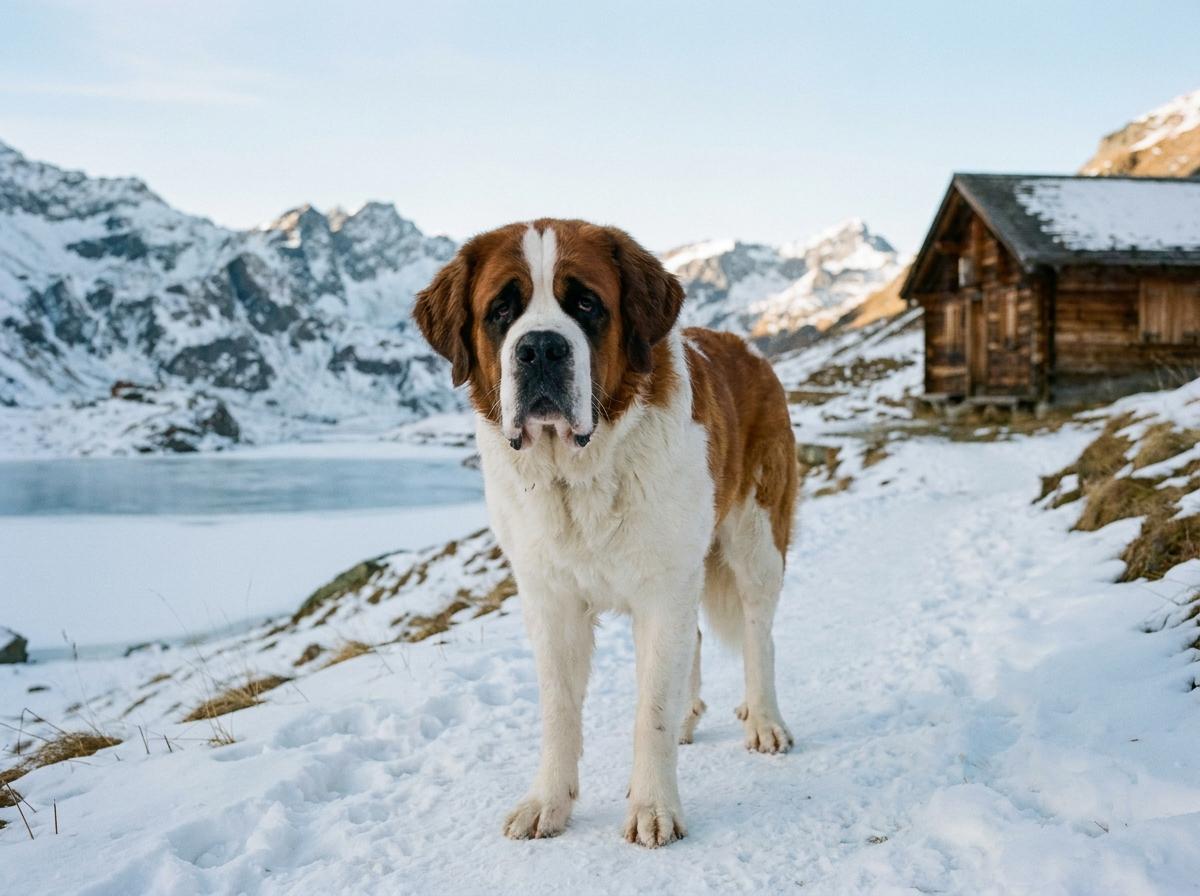
Saint Bernard
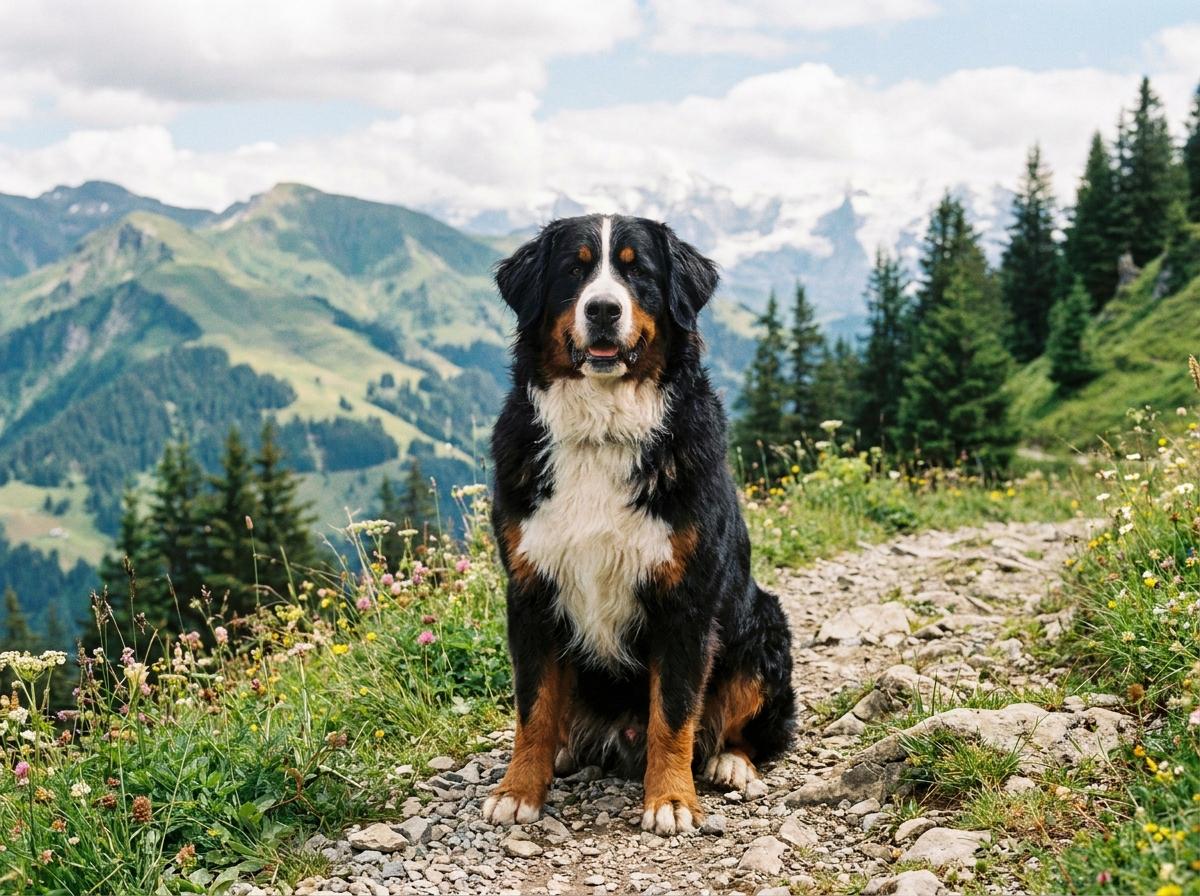
The Saint Bernard is a giant working dog from the western Alps, most closely linked with the hospice at the Great Saint Bernard Pass between Switzerland and Italy. Monks and local keepers used large farm and draft dogs there for guarding, hauling, and later avalanche and lost-traveler work. The modern breed is massive and heavy-boned, with a broad head, deep chest, and either a smooth or rough coat. White with red, brown, or brindle markings and a dark mask is typical. The small brandy barrel seen in paintings is part of popular legend rather than standard rescue equipment.
Daily life with a Saint Bernard requires space, planning, and a tolerance for drool. These dogs are often gentle and patient, but their size makes early training essential before jumping, pulling, or leaning become dangerous. They need moderate exercise rather than hard endurance work, especially while growing, and they are prone to overheating in warm weather. Weight control helps protect hips, elbows, and the spine. Bloat awareness, cardiac screening, eye checks, and careful selection of long-lived family lines are important buyer topics. Rough coats need more brushing, but both coat types shed heavily during seasonal changes.
Colors: Apricot, Bicolor, Black, Black and Tan, Black and White, Black Mask, Blue, Blue and Tan, Blue Merle, Blue Roan, Blue Tick, Brindle, Brown, Brown and Tan, Brown and White, Chocolate, Cream, Dapple, Domino, Fawn, Fawn and White, Gold, Gray, Harlequin, Irish Marked, Liver, Liver Mask, Mahogany and White, Mahogany Brindle and White, Mantle, Mask, Merle, Mottled, Parti-Color, Piebald, Red, Red and White, Red Merle, Red Roan, Red Tick, Reverse Brindle, Roan, Sable, Saddle, Silver, Speckled, Spotted, Tan, Ticked, Tricolor, Tuxedo, White, Yellow