

Salish Wool Dog
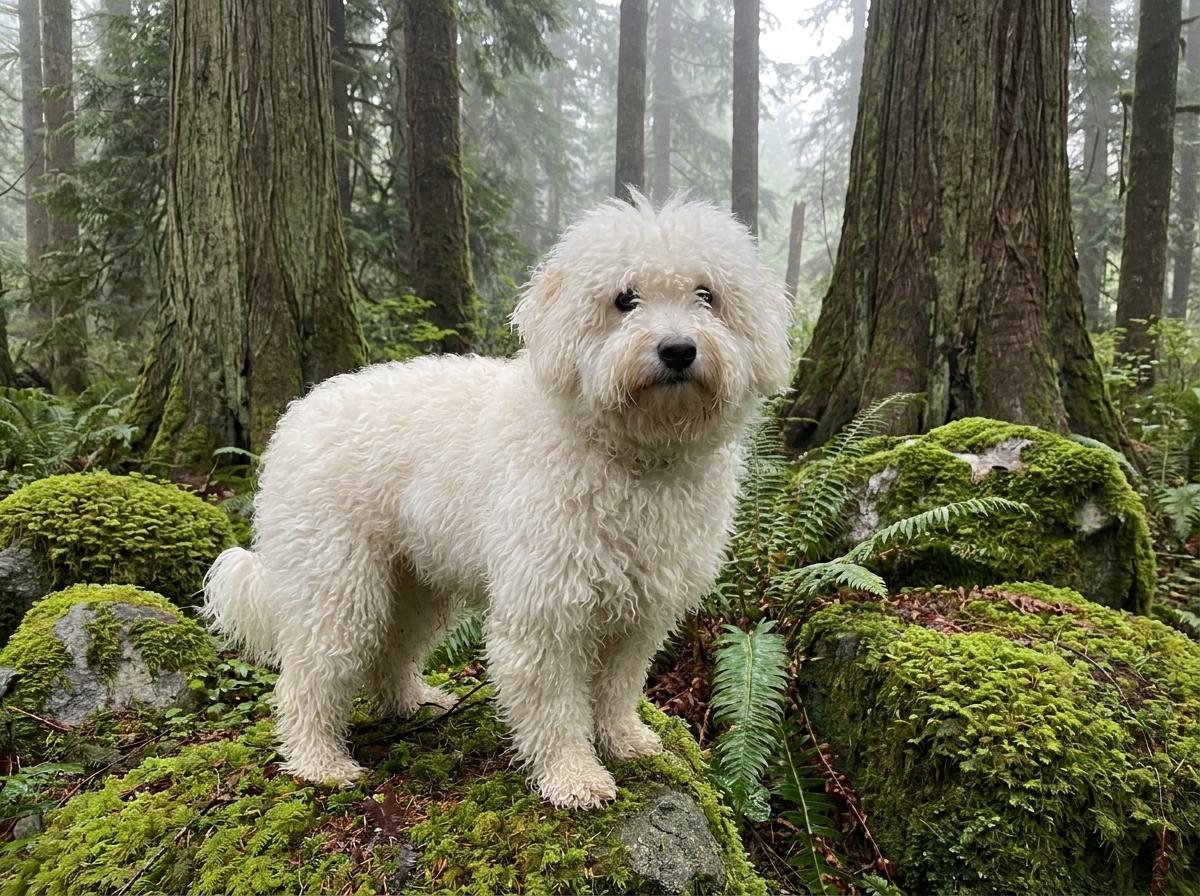
The Salish Wool Dog was a small, long-coated dog maintained by Coast Salish peoples of the Pacific Northwest for textile fiber. Historical accounts describe mostly white dogs kept separate from village hunting and camp dogs so their coats stayed consistent. Their soft undercoat was sheared or plucked and spun, often with mountain goat wool and plant fibers, for valued blankets and ceremonial textiles. The type disappeared as a living population after colonial disruption, changing trade patterns, and the loss of managed breeding systems that had supported it.
There is no modern pet version of the Salish Wool Dog. Work with the name belongs in cultural heritage, museum, archaeological, and genetic contexts, with Coast Salish knowledge and authority treated as central rather than decorative. Surviving blankets, historical descriptions, and a few preserved specimens help researchers understand coat genetics and Indigenous animal management. Claims that a contemporary mixed dog has recreated the breed should be approached carefully. Stewardship today is about respectful documentation, community access to collections, and accurate telling of the dog's place in Coast Salish weaving traditions.
Colors: Albino, Apricot, Bicolor, Black, Black and Tan, Black and White, Black Mask, Blue, Blue and Tan, Blue Merle, Blue Roan, Blue Tick, Brindle, Brown, Brown and Tan, Brown and White, Chocolate, Cream, Dapple, Domino, Fawn, Fawn and White, Gold, Gray, Grey, Harlequin, Irish Marked, Leucistic, Liver, Liver Mask, Mantle, Mask, Melanistic, Merle, Mottled, Parti-Color, Piebald, Red, Red and White, Red Merle, Red Roan, Red Tick, Reverse Brindle, Roan, Sable, Saddle, Silver, Speckled, Spotted, Tan, Ticked, Tricolor, Tuxedo, White, Yellow