


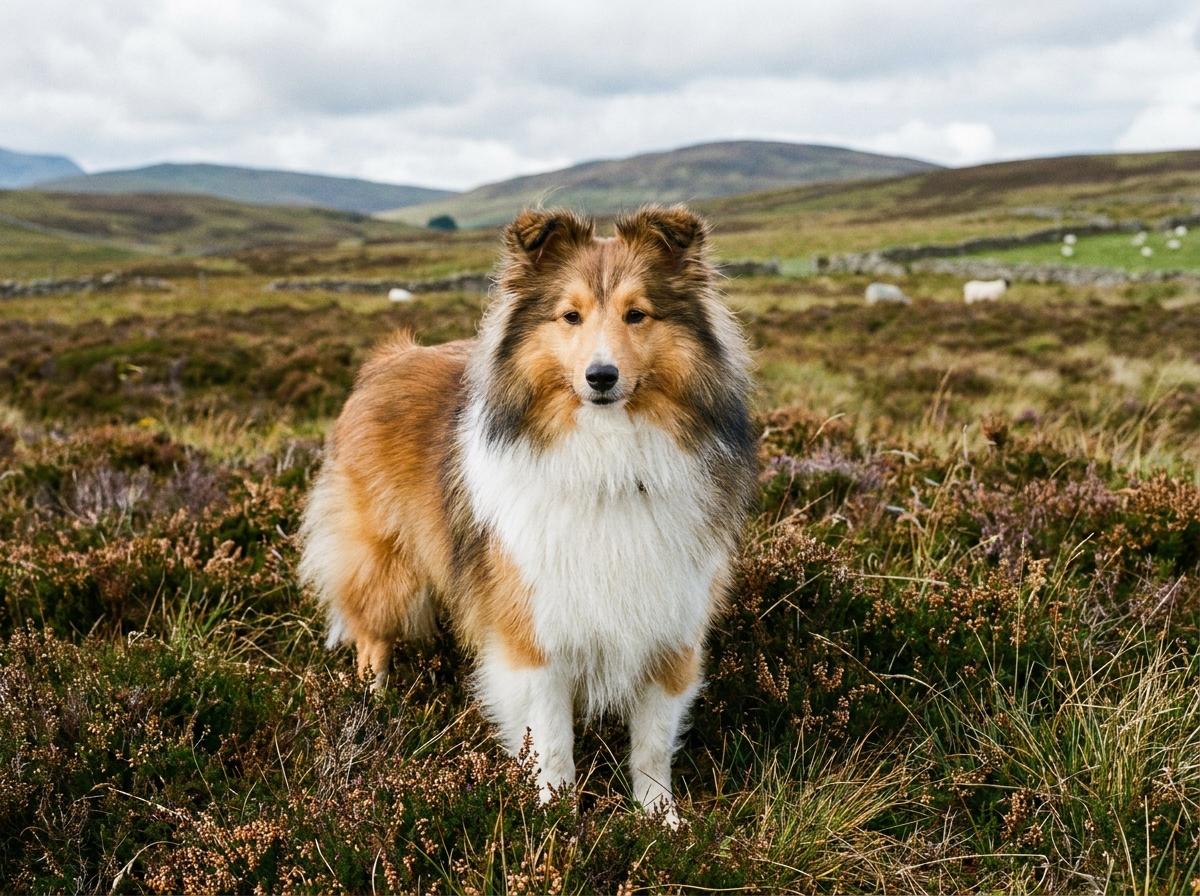
Shetland Sheepdog
The Shetland Sheepdog, or Sheltie, is a small herding dog developed in Scotland's Shetland Islands from island working dogs and later collie-type influence. Although it resembles a miniature Rough Collie, it is a separate breed with its own proportions and sharp, watchful expression. Shelties carry a long double coat, a wedge-shaped head, semi-erect ears, and colors such as sable, black, and blue merle with white or tan markings. Their original job was controlling small livestock and alerting crofters on exposed island farms.
Modern Shelties often excel in agility, obedience, rally, and herding because they are quick, biddable, and sensitive to detail. That same sensitivity means rough handling, chaotic homes, or poorly managed barking can become problems. They need steady socialization, mental work, and enough exercise to stay fit without being pushed like a larger farm collie. The coat sheds heavily at times and requires brushing down to the undercoat, especially behind the ears and in the trousers. Health discussions with breeders commonly include eye disease, hip evaluation, thyroid problems, dermatomyositis, and MDR1 drug sensitivity.
Colors: Apricot, Bicolor, Black, Black and Tan, Black and White, Black Mask, Black White and Tan, Blue, Blue and Tan, Blue Merle, Blue Merle and White, Blue Roan, Blue Tick, Brindle, Brown, Brown and Tan, Brown and White, Chocolate, Cream, Dapple, Domino, Fawn, Fawn and White, Gold, Gray, Harlequin, Irish Marked, Liver, Liver Mask, Mantle, Mask, Merle, Mottled, Parti-Color, Piebald, Red, Red and White, Red Merle, Red Roan, Red Tick, Reverse Brindle, Roan, Sable, Sable and White, Saddle, Silver, Speckled, Spotted, Tan, Ticked, Tricolor, Tuxedo, White, Yellow