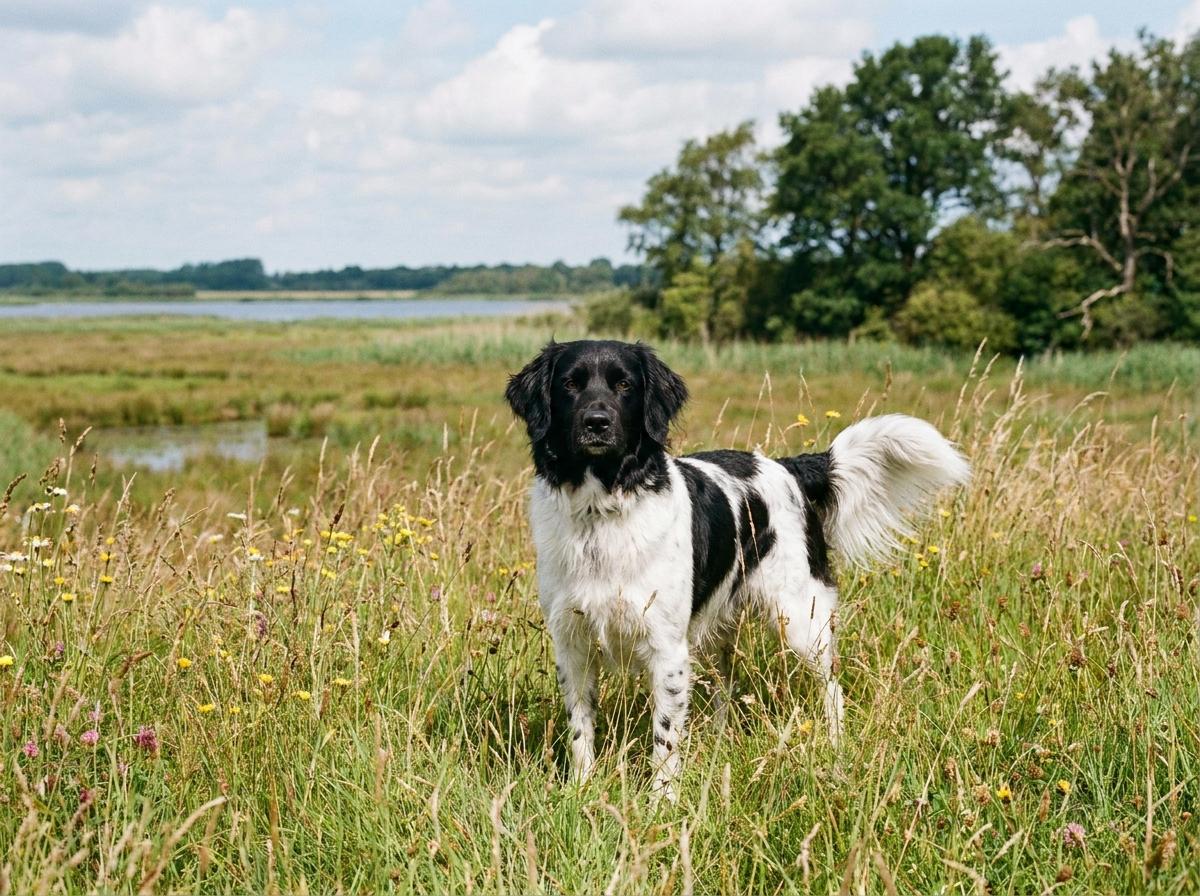
Stabyhoun
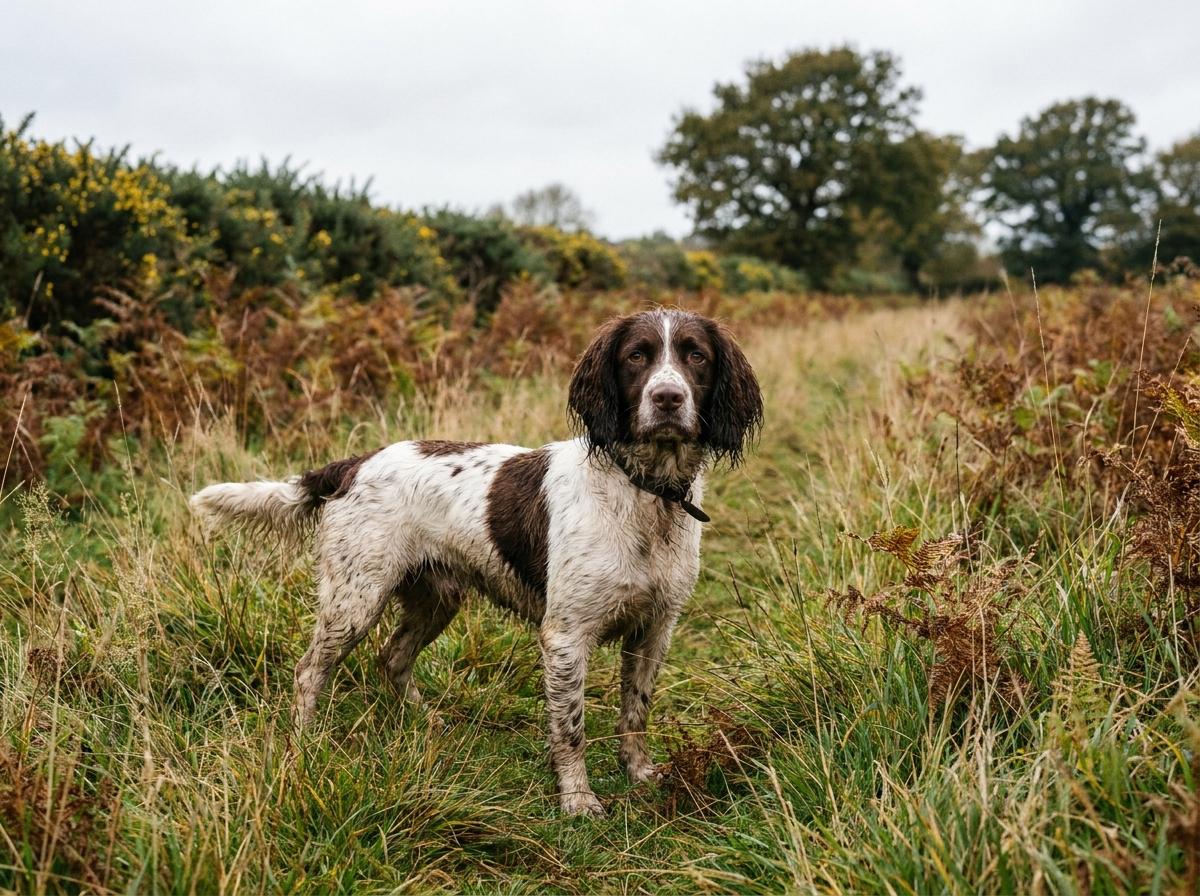
Developed in Friesland in the northern Netherlands, the Stabyhoun is a medium-sized farm and hunting dog whose name is often linked to the Frisian idea of a dog that stands by its owner. It is a versatile gundog rather than a specialist pointer alone, used historically for birds, small game, vermin control, and watch work around rural homes. The breed has a slightly longer than tall outline, a soft expression, drop ears, and a weather-resistant coat with feathering. Black and white is most common, often with ticking or roaning; brown and white occurs in some populations.
The Stabyhoun tends to be thoughtful, people-focused, and a little independent, which calls for patient training rather than drilling. Regular walks, retrieving games, nose work, and controlled opportunities to range suit the breed better than a purely sedentary household. The coat needs brushing through the feathering and ears, especially after field work, but it is not usually sculpted. Because numbers remain limited outside the Netherlands, breeding programs pay close attention to genetic diversity and health screening, including hips, elbows, epilepsy, and known neurologic or cardiac conditions. Buyers may need to wait for a litter and work with breed clubs rather than casual sources.
Colors: Albino, Apricot, Bicolor, Black, Black and Tan, Black and White, Black Mask, Blue, Blue and Tan, Blue Merle, Blue Roan, Blue Tick, Brindle, Brown, Brown and Tan, Brown and White, Chocolate, Cream, Dapple, Domino, Fawn, Fawn and White, Gold, Gray, Grey, Harlequin, Irish Marked, Leucistic, Liver, Liver Mask, Mantle, Mask, Melanistic, Merle, Mottled, Parti-Color, Piebald, Red, Red and White, Red Merle, Red Roan, Red Tick, Reverse Brindle, Roan, Sable, Saddle, Silver, Speckled, Spotted, Tan, Ticked, Tricolor, Tuxedo, White, Yellow