Tahitian Dog
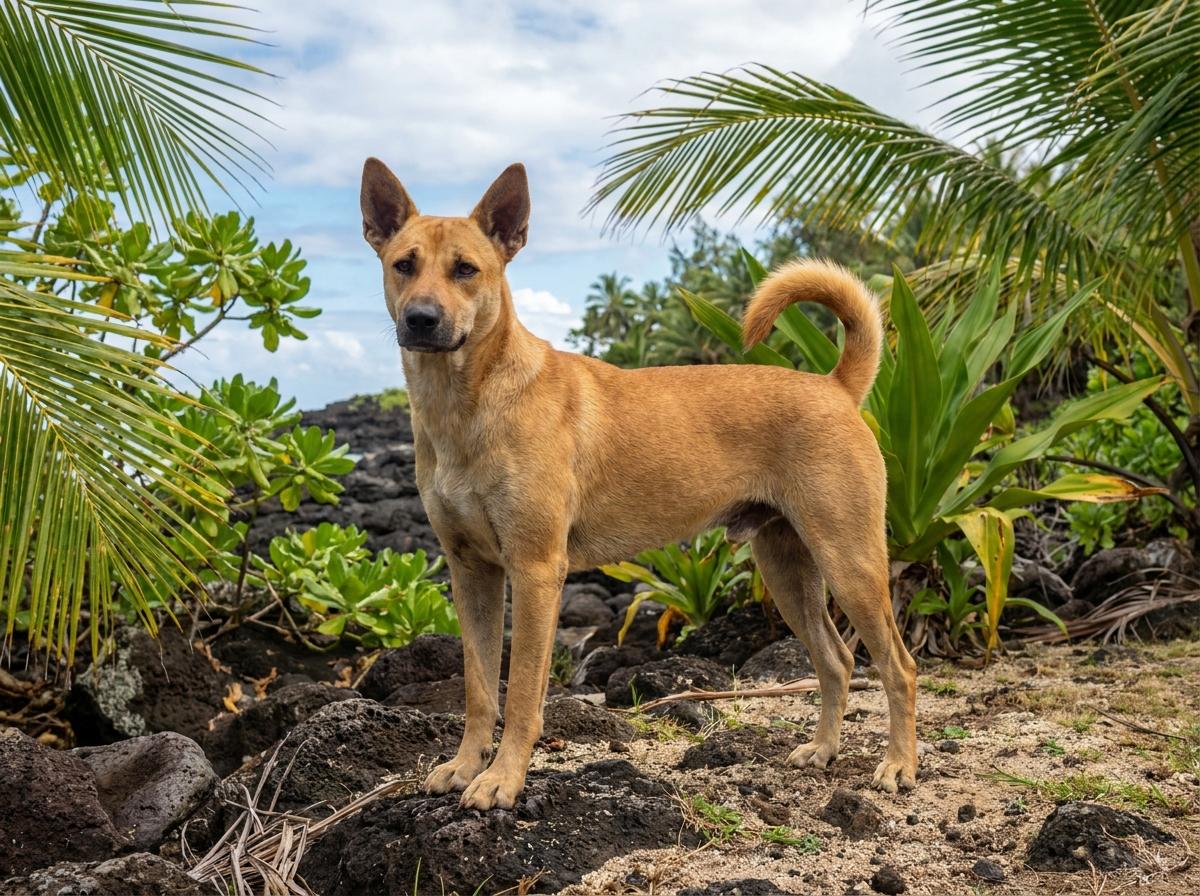
Known from eighteenth-century accounts and later archaeology, the Tahitian dog was one of the Polynesian domestic dog populations carried through the Society Islands. Descriptions are fragmentary, but it was a small to medium island dog, probably related to other Pacific dogs such as the Hawaiian poi dog and New Zealand kuri. These dogs were kept within household and ritual economies, sometimes as food animals, companions, or markers of status, rather than as a standardized kennel breed.
No recognized living Tahitian dog population is known today. Modern dogs in French Polynesia may have mixed local histories, but they should not be sold or described as preserved Tahitian dogs without evidence. The name is mainly useful for historians, archaeologists, museums, and people studying human migration, island animal management, and the loss of old landraces after colonization, imported breeds, and changing food systems.
Colors: Albino, Apricot, Bicolor, Black, Black and Tan, Black and White, Black Mask, Blue, Blue and Tan, Blue Merle, Blue Roan, Blue Tick, Brindle, Brown, Brown and Tan, Brown and White, Chocolate, Cream, Dapple, Domino, Fawn, Fawn and White, Gold, Gray, Grey, Harlequin, Irish Marked, Leucistic, Liver, Liver Mask, Mantle, Mask, Melanistic, Merle, Mottled, Parti-Color, Piebald, Red, Red and White, Red Merle, Red Roan, Red Tick, Reverse Brindle, Roan, Sable, Saddle, Silver, Speckled, Spotted, Tan, Ticked, Tricolor, Tuxedo, White, Yellow