


Tang Dog
The Tang Dog is the native dog of southern China and Hong Kong, known in Cantonese as the Tong gau (唐狗, literally “Tang dog,” after the Tang dynasty). It helps to be honest about what the name covers. For most people in Hong Kong and Guangdong, “Tang dog” simply means the local village dog, a free-ranging landrace that has bred on its own along the southern Chinese coast for thousands of years, not a standardized show breed with a fixed pedigree. Alongside that everyday meaning sits a newer effort by the China Kennel Union (CKU) and a Hong Kong Tang Dog Association to describe the type as a recognizable native breed. This page covers both: what the Tang dog actually is, where it comes from, the traits people use to identify it and how reliable those traits really are, how it behaves, what it needs, and the realistic path to bringing one home.
Browse listings, public profiles, breeders, or add your animal.
What is a Tang Dog?
The character 唐 (Tang) refers to the Tang dynasty (618 to 907), a shorthand many Chinese communities still use for “Chinese,” the way “Tang people” and “Chinatown” (唐人街, “Tang people’s street”) do. So “Tang dog” reads as “Chinese dog” more than as the name of one carefully bred line. In Hong Kong, the Cantonese Tong gau is the ordinary, much-loved local dog you see in the New Territories, on hiking trails, and in rescue kennels. Reputable sources are clear that this is a landrace, a naturally evolved local type shaped by adaptation rather than a formal breed with a closed studbook. The canine genetics company Embark, which has sampled these dogs directly, describes true village dogs as animals that “freely breed and live near people,” and calls Hong Kong and East Asian village dogs “some of the most genetically diverse dogs on earth.”
The second, narrower usage treats the Tang dog as an emerging native breed. In the 2000s a Tang Dog Association formed in Hong Kong to raise the profile of the local dog, and the China Kennel Union, China’s member body of the Fédération Cynologique Internationale (FCI), has published a description of the type as part of its native breed conservation work. When the 2019 FCI World Dog Show was held in Shanghai and hosted by the CKU, it included a specialty showcase for China’s native breeds. So the Tang dog sits in an odd place: an ancient, everyday dog that a handful of organizations are now trying to define and celebrate as a breed. If you are comparing it against other dogs, the broader Creatures dog species page is a useful place to start.
Origin and history
The Tang dog belongs to the village dogs of southern China, a population with unusually deep roots. Village dogs are the free-ranging, human-adjacent dogs found across much of the world, and they are the direct descendants of the earliest domesticated dogs. East Asia figures heavily in that story. A widely cited 2016 genomic study led by researchers at the Kunming Institute of Zoology proposed southern East Asia as a place of origin for the domestic dog, and reported that indigenous Chinese dogs carry higher genetic diversity than most Western breeds, consistent with an early and less intensively managed history (Wang et al., 2016, reported by China Daily). China has been described as home to more than 50 indigenous dog types, and later work on Chinese indigenous breeds has continued to document their diversity and distinct genetic signatures (Frontiers in Genetics, 2019).
Within that broad picture, the southern coastal dog earned its keep as a gatekeeper. For centuries it guarded homes, courtyards, and farms, barked at what did not belong, and fed itself with minimal fuss. That working past still shows in the modern animal’s alertness and its wariness of strangers. In Hong Kong the same dog became the Tong gau, so common that a University of Hong Kong study found the local mongrel is among the animals most often affected by abuse and abandonment, which is part of why groups like the SPCA and dedicated rescues run long-standing programs to care for and rehome them.

What a Tang Dog looks like
Here is where the two meanings of “Tang dog” pull apart, and where you should read carefully.
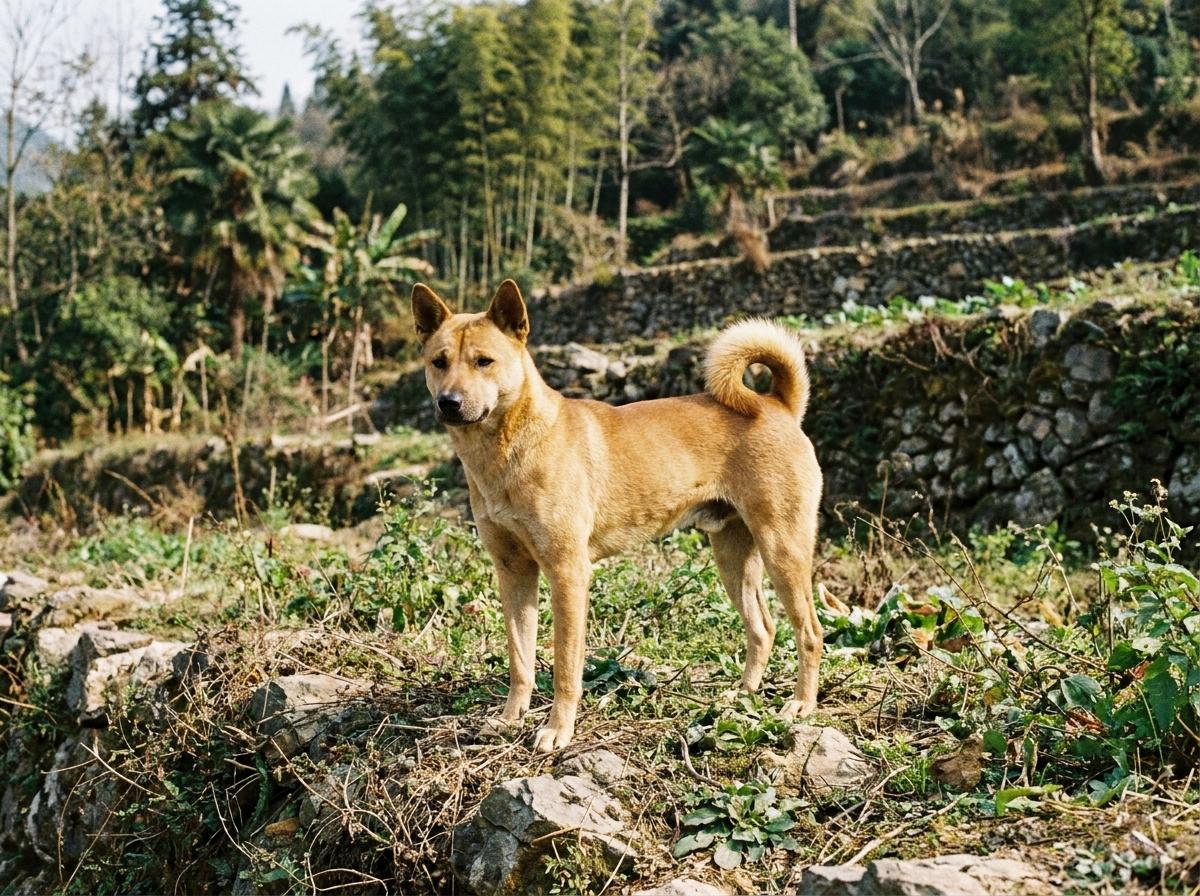
The CKU’s native breed description paints a fairly specific picture: a medium-sized, well-balanced dog with a shoulder-height-to-body-length ratio of roughly 10 to 10 (as tall as it is long), a rich coat that can be long or short, pricked ears, a bushy or whip-like tail, a broad nose, long slightly sloping eyes, a blue-black tongue, and solid coloring in cream, red, or black. That is a genuine attempt to codify a look, and many Tang dogs do fit large parts of it, especially the spitz influence you can see in a pointed muzzle, upright ears, and a tail that curls up over the back.
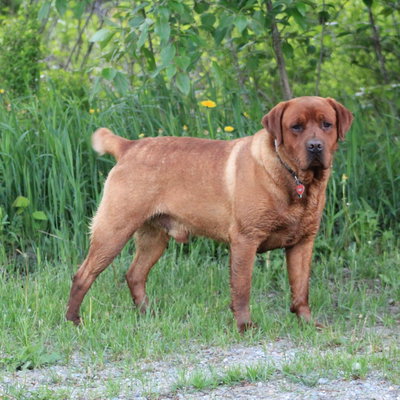
The landrace reality is broader. Because the everyday Tang dog breeds freely rather than to a standard, its appearance varies. Hong Kong village dogs are commonly medium-sized, in the range of about 13 to 22 inches tall and roughly 20 to 55 lb depending on the individual and sex, with short-to-medium coats (per Embark’s breed resource). In practice you will see tan, red, black, black-and-tan, and mixed coats, not only the three solid colors of the idealized description. Read the CKU standard as an aspirational profile of the “best type,” not a promise about every dog that answers to the name. If you meet a friendly, alert, medium coastal-Chinese dog with a curled tail and pricked ears, it is very reasonably a Tang dog, whether or not it ticks every box.
The blue-black tongue, explained honestly
The dark tongue is the trait people latch onto, so it is worth being precise. A blue-black tongue comes from extra melanin pigment in the tongue tissue, the same pigment that darkens some dogs’ lips, gums, and palate. It is most famously required in the Chow Chow and the Chinese Shar-Pei, two breeds that also trace to southern China, and the American Kennel Club notes that many breeds can carry blue or black pigment or spots on the tongue, along with plenty of mixed-breed dogs. A dark tongue fits the southern Chinese lineage and is a nice marker of type, but it is not a reliable certificate of authenticity. Some Tang dogs have a fully or partly pigmented tongue, some do not, and a dark spot on a random dog’s tongue does not by itself prove Chow, Shar-Pei, or Tang ancestry. Treat it as a charming clue, not proof.
Temperament
Owners and rescues consistently describe the Tang dog as loyal, intelligent, alert, and watchful, often affectionate with its own people and reserved or cautious with strangers. That profile makes sense for a dog bred by circumstance to guard and to think for itself. The flip side of that independence is a dog that suits an owner who enjoys building trust and putting in consistent, reward-based training rather than someone expecting instant, biddable obedience. Early, positive socialization matters a great deal, both because the guarding instinct can tip into over-wariness without it, and because a confident, well-socialized Tang dog tends to be a steady, undramatic companion. As with any dog, individual personality varies with genetics, upbringing, and handling, so meet the specific animal rather than relying on the label.

Health and hardiness
One plausible advantage of a landrace is genetic health, but it is worth being clear that this is an inference from how landraces generally work, not a measured fact about Tang dogs. The reasoning runs like this: because Tang dogs breed from a wide, diverse gene pool rather than a small, closed one, a diverse population like this would be expected to carry less of the inbreeding that concentrates inherited disease. Broader research supports the general principle. A large University of California, Davis analysis led by veterinary geneticist Danika Bannasch found that most purebred dogs carry inbreeding well above levels considered safe, and that the most heavily inbred dogs averaged about 29 percent more non-routine veterinary visits than mixed-breed dogs. That study did not sample Tang dogs, though, and no published dataset measures inbreeding or inherited-disease burden specifically in Tang or Hong Kong village dogs, so read any health advantage as a reasonable expectation for a diverse landrace rather than an established, Tang-specific finding.
Even a diverse gene pool does not make a dog invincible. A Tang dog still needs the ordinary foundation of good health: core vaccinations and parasite prevention on your veterinarian’s schedule, dental care, a sensible diet that keeps it lean, and prompt attention when something seems off. Any individual dog can develop hip problems, allergies, dental disease, or the age-related issues common to all dogs, and a diverse gene pool lowers the odds of inherited disease without removing them. Keeping clear records of vaccinations, weight, and any health events over the years makes it far easier to spot a trend early and to give a new veterinarian an accurate history. Defer all diagnoses and any medication decisions to a veterinarian who can examine the dog.
Care and daily life
The Tang dog is a moderate, adaptable dog rather than a demanding specialist, which is a large part of its appeal.
Exercise and enrichment
This is an active, alert dog with a working background, so it needs real daily exercise and something to do with its mind. Solid walks, chances to sniff and explore, and games or training sessions go a long way. A bored, under-exercised guarding dog is the one that barks too much and invents its own jobs, so channel that energy deliberately.
Coat and grooming
Coats run short to medium and are easy to keep. Routine brushing to manage shedding, occasional baths, regular nail trims, and basic ear and dental care cover the essentials. Dogs with a thicker, more spitz-like coat will shed seasonally and appreciate more frequent brushing during those stretches.
Training and home fit
Reward-based training suits the breed’s independent streak better than heavy-handed correction. Because the Tang dog is naturally watchful and can be reserved with strangers, invest early in socialization to people, other dogs, and everyday situations. A securely fenced yard is worth having for a dog with strong territorial and prey instincts, and consistent household rules help a smart, self-directed dog understand its place. Many Tang dogs live happily as family companions, including with children, when they are well socialized and treated with respect, as the calm scene of a child and a settled dog suggests.
Size and lifespan
The Tang dog is a medium dog. Hong Kong and Chinese village dogs commonly stand around 13 to 22 inches at the shoulder and weigh roughly 20 to 55 lb, with genuine variation because this is a landrace and not a size-standardized breed. On lifespan, Hong Kong rescue and care sources commonly cite around 12 to 16 years, and sometimes longer with good care, which is in line with what you would expect for a medium-sized dog from a diverse landrace. There is no formal breed-specific survival study behind that figure, so treat it as a reasonable general expectation rather than a guarantee.
Getting a Tang Dog
How you find a Tang dog depends almost entirely on where you are.
In southern China and Hong Kong, Tang dogs are everywhere, and the most responsible way to bring one home is through adoption. Local rescues and welfare groups such as the SPCA run long-standing programs specifically for the Tong gau, and there is no shortage of dogs, from puppies to steady adults, looking for homes. Adopting an adult has a real advantage here: you can see the grown dog’s size, coat, and temperament rather than guessing.
Outside Asia, the Tang dog is uncommon and there is no organized Western breeder scene for it, which is exactly what you would expect for a landrace village dog. Most Tang dogs and Tang-type dogs in North America and Europe arrive through rescue organizations that transport and rehome southern Chinese and Hong Kong village dogs. If you are set on this type, adoption and rescue are the realistic paths, and patience helps. Be a little skeptical of anyone marketing “purebred Tang dog puppies” at a premium: the whole point of the type is that it is a diverse native dog rather than a closed pedigree line. Whatever the route, meet the individual dog, ask about its history and health, and judge the animal in front of you.
For dogs that do occasionally appear in listings or through directories, a saved search alert is the practical way to catch one without checking constantly. And if you want to see how the Tang dog compares to a related southern Chinese dog with the same blue-black tongue, the Chow Chow breed page is a natural next stop. Creatures also documents other regional heritage and landrace-adjacent animals worth a look, from the Molossus of Epirus, an ancient Greek guardian dog, to the Murgese, a heritage horse breed from southern Italy, if you enjoy older, place-shaped breeds.
Frequently asked questions
Is the Tang dog a real breed?
It depends on what you mean by breed. The Tang dog (Tong gau) is a genuine, ancient landrace, the native village dog of southern China and Hong Kong, and it is not recognized as a formal breed by the FCI or the AKC. Separately, the China Kennel Union and a Hong Kong Tang Dog Association have described and promoted it as a native breed. So it is real and old, but it is a landrace first and a formally standardized breed only in an emerging, in-progress sense.
Do all Tang dogs have a blue-black tongue?
No. A dark tongue appears in the CKU’s ideal description and fits the southern Chinese lineage it shares with the Chow Chow and Shar-Pei, but not every Tang dog has one, and a dark tongue on any dog is not proof of Tang ancestry. Treat it as a nice marker of type, not a certificate.
Are Tang dogs good family pets?
Often, yes. They are typically loyal, alert, and affectionate with their own people, and many live well with families and children when they are well socialized. Their watchdog instincts and independent streak mean early socialization and consistent, reward-based training matter, and they suit an owner who enjoys building a relationship with a smart dog.
Are Tang dogs healthy?
As a diverse landrace, they are expected to carry a lower burden of breed-specific inherited disease than heavily inbred pedigree dogs, though this is an inference from how landraces generally work rather than a measured finding in Tang dogs. Either way it is not a free pass: they still need routine veterinary care, vaccinations, parasite prevention, dental care, and a healthy weight.
How big do Tang dogs get?
They are medium dogs, commonly about 13 to 22 inches tall and roughly 20 to 55 lb, with real variation because the type is not size-standardized.
Where can I get a Tang dog?
In Hong Kong and southern China, through local rescues and welfare groups. Elsewhere, mainly through rescue organizations that rehome southern Chinese and Hong Kong village dogs, since there is no organized Western breeder scene for the type.
Do this next on Creatures
Whether you are researching the Tang dog, waiting for the right rescue dog to appear, or already sharing your home with one, Creatures is the records, marketplace, and directory layer to keep it all in one place.
Add your dog. Already have a Tang dog or a Tang-type rescue? Create a free animal profile in a few minutes. The walkthrough is in adding an animal to Creatures.
Track health from day one. A rescue dog often arrives with an unknown history, so start its record early. Add a health or care record. The record sheet opens for any visitor to look around, and a free account saves what you enter. See adding a record and health and medical records for the full how-to.
Get alerted. Tang dogs are uncommon in the West, so set a free Tang dog listing alert and we will tell you when one is posted. No account needed to start. New to the tool? Read saving searches and using your watchlist.
Browse and search. Look through dogs on the marketplace and find trusted breeders, rescues, and owners in the Creatures directory.
List a rescue or program. Run a rescue or work with village dogs? Create an organization profile so adopters can find you, and read creating an organization and adding your team.