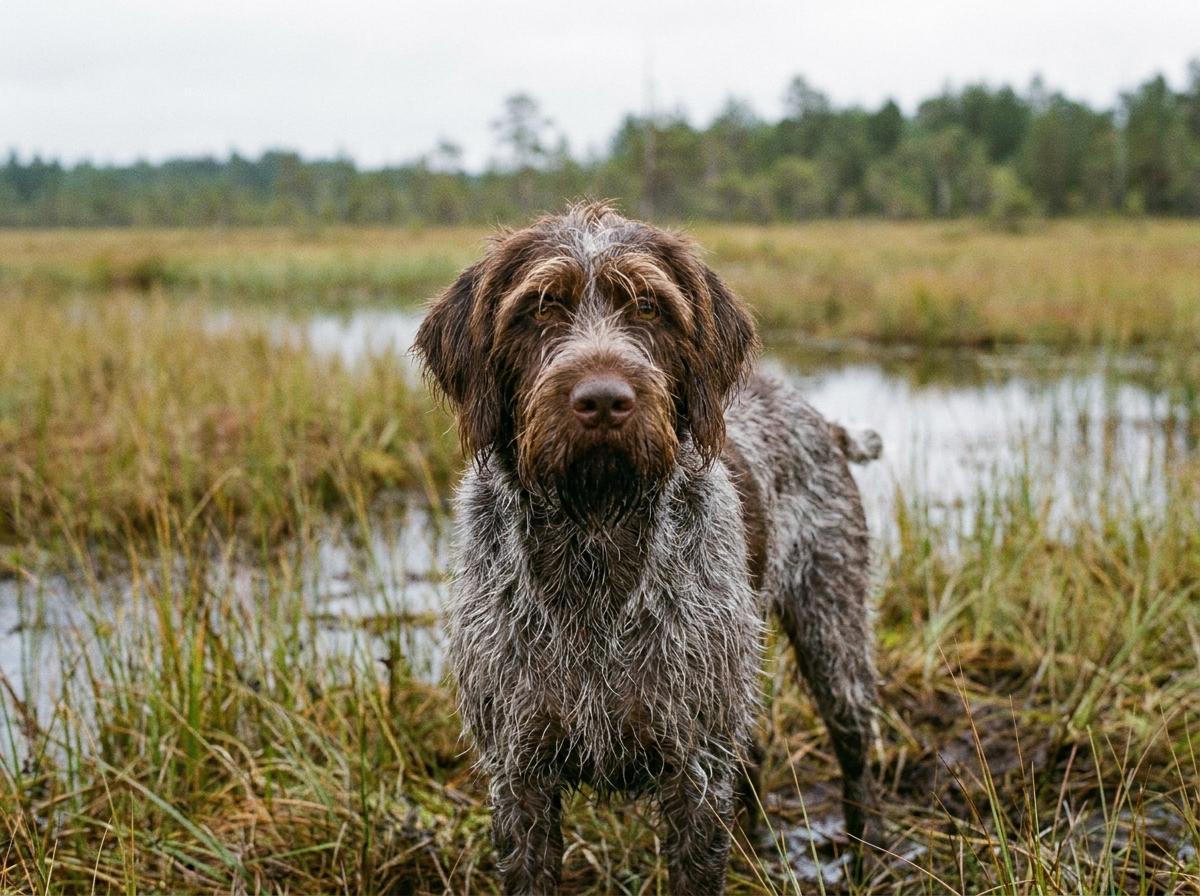
Wirehaired Pointing Griffon
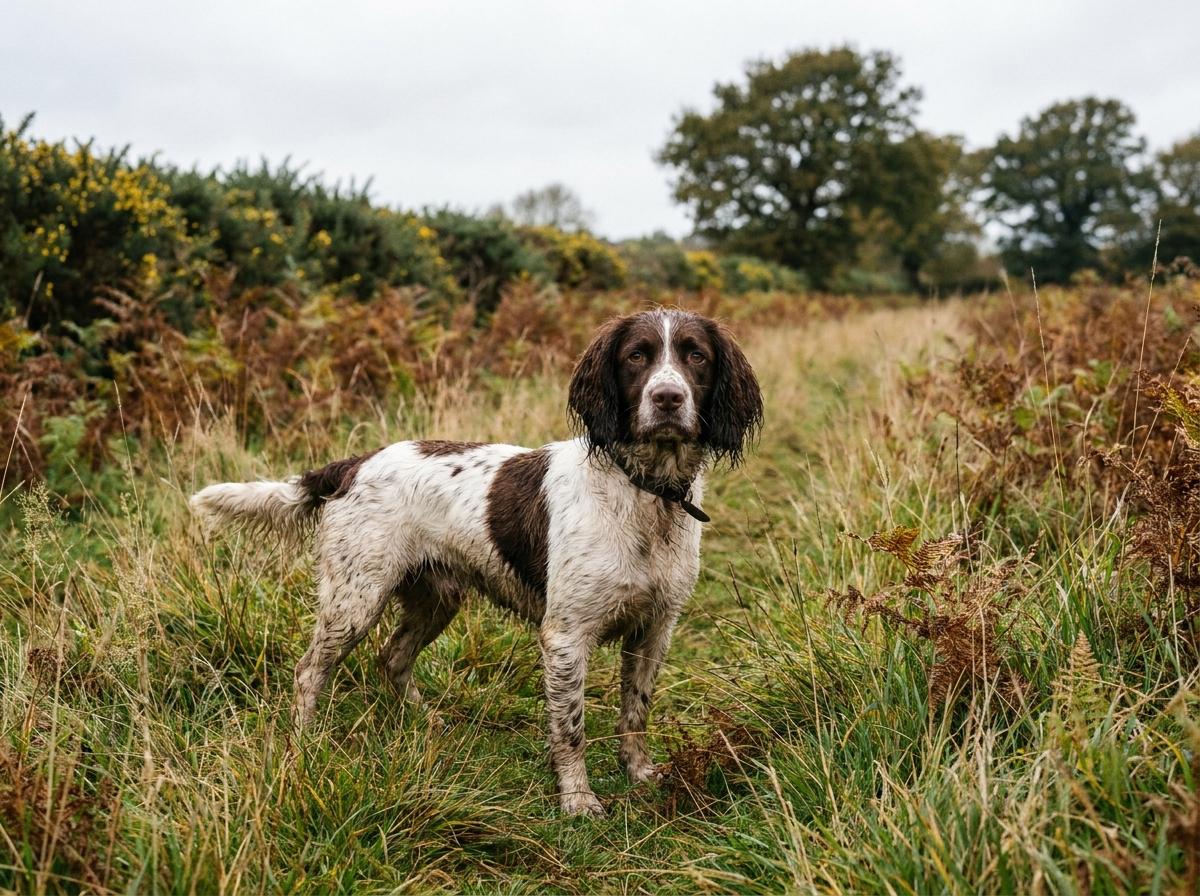
The wirehaired pointing griffon, often called the Korthals griffon, is a medium-sized versatile gundog created in late nineteenth-century Europe under the breeding program of Eduard Korthals. It was selected to point game, retrieve on land and water, and work close enough for a walking hunter. The breed's rough double coat, heavy eyebrows, beard, and mustache give it a shaggy outline, while the usual steel-gray coat with brown markings helps distinguish it from other wirehaired pointing breeds. A good griffon is cooperative, nose-driven, and methodical rather than flashy or far-ranging.
In homes, this is an active sporting dog that needs field work, long off-leash runs in safe areas, tracking, or another regular outlet for scent and problem solving. The harsh coat benefits from brushing and occasional hand stripping; neglected beard hair can hold burrs, food, and water. Griffons are often close to their families and can be slow to mature, so patient training and steady social exposure matter. Breeding and buyer conversations should cover hip and elbow evaluations, eye checks, thyroid issues, and field aptitude, not just coat. For hunters, the best matches usually come from lines that suit the local terrain, game, and water conditions.
Colors: Apricot, Bicolor, Black, Black and Tan, Black and White, Black Mask, Blue, Blue and Tan, Blue Merle, Blue Roan, Blue Tick, Brindle, Brown, Brown and Tan, Brown and White, Brown White and Gray, Chocolate, Cream, Dapple, Domino, Fawn, Fawn and White, Gold, Gray, Gray Brown, Harlequin, Irish Marked, Liver, Liver Mask, Mantle, Mask, Merle, Mottled, Parti-Color, Piebald, Red, Red and White, Red Merle, Red Roan, Red Tick, Reverse Brindle, Roan, Sable, Saddle, Silver, Speckled, Spotted, Steel Gray, Tan, Ticked, Tricolor, Tuxedo, White, Yellow