Norfolk Trotter
The Norfolk Trotter, also called the Norfolk Roadster, was the great trotting road horse of eastern England, a compact, powerful bay built to carry a heavy rider long distances at a fast, bold, high-stepping trot. It is one of the most important horses you can no longer buy. The breed is extinct as a distinct type, absorbed into the modern Hackney and scattered through the pedigrees of the Standardbred, many continental warmbloods, and much of the trotting horse world. This page explains what the Norfolk Trotter actually was, where it came from, how it looked and moved, why it disappeared, and how to meet its legacy today through its living descendant, the Hackney. If you are researching trotting bloodlines, sport horse foundations, or simply where a famous gait came from, this is the honest history, not a sales pitch for an animal you cannot obtain.

Browse listings, public profiles, breeders, or add your animal.
What was a Norfolk Trotter?
The Norfolk Trotter was a large-framed trotting harness and road horse that originated in and around Norfolk in eastern England. Before the age of good roads and railways, the fastest reliable way for a person to cover ground was on the back of a horse that could trot for hours without tiring, and the Norfolk Trotter was bred to be exactly that horse. It carried a heavy man great distances at a fast trot, and later became the star of the trotting races that were popular in the early part of the 19th century.
The same road horse was bred in Yorkshire as well, where it was known as the Yorkshire Trotter or Yorkshire Roadster. Breed historians treat the Norfolk and Yorkshire roadsters as one type under different regional names, so when you read “Norfolk Roadster,” “Yorkshire Roadster,” or “Norfolk Trotter” you are reading about the same kind of animal. The word “roadster” is the key: this was the working road horse of its day, valued for speed, endurance, and the ability to keep going.
It is important to be clear from the start that this is a historical breed. There is no living, registrable, purebred Norfolk Trotter you can go out and buy, because the type was never given its own separate stud book and was gradually folded into the Hackney. What survives is its blood, its famous trot, and its outsized influence on horses that are very much alive today. If you are comparing trotting and sport horse foundations, the broader Creatures horse species page is a useful place to see where this old road horse sits in the wider family of breeds.
Origin and history
The Norfolk Trotter took shape over roughly two centuries in the flat, productive farmland of East Anglia, and part of its story begins with royal policy. In 1542, King Henry VIII required wealthy landowners to keep a set number of trotting-horse stallions, one strand of a broader Tudor push to improve English horse stock through several Acts of Parliament in the 1530s and 1540s. Those laws also tried to raise the size of English horses by setting minimum heights for breeding stallions and mares. Norfolk, already a serious horse-breeding region, became a center for exactly the kind of strong, fast trotting horse the crown wanted, and the local road horse grew out of that foundation.
The single most important animal in the breed’s history was a stallion named Shales, foaled in 1755 and usually known as Old Shales. Shales mattered because of what stood behind him: his sire was the Thoroughbred Blaze, foaled in 1733, and Blaze traced back through the great racehorse Flying Childers to the Darley Arabian, one of the three foundation sires of the entire Thoroughbred breed. Crossing that fast, refined Thoroughbred blood onto the sturdy native Norfolk road mares produced a horse that combined stamina and a powerful trot with more quality and speed than the old cob stock alone. Shales and his sons became the fountainhead of the Norfolk trotting line.
Through the 18th and early 19th centuries the Norfolk Trotter was one of the most useful horses in England, moving people and goods at a time when a good trotter was infrastructure. Then the ground shifted under it. Better roads, the spread of the railway, and changing fashion in horses reduced the demand for a fast road trotter, and the breeders who had kept the type turned toward the show ring and the emerging Hackney. Because no one had ever created a stand-alone Norfolk Trotter stud book, there was no formal structure to preserve the old breed under its own name. It simply merged into what became the Hackney, and the Norfolk Trotter as a distinct breed ceased to exist.
What a Norfolk Trotter looked like

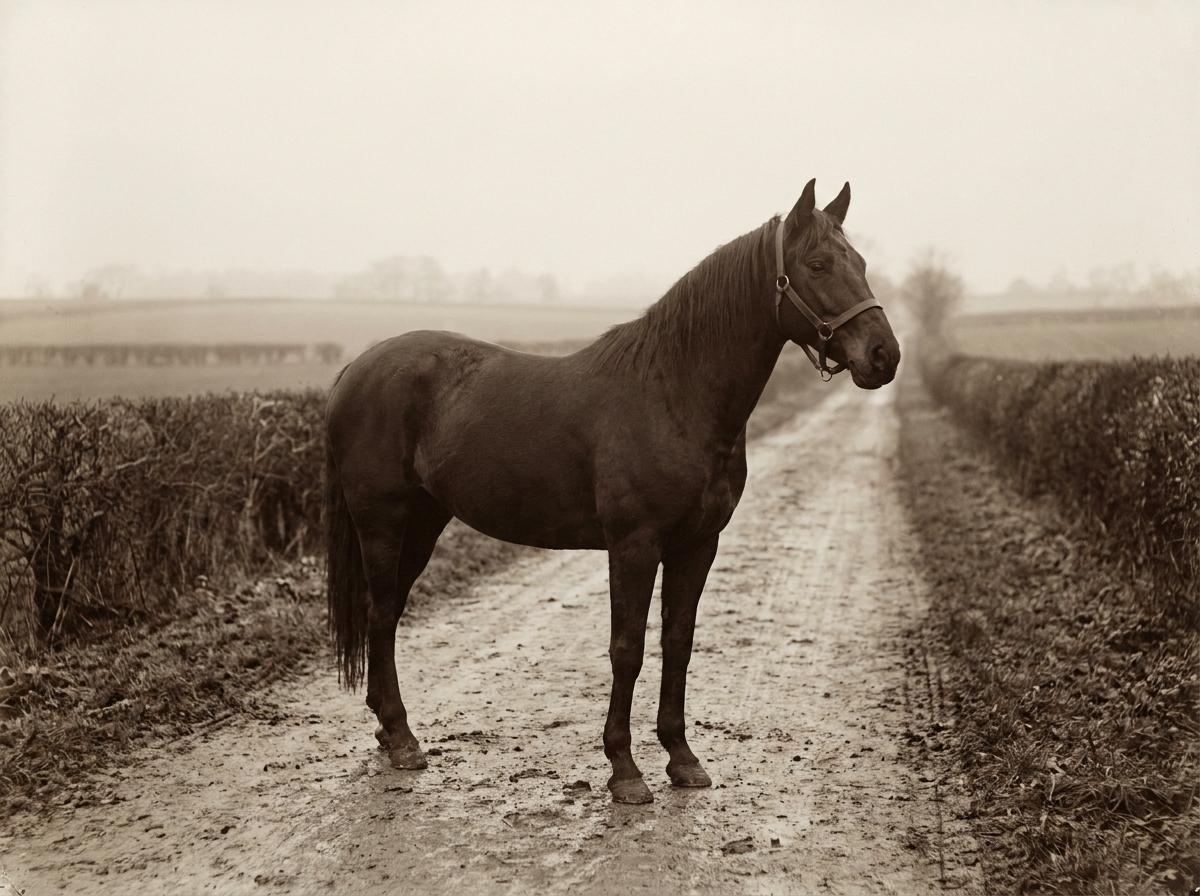
Historical descriptions paint a consistent picture of a medium-sized, powerfully built road horse rather than a tall, elegant carriage horse. The main points that recur across breed histories are these.
- Size. Historical accounts vary, but most put the Norfolk Trotter at roughly 15 to 16 hands: a compact, powerfully built road horse whose value came from strength and gait, not height. Its value came from strength and gait, not height.
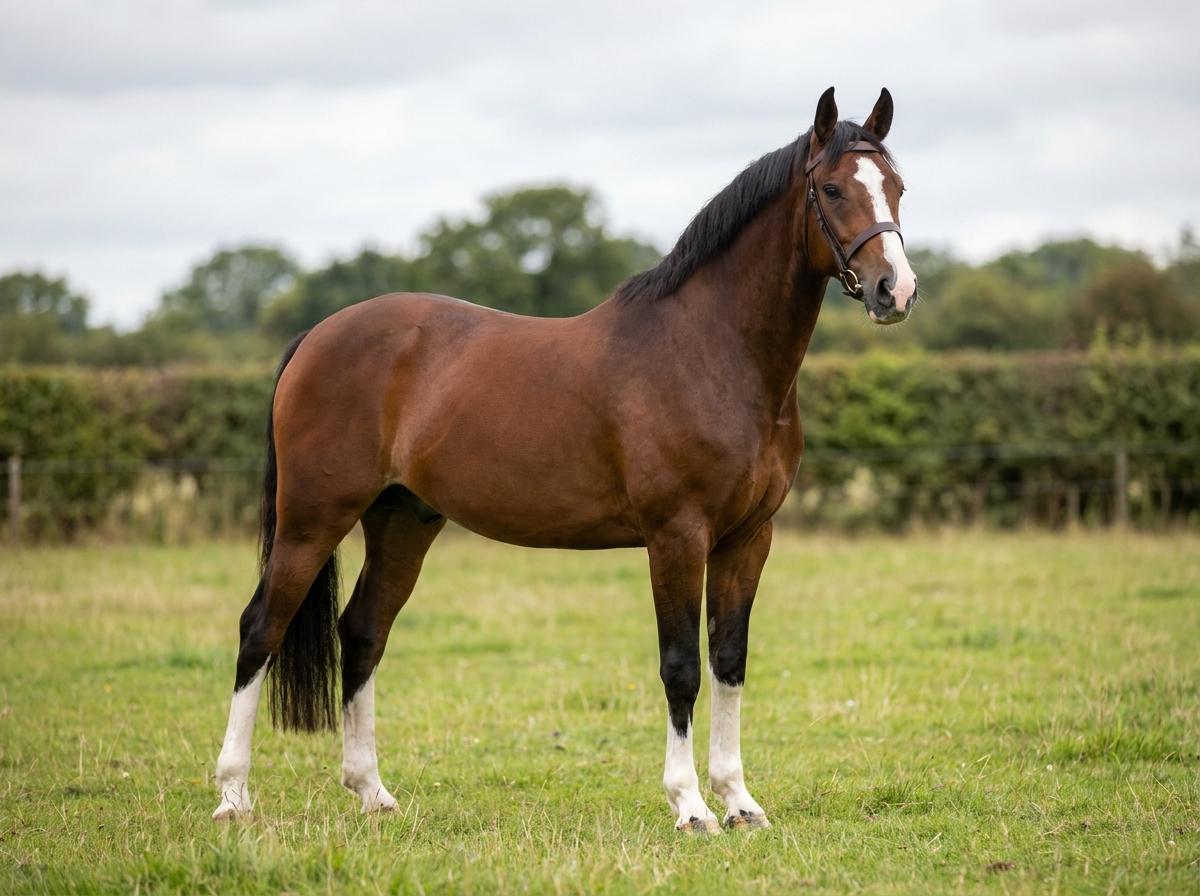
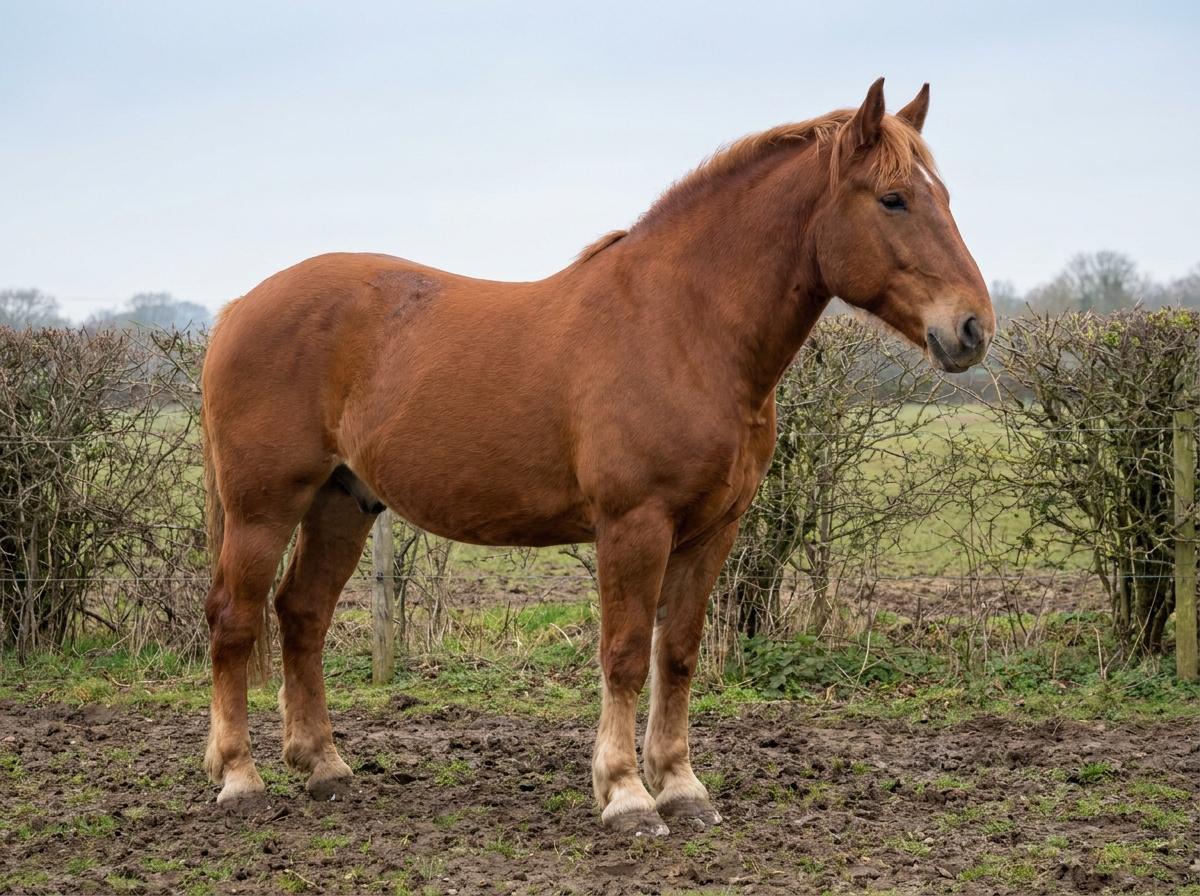
- Build. It was deep-chested and muscular, with a strong, fairly level back for carrying weight, powerful hindquarters to drive the trot, a sloping shoulder, and clean, strong legs with sound hooves suited to hard road work. This was a horse built to carry a heavy rider all day without breaking down.
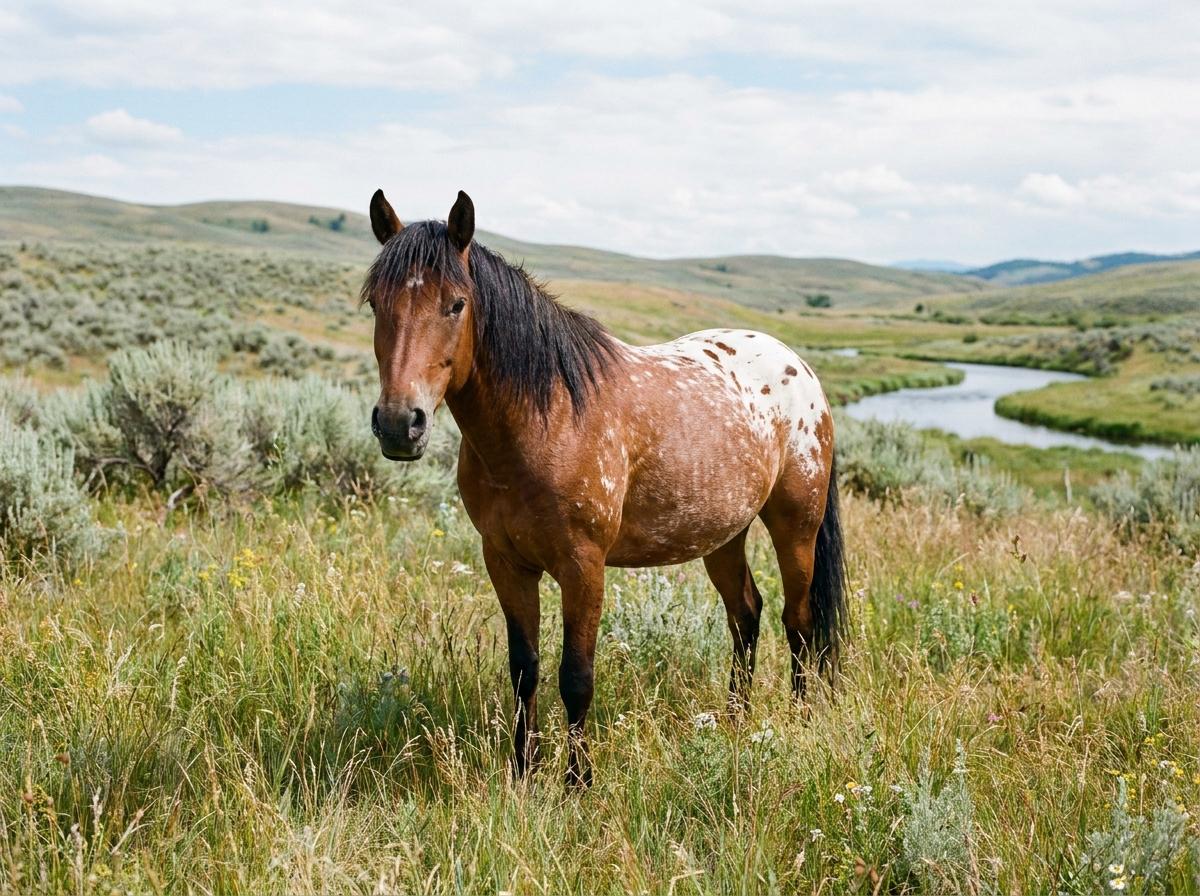
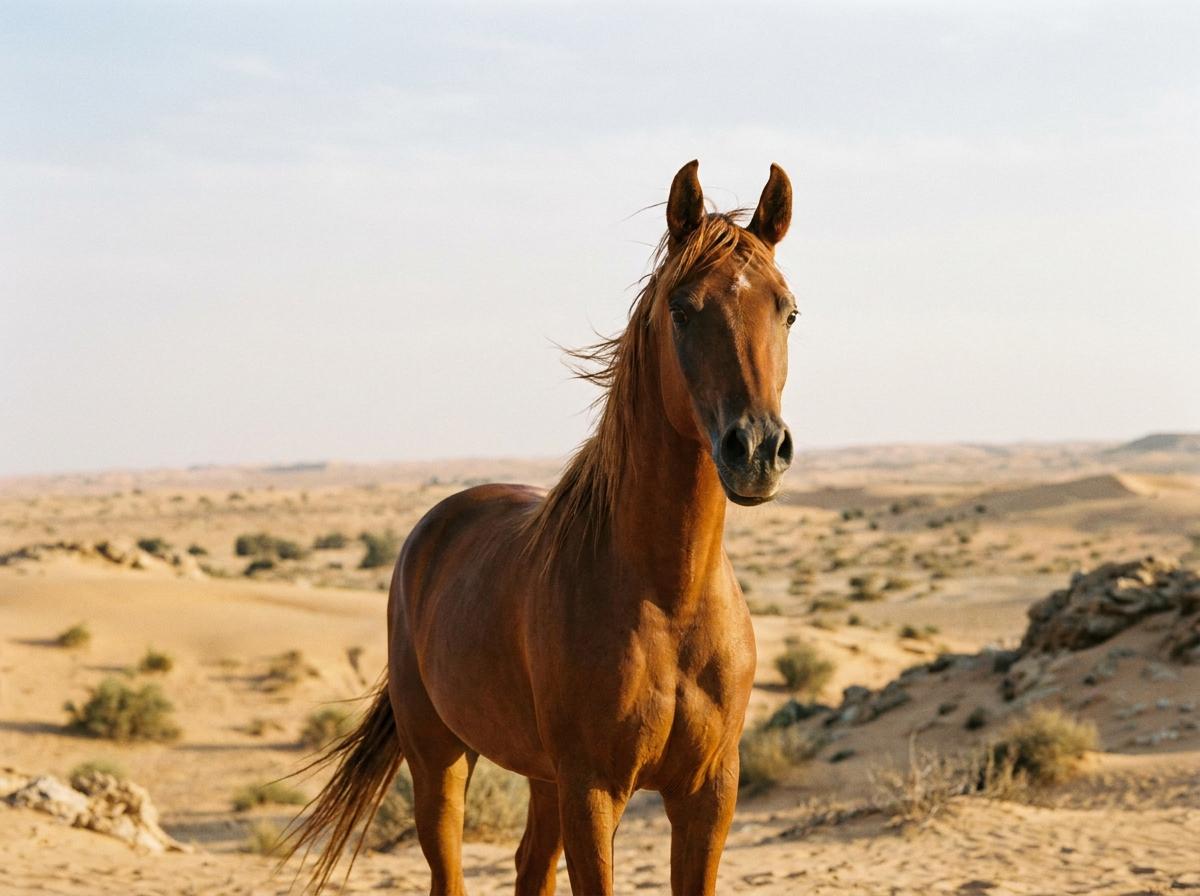
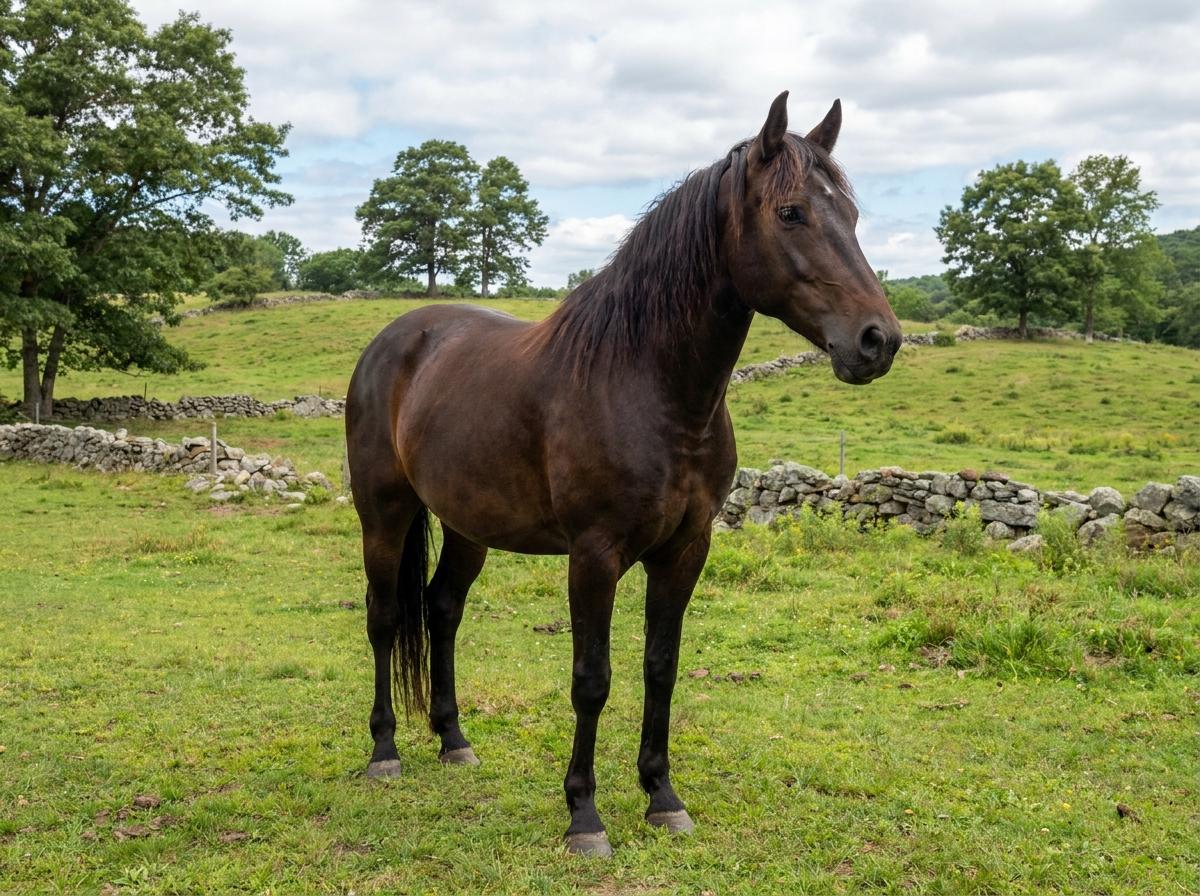
- Color. The coat was usually a solid color, most often bay or brown, and also chestnut or black, sometimes with white markings. Bay, a reddish-brown body with black mane, tail, and lower legs, was especially typical.
- The trot. Above everything, the Norfolk Trotter was defined by its trot: bold, high-stepping, ground-covering, and remarkably sustainable. Contemporary accounts credit good individuals with carrying a heavy man at speeds around 17 miles per hour, which is exceptional for a trotting horse under saddle. That combination of high knee action and stamina is the trait the breed is remembered for and the trait it passed on.
You can see the direct visual echo of this horse in the modern Hackney, whose spectacular knee-and-hock action is a refined, exaggerated version of the working Norfolk trot.
The famous trot, and trotting races
The whole point of the Norfolk Trotter was the trot, and in the early 19th century that gait had a competitive stage. Trotting matches, usually ridden under saddle rather than driven, were a popular public spectacle, and Norfolk Trotters excelled at them. A horse that could trot fast and far for money was a prized possession, and the breed’s reputation for a bold, tireless, high road trot was built partly in these contests.

This is also where the Norfolk Trotter’s story connects to the future of harness sport. The same qualities prized in an English trotting match, speed at the trot, endurance, and a willing engine behind, were exactly the qualities that would matter when trotting became an organized racing sport on both sides of the Atlantic. The Norfolk road horse was, in effect, an early prototype of the specialist trotter, and its genes traveled into the breeds that would dominate that sport.
Why the Norfolk Trotter is extinct
Calling a breed extinct can sound dramatic, so it is worth being precise about what happened. The Norfolk Trotter did not die out for lack of quality. It disappeared as a distinct breed for two connected reasons.
First, its job vanished. A fast road trotter was essential when riding was the quickest way to travel over poor roads. As turnpikes improved, railways spread, and later the motor age arrived, the practical need for a horse that could trot a heavy rider across a county evaporated. Second, and decisively, the type never had its own stud book. Breed identity in the modern sense depends on a registry that records pedigrees and defines the breed. The Norfolk and Yorkshire roadsters were never formally closed and recorded under their own name, so when breeders reorganized around a new show and driving horse, there was no separate Norfolk Trotter registry to keep the old breed alive.
Instead, the breed was absorbed. In 1883 the Hackney Horse Society was founded in Norwich, in the very heart of the Norfolk Trotter’s home country, and its stud book drew its foundation pedigrees from these roadster lines, with records reaching back to the Shales horse of the 1750s. The Norfolk Trotter did not so much vanish as change its name and its purpose, from working road horse to elegant show and carriage horse, and continue as the Hackney. So the honest way to describe the Norfolk Trotter is as a foundation breed: gone as a separate animal, fully present in the DNA of others.
The living legacy: Hackney, Standardbred, and beyond
The reason the Norfolk Trotter still matters, and still gets searched for, is that its influence is enormous and easy to trace.
The Hackney horse. The most direct descendant is the Hackney, developed in England by crossing the Norfolk and Yorkshire roadsters with Thoroughbred blood. The Hackney Horse Society, formed in Norwich in 1883, formalized the breed, and the Hackney inherited and then intensified the Norfolk Trotter’s signature high-stepping trot. Today the Hackney is a show and carriage-driving horse rather than a road horse, typically standing around 15 to 16 hands, most often bay, brown, chestnut, or black, and famous for a brilliant, almost startling knee-and-hock action. If you want to see and even own a piece of the Norfolk Trotter’s legacy, the Hackney is where to look. It is worth knowing that the Hackney is now itself a rare breed in need of conservation. The Livestock Conservancy lists the Hackney Horse as critical, and in the United Kingdom the Rare Breeds Survival Trust has recorded very low numbers of breeding animals, so anyone drawn to this bloodline can genuinely help by supporting responsible Hackney breeders.

The American Standardbred. The Norfolk Trotter also helped found the horse at the center of American harness racing. A Norfolk Trotter stallion named Bellfounder was imported to the United States in 1822, and he became the dam sire of Hambletonian 10, the horse foaled in 1849 who is regarded as the foundation sire of the Standardbred breed. Since the overwhelming majority of today’s Standardbreds trace back to Hambletonian 10, the Norfolk Trotter’s trotting genes run through the modern harness racing world by way of Bellfounder.
Continental warmbloods and other trotters. During the 19th century, English trotting horses including the Norfolk Trotter were exported to the European continent and crossed onto native mares to add trot, size, and quality. Breed histories name the Norfolk Trotter among the influences on the Dutch Gelderlander and, through it, the modern Dutch Warmblood, and English trotting and Thoroughbred blood of this era fed into several other continental sport and harness populations. In this way a single English road horse left fingerprints on a surprising share of the trotting and warmblood horses alive today, including modern sport horses like the Zangersheide jumping studbook that sit downstream of the great warmblood foundations.
How the Norfolk Trotter compares to other historic types
It helps to place the Norfolk Trotter next to other horses of its era and role. Like the Norfolk Trotter, several regional working and mountain breeds carried the identity of their home ground and were shaped by a specific job. The Hucul pony of the Carpathian mountains, for example, is a hardy, ancient working type prized for endurance over difficult terrain, and it survives today precisely because it was recognized and recorded as a distinct breed with its own conservation effort. That contrast is the whole lesson of the Norfolk Trotter: a breed can be superb and still disappear as a distinct animal if its job ends and no registry preserves it under its own name. The Norfolk Trotter’s excellence was real, but its formal identity was not protected, so it lives on only through the Hackney and the other breeds it helped create.
Frequently asked questions
Can you still buy a Norfolk Trotter?
No. The Norfolk Trotter is extinct as a distinct breed and was never given its own stud book, so there are no purebred, registrable Norfolk Trotters for sale. To own a horse that carries its blood and its famous high-stepping trot, look to the modern Hackney horse, its direct descendant.
Is the Norfolk Trotter the same as the Hackney?
Not exactly, but the Hackney descends directly from it. The Hackney was created by crossing the Norfolk and Yorkshire roadsters with Thoroughbred blood, and the Hackney Horse Society, founded in Norwich in 1883, absorbed the old roadster lines into the new breed. The Hackney is essentially the Norfolk Trotter refined and redirected from road work to show and carriage driving.
Why did the Norfolk Trotter go extinct?
Its job disappeared as roads improved and railways then motor vehicles took over long-distance travel, and it never had a separate stud book to preserve it under its own name. Breeders reorganized around the Hackney, and the Norfolk Trotter was absorbed into it rather than dying out for lack of merit.
What breeds did the Norfolk Trotter influence?
The Hackney most directly, and through the stallion Bellfounder and his descendant Hambletonian 10, the American Standardbred. English trotting horses of this type also influenced continental warmblood and harness breeds such as the Gelderlander and the Dutch Warmblood.
How fast could a Norfolk Trotter go?
Historical accounts credit good individuals with carrying a heavy rider at a trot of around 17 miles per hour, which is remarkable for a horse trotting under saddle. Speed and stamina at the trot were the breed’s whole purpose.
How tall was a Norfolk Trotter?
Most stood around 15 hands. It was a compact, muscular, cob-type road horse valued for strength and gait rather than height.
Do this next on Creatures
The Norfolk Trotter itself is history, but its bloodline is alive in the Hackney and in the wider trotting and sport horse world. If you want to own, record, or research that living legacy, Creatures is the records, marketplace, and directory layer to do it in one place. The honest note first: because the Norfolk Trotter is extinct, the ownership actions below point at the Hackney, its direct living descendant, not at a purebred Norfolk Trotter you cannot actually buy.
Explore the living descendant. Browse Hackney horses on the marketplace, the Norfolk Trotter’s direct descendant, and search trusted breeders and studs in the Creatures directory. New to the marketplace? See saving searches and using your watchlist.
Get alerted. True Hackneys are rare, so set a free Hackney listing alert and we will tell you the moment one is posted. No account needed to start.
Add your horse. Keep a Hackney or another horse carrying trotting bloodlines? Create a free animal profile in a few minutes, no account needed to start. The walkthrough is in adding an animal to Creatures.
Record pedigree and health. Track pedigree, health, and breeding records on Creatures. The record sheet opens for any visitor to look around, and you will need a free account to save what you enter. See adding a record and health and medical records for the full how-to.
List your stud or barn. Breed rare heritage or sport horses? Create a free breeder or stud profile, then get listed in the breeder directory so buyers looking for these bloodlines can reach you. If you run the operation with a team, read creating an organization and adding your team.
Sell with confidence. Planning to sell a horse? Learn how seller payout works before you list.
If you breed Hackneys or other heritage horses, you can also list your stud or barn in the Creatures directory so buyers searching for these historic bloodlines can find you.