Cameo
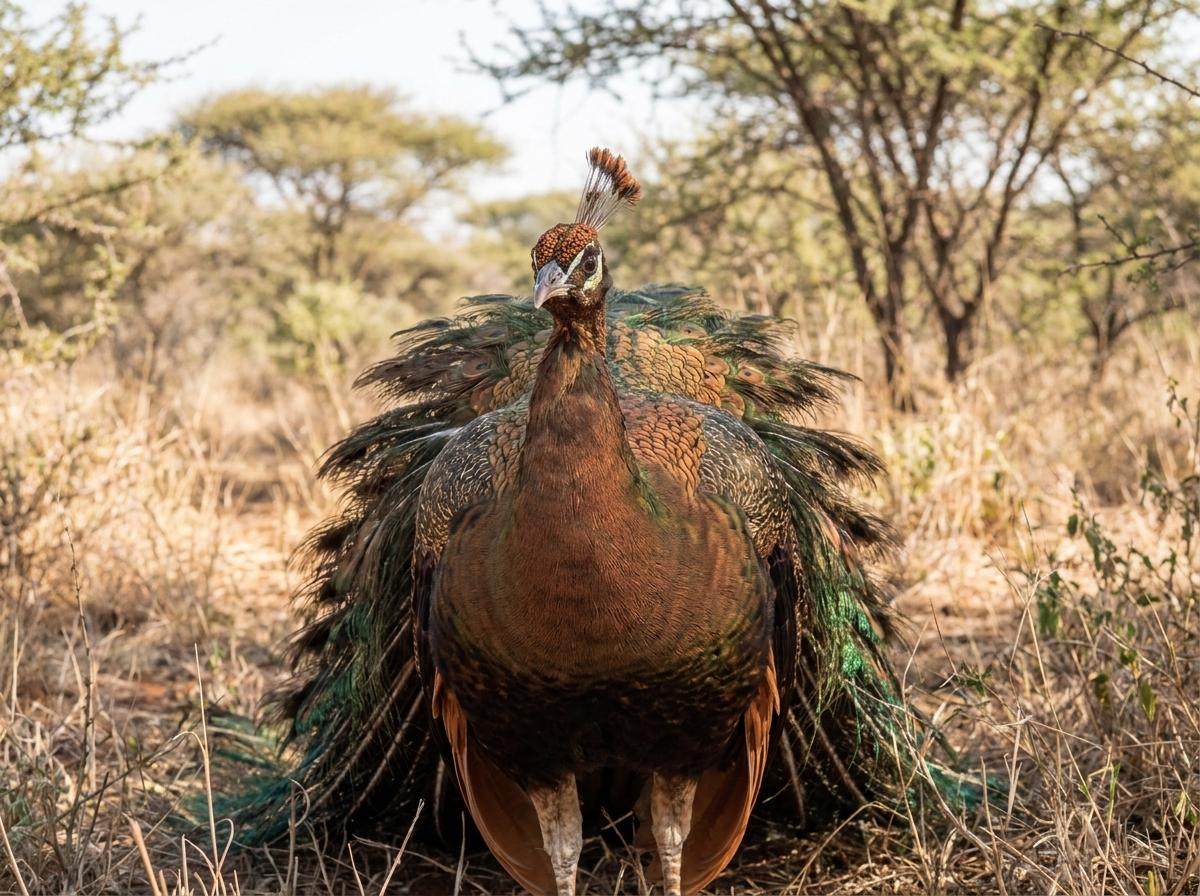
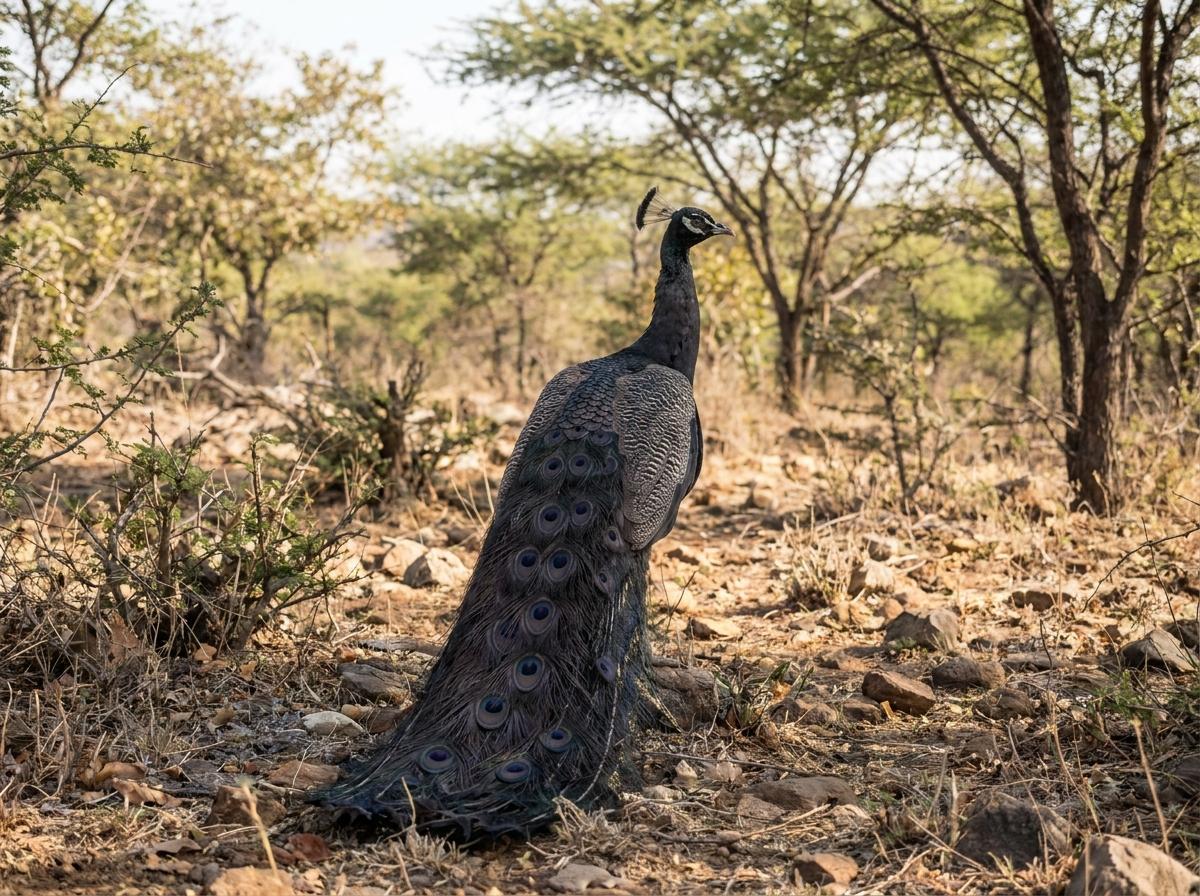
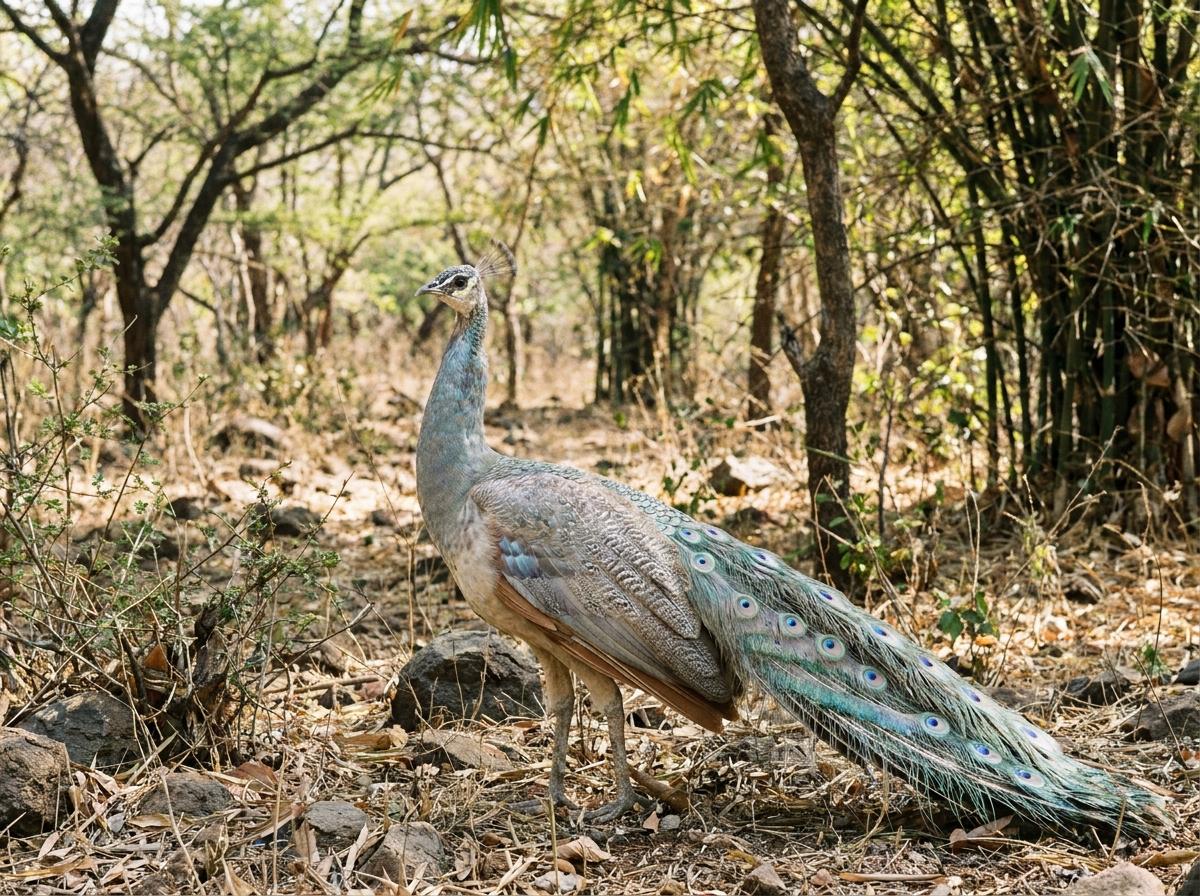
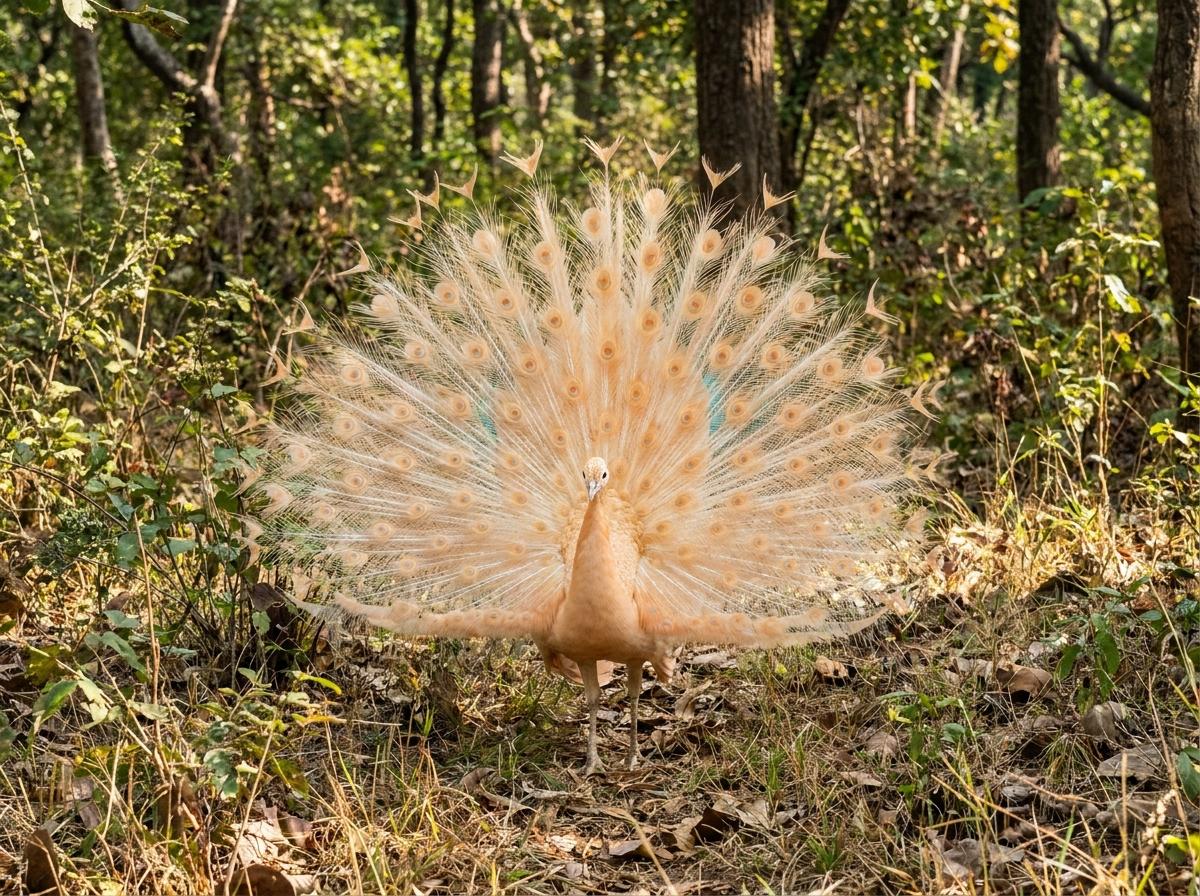
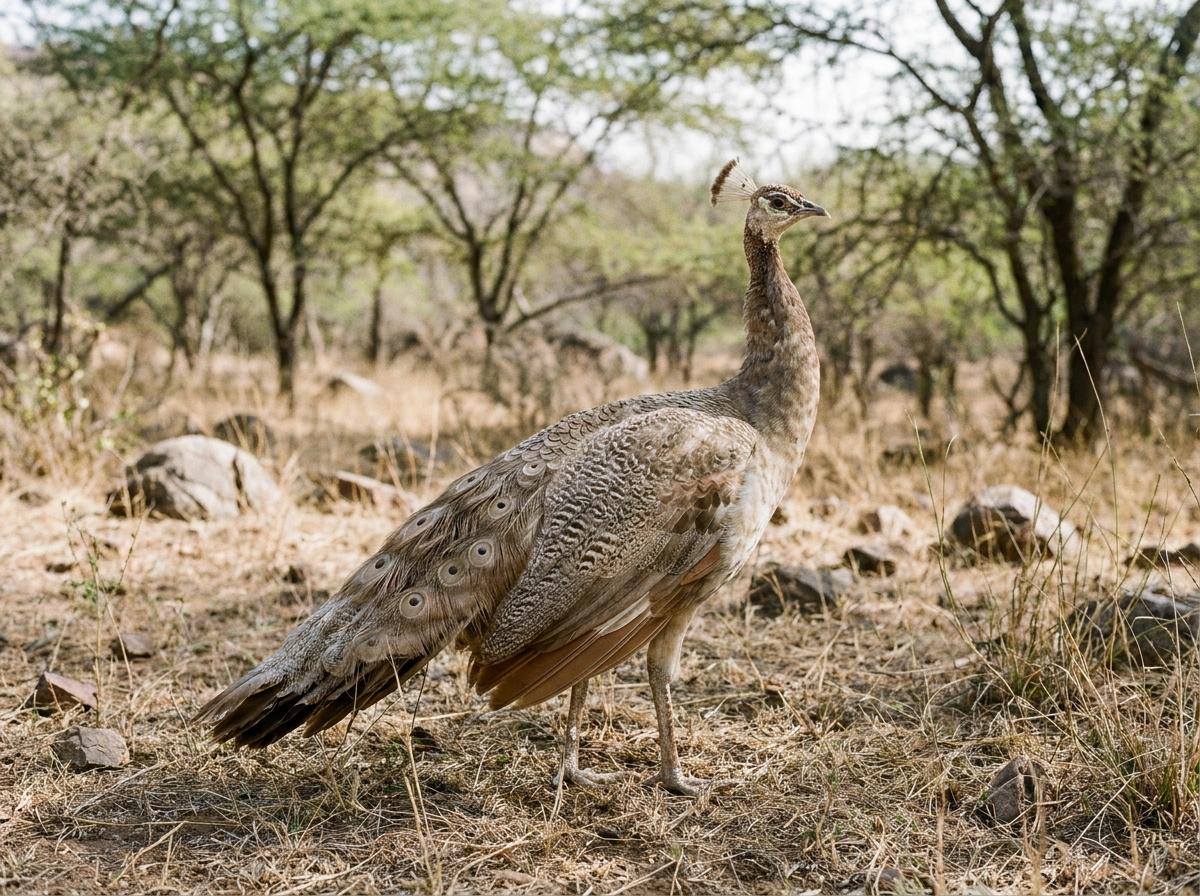
The cameo peafowl is not a separate species. It is a color mutation of the Indian peafowl (Pavo cristatus), the same bird as the familiar blue peacock, with one change: the wild iridescent blue and green is replaced by warm brown and tan. A cameo peacock (the male) still grows the long train and fans it in display, but in cocoa and coffee-cream tones rather than metallic blue, and the eyespots on the train show in brown and cream instead of blue and copper. A cameo peahen is a soft, pale brown. Everything else about the bird, its size, its loud calls, its space needs, and the way the male takes years to grow a full train, is the same as any Indian peafowl. Below you will find what the cameo mutation actually is, how it is inherited, how it looks, how it combines with other mutations to make named varieties, and what it takes to keep peafowl well.

Browse listings, public profiles, breeders, or add your animal.
What is a cameo peafowl?
A cameo peafowl is an Indian peafowl that carries the cameo color mutation. Genetically it is the same species Carl Linnaeus described in 1758, Pavo cristatus, with a single change to how its feathers take on color. In the wild-type bird, structural color and pigment combine to produce the famous iridescent blue neck and the bronze-green train. In a cameo bird that iridescence is gone and the plumage reads as warm brown, tan, and cream.
It helps to be precise about the word “peafowl.” Peafowl is the name for the species and includes both sexes. A peacock is a male, a peahen is a female, and the young are peachicks. So “cameo peacock” strictly means a male cameo bird, while “cameo peafowl” covers both. You will see the terms used loosely online, but on a records or breeding page the distinction matters.
Cameo is one of a set of color mutations that peafowl keepers have isolated in captivity and that the United Peafowl Association (UPA), the hobby’s recognized registry in the United States, tracks and defines. Because these are captive-bred color variants of one species, a cameo bird crosses freely with a blue Indian peafowl. The offspring simply inherit color genes according to the rules below. If you are comparing peafowl types more broadly, the Creatures Indian peafowl species page is the place to see the wild-type bird and its other mutations side by side.
Origin and history
The cameo mutation is the oldest recognized color mutation in peafowl. It was isolated in 1967 in Maine from India Blue stock. The first brown bird to hatch was initially called a “silver dun” before the name was standardized to cameo. From that founding line, breeders selected and multiplied the color, and it spread through the peafowl-keeping community in North America and later abroad.
Cameo sits alongside a handful of other early color mutations that the United Peafowl Association came to recognize. It is worth understanding that the peafowl “breed” world is really a mutation-and-pattern world: rather than distinct breeds in the way dog or cattle breeders use the term, peafowl keepers work with a base species and a growing catalog of color mutations (like cameo) and pattern mutations (like black-shoulder, pied, and white-eye) that stack together into named varieties. The UPA maintains that catalog of approved varieties.
Because cameo is genuinely a color of the Indian peafowl and not a separate animal, any accurate history of the “cameo peacock” is really the history of the Indian peafowl plus this one mid-century mutation event. Keep that framing in mind when you read breeder listings that present cameo as though it were its own breed.
How the cameo color is inherited
This is the part that trips up new keepers, so it is worth getting right.
Cameo is a sex-linked recessive trait. In birds, the sex chromosomes work the opposite way to mammals: males carry two Z chromosomes (ZZ) and females carry one Z and one W (ZW). The cameo gene sits on the Z chromosome. That has two practical consequences that show up again and again in real flocks.
First, a male needs two copies of the cameo gene to actually look cameo, because he has two Z chromosomes. A male with only one copy looks like a normal blue bird but is a “split” carrier, meaning he carries cameo hidden and can pass it on. A female, with only one Z, needs just that single copy to show the color. She cannot be a hidden “split” for a sex-linked color the way a male can.
Second, this asymmetry is why there tend to be more cameo hens than cameo cocks in the hobby. A single cameo-carrying Z is enough to produce a visible cameo hen, while a visible cameo cock requires the gene from both parents lining up. Breeders planning cameo matings track which birds are visibly cameo and which cocks are split, because the sex-linked pattern makes the outcome of a pairing predictable once you know the parents.
If you keep or breed cameo peafowl, this is exactly the kind of thing worth writing down. Recording each bird’s visible color, its known splits, and the results of each pairing turns guesswork into a real breeding record. You can keep that history on a free animal profile and log matings and hatches as records, which we cover in the hub at the end.
What a cameo peafowl looks like
The cameo mutation removes the iridescence and shifts the whole bird into browns. The structure of the bird, crest, train, eyespots, and body shape, is unchanged from any Indian peafowl. Only the color is different.
- The cameo peacock (male). The body is a warm brown that ranges toward a pale “coffee-with-milk” cream, with a distinctly darker chocolate-brown neck and head. The long train carries the same eyespot (ocellus) pattern as a blue peacock, but rendered in brown, tan, and cream rather than the wild bird’s blue nucleus and copper rim. There is no iridescent blue anywhere on the bird. Cameo males also change tone with the season: new feathers grown in after the annual molt come in darker brown, then lighten with sun exposure over the following months.
- The cameo peahen (female). She is a soft, pale sandy brown overall, with a darker rusty-brown wash on the neck and head, and no train. She is noticeably lighter than the male across the body.
- The crest. Both sexes keep the fan-shaped head crest of the Indian peafowl, in brown rather than the wild-type blue-and-green.

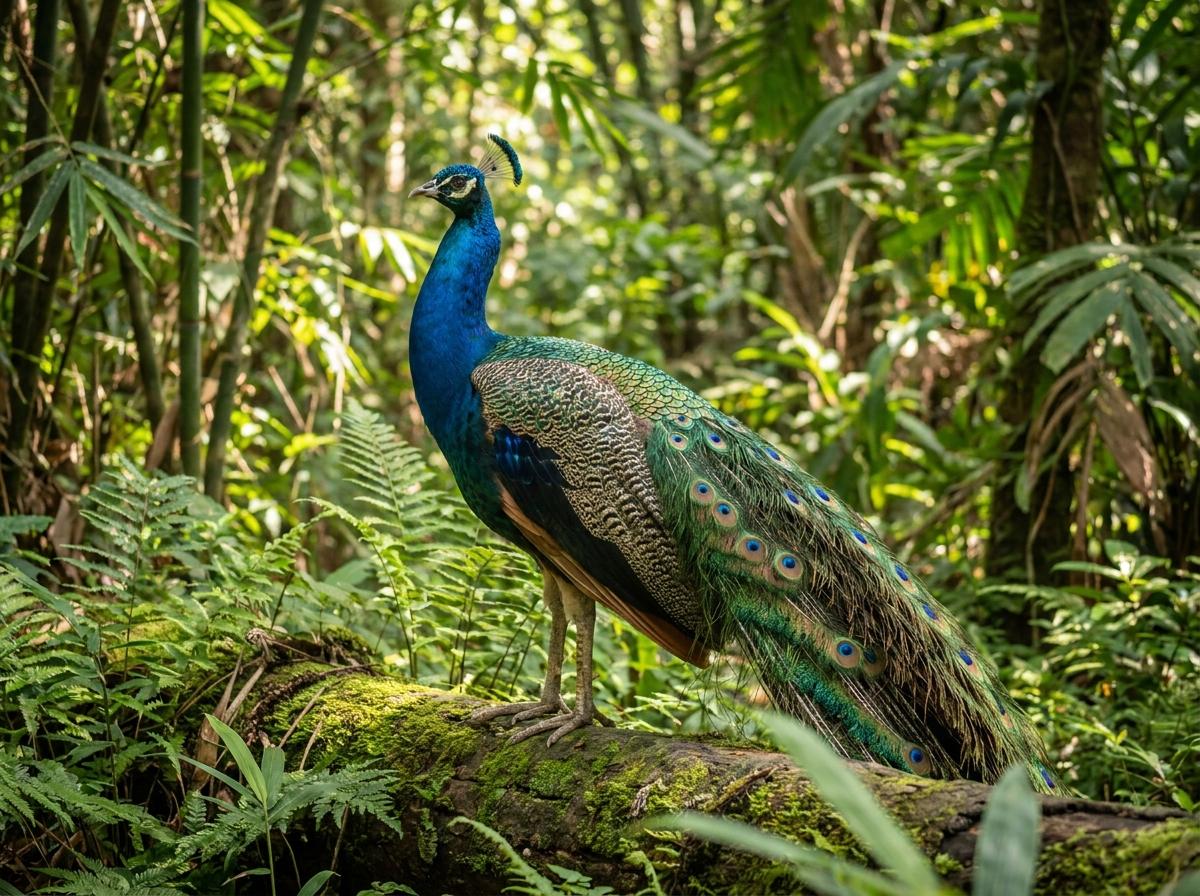
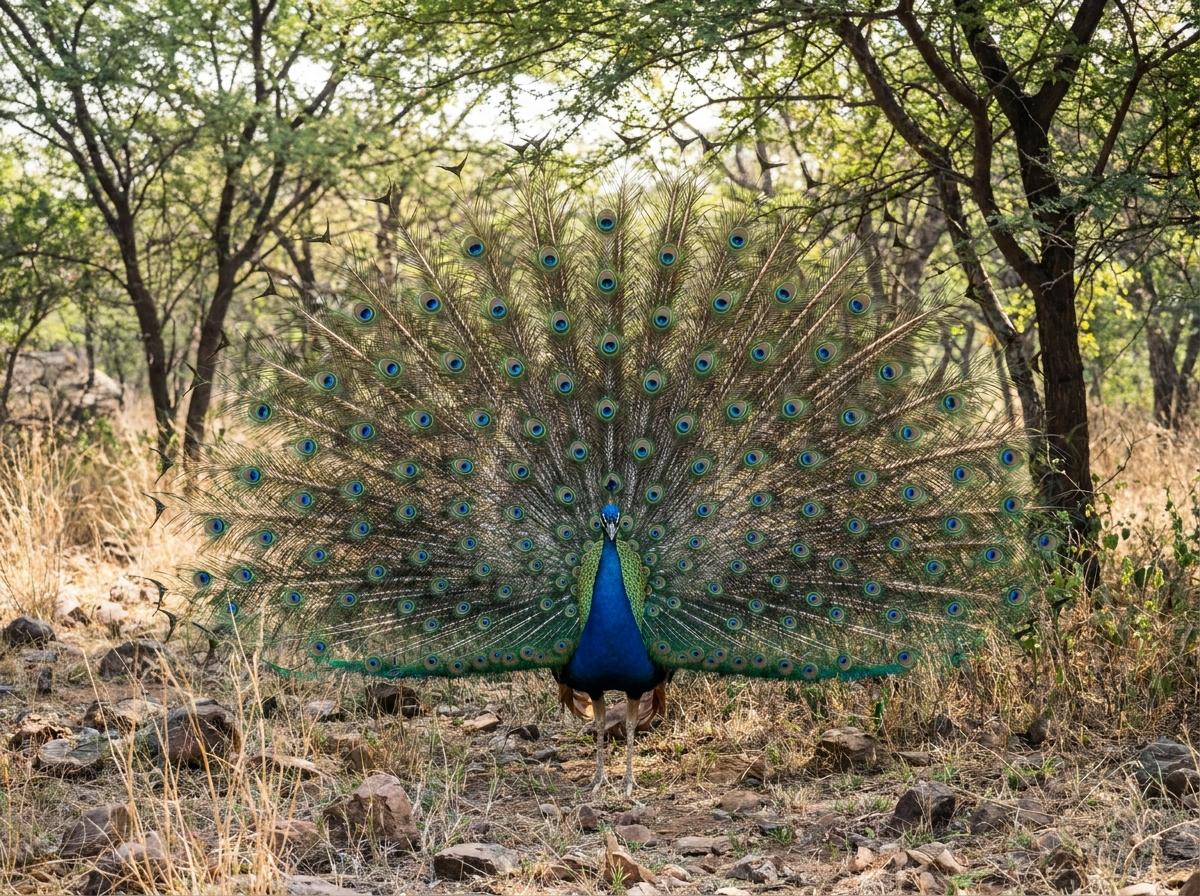
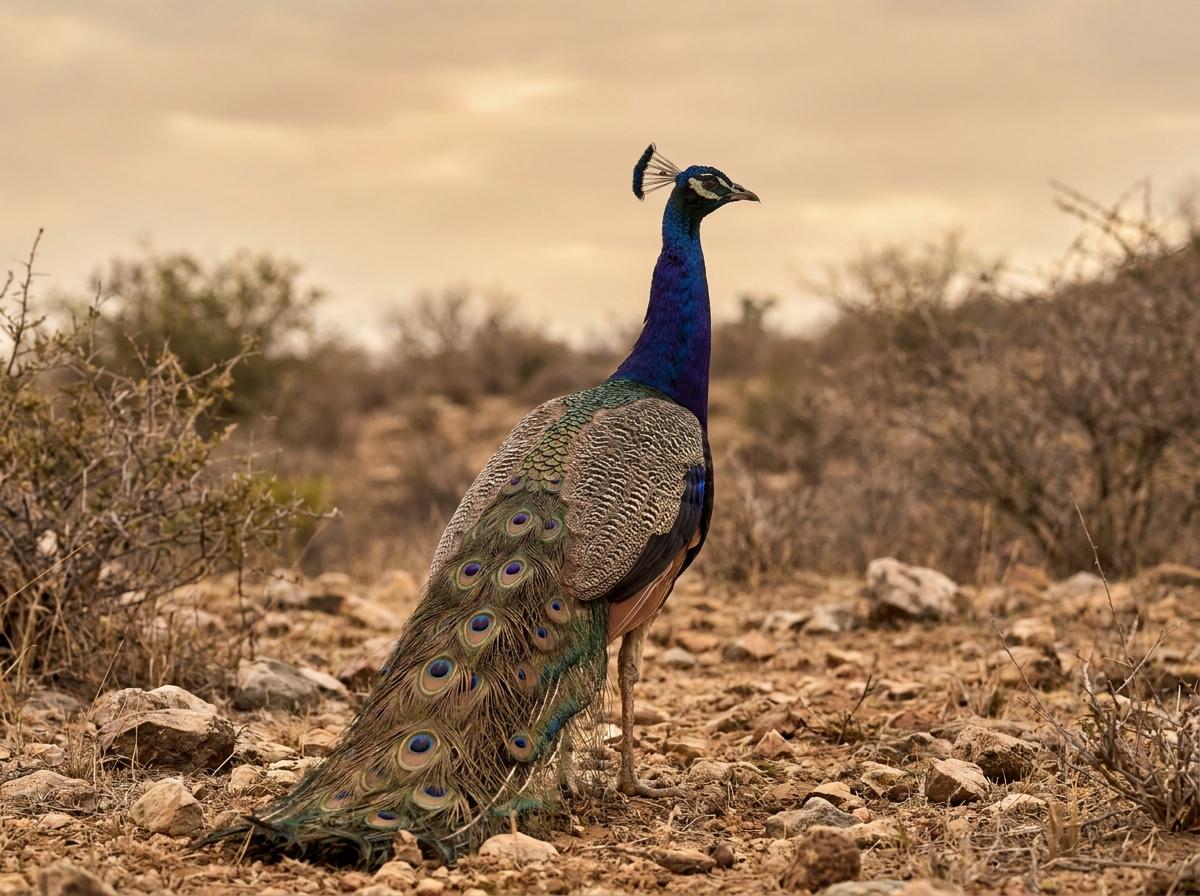
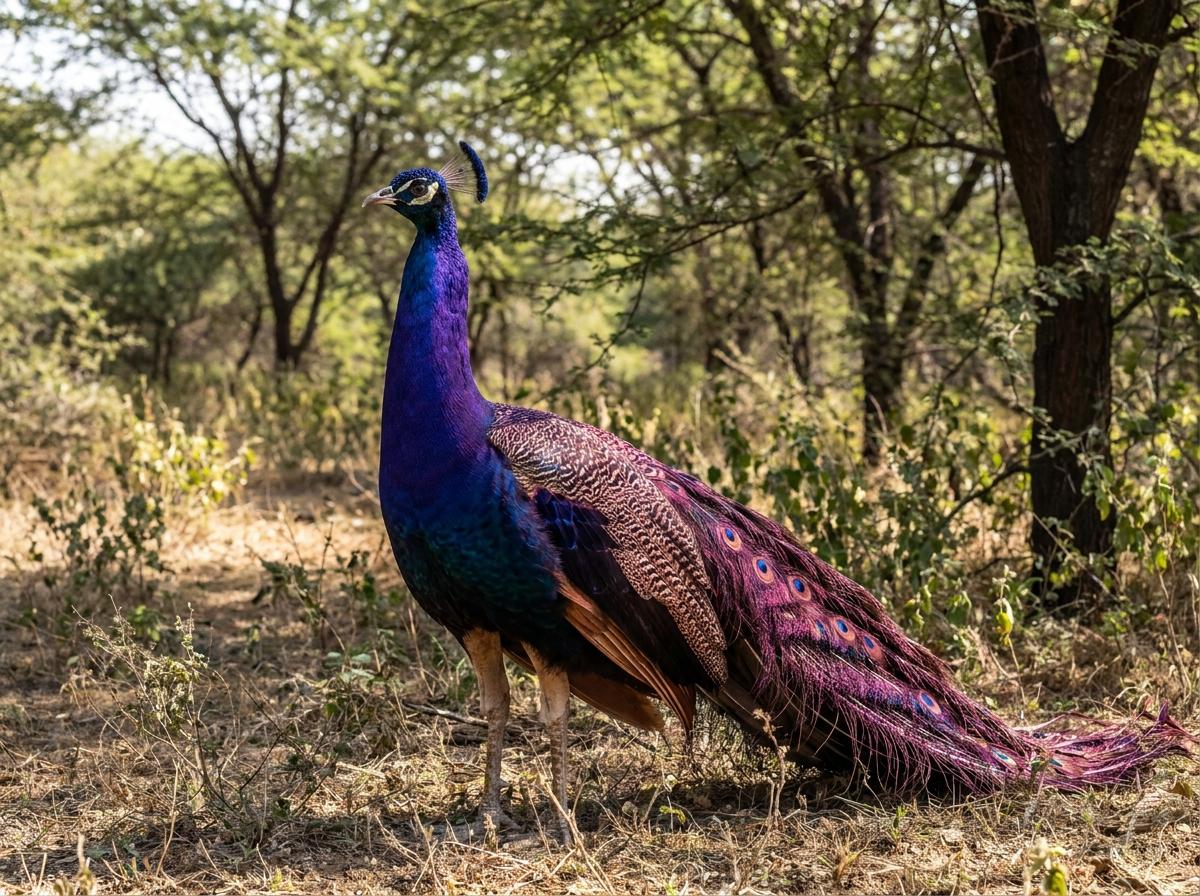
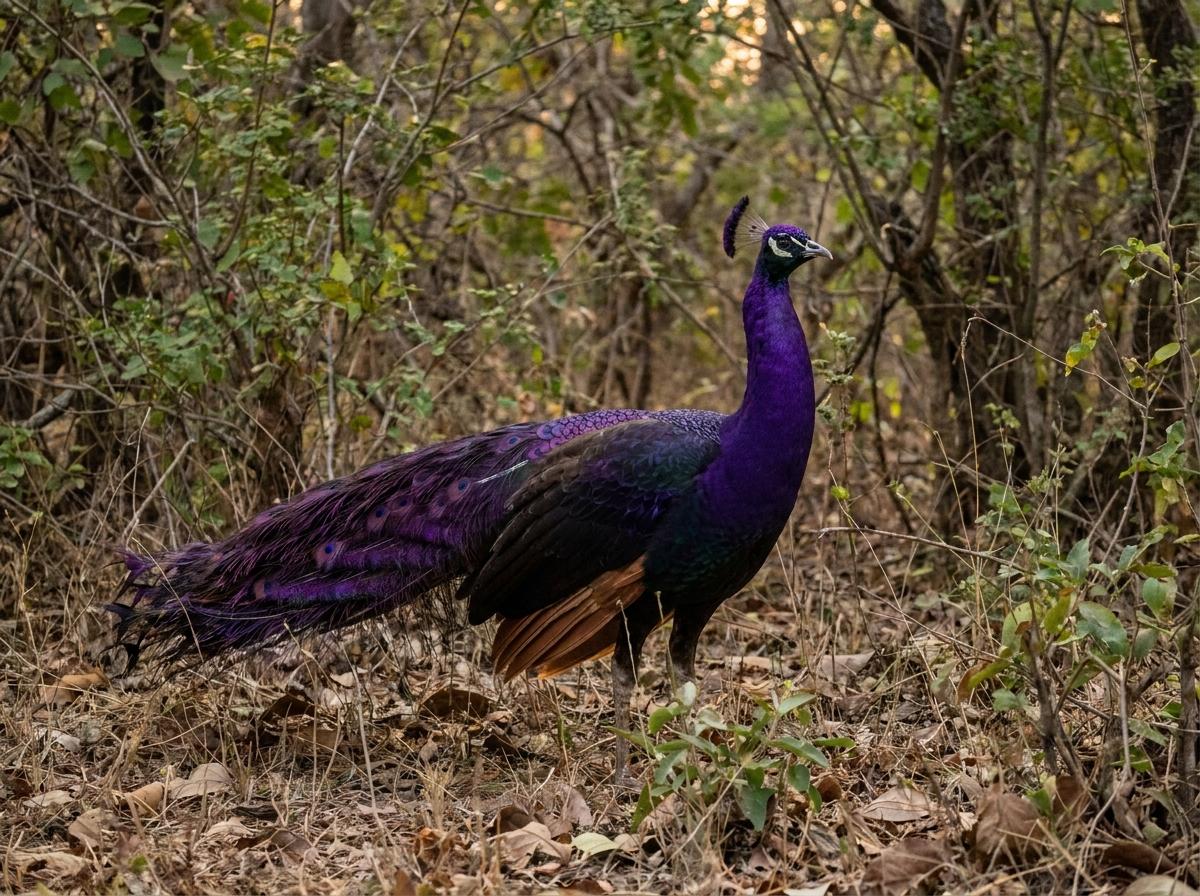
For reference, the wild-type Indian peacock this mutation derives from has a metallic blue crown and neck, a bronze-green train, and eyespots built from a purplish-black heart-shaped center ringed by blue and an outer copper rim. Line the two up and the cameo bird is the same silhouette in an entirely different palette.
Cameo combined with pattern mutations
Because cameo is a color and the pattern mutations are separate genes, cameo stacks with them to make a whole family of named varieties. This is where the catalog of United Peafowl Association varieties gets long. Common combinations you will encounter include:
- Cameo Black-Shoulder, where the black-shoulder wing-and-back pattern is expressed in cameo brown rather than blue. Some keepers also call the cameo black-shoulder an “Oaten” bird.
- Cameo Pied, which adds the pied white patterning to the cameo color.
- Cameo White-Eye, where the eyespots on the train carry the white-eye pattern (white in place of the dark center) on a cameo base.
- Further stacks such as Cameo Pied White-Eye and Cameo Silver Pied, plus Spalding versions (which introduce green peafowl genetics), extend the list further.
The takeaway for a buyer is simple. A listing that says “Cameo Black-Shoulder Pied White-Eye” is describing one Indian peafowl carrying the cameo color plus three pattern mutations, not some exotic separate breed. If you are matching a listing to what you actually want, it helps to know that the first word (cameo) is the color and the rest are patterns layered on top.
Peafowl husbandry and care
Keeping a cameo peafowl is keeping an Indian peafowl. The color mutation does not change the bird’s needs. Peafowl are large, long-lived, loud, and strong fliers, and they need real space and secure housing. Defer any medical decisions to an avian or poultry veterinarian who can see the bird.
Space and housing
Peafowl need room. A common guideline from peafowl keepers is a minimum on the order of 80 square feet of pen per bird, in an enclosure at least 6 to 7 feet tall, and taller is better because peacocks fly well despite the train. Breeding pens are often larger still. If you plan to let birds free-range, keepers generally suggest several acres and note that on smaller properties full enclosure is the safer choice, both to keep the birds home and to protect them from predators. A fully covered aviary or pen is the standard recommendation because peafowl roost high and will fly out of an open-topped run.
Roosting
Peafowl roost off the ground and want sturdy, elevated perches. A flat perch (a common suggestion is a 2 by 4 board mounted with the wide face up) placed several feet up gives a big-bodied bird a stable place to sit through the night. Provide perches in both the sheltered and open parts of the enclosure.
Climate and shelter
Despite their tropical origin, Indian peafowl tolerate cold surprisingly well and are kept successfully in cold-winter climates with only basic shelter. A dry, draft-protected shelter, often described as a three-sided structure open on the warmer, southerly side, is usually enough. The priorities are staying dry and out of wind rather than supplemental heat for otherwise healthy adult birds.
Noise
This is the single most important thing to understand before you buy. Peacocks are loud, especially in the breeding season, when males call repeatedly with a far-carrying wail. On a rural property this is part of the charm. Close to neighbors it is a genuine problem, and keepers widely advise against peafowl where noise sensitivity or close neighbors are a factor. There is no quiet color mutation. A cameo peacock is exactly as loud as a blue one.
Feeding and general care
Indian peafowl are omnivores that forage for grasses, seeds, buds, fruits, insects, and small prey, and in captivity are typically fed a game-bird or poultry ration appropriate to their life stage, with grit, clean water, and space to forage. Routine care follows good poultry practice: clean housing, a parasite plan suited to your climate, predator-proofing, and the veterinary guidance your area calls for. Keeping clear records of each bird’s hatch date, molts, breeding, and any health events makes management far easier over a bird that may live 15 to 20 years.

The train, molt, and maturity
One of the most common questions about any peacock, cameo included, is when the male grows his full train and what happens to it each year.
Male Indian peafowl do not hatch with a train. The long train coverts and the leg spur begin developing in the second year, the bird reaches sexual maturity and a substantial display by around the third year, and the train is generally considered fully developed at about age four. In other words, a young cameo cock will not look like the display photos for a few seasons, and a “no train yet” juvenile is completely normal.
The train is not permanent. Males molt and drop the long train feathers every year, typically in late summer after the breeding season (in the birds’ native range this tracks the end of the monsoon, around August or September), and regrow the full train over the following months so it is complete again by late winter or early spring. For a cameo bird, remember that the freshly regrown feathers come in darker brown and then lighten with sun over the season. So a cameo peacock’s exact shade shifts through the year, which is normal, not a health problem.
Cost and availability
Cameo peafowl are bred by hobbyists and breeders worldwide, so they are obtainable, but the sex-linked genetics shape the market. Because a single cameo Z chromosome produces a visible hen while a visible cameo cock needs the gene from both sides, cameo hens are generally more numerous than cameo cocks. Prices vary widely by age, sex, exact variety (a plain cameo versus a multi-pattern cameo such as cameo silver pied), and the seller, so there is no single reliable public price to quote and we will not invent one. In general terms, expect a mutation-color bird to cost more than a standard India Blue, and rarer stacked varieties to cost more again.
When you shop, buy on evidence rather than on the color alone. Ask the seller to be specific about each bird’s variety and, for breeding purposes, its known splits. Confirm the bird’s age (which tells you whether a young cock should be expected to have a train yet), and see the animal or clear photos in person. Because “cameo” is thrown around loosely, make sure the listing’s naming matches what you actually want, especially when patterns are stacked on top of the color.
You can browse current Indian peafowl listings on the Creatures marketplace and look for breeders in the Creatures directory. If a bird is not listed right now, a saved listing alert (in the hub below) is the practical way to be told when one is posted. If you are researching other ornamental and heritage birds, the English Carrier pigeon guide is a useful companion read on a very different but equally selectively bred fancy bird.
Frequently asked questions
Is a cameo peacock a separate breed or species?
No. It is a color mutation of the Indian peafowl, Pavo cristatus, the same species as the ordinary blue peacock. Cameo changes only the color, replacing the iridescent blue and green with warm brown and tan.
Why is a cameo peacock brown instead of blue?
The cameo mutation removes the iridescence and pigment pattern that make a wild-type Indian peacock blue and green, so the bird reads as brown, tan, and cream instead. It is one specific, recognized peafowl color mutation, the oldest one, isolated in Maine in 1967.
Are there more cameo peahens than cameo peacocks?
Yes, and it is down to genetics. Cameo is sex-linked recessive, so a hen shows the color with a single copy of the gene, while a cock must inherit it from both parents to look cameo. That asymmetry means visible cameo hens are more common than visible cameo cocks.
When does a cameo peacock grow his full train?
The same timeline as any Indian peafowl. The train starts developing in the second year, the bird matures around the third year, and the train is generally full by about age four. It is then molted and regrown every year.
Are cameo peafowl loud?
Yes. A cameo peacock is exactly as loud as a blue one, especially in breeding season. The color mutation has no effect on the call. Peafowl are not a good choice close to neighbors.
Do cameo peafowl need special care compared to blue peafowl?
No. Care is identical to any Indian peafowl: a large covered pen or aviary, high roosts, a dry draft-free shelter, a good game-bird or poultry ration, predator protection, and veterinary guidance. Only the color differs.
Do this next on Creatures
Whether you are researching the cameo mutation, hunting for a specific variety, or already keeping peafowl, Creatures is the records, marketplace, and directory layer to do it in one place.
Compare the mutations. Start on the Indian peafowl species page to see the wild-type bird and its color mutations together, or read a companion fancy-bird guide, the English Carrier pigeon.
Find a bird. Browse Indian peafowl on the marketplace and search trusted breeders in the Creatures directory. New to searching? See saving searches and using your watchlist.
Get alerted. Cameo cocks in particular can be hard to catch, so set a free cameo peafowl listing alert and we will tell you when one is posted. No account needed to start.
Add your bird. Already keeping cameo peafowl? Create a free animal profile in a few minutes, no account needed to start. The walkthrough is in adding an animal to Creatures.
Track molts, matings, and health. Log records on Creatures, from annual train molts to pairings, splits, and hatch dates. The record sheet opens for any visitor to look around, and a free account saves what you enter. See adding a record.
List your flock. Breed or sell peafowl? Create a breeder or organization profile, no account needed to start, and read getting listed in the breeder directory so buyers searching for a specific variety can reach you.
Sell with confidence. Planning to sell birds? Learn how seller payout works before you list.