




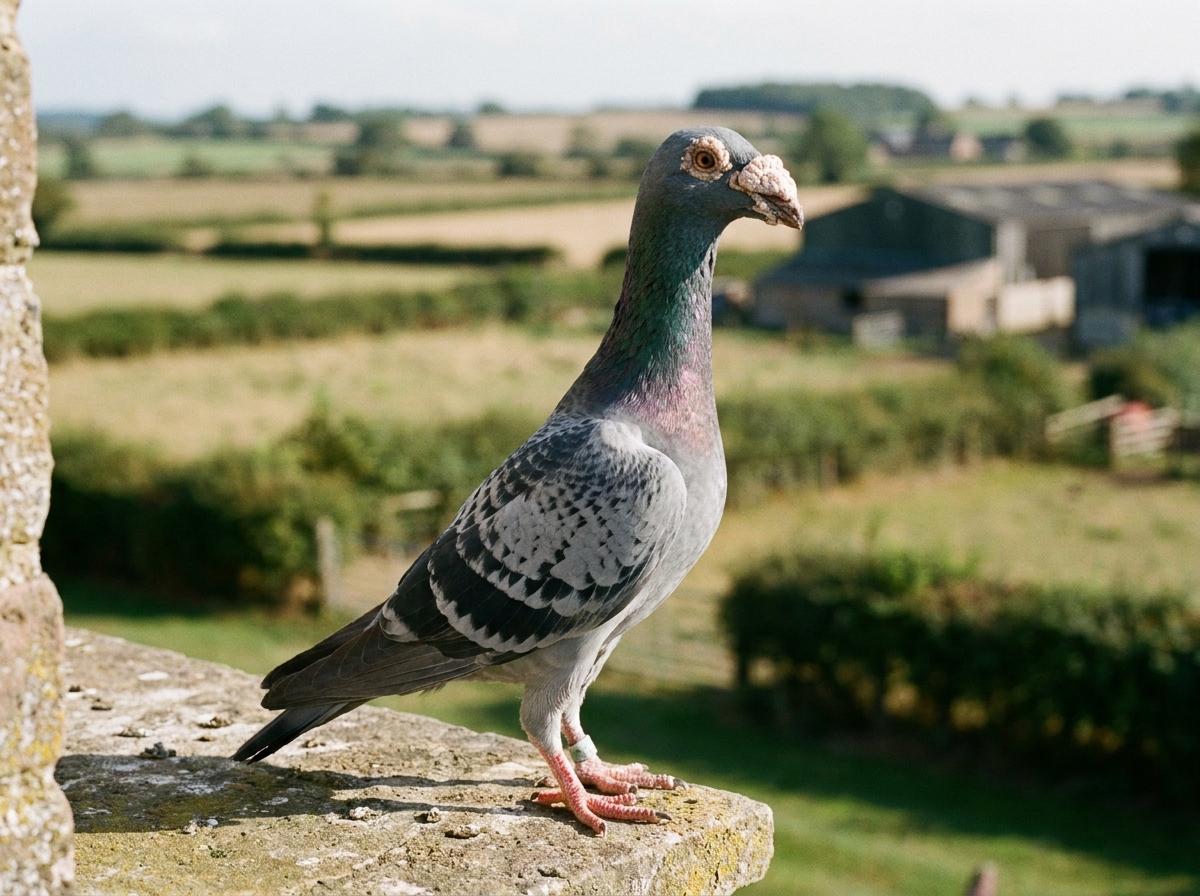
English Carrier
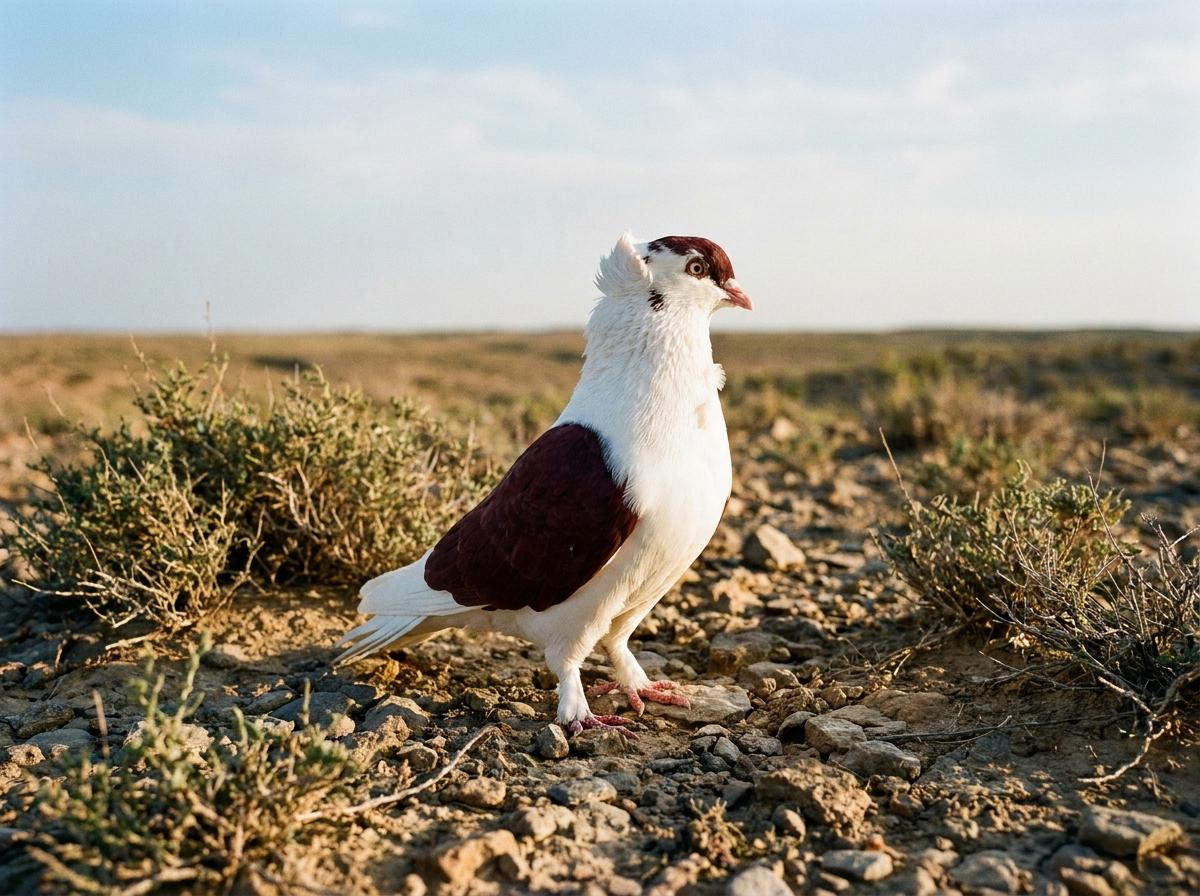
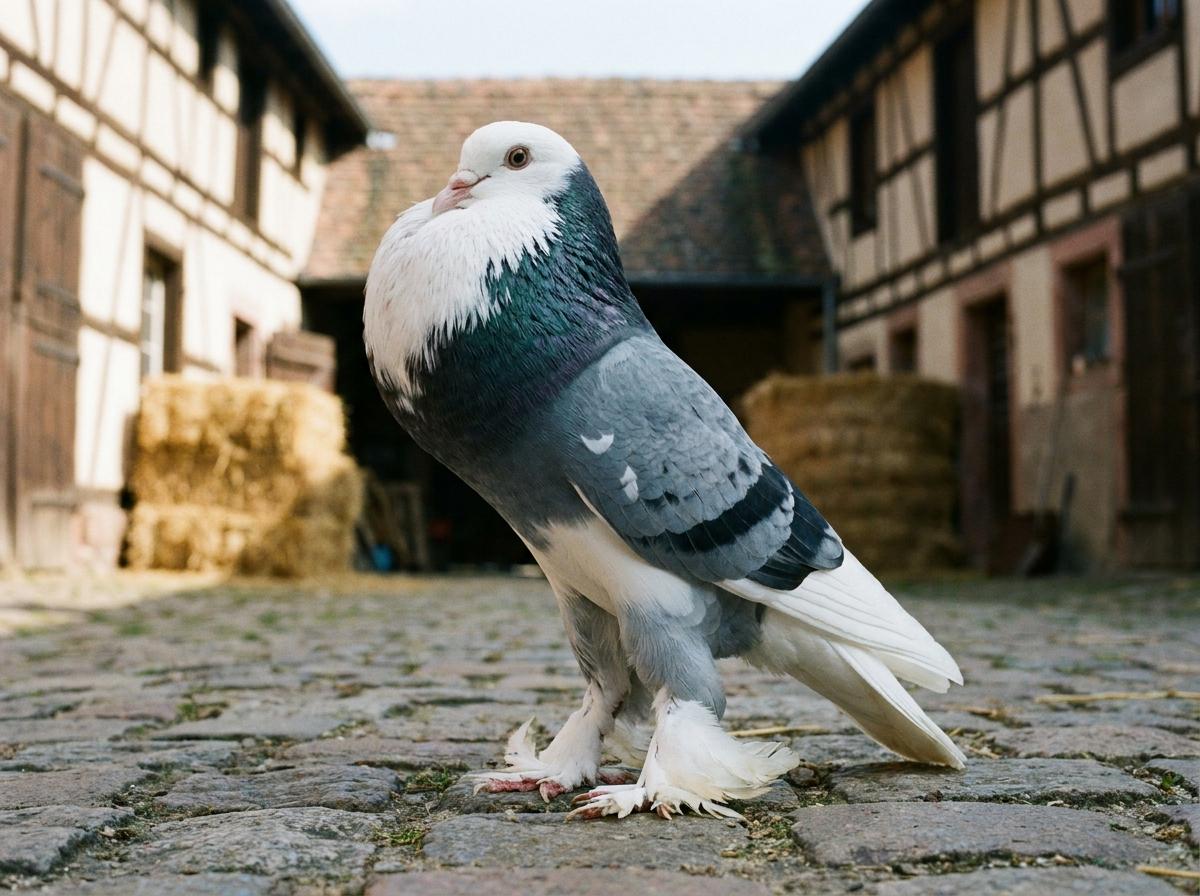
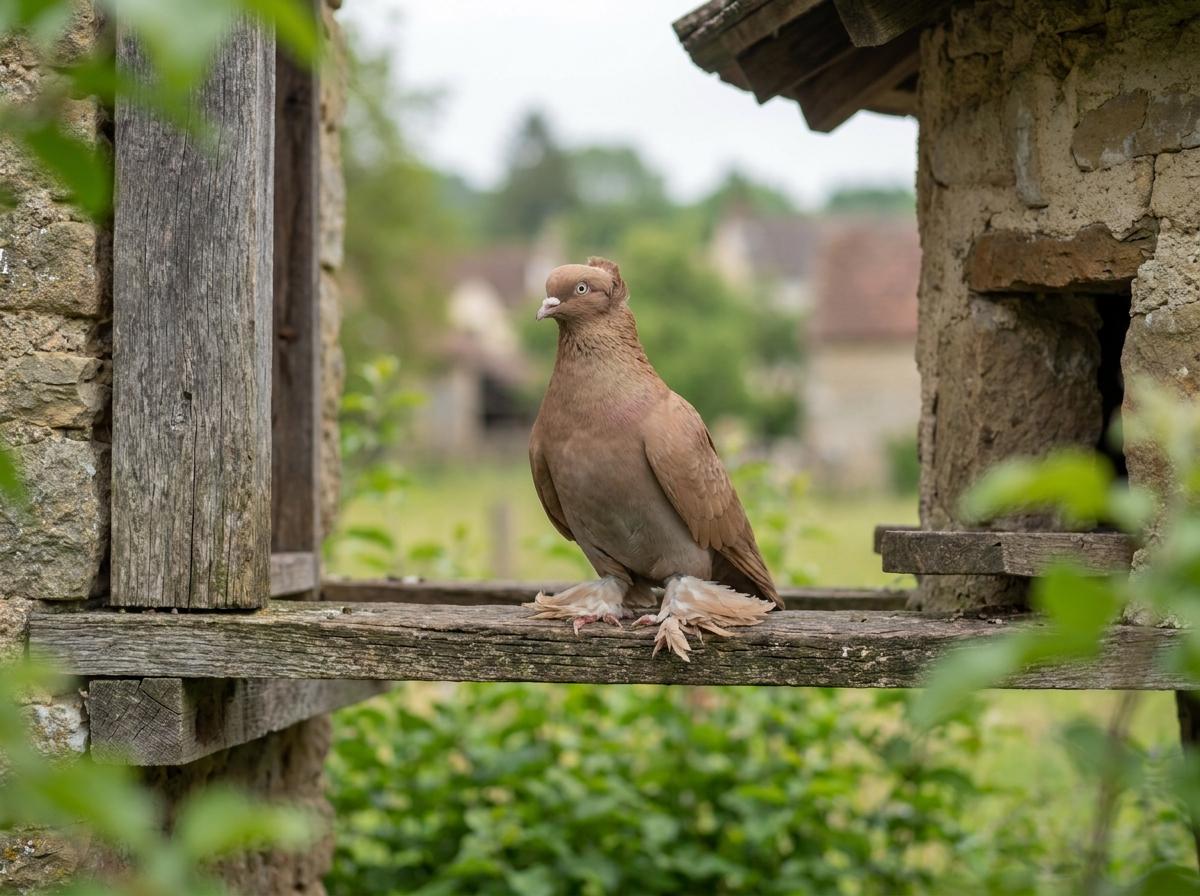
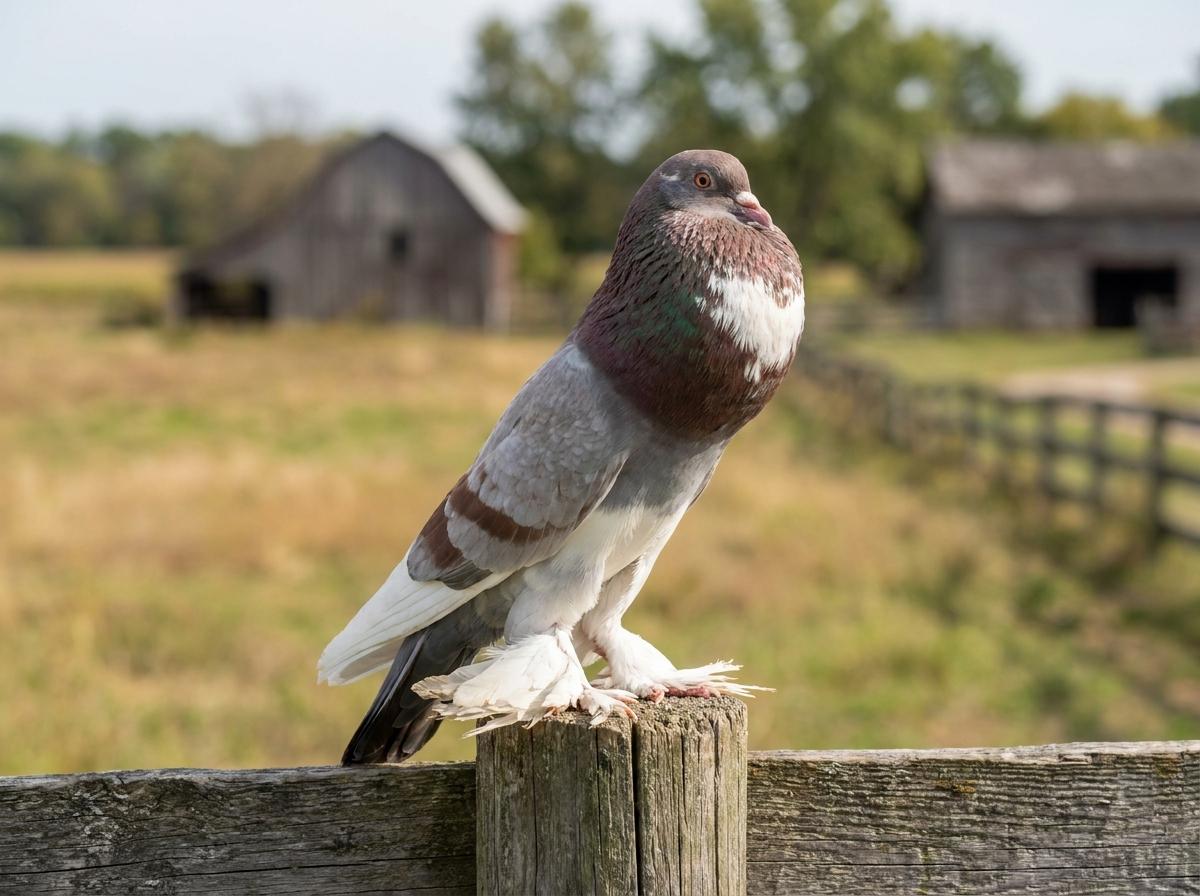
The English Carrier is a tall, upright, long-bodied show pigeon best known for the dramatic fleshy ornaments on its face: a large, rounded, powdery-white wattle mounded over the beak and prominent circular wattle rings, called ceres, that ring the eyes like goggles. Despite the name, the modern English Carrier is not a message-carrying or racing bird. It is strictly an exhibition breed, one of the oldest and most influential in the fancy, and the “carrier” in its name is a historical inheritance from the messenger pigeons it descends from, not a description of what it does today. If you found this page after seeing a startling, wattle-faced pigeon and wondered whether it was some kind of homing bird, this is the place to clear that up. Below you will find what the breed is, where it came from, how to tell it apart from the racing homer it is so often confused with, what it looks like, how the wattle develops, and what to check before you buy one.

Browse listings, public profiles, breeders, or add your animal.
What is an English Carrier pigeon?
The English Carrier is a breed of domestic pigeon (descended, like all domestic pigeons, from the wild rock pigeon, Columba livia) developed in England and prized as an exhibition bird. It is one of the classic old English fancy breeds, and for much of the nineteenth century it was so admired for its size and stately bearing that fanciers called it the “King of Pigeons.” What defines it visually is the exaggerated, ornamental flesh on the face: a big, rounded, cauliflower-textured wattle sitting over the top of a long straight beak, and thick, circular rings of fleshy tissue (the ceres) around the eyes. Add a long neck carried erect, a long back, and an alert, near-vertical stance, and the result is a bird that looks quite unlike an ordinary pigeon.
The single most important thing to understand about this breed is right there in its confusing name. The English Carrier is not, today, a carrier of anything. It does not carry messages, and it is not the bird that races home over long distances. It is a show pigeon, judged in the exhibition hall against a written standard for the shape and quality of its wattle, ceres, beak, neck, and carriage. The “carrier” label is a leftover from the breed’s distant ancestry in genuine messenger pigeons, a point we untangle in the history and in the racing-homer comparison below.
If you are weighing the English Carrier against other breeds, the broader Creatures pigeon species page is a good place to compare it with the rest of the family.
Origin and history: why it is called a “Carrier”
The story behind the name is the key to the whole breed. Long before the modern racing pigeon existed, various parts of the world used pigeons to send messages, and some of the birds bred for that work in the Near East and Asia carried heavy wattles on the face. Breed histories trace the English Carrier back to these imported Asiatic messenger pigeons, including birds described as Persian and Baghdad carriers, brought into Europe and England in earlier centuries. English fanciers took that non-European stock and, rather than selecting purely for flying and homing ability, bred it toward size, length, elegant carriage, and above all toward the dramatic facial wattle and eye ceres.
By the 1700s the breed had been ranked among the most popular pigeons in England, and over time it surrendered whatever reputation it once had as a flyer to become a purely ornamental exhibition bird. By the middle of the nineteenth century the modern show type was largely fixed. In other words, the “carrier” name records what the breed’s ancestors did, not what the breed itself now does. The English Carrier you see at a show has been bred for looks, not for message-carrying, for many generations.
This breed also sits close to the center of pigeon history in another way. Charles Darwin studied domestic pigeons closely while developing his ideas on variation under domestication, and he singled the Carrier out, describing it as “a fine bird, of large size, close feathered, generally dark-coloured, with an elongated neck,” and noting that its body was nearly double the length of the wild rock pigeon and that it could open its beak far wider. The Carrier was, for Darwin, a vivid example of how far selective breeding could push a single species away from its wild starting point.

English Carrier vs racing or homing pigeon: clearing up the confusion
This is the confusion the breed’s name creates, and it is worth settling plainly, because “carrier pigeon” is often used loosely in everyday speech to mean any message-carrying or homing bird.
The bird that actually flies home over long distances today is the Racing Homer (also called the racing pigeon or homing pigeon). It was developed in England and Belgium roughly two centuries ago and, according to breed histories, was bred from several older breeds. The English Carrier is commonly listed among the breeds that contributed to the modern racing homer, which is exactly why the names sound related. So the relationship is real, but it runs the other way from what people assume: the English Carrier is an ancestor and relative of the racing homer, not a modern racing bird itself.
Put simply:
- The English Carrier is a show breed. It is bred for the size and form of its wattle, ceres, neck, and stance, and it is judged in the exhibition hall. It is not selected for flying or homing performance and is not used to race or send messages.
- The Racing Homer is the modern athletic homing pigeon. It is a plain, streamlined bird bred for speed, endurance, and the ability to navigate home. It carries no ornamental facial wattle and looks nothing like a Carrier in the ring.
If someone tells you an English Carrier will fly home from a distance like a racing pigeon, treat that as a misunderstanding of the name. The breed lost that role generations ago. For a working homing or racing bird you want a Racing Homer, which is a different breed with a different purpose. You can compare the wider pigeon family, including flying and utility breeds, on the Creatures pigeon species page, and this exact naming confusion also surrounds the American Show Racer, a show breed derived from racing homers whose name likewise points to an ancestry rather than a current job.

What an English Carrier pigeon looks like
The English Carrier is built for height, length, and facial ornament. The overall impression is of a tall, slim, statuesque bird that stands almost bolt upright and reaches upward with a long neck, so that even at rest it looks alert and “game.”
- The wattle. The signature feature is a large, rounded wattle sitting over the top of the beak. In a good bird it is well shaped, hard and closely folded rather than loose, and finished with a powdery white bloom on the surface. Breed judges prize correct shape and quality over raw size alone.
- The eye ceres (wattle rings). Around each eye is a broad, circular ring of fine fleshy tissue. In a mature bird these ceres form an even, roughly circular ring, often likened in the standard to about the size of a coin, framing a typically deep red eye. Together the beak wattle and the eye ceres give the breed its unmistakable “goggled” face.
- Long beak. The beak is long and stout, a “box” beak in which the two halves meet cleanly along their length. In this breed the length of the beak, measured from the eye, is part of the standard.
- Long neck and upright carriage. The neck is long and slender with noticeable “reach,” and the bird carries its head high in an erect, near-vertical station. This bold upright stance is one of the breed’s defining characteristics.
- Long body and legs. The body is long, the back long and straight, and the legs long and heavy-boned, carrying the bird tall. The legs are clean, meaning smooth and unfeathered.
- Colors. The Carrier comes in a range of recognized colors including black, dun (a brownish grey), white, blue bar, silver bar, red, and yellow, among others. Black and dun are among the classic and historically dominant colors.
In size, the breed is large. It runs on the order of 17.5 to 18.5 inches from beak to tail, close to twice the length of an ordinary rock pigeon, and is commonly cited at roughly 20 to 23 ounces in weight. This is a substantial, long-framed pigeon, not a small or dainty one.
How the wattle develops with age
One of the most important things for a would-be buyer to understand is that the English Carrier’s famous face is not there at hatching, and it is not fully formed in a young bird. The wattle and eye ceres build gradually as the pigeon matures. A youngster has only modest wattling, and the large, well-formed, powdery wattle that defines a top show bird develops and improves over a period of years. Practitioner accounts commonly describe the wattle taking on the order of three to four years to reach its best.
This matters in two practical ways. First, you cannot fully judge a young bird’s eventual wattle from its appearance as a squab or yearling, so buying is partly a bet on breeding and on the parents. Second, an impressive wattle is a sign of a mature, older bird, which is worth remembering when you are told a young bird will “grow into” a spectacular face. It may, but that outcome is a function of genetics and time, not a guarantee.
Temperament and keeping
English Carriers are generally described by keepers as calm and manageable birds that tolerate handling well, which suits a breed that spends its life being shown and posed rather than flown hard. As with any pigeon, individual temperament varies with how much the birds are handled and how they are housed, and a bird that is worked with gently from a young age is easier to show.
Because it is an exhibition breed rather than a flying breed, the English Carrier is kept in a loft and aviary setup rather than expected to range freely and return. The husbandry itself is standard pigeon keeping. Pigeons are housed in a dry, draft-free loft with nest boxes for breeding pairs and enough room to perch and move without crowding. They are fed a varied diet of grains, and because they swallow seeds whole they also need grit to grind their food and a calcium source such as oyster shell or crushed eggshell, which matters especially for laying hens and growing young. Clean water at all times is essential. Pigeons are generally monogamous, pair for life, and share incubation and the feeding of their young, both parents producing a protein-rich “crop milk” for the first days after hatching.
One breed-specific point is worth flagging honestly. Because the beak is long and the wattle sits over it, some keepers report that heavily wattled Carriers can occasionally need a little help at feeding, watering, or breeding time, and pairs are sometimes managed accordingly. Treat this as practical loft experience rather than a formal veterinary rule, and if you keep the breed, work with an avian or poultry veterinarian for anything beyond routine care. Defer medical decisions to a veterinarian who can examine the birds, and keep clear records of pairings, hatch dates, and any treatments so you can make breeding decisions on evidence rather than memory.
Lifespan
There is no special breed-specific lifespan figure for the English Carrier, so the sensible expectation is the general one for well-kept domestic pigeons, commonly around 10 to 15 years, with some individuals living longer under excellent care. Because the breed’s show quality depends on a wattle that takes years to mature, good Carriers are often kept and valued well into adulthood rather than being short-lived show birds, but treat the 10-to-15-year range as a general guide rather than a guarantee for any one bird.
What the breed is used for
The English Carrier has one honest modern job: exhibition. Fanciers keep and breed it to produce birds with correct wattle and cere shape and quality, correct beak, a long reaching neck, an upright station, good length of body and leg, and clean color, and then show those birds against a written standard. It is one of the foundation ornamental breeds of the fancy, historically influential far out of proportion to its numbers, both as an ancestor of the racing homer and as a parent breed behind other wattled and long-faced show pigeons.
It is not a meat or squab breed in the way the utility pigeons are, and it is not a flying or racing breed. If your goal is squab production you would look at large utility breeds such as the King, and if your goal is a striking loft and show bird with a very different look you might compare it against breeds like the English Trumpeter or the cobby, rounded Modena. The English Carrier’s appeal is specifically the wattle, the reach, and the regal upright type, which is a taste, and a discipline, unto itself.
Cost and availability
The English Carrier is a specialist show breed, so you will generally find it through pigeon clubs, breed exhibitors, and dedicated fanciers rather than in a general pet store. It is an established and historically important breed, but it is not one of the most numerous, and good, correctly wattled birds from serious show lines are a smaller pool than, say, common utility pigeons.
There is no single reliable published price for an English Carrier, and prices vary widely with quality, age, color, and how close a bird is to the show standard, so we will not invent a precise figure. As a general guide, ordinary birds tend to be modest in price, while mature, correctly formed show-standard birds, and rarer colors, command more, precisely because the wattle takes years to prove out and top type is uncommon. The most practical approach is to find active Carrier breeders, ask what their birds are selected for and how their lines mature, and buy stock matched to your goal, whether that is a first pair to learn on or serious show prospects. You can look for current listings on the Creatures marketplace and find breeders and lofts in the Creatures directory.
Buying considerations
Because the English Carrier’s whole value rides on ornamental features that develop slowly, buy with a clear head.
- Know that you are buying a show bird, not a racer. If you want a bird that flies home over distance, this is the wrong breed. Buy a Carrier for the exhibition hall and the loft, not for racing or message-carrying.
- Judge the parents, not just the youngster. Because the wattle and ceres take years to mature, a young bird’s eventual face is largely a bet on its breeding. Look at the sire and dam and at the seller’s older birds to see how the line develops.
- Assess wattle and cere quality, not just size. In a mature bird, look for a well-shaped, hard, cleanly folded wattle with the powdery finish and even, circular eye ceres, rather than merely a large but coarse or loose face.
- Check overall type. Correct English Carrier type is about the whole bird: length and reach of neck, upright station, length of body and leg, and a long stout box beak, not the wattle alone.
- Buy a sound, healthy bird. Look for clean feathering, bright eyes, no respiratory signs, and good weight and condition. For breeding you want a true cock and hen, since pigeons pair for life and raise their young as a team.
- Ask for records. Hatch dates, pairings, and any health treatments tell you more than appearance alone, especially when you are effectively buying into a line’s genetics for future wattle development.
Frequently asked questions
Is the English Carrier a homing or racing pigeon?
No. Despite the name, the modern English Carrier is strictly a show and exhibition breed. It is not used to carry messages and it does not race or fly home over distance. The bird that does that is the Racing Homer, a separate breed.
Then why is it called a “Carrier”?
The name is historical. The breed was developed in England from imported Asiatic messenger pigeons (birds described as Persian and Baghdad carriers) that once carried messages. English fanciers bred that stock toward size and ornamental facial wattle rather than flying ability, so the name records the ancestry, not what the breed does today.
What is the fleshy growth on its beak and around its eyes?
Those are its defining ornaments: a large rounded wattle over the beak and circular wattle rings, called ceres, around the eyes. They are normal, selectively-bred features of this breed, and they build up as the bird matures.
Is the English Carrier related to the racing pigeon?
Yes, but as an ancestor. The modern Racing Homer was bred from several older breeds, and the English Carrier is commonly listed among them. So the racer descends in part from the Carrier, not the other way around.
How big is an English Carrier?
It is a large pigeon, roughly 17.5 to 18.5 inches from beak to tail, close to twice the length of a common rock pigeon, and commonly cited at around 20 to 23 ounces. It stands tall and upright on long legs with a long neck.
Are English Carriers good for beginners?
They are generally calm and handleable, but they are a specialist show breed whose top quality depends on a slowly developing wattle, so a beginner is best served by starting with a mentor or an established breeder, learning the standard, and buying from a line that matures well. As with any pigeon, success comes down to a clean dry loft, a varied grain diet plus grit and calcium, fresh water, and a relationship with an avian veterinarian.
Do this next on Creatures
Whether you are researching the breed, hunting for a good pair, or already keeping English Carriers, Creatures is the records, marketplace, and directory layer to do it in one place.
Find birds. Browse English Carrier pigeons on the marketplace and search trusted breeders and lofts in the Creatures directory.
Get alerted. Correctly wattled show Carriers are a small pool and are not always listed, so set a free English Carrier listing alert and we will tell you when one is posted. No account needed to start, and the walkthrough is in saving searches and using your watchlist.
Add your pigeon. Already keeping English Carriers? Create a free pigeon profile in a few minutes. No account needed to start, and the steps are in adding an animal to Creatures.
Track pairings and wattle development. Keep breeding and health records on Creatures. The record sheet opens for any visitor to look around, and a free account saves what you enter. See adding a record for the full how-to.
List your loft. Breed and show Carriers? Create a free breeder profile so buyers searching for this breed can reach you. No account needed to start, and you can read getting listed in the breeder directory first.
Sell with confidence. Planning to sell birds? Learn how seller payout works before you list.
If you keep or breed English Carriers, you can also list your loft in the Creatures directory so buyers searching for this breed can reach you.