



French Mondain
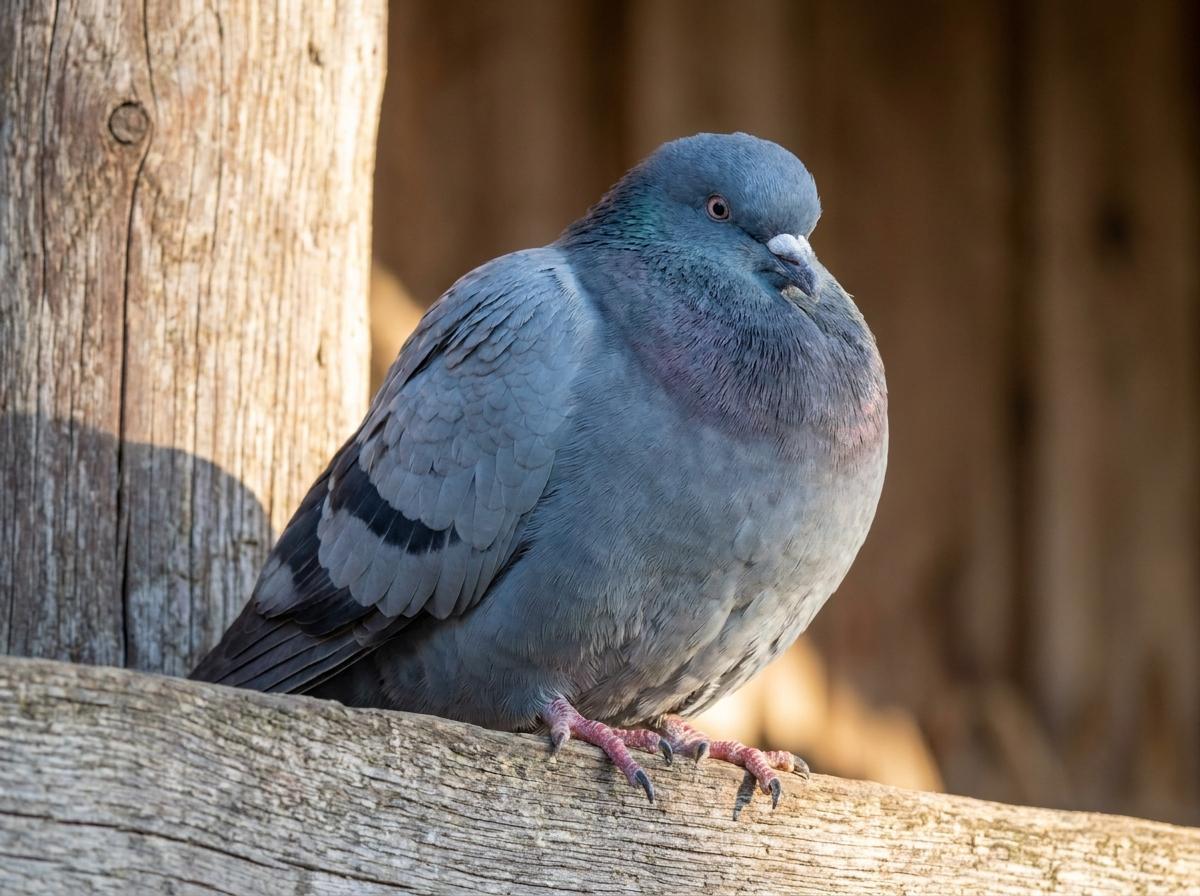
The French Mondain is a large, heavy utility pigeon developed in France and bred first and foremost for the table, meaning meat and squab production, though many fanciers today also keep it as a calm, handsome show bird. It is one of the bigger domestic pigeon breeds: broad and deep through the chest, full and rounded in body, with short, smooth, clean (unfeathered) legs and a small neat head on a short thick neck. It comes in a wide range of colors and patterns. If you have landed here wondering whether the French Mondain is the giant of the pigeon world, the honest answer is that it is large and substantial but not the largest, and below we separate the breed from the heavier Runt it is often confused with, cover its real weight and standards, its history, what it looks like, what it is used for, and what to check before you buy a pair.

Browse listings, public profiles, breeders, or add your animal.
What is a French Mondain pigeon?
The French Mondain is a breed of domestic pigeon (descended, like all domestic pigeons, from the rock pigeon, Columba livia) that was developed in France as a utility bird, which in pigeon keeping means a bird raised for meat. Its young, called squabs, are the product squab keepers are after, and the adults are large enough to raise plump, fast-growing youngsters. Over the twentieth century the breed was also refined into a striking exhibition pigeon, so today you will find French Mondains both in working squab lofts and on the show bench. It is classified among the utility pigeons, alongside breeds like the Carneau, the King, the Strasser, and the American Giant Runt.
The name “Mondain” comes from older French Mondain stock that breeders consolidated into a defined type. You will sometimes see the breed called the Gros Mondain, French for “large Mondain,” which captures the essential point: this is a big, heavy, deep-bodied pigeon, not a slim flying bird. If you are weighing it against other pigeons, the broader Creatures pigeon species page is a good place to compare it with other breeds.
One worthwhile note up front: the American French Mondain and the European French Mondain are often treated as two distinct breeds that share the same name, having diverged in type over decades of separate breeding. So a French Mondain in a United States loft and one on a European show bench may differ noticeably in shape and feather, even though both trace back to the same root.
Origin and history
The Mondain is an old French breed, and the modern French Mondain is the result of breeders bringing several older strains together into one defined type. Pigeon historians describe larger and middle-sized Mondain strains, plus a Berlin Mondain line introduced from Prussia in the early nineteenth century, that were crossed and selected over time. In the early twentieth century, breeders worked to refine the bird into the broad-chested, full-bodied utility pigeon recognized today, and they drew up the first formal breed standard in 1931 once enough fanciers had agreed on the type.
The breed also has an American chapter. The French Mondain was a popular squabbing pigeon in the United States in the early twentieth century, to the point that the American Pigeon Journal devoted a special issue to it in July 1917. That era, before broiler chickens dominated cheap poultry meat, was the heyday of commercial squab raising in North America, and large utility breeds like the Mondain, the Carneau, and the King were the workhorses of that trade.
The Mondain’s influence runs through several other meat breeds. The Carneau, which arose in northern France and southern Belgium in the late nineteenth century, is described as deriving partly from Mondain pigeons crossed with local rock doves. The King breed was built in part from Mondain stock crossed with other breeds. So even where the French Mondain itself is no longer the headline commercial bird, its genetics are woven into the wider family of utility pigeons.
What a French Mondain looks like
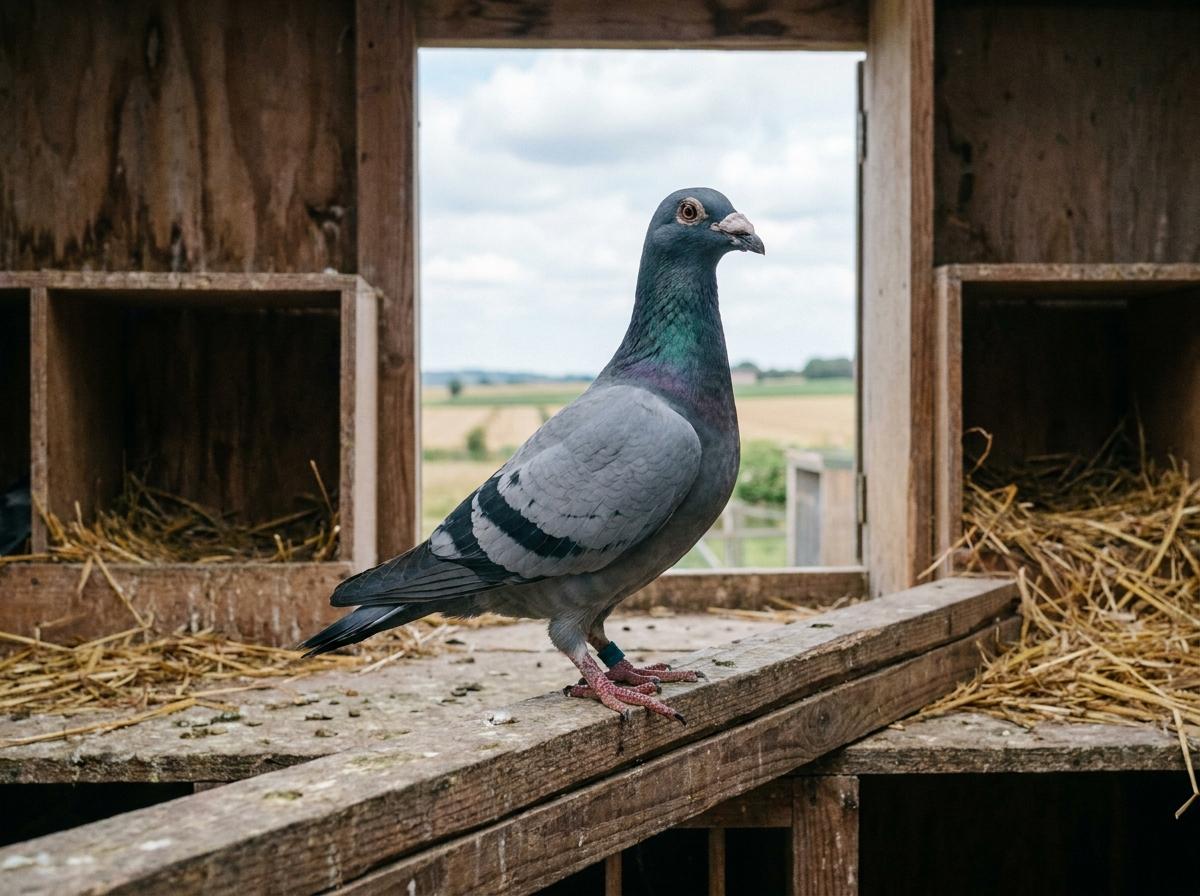
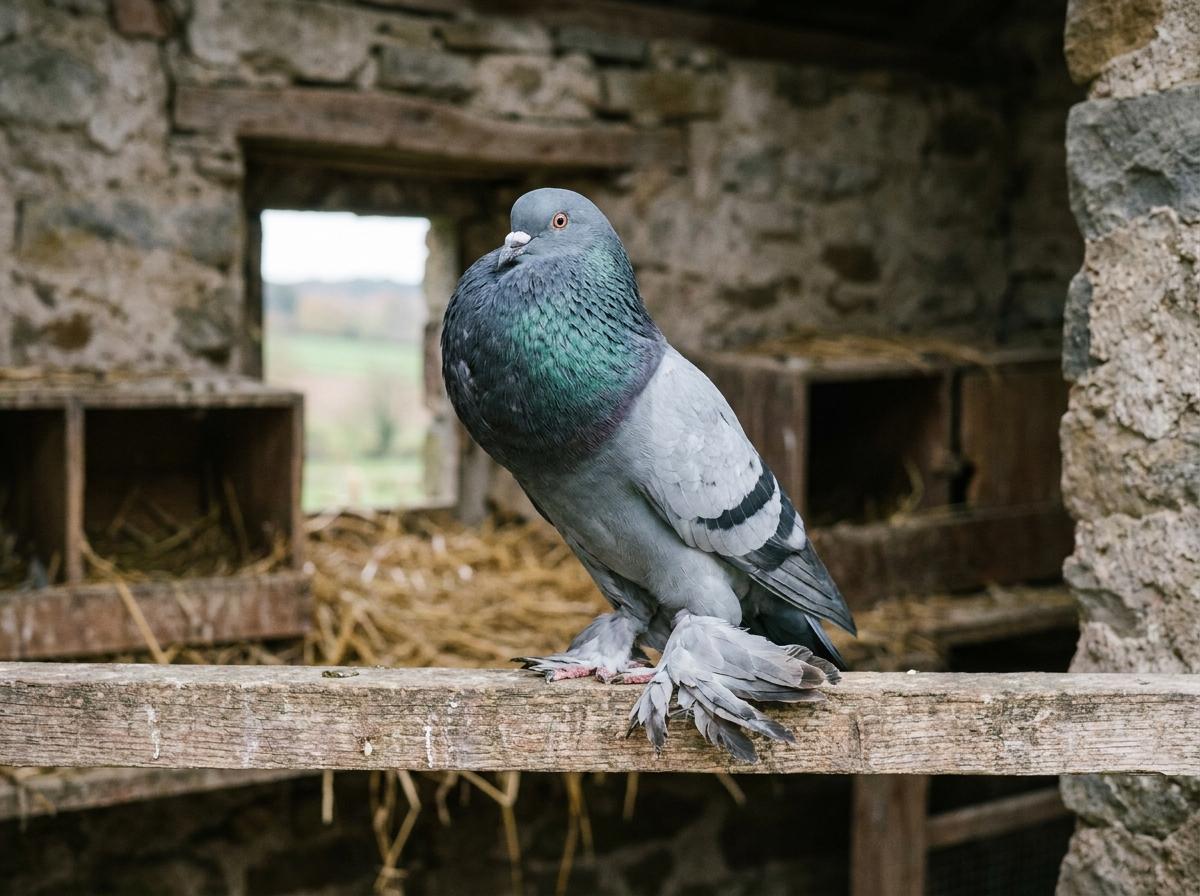
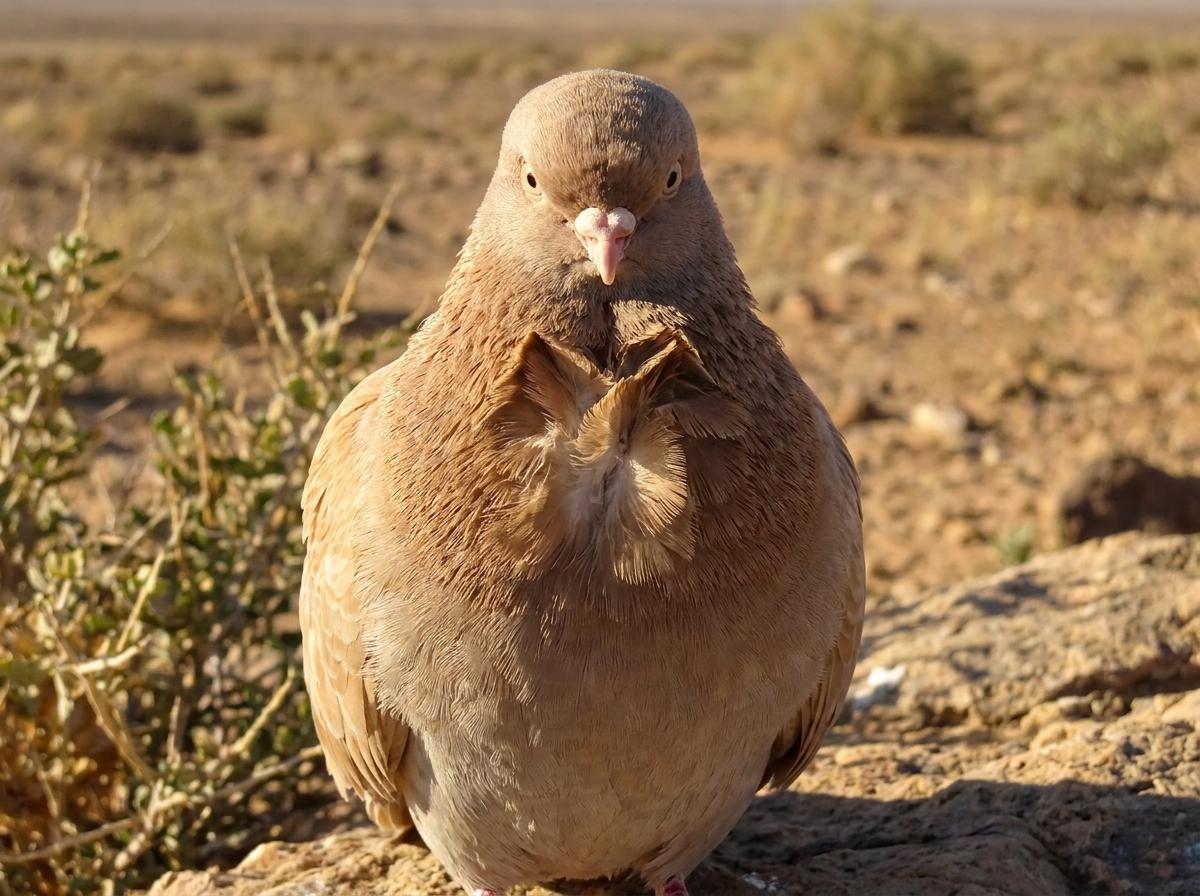
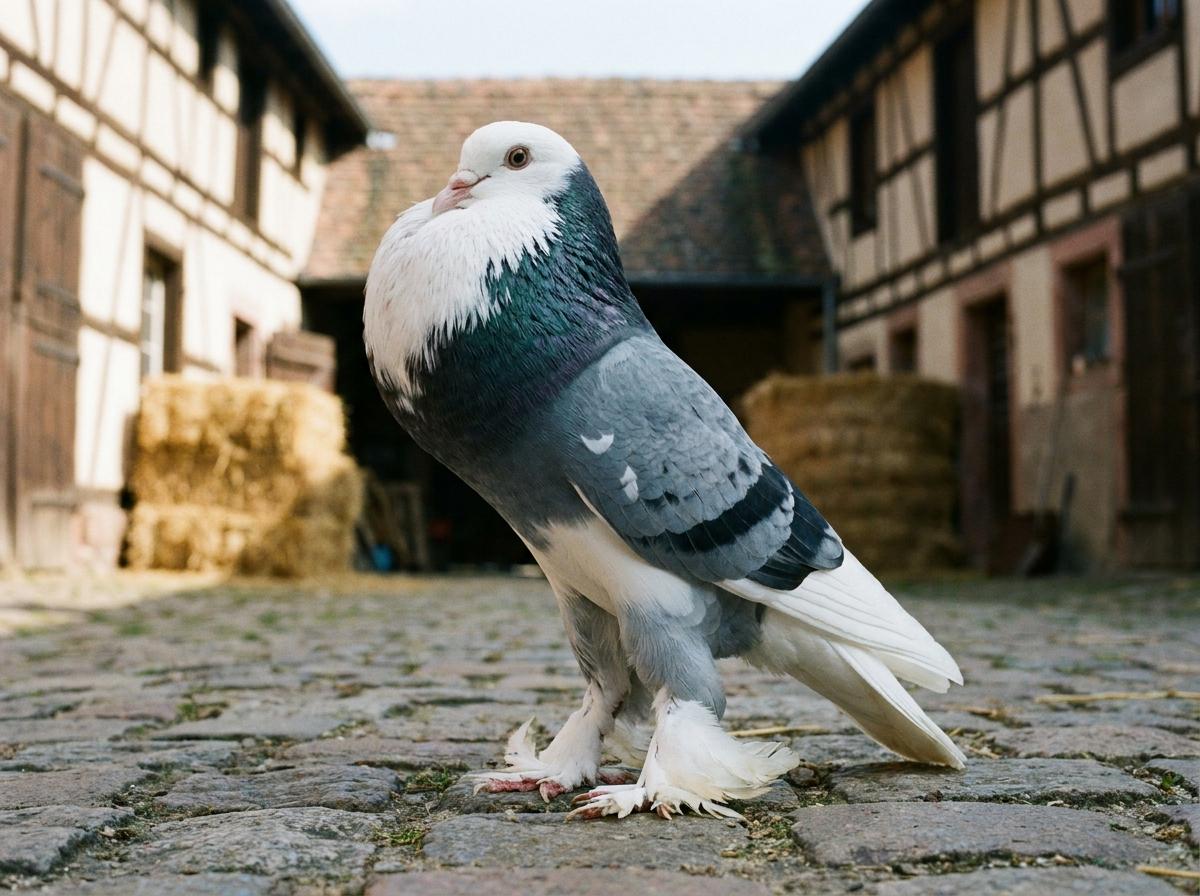
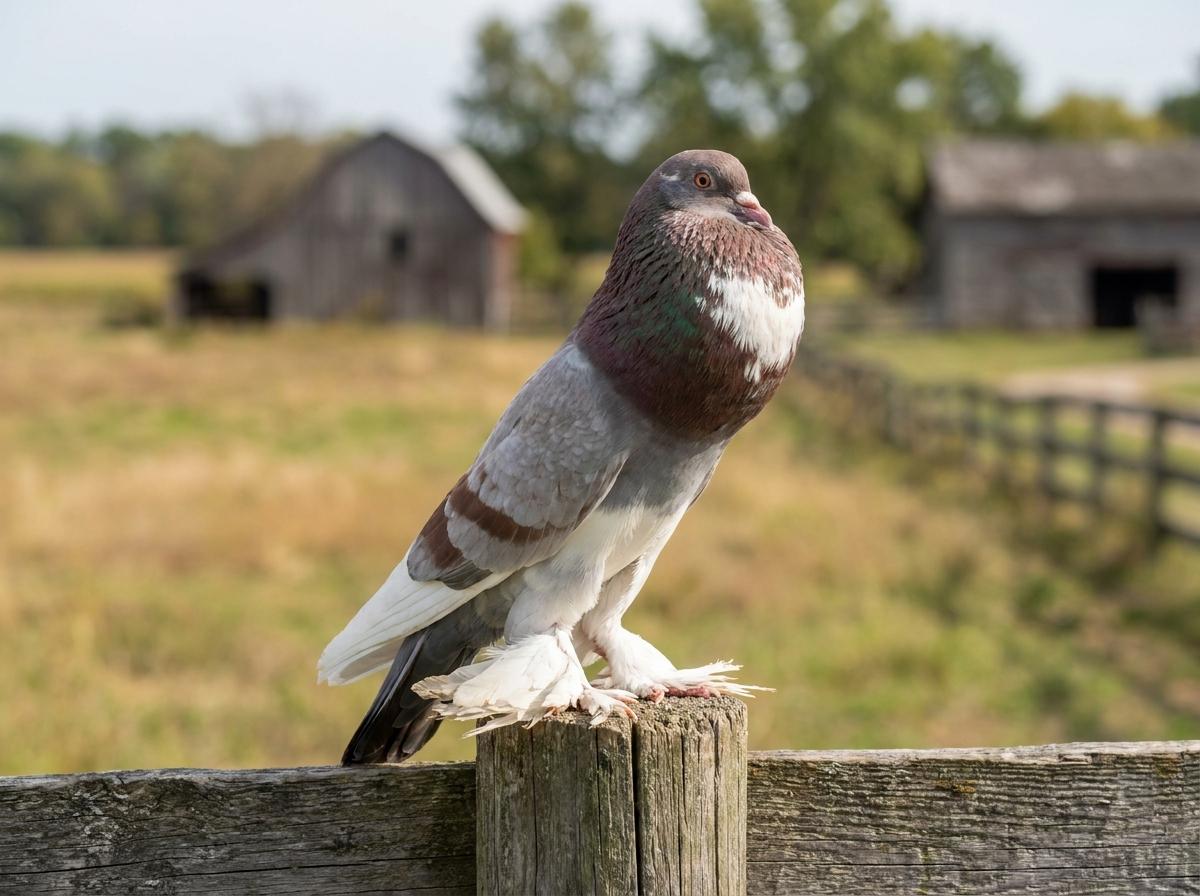
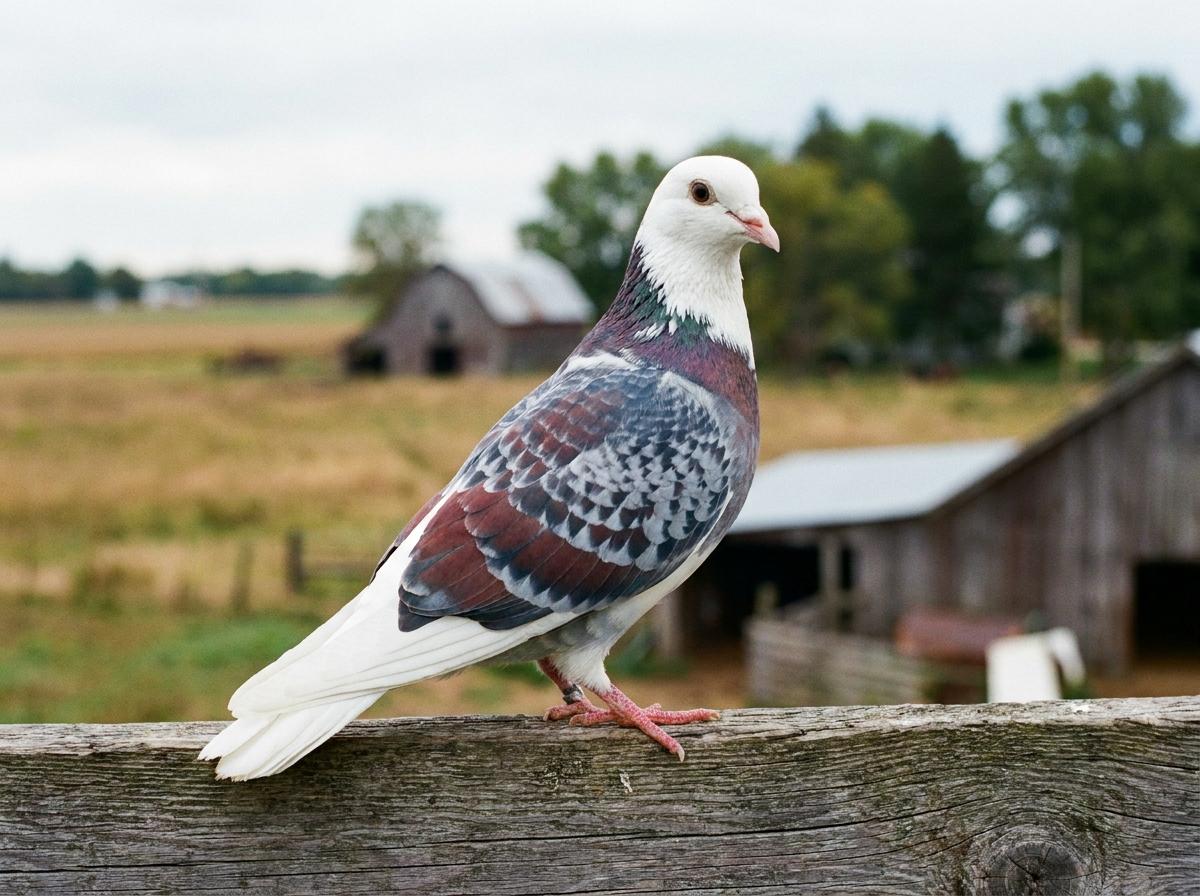
The French Mondain is built for substance. The overall impression is of a large, cobby (compact and rounded) pigeon with real weight to it.

- Broad, deep body. The chest is broad and the body deep and full, giving the bird its heavy, rounded look. This is the trait that made it a meat breed: a big frame raises big squabs.
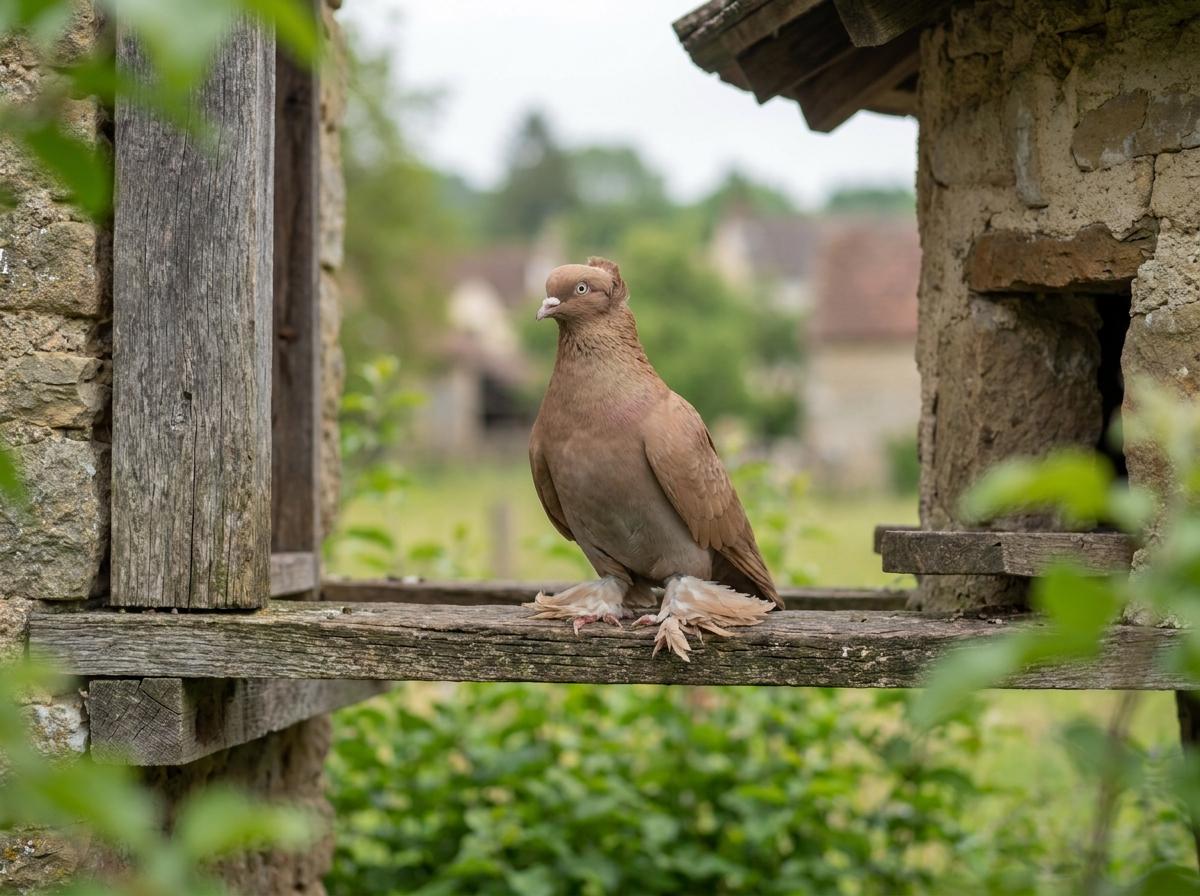
- Short, clean legs. The legs are short and, in the common American type, smooth and clean (unfeathered) rather than muffed. Historically the breed has been recorded in both clean-legged and feather-legged forms, but clean-legged birds are what most keepers picture and what the typical American French Mondain shows.
- Small head, short neck. The head is relatively small and neat for the size of the bird, set on a short, thick neck. The beak is short and stout rather than long.
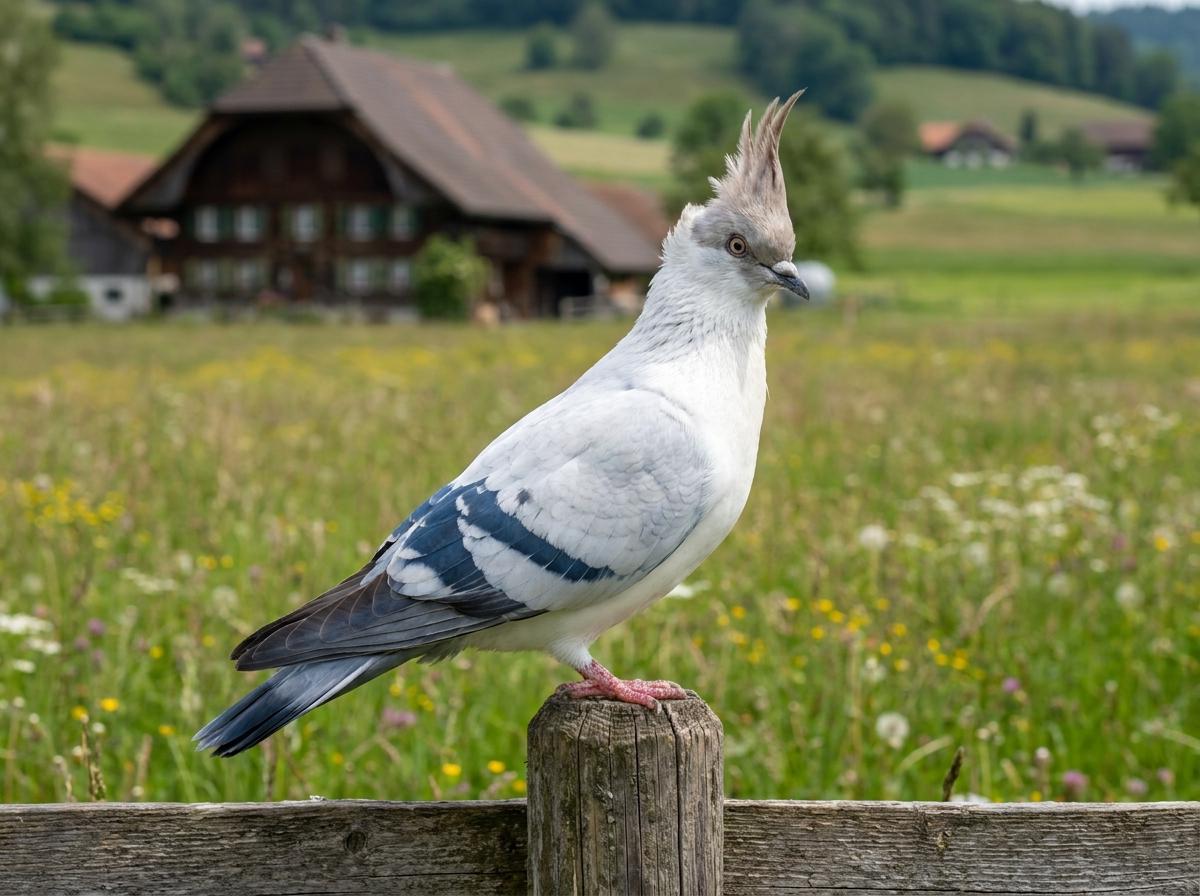
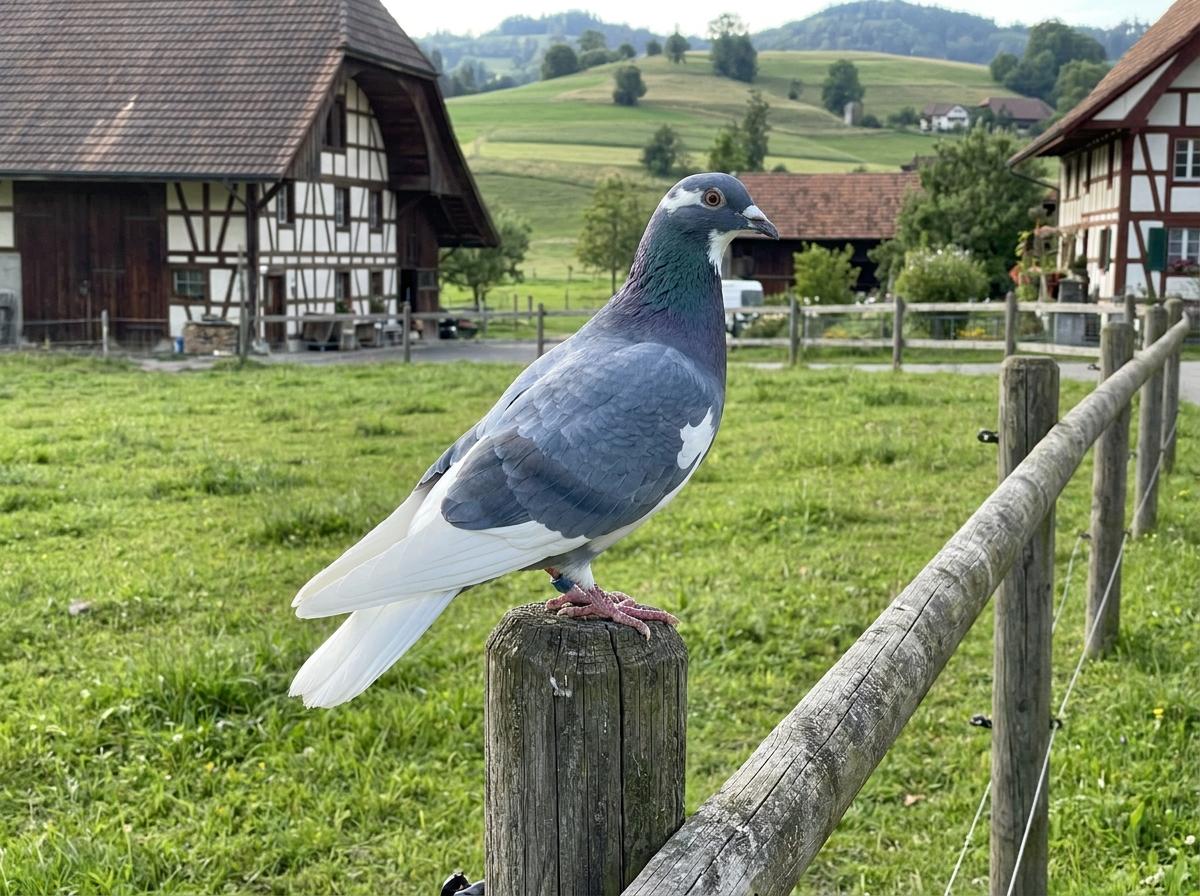
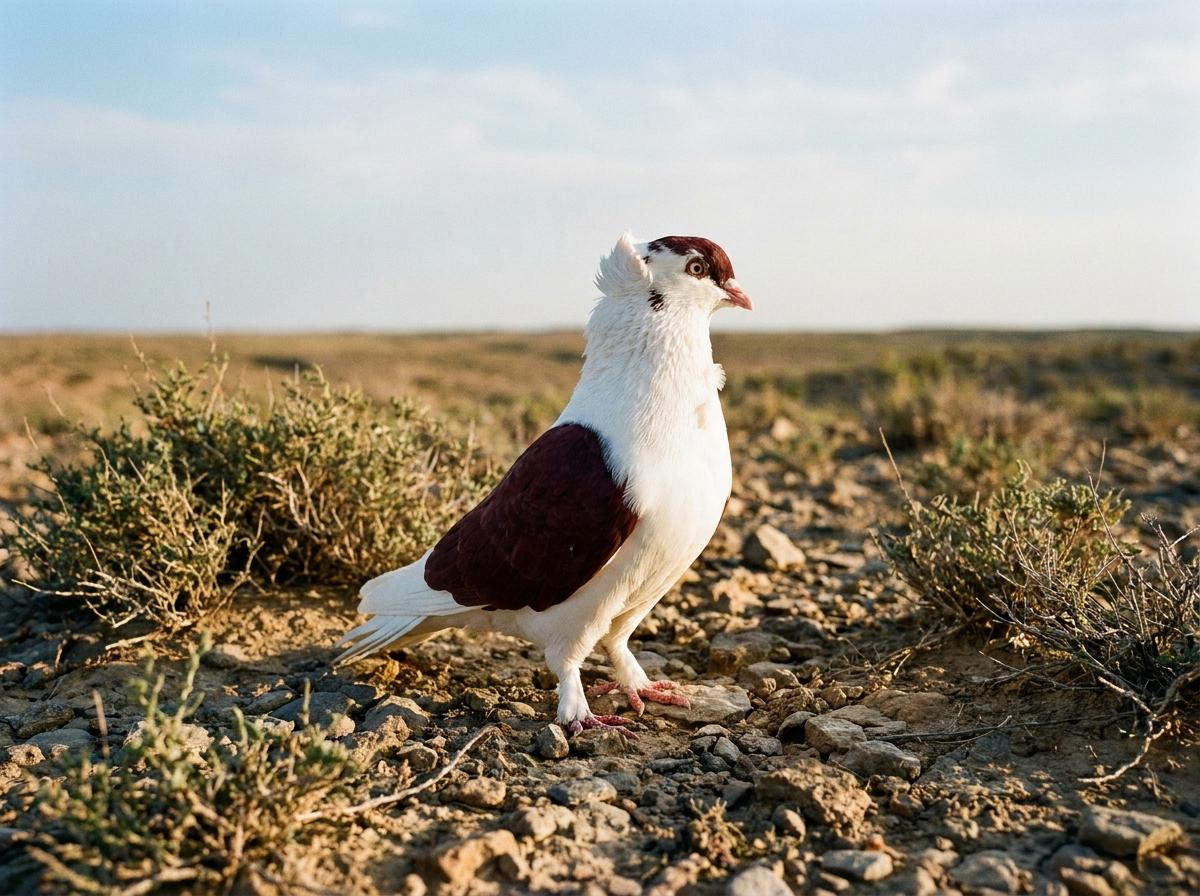
- Many colors and patterns. The breed is not tied to one color. Self-colored birds (a single color over the whole bird) include white, red, yellow, and black, and there are patterned forms such as barred, chequered, and grizzled, with blue, silver, and other shades appearing in the patterns.

How big is it really, and is it the largest pigeon?
This is where the French Mondain attracts some myth, so it is worth being precise. The live weight of mature French Mondains is commonly cited in the range of about 850 to 1,130 grams (roughly 1.9 to 2.5 pounds), and well-grown modern show birds can run heavier still. When breeders set the first standard in 1931, they wrote in minimum weights of around 900 grams for hens and 1,000 grams (one kilogram) for cocks, to keep the breed genuinely large.
That makes the French Mondain a big, heavy pigeon, several times the heft of an ordinary feral street pigeon, but it is not the single largest domestic breed. The title of largest domestic pigeon by weight goes to the Giant Runt, which is bred specifically for maximum size. It is easy to conflate the two because both are heavy utility-type birds, but they are distinct breeds: the Runt is the giant, and the French Mondain is a large, well-balanced meat-and-show pigeon with a more refined, rounded type. If a seller describes a “giant French Mondain” as the biggest pigeon in the world, treat that as marketing rather than breed fact.
What the breed is used for
The French Mondain has two honest jobs, and it is worth being clear about both.
Meat and squab production. This is the breed’s original and defining purpose. In squab raising, a pair of pigeons incubates two eggs, both parents produce a protein-rich “crop milk” to feed the hatchlings for the first week or so, and the young squabs grow very quickly on that and then on regurgitated grain. Across utility breeds, squabs are typically taken at around 26 to 30 days, just before they fledge, when the meat is at its tenderest. A large-bodied breed like the Mondain was selected precisely because it raises heavy, meaty squabs.
Show and ornament. Over the decades the French Mondain was also developed into an exhibition breed, judged against the written standard for body shape, size, feather quality, and color. Many keepers now raise French Mondains primarily as calm, attractive loft birds and show entries rather than for the table. Both roles are legitimate, and a single loft can serve both, but it helps to know which one you are buying into, because show lines and hard-working production lines are not always selected for the same things.
Temperament and keeping
French Mondains are generally described by keepers as calm, docile, and easy to handle, which fits a heavy-bodied bird that is not built for fast, agile flight. As a large pigeon, it is not a strong flyer in the way a racing homer is, so it is usually kept in a loft and aviary setup rather than expected to range widely. As with any pigeon, individual temperament varies with how much the birds are handled and how they are housed.
The general husbandry is standard pigeon keeping, scaled to a larger bird. Pigeons are typically housed in a dry, draft-free loft with nest boxes for breeding pairs and enough space to perch and move; a common rule of thumb is roughly 27 cubic feet of loft space per pair, so a heavy breed appreciates room rather than crowding. They eat a mix of grains and seeds (corn, peas, wheat, and similar), and because they swallow whole seeds, they need access to grit to grind food, plus a calcium source such as oyster shell or crushed eggshell, which matters especially for laying hens and growing squabs. Clean water at all times is essential. Pigeons are generally monogamous and pair for life, and both members of a pair share incubation and feeding, which is part of why they raise squabs so efficiently.
On health, follow the same basics as for any loft: keep housing clean and dry, watch for the common pigeon parasites and respiratory issues, and work with an avian or poultry veterinarian for anything beyond routine care. Defer medical decisions to a veterinarian who can examine the birds, and keep clear records of pairings, hatch dates, and any treatments so you can make breeding and culling decisions on evidence rather than memory.
Lifespan
There is no special breed-specific lifespan figure for the French Mondain, so the sensible expectation is the general one for well-kept domestic pigeons: commonly around 10 to 15 years, with some individuals living longer under excellent care. Heavily producing birds in a working squab loft are managed differently from a single pet pigeon, so treat that range as a general guide rather than a guarantee for any one bird.
Cost and availability
French Mondains are an established, recognized breed kept by pigeon fanciers in North America and Europe, so they are obtainable, but they are a specialty fancier’s bird rather than something sold in every feed store. You will generally find them through pigeon clubs, breed exhibitors, and dedicated lofts rather than mass outlets.
There is no single reliable published price for a French Mondain, and prices vary widely with quality, color, whether the bird is show-standard or production stock, and the seller’s region, so we will not invent a precise figure. As a general guide, ordinary utility-quality birds tend to be modest in price while top show-standard or rare-color birds command more. The most practical approach is to find active breeders, ask what their birds are selected for (table production versus show type), and buy a pair that matches your goal. You can look for current listings on the Creatures marketplace and find breeders and lofts in the Creatures directory.
Buying considerations
Because the breed spans both working and show purposes, and because it gets confused with the Runt, buy with a clear head.
- Decide table or show first. A line bred hard for squab production and a line bred for the show bench are not the same animal. Tell the seller which you want and buy stock selected for it.
- Confirm the type, not just the name. Ask whether the birds are the American or European French Mondain, since the two differ in shape and feather, and confirm leg type (the common American bird is clean legged).
- Do not overpay for “biggest pigeon” claims. The French Mondain is large but is not the Giant Runt. Judge a bird on correct breed type, body depth, condition, and health, not on a size-record sales pitch.
- Buy a sound, healthy pair. For breeding you want a true cock and hen in good condition, with clean feathering, bright eyes, no respiratory signs, and good weight. Pigeons pair for life and work as a team, so a well-matched pair is the foundation of a productive loft.
- Ask for records. Hatch dates, pairings, and any health treatments tell you more than appearance alone, especially if you are buying into production stock.
For more on listing and selling birds responsibly once you are set up, the Creatures help center covers how seller payout works.
Frequently asked questions
Is the French Mondain the biggest pigeon breed?
No. It is a large, heavy utility pigeon, but the largest domestic pigeon by weight is the Giant Runt, a separate breed selected for maximum size. The French Mondain is big and deep-bodied with a more refined, rounded type.
What is a French Mondain used for?
Primarily meat and squab production, which is what it was developed for in France. It is also widely kept today as a calm, attractive show and loft bird, so it serves both working and exhibition roles.
How much does a French Mondain weigh?
Mature birds are commonly cited at roughly 850 to 1,130 grams (about 1.9 to 2.5 pounds), and the 1931 breed standard set minimum weights near 900 grams for hens and 1,000 grams for cocks. Well-grown modern show birds can be heavier.
Is the French Mondain clean legged or feather legged?
The common American French Mondain is clean legged, with short, smooth, unfeathered legs. The breed has historically been recorded in both clean-legged and feather-legged forms, so confirm the type with the seller.
What colors do French Mondains come in?
A wide range. Self-colored birds include white, red, yellow, and black, and there are patterned forms such as barred, chequered, and grizzled in blue, silver, and other shades.
Are French Mondains good for beginners?
They are generally calm, docile, and straightforward to keep, which makes them a reasonable larger breed for a careful beginner. As with any pigeon, success comes down to a clean dry loft, good grain plus grit and calcium, fresh water, and a relationship with an avian veterinarian.
Do this next on Creatures
Whether you are researching the breed, looking for a good pair, or already running a loft, Creatures is the records, marketplace, and directory layer to do it in one place.
Find birds. Browse French Mondains on the marketplace and search trusted breeders and lofts in the Creatures directory.
Get alerted. Good French Mondain pairs are not always listed, so set a free French Mondain listing alert and we will tell you when one is posted. No account needed to start. The walkthrough is in saving searches and using your watchlist.
Add your pigeon. Already keeping French Mondains? Create a free pigeon profile in a few minutes. No account needed to start, and the steps are in adding an animal to Creatures.
Track pairings and squabs. Keep breeding and health records on Creatures. The record sheet opens for any visitor to look around, and a free account saves what you enter. See adding a record for the full how-to.
List your loft. Run a breeding loft or farm? Create a free breeder profile so buyers searching for this breed can reach you. No account needed to start, and you can read getting listed in the breeder directory first.
Sell with confidence. Planning to sell birds? Learn how seller payout works before you list.
If you are comparing breeds, you can also read up on other pigeons in the Creatures cluster, including the Modena, the Damascus, and the Nun, or step back to the pigeon species page to see the full range.