




German Beauty Homer
The German Beauty Homer, known in its homeland as the Deutsche Schautaube, is a German exhibition pigeon developed from racing and homing stock and then bred purely for looks rather than for flying home from a race. It is the German counterpart to the American Show Racer: same broad homing-pigeon family, same smooth-feathered outline, but a whole century of selection aimed at an idealized “beauty” type, a large arched head, an expressive eye, and an elegant upright carriage, judged on the show bench instead of the race clock. This page explains what the breed is, where it came from, how to recognize a good one, how it differs from the flying racing homer and from the heavily wattled show breeds it is often confused with, what it costs, and what to check before you buy.

Browse listings, public profiles, breeders, or add your animal.
What is a German Beauty Homer?
The German Beauty Homer is a fancy pigeon developed in Germany from racing and homing pigeon stock, then bred toward a written standard that describes an idealized, elegant “beauty” type. Its German name, Deutsche Schautaube, translates roughly as “German show pigeon,” and that name is the honest description of what the breed is for. An older German name, Schonheitsbrieftaube, literally means “beauty racing homer,” which captures the breed’s history in a single word: it began as a homing pigeon and was then selected for beauty.
The single most useful thing to understand about the breed is that it is a show breed of form, not a flyer. Contemporary accounts of the breed describe how it started with good flying ability and gradually lost it as breeders concentrated on appearance, until it was developed only for the show pen. In other words, the German Beauty Homer is judged on the perch and in the hand, on head shape, eye, carriage, and feather, not on how fast it returns from a liberation point.
That makes it a close parallel to the American Show Racer, a United States breed that took racing homers in exactly the same direction: away from racing and toward a standardized exhibition type. The two breeds are the German and American answers to the same question, which is what an idealized homer should look like in the show hall. If you are comparing pigeon breeds more broadly, the Creatures pigeon species page is the place to see the German Beauty Homer alongside its relatives.
Origin and history
The breed came together in Germany at the turn of the twentieth century. Wikipedia dates it to roughly one hundred years ago, developed over many years of selective breeding from German racing pigeons, and breeder and reference accounts place its formation in the early 1900s. A specialty organization for the breed, the Sonderverein der Zuchter Deutscher Schautauben, was established around 1908 and the type was formalized in the German standards not long after, which is the point at which a loose “beauty homer” becomes a defined breed with an agreed ideal.
The intent of that early selection was clear. German fanciers wanted the homer outline pushed toward a bolder, more arched head, a stronger beak, a large expressive eye, and a more refined, elegant carriage. As those points were rewarded in the show hall generation after generation, the practical flying ability that the founding stock carried was no longer the goal, and the breed settled into its role as a bird kept for its looks.
The German Beauty Homer then spread beyond Germany. In Europe it is recognized by the Entente Europeenne d’Aviculture et de Cuniculture, the continental body that standardizes fancy pigeon breeds, where it carries the breed code D/032 under the name Deutsche Schautaube and sits in the utility or form group. In the United States, dedicated breeders organized around the breed and it is recognized by the National Pigeon Association, the main umbrella body for the pigeon fancy in the country, which classes it among the form breeds. That combination, an early German standard and later recognition on both sides of the Atlantic, is why the German Beauty Homer is treated as an established exhibition breed rather than simply a good-looking homer.
What a German Beauty Homer looks like
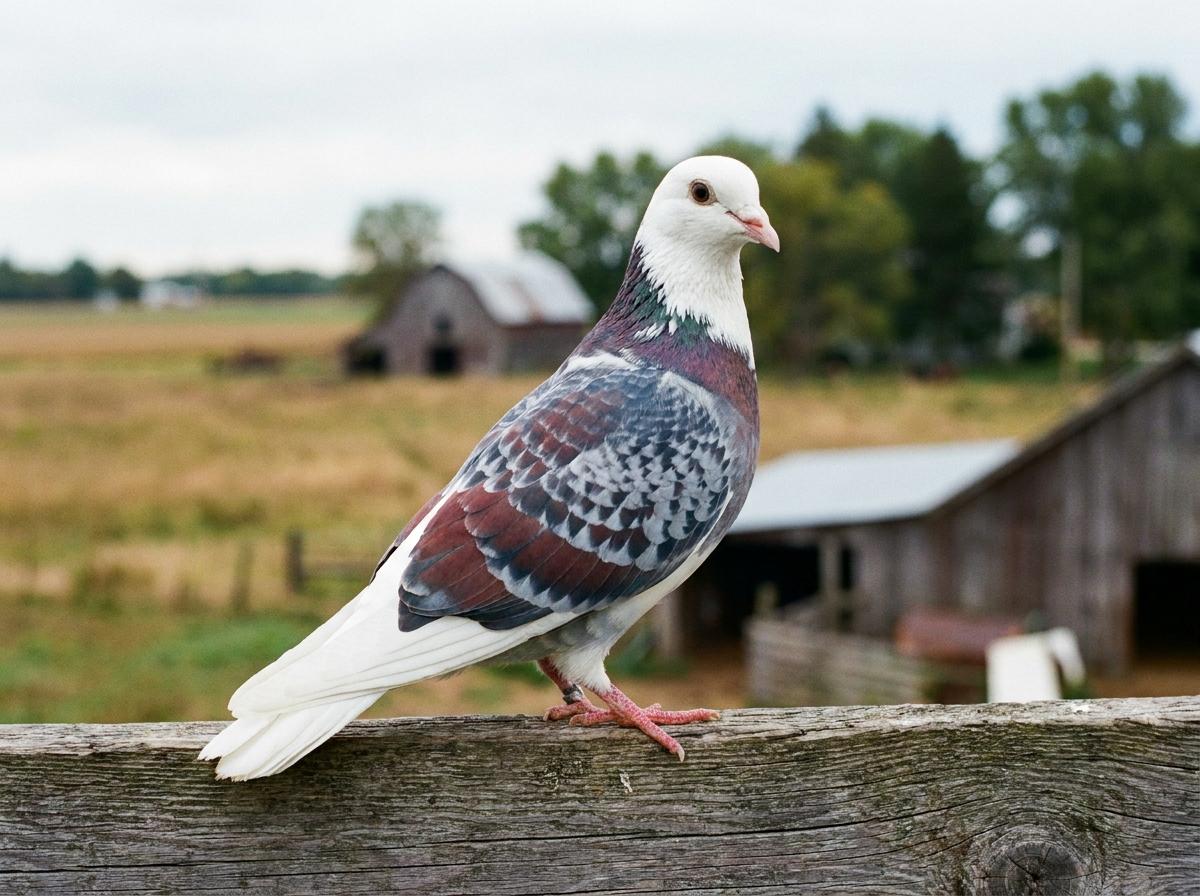
The German Beauty Homer is a medium pigeon whose whole reason for existing is its head and its stylish carriage. Read those first, then the body and legs.

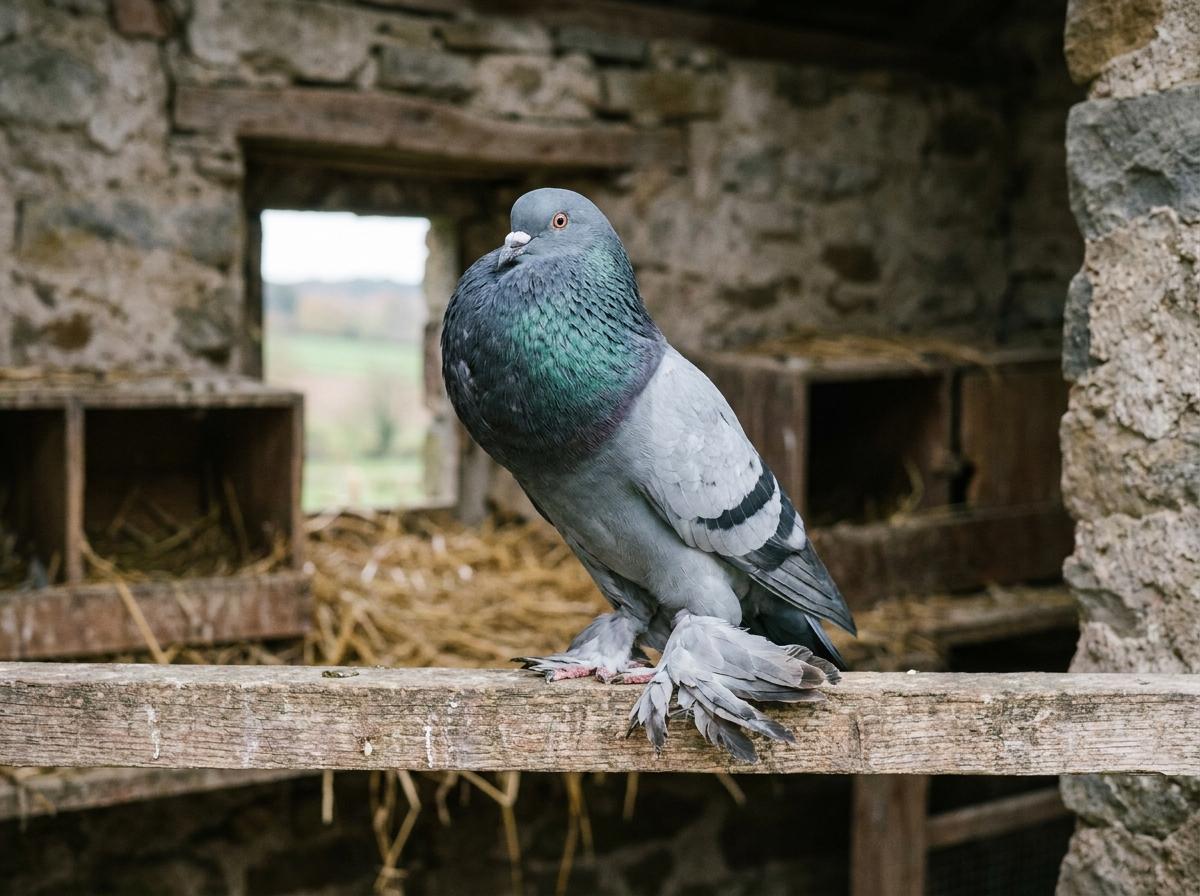
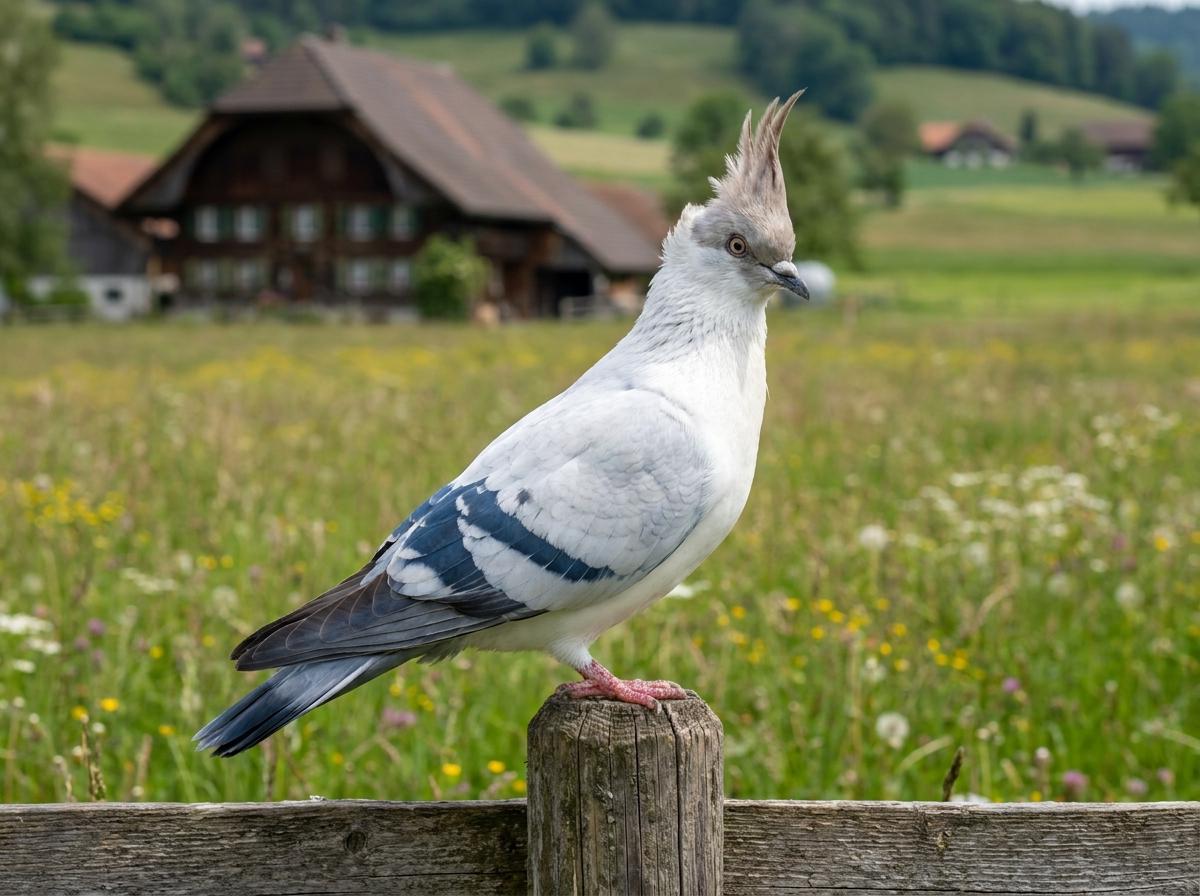
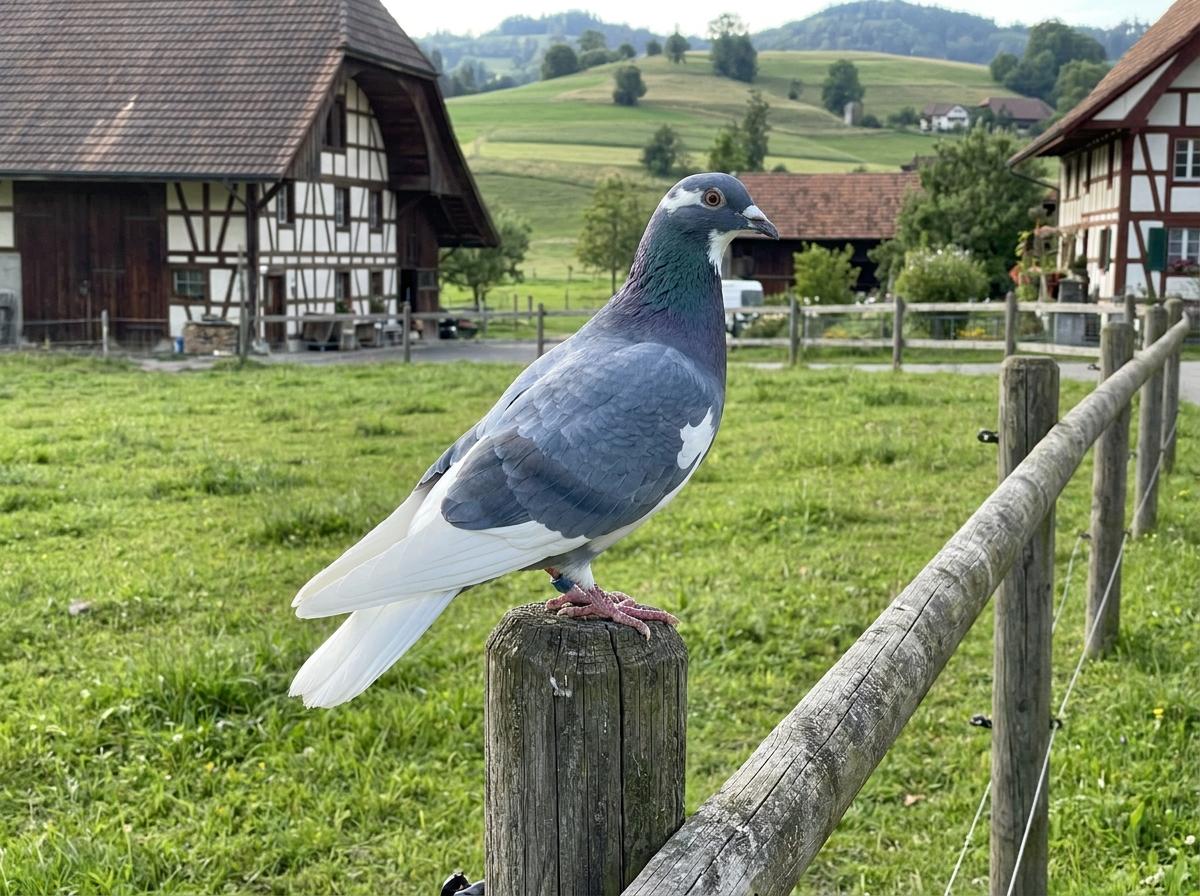
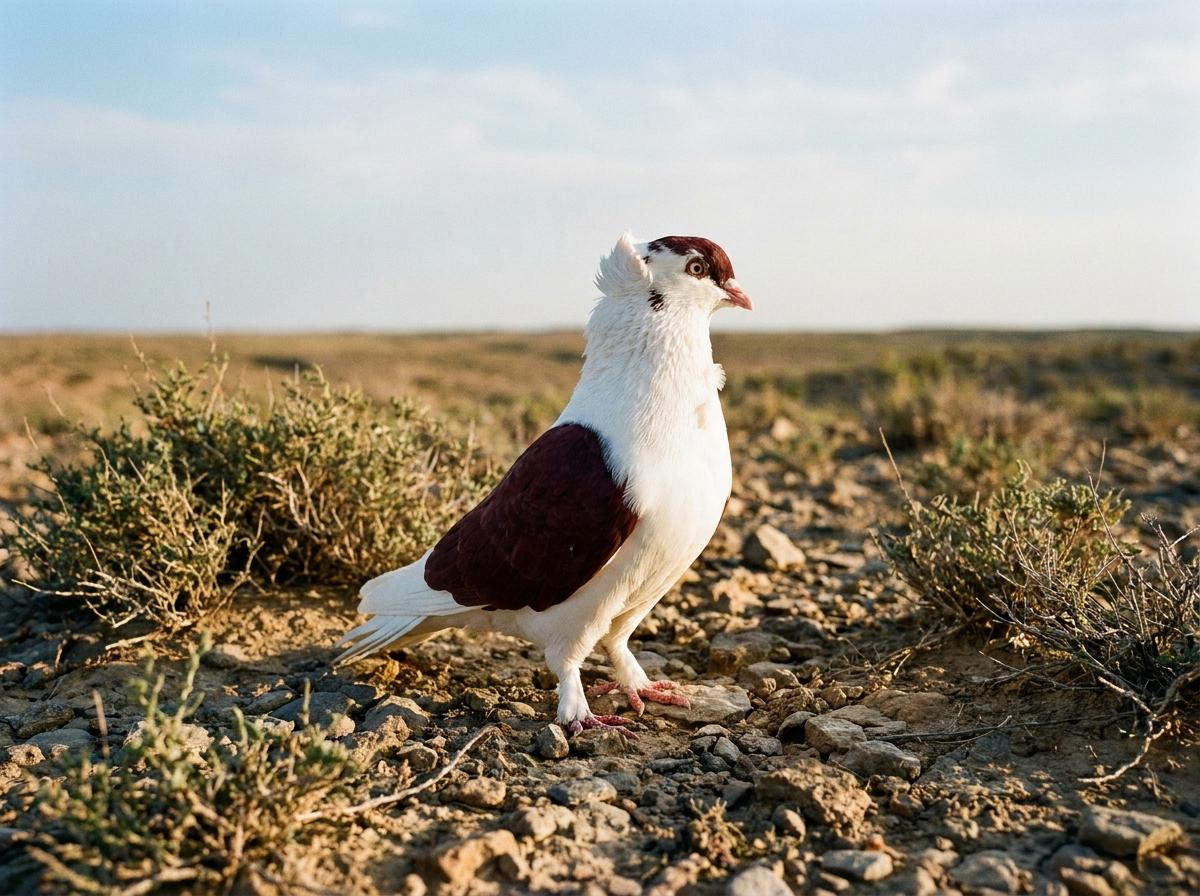
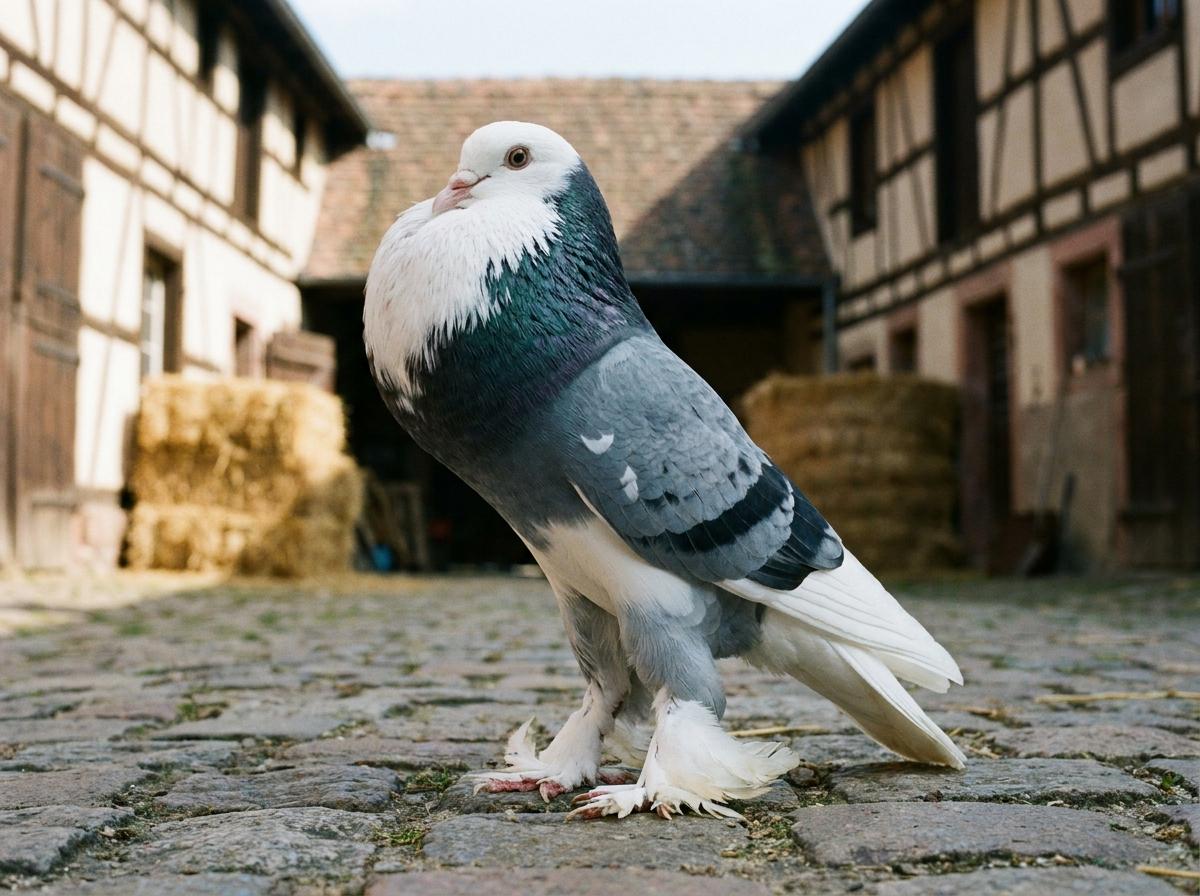
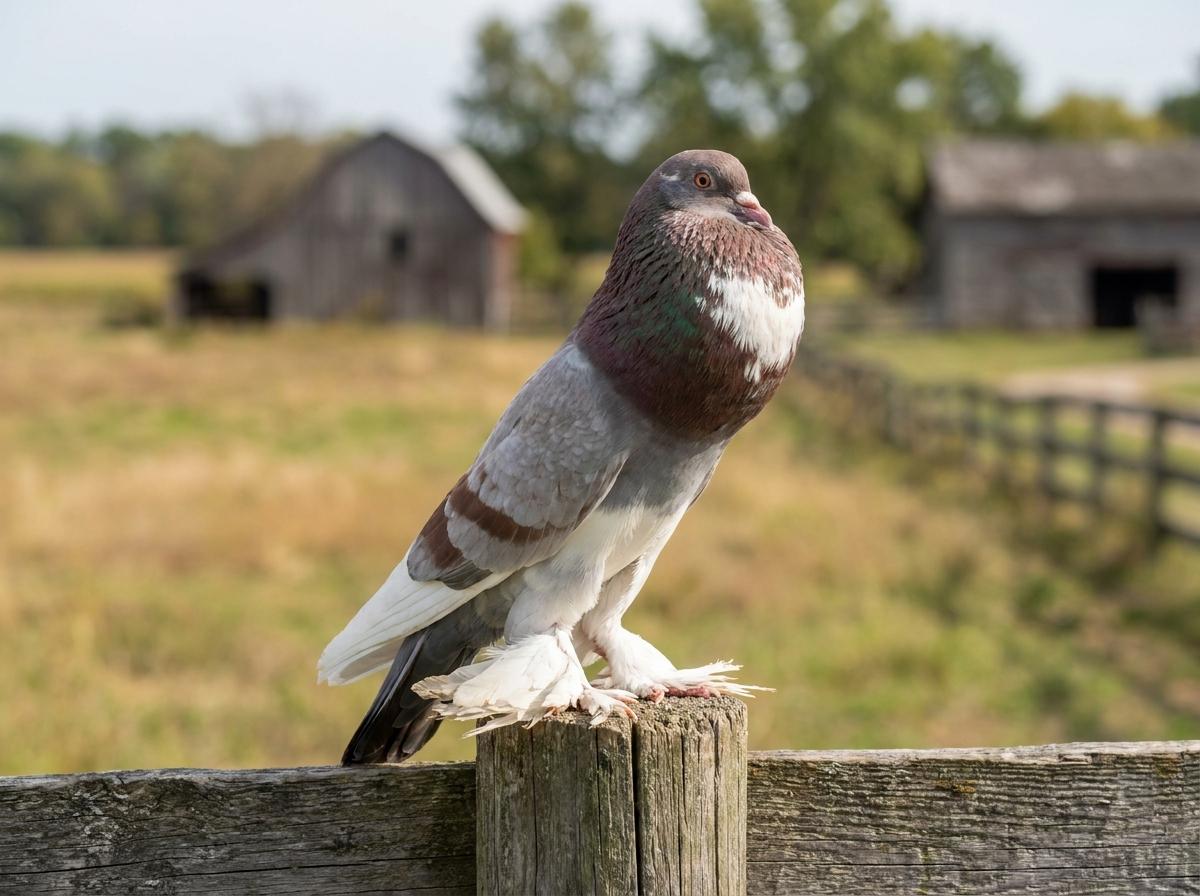
- A large, almost semicircular head. This is the breed’s signature and the trait fanciers name first. Descriptions of the standard call the head massive and almost semicircular. It is broad above the eye and narrows gradually, wedge fashion, toward the forehead and beak, and in profile the beak and forehead form a slightly convex line that passes without interruption into the arched skull and then flows in a smooth round line back into the neck.
- A strong, well-proportioned beak. The beak is of medium length, solid, full, and blunt at the tip when closed. A distinctive point is that the lower mandible is of almost equal substance to the upper, which gives the beak its powerful, well-balanced look rather than the fine, delicate beak of some other breeds.
- A small, delicate wattle. The nasal wattle is fine, smooth, and close fitting, often described as small and heart shaped. This is worth stressing, because the German Beauty Homer is not a heavily wattled breed. It does not carry the large, hard, cauliflower-like wattle of a carrier, and confusing the two is a common mistake.
- A big, expressive eye. The eyes are large, prominent, and very expressive, with fine, well-developed ceres, and the iris is red. The expressive eye set in the arched head is a large part of what breeders mean when they call the bird a “beauty.”
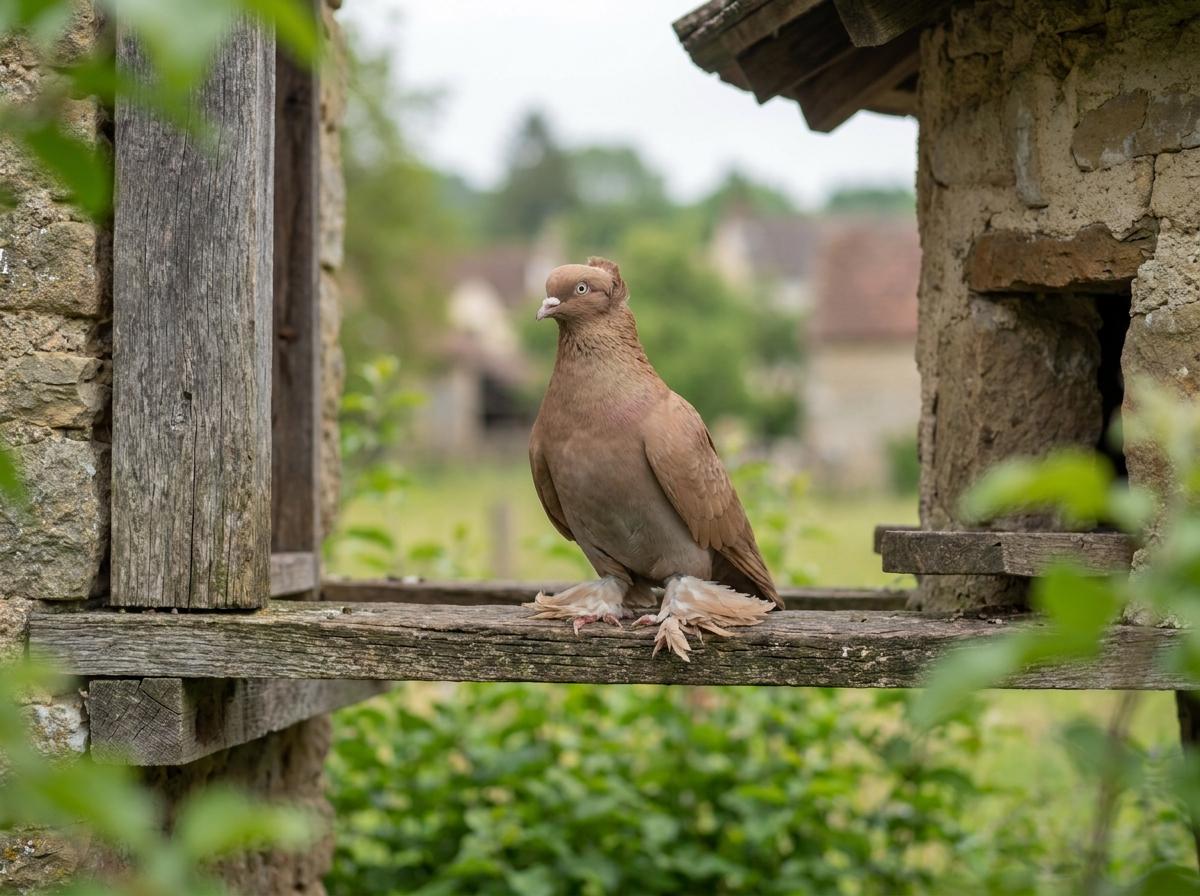
- Thin neck, full body, long clean legs. The neck is long but thin, the body full and carried fairly horizontally, and the legs are notably long, clean, and bare. Overall the bird reads as refined and elegant rather than heavy or squat.
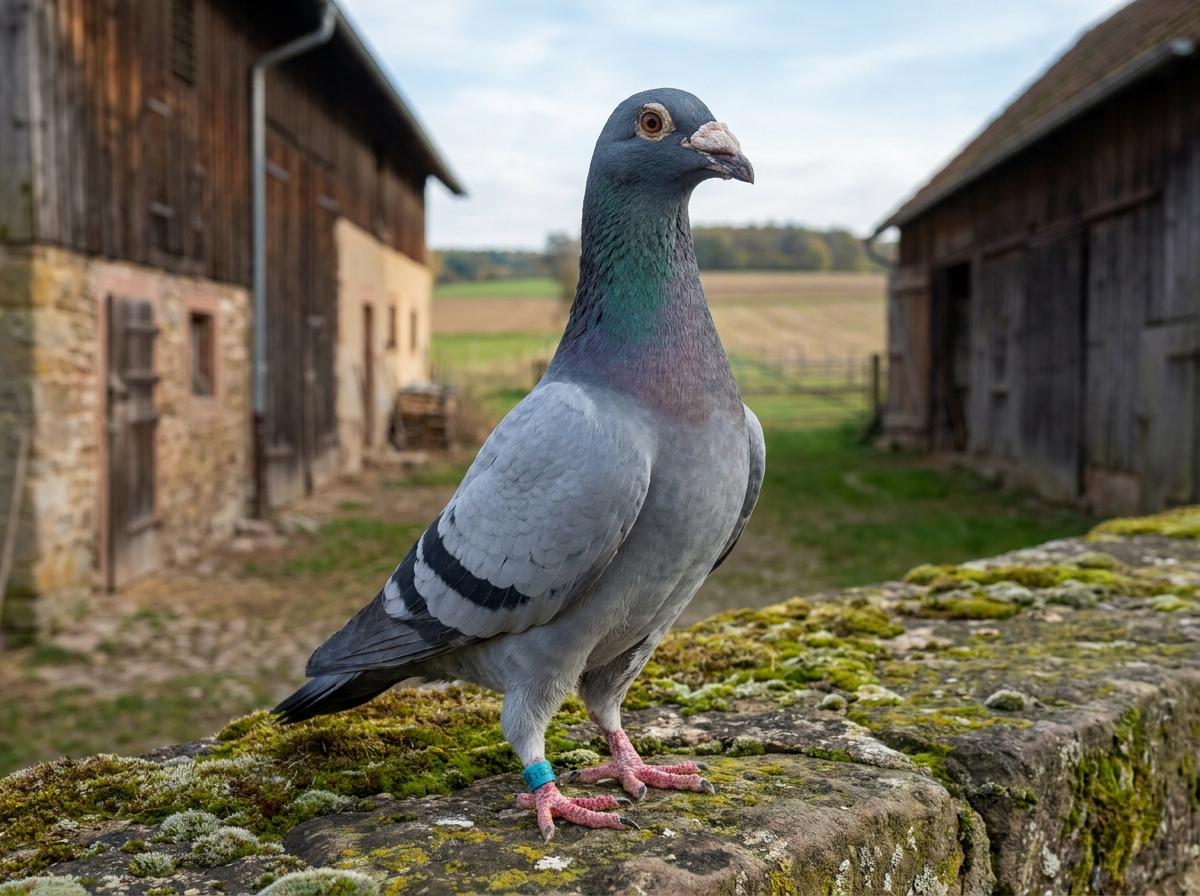
In size it is a medium pigeon, standing around 18 cm tall and commonly weighing on the order of 480 to 580 g, with a leg band ring size around 9 mm. It comes in a wide range of colors and patterns, including self colors such as black, bars and barless, checkers, and patterns such as almond, across many ground shades. As with most show breeds, color is judged within the standard and never as a substitute for correct head and type.
The show breed, not a racing pigeon
It is worth being blunt about this, because the name misleads people. A German Beauty Homer is not a bird you race. It descends from racing and homing pigeons, and to a casual eye it can look like a homer with an unusually grand head, but every part of the selection program has been aimed at the show standard. Older birds in this family were flown, and the breed’s own history describes flying ability being deliberately set aside in favor of beauty. If you want a pigeon that competes over distance, that is the flying racing homer, a different bird bred and proven on the clock. If you want the sculpted head and elegant carriage that win in the show hall, that is the German Beauty Homer.
How it differs from the wattled show breeds
Because it is a homing-family show breed with an emphasized head, the German Beauty Homer gets confused with the old wattled exhibition breeds, above all the English Carrier. The distinction is easy once you know it. The English Carrier is defined by heavy ornamentation, a large, hard, rounded, powdery-white nasal wattle and prominent eye ceres on a tall, slender frame. The German Beauty Homer deliberately keeps a small, fine, close-fitting wattle and puts its emphasis on the size and arch of the head and the quality of the eye instead. So if you see a homing-type pigeon with a big cauliflower-like growth over the beak, you are looking at a carrier. If you see one with a large, smooth, arched head, a clean strong beak, and only a delicate wattle, you are looking at a German Beauty Homer.

Temperament and what keeping them is like
German Beauty Homers are generally described by keepers as hardy, strong, and calm birds that handle well, which fits a breed that is regularly caught up, posed, and examined by judges. We flag that as the general experience of fanciers rather than a formally studied trait, since the breed literature concentrates on the standard rather than on behavior. Like most domestic pigeons descended from homing stock, they are active, sociable loft birds that settle into a group, take readily to a clean dry loft, and become easy to handle with routine contact.
Day-to-day keeping is standard pigeon husbandry. They need a dry, draft-free, predator-proof loft with adequate perches and nest boxes, a good pigeon grain mix with grit and clean water always available, and protection from cats, hawks, and rodents. Because show birds are handled often and shown in company, loft hygiene and a sensible quarantine routine for new or returning birds matter more than for a closed backyard flock, since crowding and shared show pens are how respiratory infections, canker, and parasites move between lofts. As with any animal, defer health decisions to a veterinarian, ideally one comfortable with birds, and treat sudden weight loss, labored breathing, or persistent loose droppings as a reason to get help rather than to guess. Because those long, clean legs and the big head are part of what is being judged, uncrowded, smooth-fitted pens that avoid injury are worth the effort.
Showing, registration, and the standard
Showing is the entire reason this breed exists, so it is worth understanding the framework. In its homeland the standard is maintained through the German specialty club and the broader national fancy, and across Europe the breed is standardized under the Entente Europeenne as breed D/032, Deutsche Schautaube. In the United States the National Pigeon Association recognizes it among the form breeds, and dedicated breeders keep and exhibit it there.
In practice that means a German Beauty Homer is judged against a written ideal for head, eye, beak, carriage, feather, and color, and that exhibition birds are usually identified with seamless leg bands applied as youngsters (the roughly 9 mm ring size noted above). If you intend to show or breed seriously, getting a current copy of the standard and connecting with the specialty club is the real starting point, because the standard, not a web summary, is what a judge is using. If you keep records the way exhibitors do, the Creatures animal profile gives you a place to track each bird’s band number, color, pairings, and show results over time, which is exactly the information a breeding program runs on.
Cost and availability
Because the German Beauty Homer is a specialty exhibition breed rather than a pet-shop pigeon, there is no single reliable published price, and we are not going to invent one. What you can plan for is the shape of the market.
Ordinary young stock from a hobby loft tends to be inexpensive, often on the order of a modest per-bird price that many fanciers will happily sell or trade at a club meet. Proven show winners, or breeders from a well-known winning family in a sought-after color, cost substantially more, because you are paying for years of selection toward that large, correct head and elegant type. The gap between a plain loft bird and a genuine show-quality bird from a competitive line is large, and it tracks head, type, and pedigree rather than looks alone.
Availability follows the same logic. You will rarely find this breed in a pet store. The realistic sources are pigeon fanciers, breed and all-breed pigeon clubs, poultry and pigeon shows, and specialty breeders. Because supply is thin and concentrated among hobbyists, a saved listing alert (below) is often the most practical way to catch a good bird when one becomes available, rather than hoping to stumble on one. The same is true of its close cousin the American Show Racer, which moves through the same clubs and shows.
Buying considerations
Buy on head, type, and health, in that order, and treat color as a tiebreaker rather than the reason to buy.
- Buy to the standard, not to a snapshot. Handle the bird. Look for the large, smoothly arched head, the strong blunt beak with its full lower mandible, the small clean wattle, and the big expressive red eye, and watch how the bird stands and carries itself. A photograph flatters a head; the hand and a live pose do not.
- Do not mistake it for a carrier or a plain homer. Make sure a bird sold as a German Beauty Homer actually shows the breed’s arched head and fine wattle, not the heavy cauliflower wattle of a carrier and not the plain, flat head of an ordinary racing homer.
- Check health honestly. Look for a bright eye, clean nostrils and wattle, smooth tight feather, good weight for the frame, and normal droppings. Avoid birds with labored breathing, a wet or cheesy mouth (a sign of canker), or a rough, fluffed look. Ask what the seller’s loft health and quarantine practices are.
- Ask about the band and the line. Seamless leg bands date a bird to a hatch year and identify the loft. For a breeding or show purchase, ask about the parents, the color genetics, and how the line has placed at shows.
- Match the bird to your goal. For a first backyard pair to learn on, a sound, healthy, moderately typed pair is plenty. For the show bench, pay for correct head and type from a competitive family and expect to pay more.
You can browse current German Beauty Homer listings on the Creatures marketplace and look for lofts and breeders in the Creatures directory. Because good stock moves through clubs and shows, setting a listing alert is usually the fastest way to hear about one.
Frequently asked questions
Is the German Beauty Homer a racing pigeon?
No. Despite the “homer” in its name, it is a show breed of form. It descends from racing and homing pigeons and looks like an idealized homer with a grand head, but it is selected and judged on head, eye, carriage, and feather, not on race performance. The breed’s own history describes flying ability being set aside in favor of beauty.
What does Deutsche Schautaube mean?
It is the breed’s German name and translates roughly as “German show pigeon.” An older name, Schonheitsbrieftaube, means “beauty racing homer,” which captures the breed’s origin as a homer selected for looks.
What is the breed’s signature feature?
The large, almost semicircular arched head, paired with a strong beak whose lower mandible is nearly equal in substance to the upper, and a big, expressive red eye. The elegant thin neck and long clean legs complete the look.
How is it different from an English Carrier?
The English Carrier is a tall, slender show breed defined by a large, hard, powdery-white cauliflower wattle over the beak and prominent eye ceres. The German Beauty Homer keeps a small, fine wattle and puts its emphasis on the arched head and expressive eye instead.
How is it different from the American Show Racer?
Both are show breeds developed from homing and racing pigeons and both are exhibition rather than flying birds. The American Show Racer is the United States version, judged on an upright “station” and a smooth powerful head. The German Beauty Homer is the German version, judged above all on its large, arched, almost semicircular head.
What registry or club recognizes the breed?
In Europe it is standardized by the Entente Europeenne as breed D/032, Deutsche Schautaube, and in the United States it is recognized by the National Pigeon Association among the form breeds, with dedicated breeders keeping and exhibiting it.
Are German Beauty Homers good for beginners?
Yes, as pigeons go. They are hardy, calm, and handled easily, and a sound backyard pair is a reasonable first show breed as long as you provide a dry, secure loft, a proper grain-and-grit diet, clean water, and a veterinarian for health problems.
Do this next on Creatures
Whether you are researching the breed, hunting for a show-quality bird, or already keeping a loft, Creatures is the records, marketplace, and directory layer to do it in one place.
Compare the family. See the German Beauty Homer next to its relatives on the Creatures pigeon species page, including its United States counterpart the American Show Racer, the wattled English Carrier, and the marked Saxon Monk.
Find birds. Browse German Beauty Homers on the marketplace and search trusted lofts and breeders in the Creatures directory. New to searching? See saving searches and using your watchlist.
Get alerted. Good show stock moves through clubs and shows, so set a free German Beauty Homer listing alert and we will tell you when one is posted. No account needed to start.
Add your bird. Already keeping German Beauty Homers? Create a free animal profile in a few minutes, band number and all. No account needed to start, and the walkthrough is in adding an animal to Creatures.
Track pairings, molts, and show results. Add a record on Creatures. The record sheet opens for any visitor to look around, and a free account saves what you enter. See adding a record for the full how-to, and use reminders and upcoming care to stay ahead of health and breeding dates.
List your loft. Breed German Beauty Homers? Add your loft or breeder profile so buyers searching for the breed can reach you, and read getting listed in the breeder directory.
If you breed pigeons, you can also list your loft in the Creatures directory so buyers searching for this breed can find you.