Silver Marten
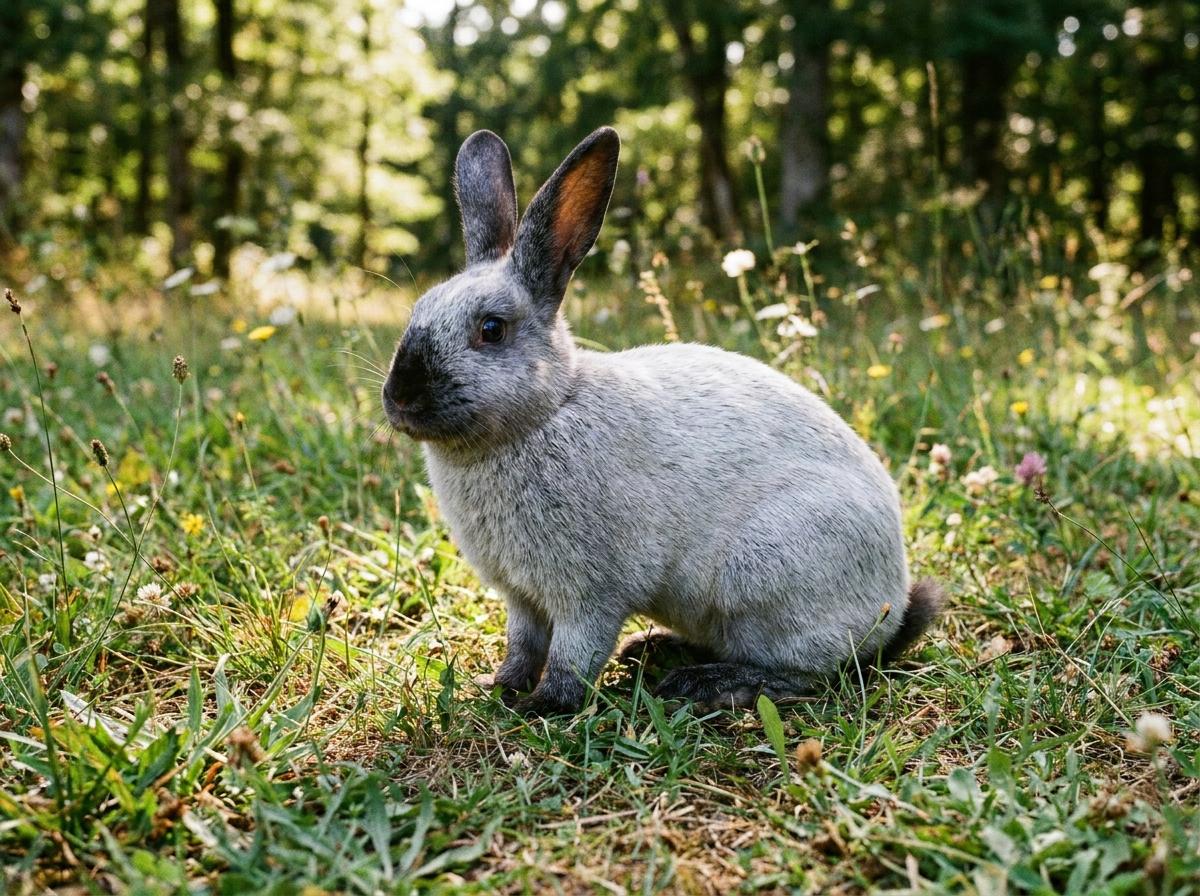
The Silver Marten is a striking medium rabbit with a deep, glossy dark body and crisp silver-white trim, the pattern that gives the breed its name. Most people picture the black variety first, a jet-black rabbit with a white belly, a silver-white triangle at the nape of the neck, silver eye circles, and silver-tipped guard hairs frosting the flanks. The American Rabbit Breeders Association also recognizes blue, chocolate, and sable in the same pattern. It is primarily a “fancy” show and pet breed rather than a commercial meat rabbit, and it carries an unusual origin: it arose from Chinchilla rabbit breeding lines in the 1920s. This page covers what the breed is, where it came from, how to tell it apart from look-alikes such as the Tan and the Silver, how big it gets, its temperament, and what good day-to-day care looks like.

Browse listings, public profiles, breeders, or add your animal.
What is a Silver Marten rabbit?
The Silver Marten is a medium-sized rabbit defined almost entirely by its coloring. The body is a solid dark color, most commonly black, laid over a set of sharp silver-white markings: a white belly, a white chin, white on the underside of the tail, silver rings around the eyes, silver on the nostrils and jaw, and silver frosting on the edges of the ears. Running up the lower sides of the body are silver-tipped guard hairs that give the coat its distinctive “silvered” look, and there is a small silver triangle of fur at the nape of the neck. Those silvered points on a dark body are the diagnostic combination. If you see a dark rabbit with crisp silver-white trim and a clean white belly, you are almost certainly looking at the marten pattern.
According to the American Rabbit Breeders Association (ARBA), which is the governing registry for the breed in the United States, the Silver Marten is recognized in four colors: black, blue, chocolate, and sable, a sepia-toned brown. The black silver marten is by far the most familiar, but the pattern is the same across all four: a dark top color trimmed with silver-white in exactly the same places. The name works on two levels, because ARBA notes the breed name also applies to the color variety itself, which has since been introduced into other breeds.
This is a fancy breed at heart. It is bred and shown for its looks and kept widely as a pet, and it is not a commercial meat or fur rabbit in the way that heavier breeds are. If you are still comparing rabbit breeds, the broader Creatures rabbit species page is a good place to see how the Silver Marten sits next to other popular breeds.
Where the Silver Marten came from
The Silver Marten has one of the more interesting origin stories in the rabbit world, because it did not start as a breed at all. It started as a surprise.
ARBA describes the breed as “originally described as ‘strange little black rabbits’ in the 1920s when they popped up in Chinchilla litters.” Chinchilla rabbits carry the chinchilla gene, which strips the yellow pigment out of the coat and gives them their grizzled gray, wild-rabbit look. In the early days of the Chinchilla breed, breeders experimented with introducing black and tan rabbits into their lines to improve type and color. The unexpected result was a run of dark, silver-trimmed rabbits carrying both the tan-pattern gene and the chinchilla gene. Rather than cull them, breeders recognized they had something worth keeping.
Enthusiasts organized quickly. A working ARBA standard for the black and chocolate varieties was established in 1927, and a specialty club was chartered around the same time. The blue and sable varieties followed, with standards established in 1933. Because the marten coloring proved so attractive, the pattern was later used to introduce a “marten” or “silver marten” variety into several other breeds, including the Netherland Dwarf, the Mini Rex, and the Mini Satin. So the Silver Marten is both a breed in its own right and the source of a color you will now see elsewhere.

Colors and the “black silver marten” question
Because “silver marten” describes a pattern, the color that comes before it tells you the base body color. The four ARBA-recognized varieties are:
- Black silver marten. A deep jet-black body with silver-white markings. This is the original and most common variety, and it is the one most people mean when they search for the breed.
- Blue silver marten. The black is diluted to a soft slate blue-gray, with the same silver-white trim.
- Chocolate silver marten. A rich dark brown body in place of black.
- Sable silver marten. A sepia-toned coloring, darkest on the extremities, with the marten markings layered over it.
All four share the identical marking map: white belly and chin, white under the tail, silver eye circles, silver nostrils and jaw, silver-edged ears, silver-tipped guard hairs up the sides, and the silver nape triangle. A well-marked show animal has crisp, clean edges to those markings rather than muddy or patchy trim. For a look at how the dilution changes the body color while the pattern stays the same, the blue variety is the clearest example.

How to tell a Silver Marten apart from look-alikes
Three breeds get confused with the Silver Marten, and the differences come down to genetics and where the light color sits. Getting this right matters if you are buying a rabbit represented as a Silver Marten.
Silver Marten versus Tan. This is the closest comparison, because both breeds share the same tan-pattern gene, which places light markings in the same spots: belly, chin, under the tail, eye circles, and inside the ears and legs. The difference is one gene. The Tan rabbit keeps its yellow pigment, so those markings are a rich tan or fawn color. The Silver Marten adds the chinchilla gene, which removes the yellow and turns those same markings silver-white. In short, a Tan is the “warm” version and a Silver Marten is the “cool,” silvered version of the same underlying pattern.
Silver Marten versus Silver and Silver Fox. These names sound alike but describe a completely different look. The Silver and the Silver Fox carry a silvering gene that scatters white-tipped hairs evenly across the whole body, giving an all-over frosted or ticked appearance. The Silver Marten is not silvered all over. It has a solid, unbroken dark top color with the silvering and white confined to the belly, points, and the guard hairs along the lower sides. If the rabbit is frosted uniformly across its back, it is not a Silver Marten.
Silver Marten versus Otter. The otter pattern in other breeds is genetically very close to the marten. The practical distinction for a buyer is that “Silver Marten” refers to this specific ARBA-recognized breed and its four colors, whereas “otter” is a color variety found within other breeds. When in doubt, ask which breed the rabbit is registered as, not just what color it looks like.
Size, weight, and body type
The Silver Marten is a medium rabbit with a compact, firm, slightly arched body. Per the ARBA standard, senior bucks weigh roughly 6 to 8.5 pounds and senior does weigh roughly 7 to 9.5 pounds, with a maximum show weight of 9.5 pounds. That puts it comfortably in the medium range: heavier than a Netherland Dwarf or Polish rabbit, and lighter than the large commercial breeds. For comparison across the smaller end of the rabbit spectrum, see the Polish rabbit guide, one of the true dwarf show breeds.
The coat is short, dense, and glossy, and the flyback fur snaps back into place when stroked against the grain. The silver-tipped guard hairs are part of what gives a good Silver Marten its polished, high-contrast look in the show ring.
Temperament and whether it makes a good pet
Silver Martens are commonly described by keepers as shy or reserved at first, then hardy, curious, and playful once they are comfortable and handled regularly. That reputation for early shyness is worth taking seriously with a new rabbit: gentle, consistent, low-pressure handling over the first weeks helps a Silver Marten settle and bond rather than stay skittish. We flag this as a general keeper observation rather than a formally studied trait, since rabbit temperament varies a great deal with the individual animal, how it was raised, and how much calm daily interaction it gets.
As pets, they suit an owner who is happy to spend time earning a rabbit’s trust and can give it space, enrichment, and daily out-of-enclosure time. A medium rabbit needs more room than a dwarf, and rabbits in general are social, intelligent animals that do poorly when left isolated in a small hutch. They can be litter-trained, which uses a rabbit’s natural tendency to use one corner, and many owners find a settled Silver Marten to be an affectionate and entertaining companion.
Care and daily needs
Silver Martens have the same core needs as any pet rabbit, and none of those needs are exotic, but they are non-negotiable. The single most important one is diet.
Diet
Hay is the foundation. Rabbit-welfare and veterinary sources are consistent that the bulk of a rabbit’s diet, on the order of the large majority of it, should be unlimited grass hay such as timothy, orchard, or oat hay. Hay keeps the digestive system moving and, just as importantly, wears down a rabbit’s continuously growing teeth. The House Rabbit Society notes that alfalfa hay is too rich in calcium and protein for most adults and should be reserved for young, growing, or nursing rabbits. Around the unlimited hay, adult rabbits get a measured portion of quality pellets and a daily serving of leafy greens, with sugary treats and fruit kept to a small amount. Fresh water must always be available. Because diet is where most pet-rabbit health problems begin, it is worth getting this right from day one and confirming specifics with a rabbit-savvy veterinarian.
Housing and enrichment
A medium rabbit needs a roomy enclosure plus daily time outside it to exercise. Rabbits are active and need space to hop, stretch fully upright, and explore. Provide safe chew items, hiding spots, and enrichment, and rabbit-proof any area they roam so they cannot chew cords or baseboards. If housed outdoors, they need protection from temperature extremes, predators, and damp.
Grooming and health
The short flyback coat is low-maintenance and needs only occasional brushing, increasing during a molt. Beyond that, routine rabbit health care applies: keep nails trimmed, watch that the teeth are wearing evenly, and monitor droppings and appetite daily, because a rabbit that stops eating or passing stool is a genuine emergency that needs a veterinarian quickly. Rabbits hide illness well, so small changes matter. A good practice is to keep dated records of weight, molts, nail trims, and any vet visits so you can spot trends early. You can track all of that in a free animal profile on Creatures (see the records tools at the end of this page). Defer any medical decision to a veterinarian who can examine the animal.

Buying a Silver Marten: what to check
Because the breed is defined by its markings, and because it is easy to confuse with the Tan, Silver, and otter-patterned rabbits, buy on evidence rather than a quick glance at a photo.
- Confirm the breed and variety. Ask which of the four ARBA colors the rabbit is (black, blue, chocolate, or sable) and, for show or breeding stock, whether it is registered. A rabbit that is only “black with white markings” is not automatically a Silver Marten.
- Check the markings in person. Look for the full marking map: clean white belly and chin, silver eye circles, silvered guard hairs up the sides, and the nape triangle. Muddy or missing markings are a fault in the show ring even if the rabbit is a fine pet.
- Ask about temperament and handling. Given the breed’s reputation for early shyness, a rabbit that has been handled gently and often will settle far more easily.
- Check general health. Bright eyes, clean nose and ears, good body condition, clean hindquarters, and steady breathing. Ask what the rabbit is being fed so you can keep the diet consistent at first.
- Ask for records. For breeding or show animals, a pedigree and any health or litter history tell you more than looks alone.
You can browse current listings on the Creatures marketplace and find breeders in the Creatures directory. If nothing is listed right now, a saved listing alert (below) is the easiest way to hear about one when it appears. If you are drawn to unusual rabbit coloring in general, the Champagne d’Argent guide covers a very different silvering effect, and the Himalayan rabbit guide covers the pointed pattern.
Frequently asked questions
What is the most common color of Silver Marten?
Black. The black silver marten, a jet-black body with silver-white markings, is the original and most familiar variety. Blue, chocolate, and sable are also recognized by ARBA and share the identical marking pattern.
How big does a Silver Marten get?
It is a medium breed. Under the ARBA standard, senior bucks weigh about 6 to 8.5 pounds and senior does about 7 to 9.5 pounds, with a maximum show weight of 9.5 pounds.
What is the difference between a Silver Marten and a Tan rabbit?
Both share the same tan-pattern gene, so the light markings sit in the same places. The Tan keeps its yellow pigment, so those markings are tan or fawn colored. The Silver Marten adds the chinchilla gene, which removes the yellow and turns the markings silver-white.
Is a Silver Marten the same as a Silver rabbit?
No. The Silver and Silver Fox breeds have white-tipped hairs scattered evenly across the whole body. The Silver Marten has a solid dark body with the silvering confined to the belly, points, and lower sides.
Are Silver Martens good pets?
They can make good pets for an owner willing to earn their trust. They are often shy at first and then become playful and affectionate once settled. Like all rabbits, they need a hay-based diet, daily exercise, space, and gentle regular handling.
How long does a Silver Marten live?
There is no breed-specific figure, so treat it as the general pet-rabbit range of roughly 8 to 10 years or more with good diet, housing, and veterinary care.
Do this next on Creatures
Whether you are researching the breed, looking for a rabbit, or already keeping a Silver Marten, Creatures is the records, marketplace, and directory layer to do it in one place.
Add your rabbit. Already have a Silver Marten? Create a free animal profile in a few minutes. No account needed to start. The walkthrough is in adding an animal to Creatures, and your animal’s profile page explains each tab.
Track weight and health. Because rabbits hide illness, dated records help you catch problems early. Add a health or weight record. The record sheet opens for any visitor to look around, and you will need a free account to save what you enter. See adding a record and health and medical records for the full how-to.
Never miss care. Set nail trims, molts, and vet visits as reminders and upcoming care so routine rabbit care does not slip.
Find a rabbit. Browse Silver Martens on the marketplace and search trusted breeders in the Creatures directory.
Get alerted. Not much listed right now? Set a free Silver Marten listing alert and we will tell you when one is posted. No account needed to start. See saving searches and using your watchlist.
Breed or show rabbits? Add your rabbitry as an organization so buyers searching for the breed can find you. No account needed to start.