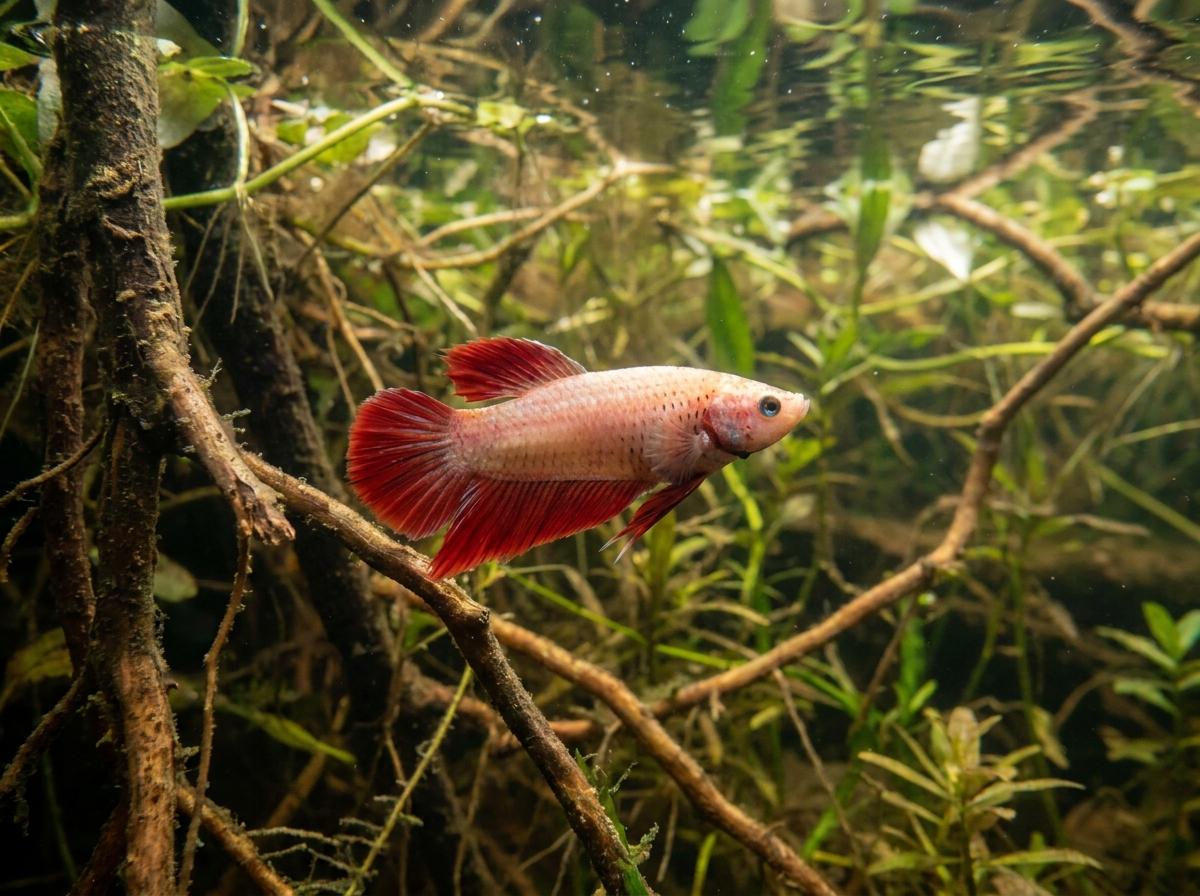
Cambodian
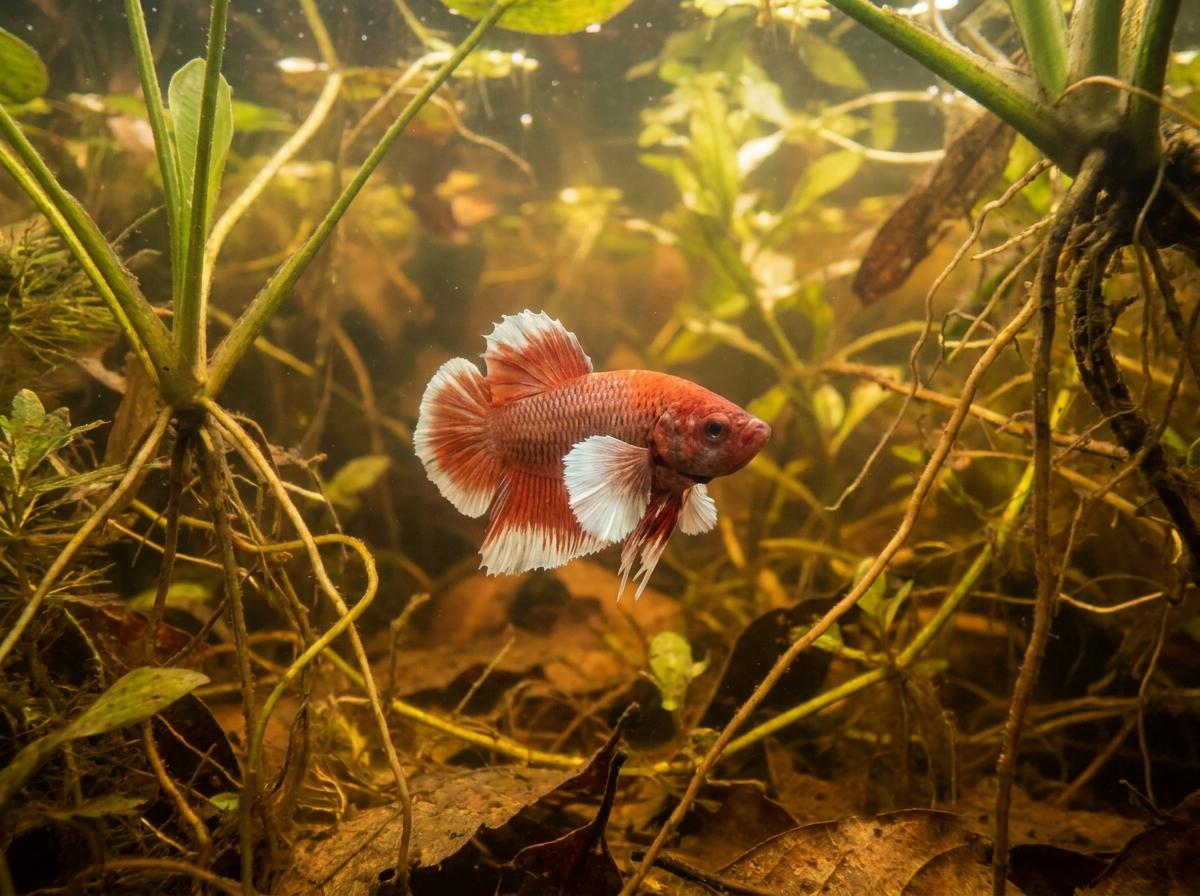
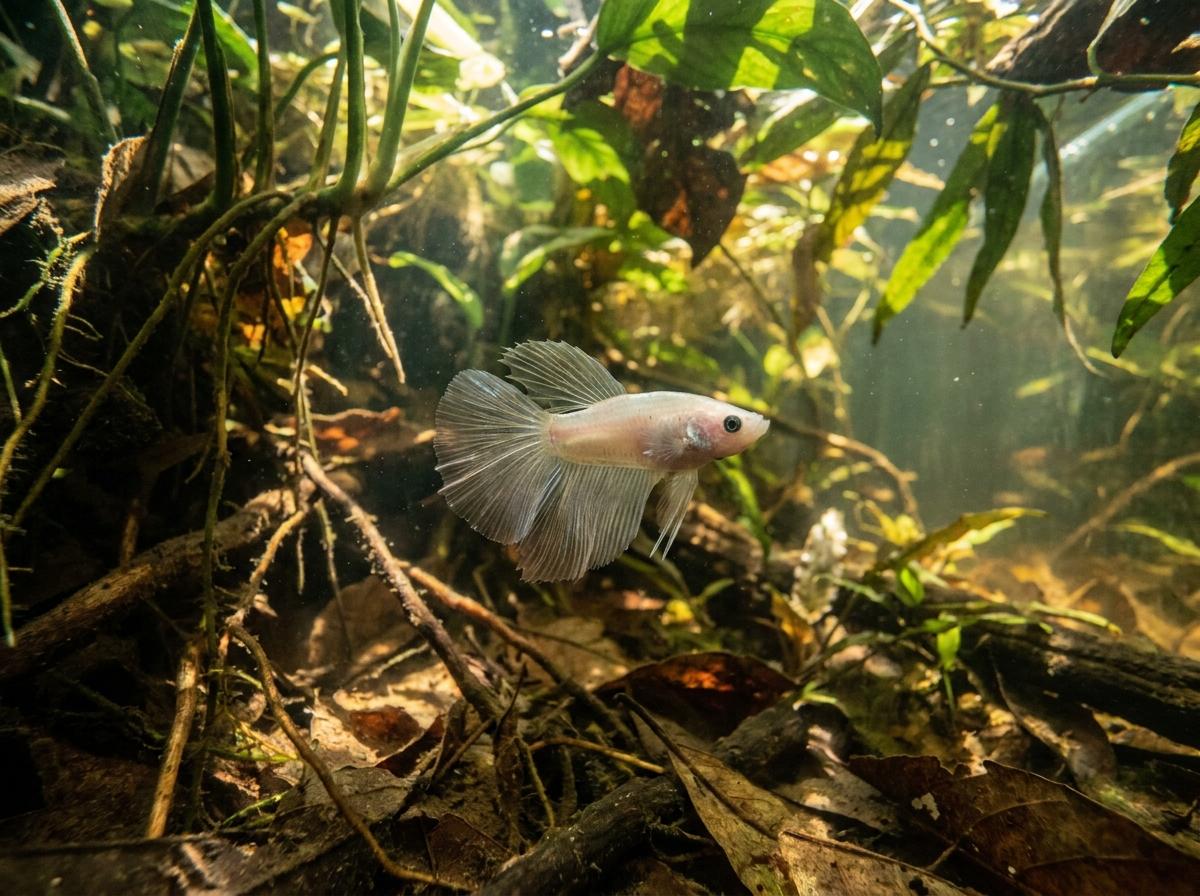
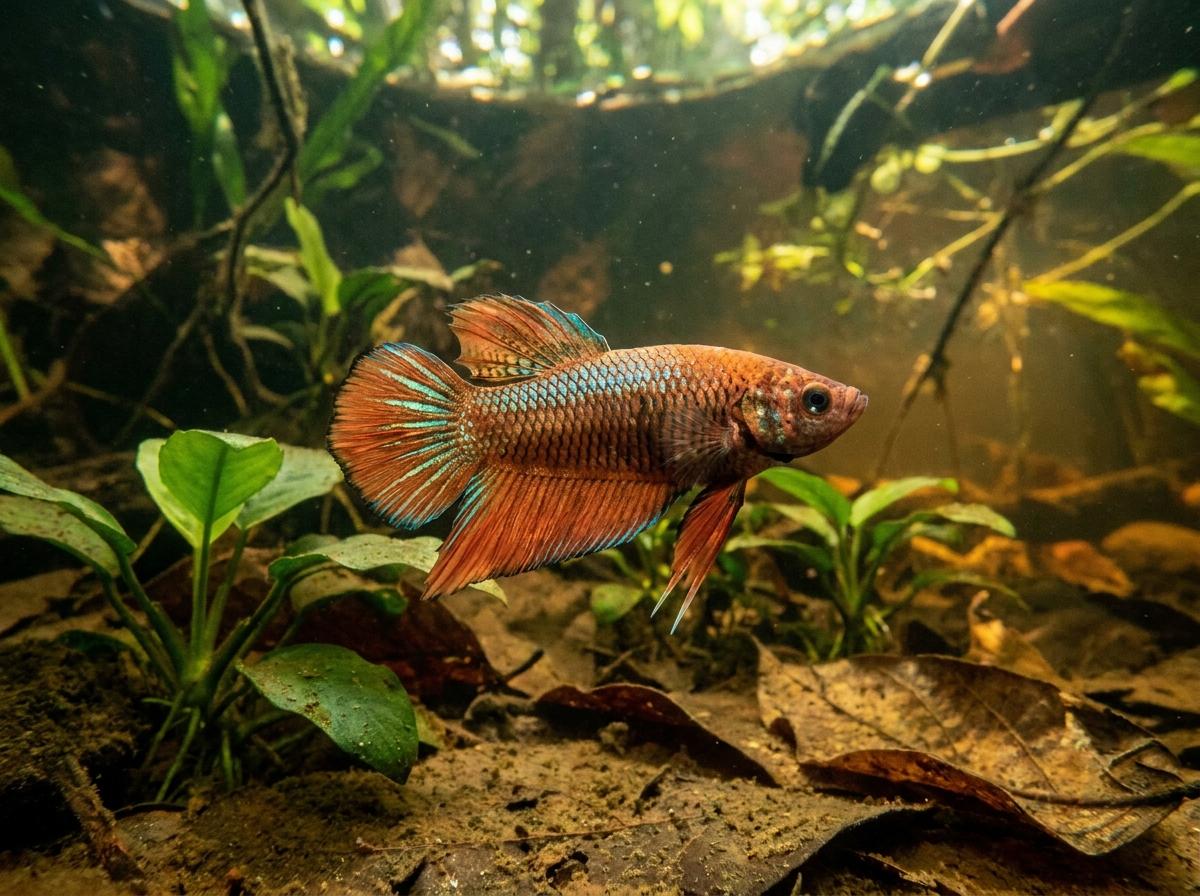
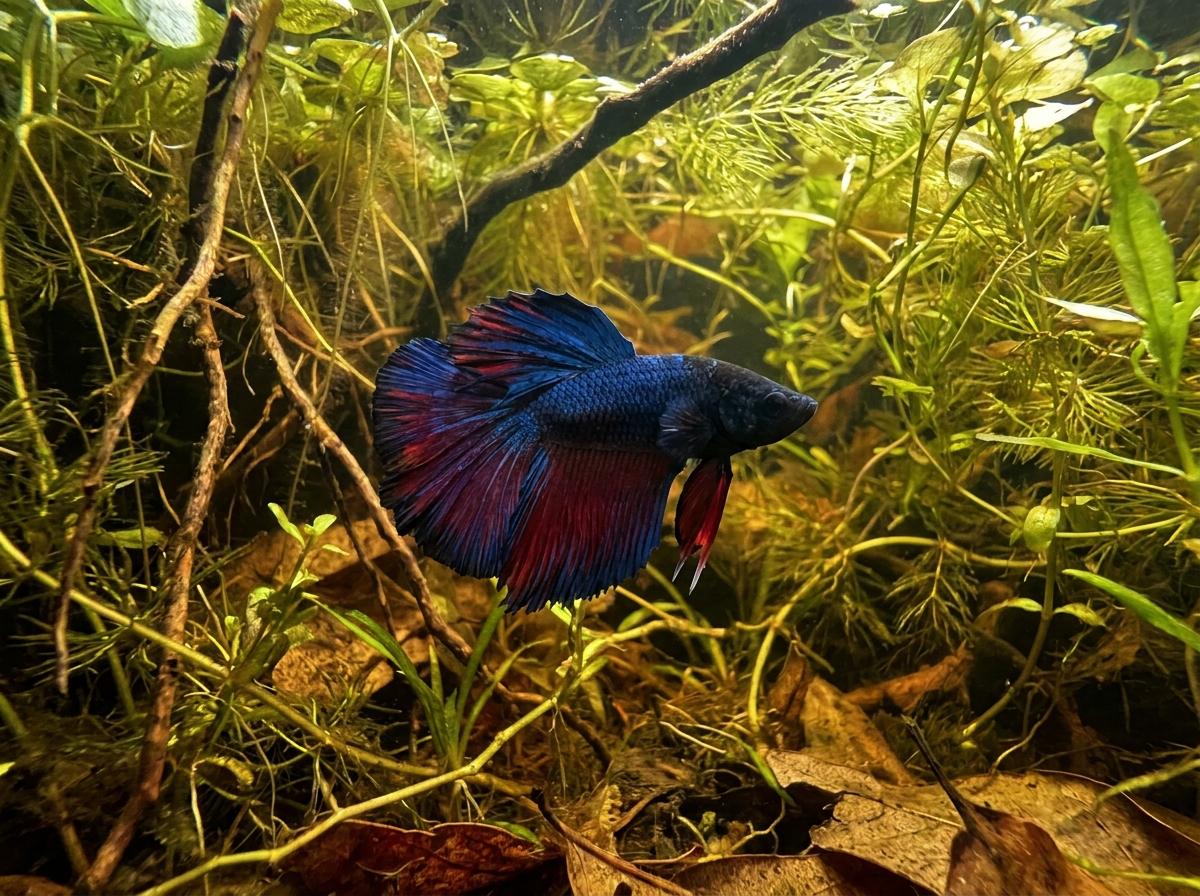
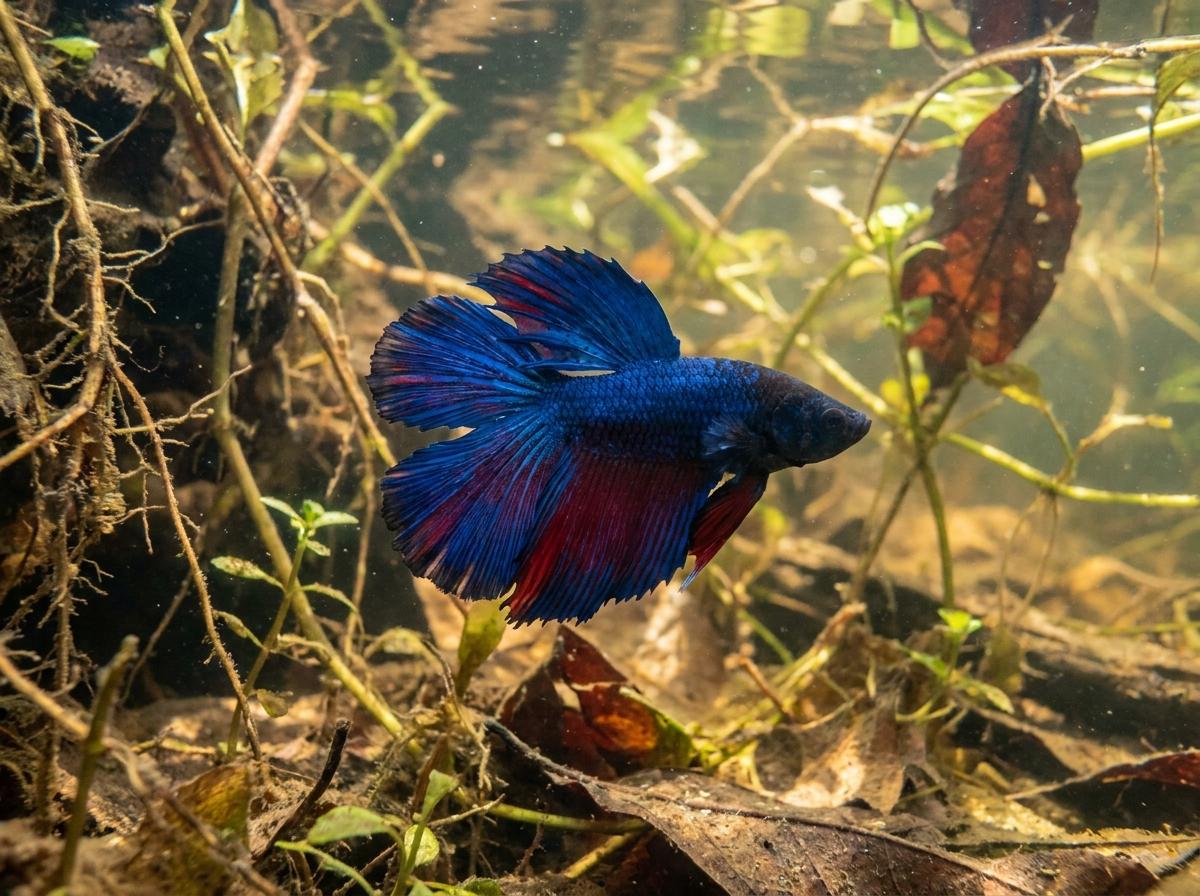
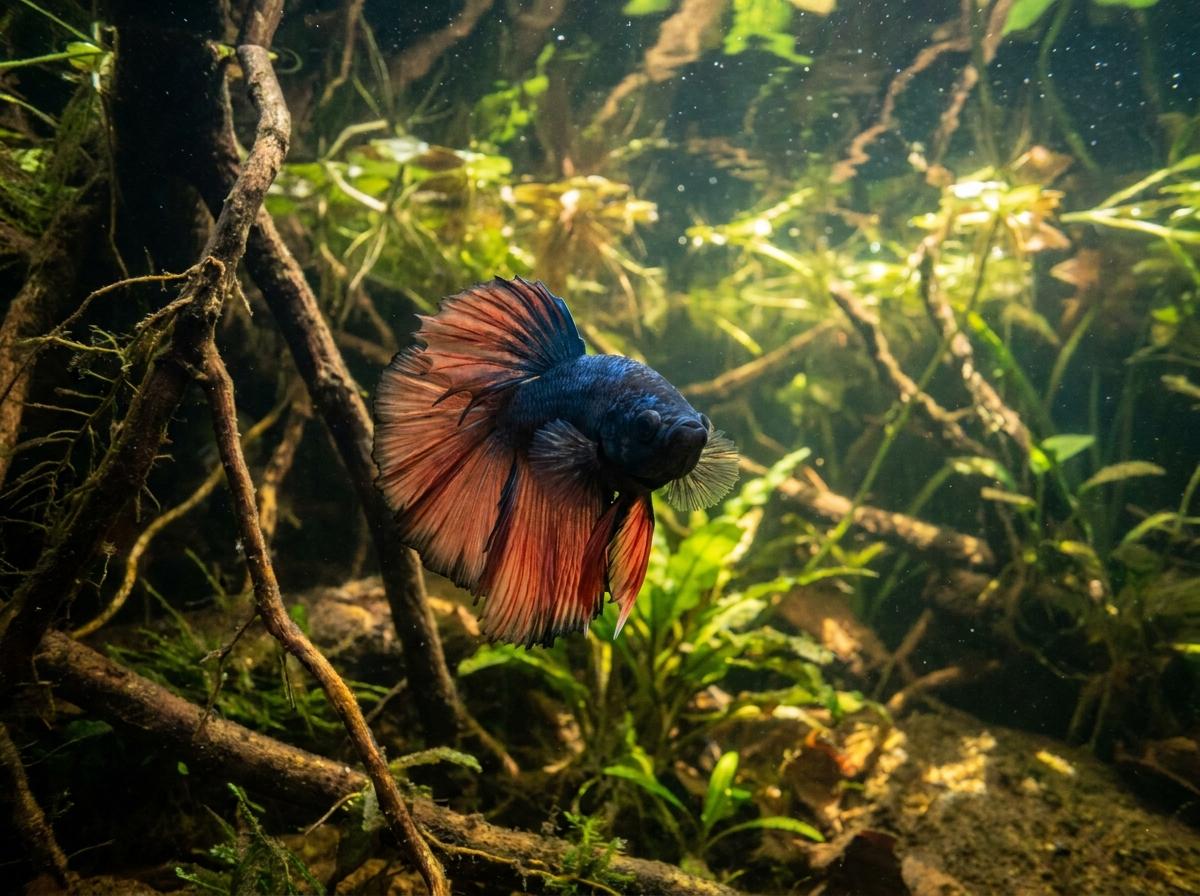
Cambodian is a color pattern in the Siamese fighting fish, Betta splendens. It is not a breed, not a species, and not a statement about where a fish was bred. A Cambodian betta has a pale flesh or cream body carrying almost no dark pigment, paired with fins in a strongly contrasting color, traditionally red. That single contrast, pale body against saturated fins, is the whole diagnosis. You can compare it against the other varieties on the Creatures betta fish page or look at what is currently listed as Cambodian on the marketplace.
The confusion worth clearing up first is that the show world and the breeding world use the word differently. The International Betta Congress, which publishes the exhibition standards judges work from, defines Cambodian for judging purposes as a flesh colored body with fins of another color, and says plainly that this judging term should not be confused with the genetic sense of the trait, which it gives as the absence of black pigment. Its own terminology chapter uses Cambodian as the example of a word whose standards definition and genetic definition do not match.
Below: what the pattern is and is not, why color, fin type and scale type are three separate things that get mixed up in listings, where the look came from, how to tell a Cambodian from the fish it is mistaken for, and what one actually needs to be kept well. That last part is the section that matters most, because the way this species is sold and kept, very often in small barren jars, is a documented welfare problem, and none of it has anything to do with color.

Browse listings, public profiles, breeders, or add your animal.
What “Cambodian” actually means
The International Betta Congress standards give the judging definition in one line: the body must be flesh color and the fins may be any other color except clear. Within that, the classic version has its own name. A Traditional Cambodian is a flesh colored body with red fins, and fins in any other color are collected together as Cambodian AOC, meaning any other color. The standards then add the sentence that resolves most arguments in betta forums: the judging phenotype term Cambodian should not be confused with the genetic definition of the trait, which is the absence of black pigment, and the genetic definition is not used for judging.
That distinction has consequences on a show bench. Because a Cambodian carries a body color and a fin color that differ, it is judged in the group for two colored fish rather than the group for single colors. The IBC gives exactly this case as its example of a classification error: a Traditional Cambodian entered in the red class has to be disqualified, because it violates the single color group the red class belongs to. The fish is not faulty. It was entered under the wrong idea of what it is.
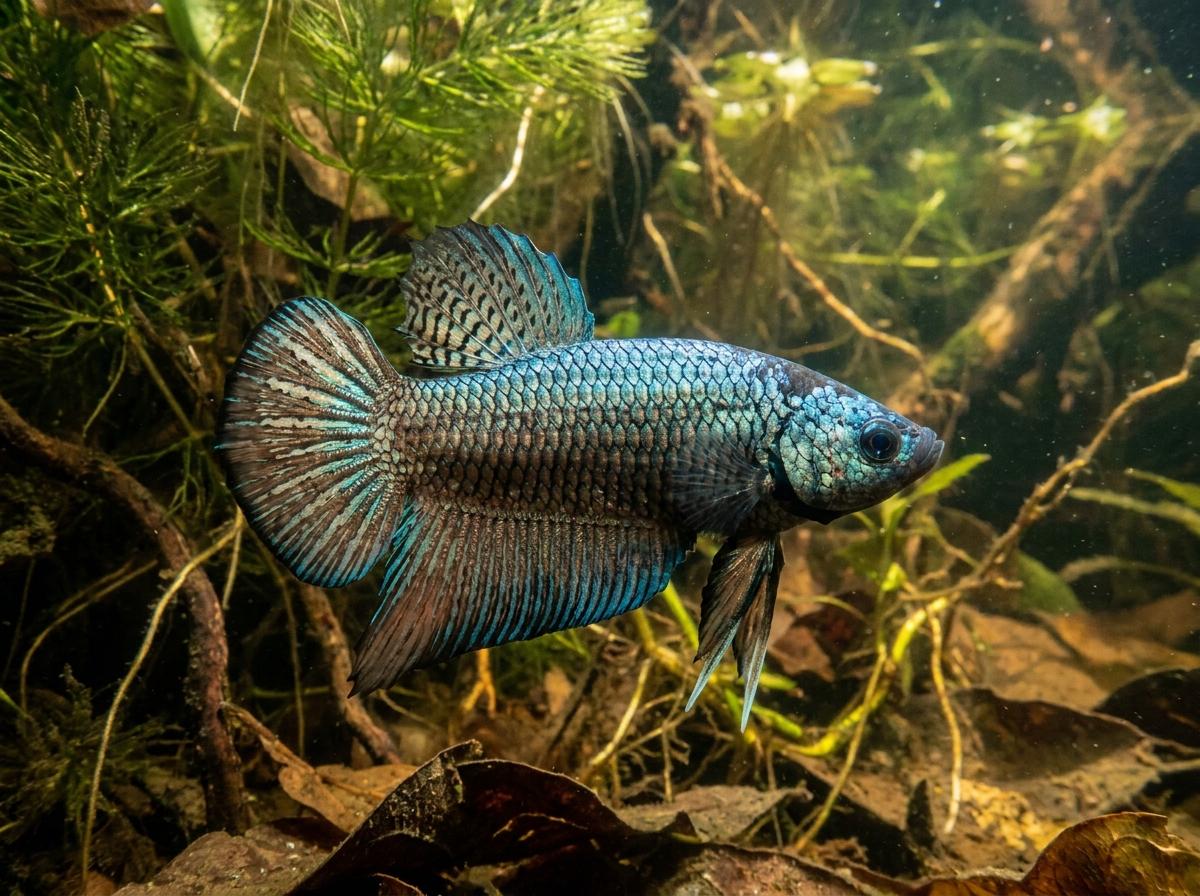
The name is old hobby shorthand and it is not a provenance claim. Cambodia does sit inside the range usually given for the species, along with Thailand, Laos and southern Vietnam, though the US Fish and Wildlife Service ecological risk screening summary for Betta splendens shows that even the native range is contested, since another authority quoted in the same document treats the species as endemic to Thailand. Either way, a Cambodian betta in a shop is a domesticated fish bred for a look, not an import from a particular country, and no seller should imply otherwise.
Color, fin type and scale type are three different axes
This is the part that makes betta listings hard to read, and it is worth getting straight before you shop, because the same fish will be described three different ways by three different sellers.
Color and pattern is one axis. The IBC devotes a whole chapter to color and pattern groups: single colors, two colored fish, patterned fish such as marble and butterfly, and so on. Cambodian lives here, as a light body with contrasting fins.
Body and finnage is a separate axis, with its own chapter and its own vocabulary. A halfmoon is defined by a caudal spread of 180 degrees, forming a clean letter D. Plakats are short finned, doubletails carry a split caudal. Note that some familiar retail words are not show classes at all: the term super delta, used for a caudal spread that is wide but stops short of 180 degrees, does not appear as a class in the 2025 IBC standards, which measure spread instead. If that is the shape you are after, the super delta betta page covers it in its own right.
Scale and iridescence is the third axis. The IBC defines dragon scale as scales thickened by a heavy layer of metallic color over the body with a full mask over the head, so the fish looks armor plated. Hobby names in that family, including the one covered on the samurai betta page, describe that heavy metallic scaling rather than a body color.
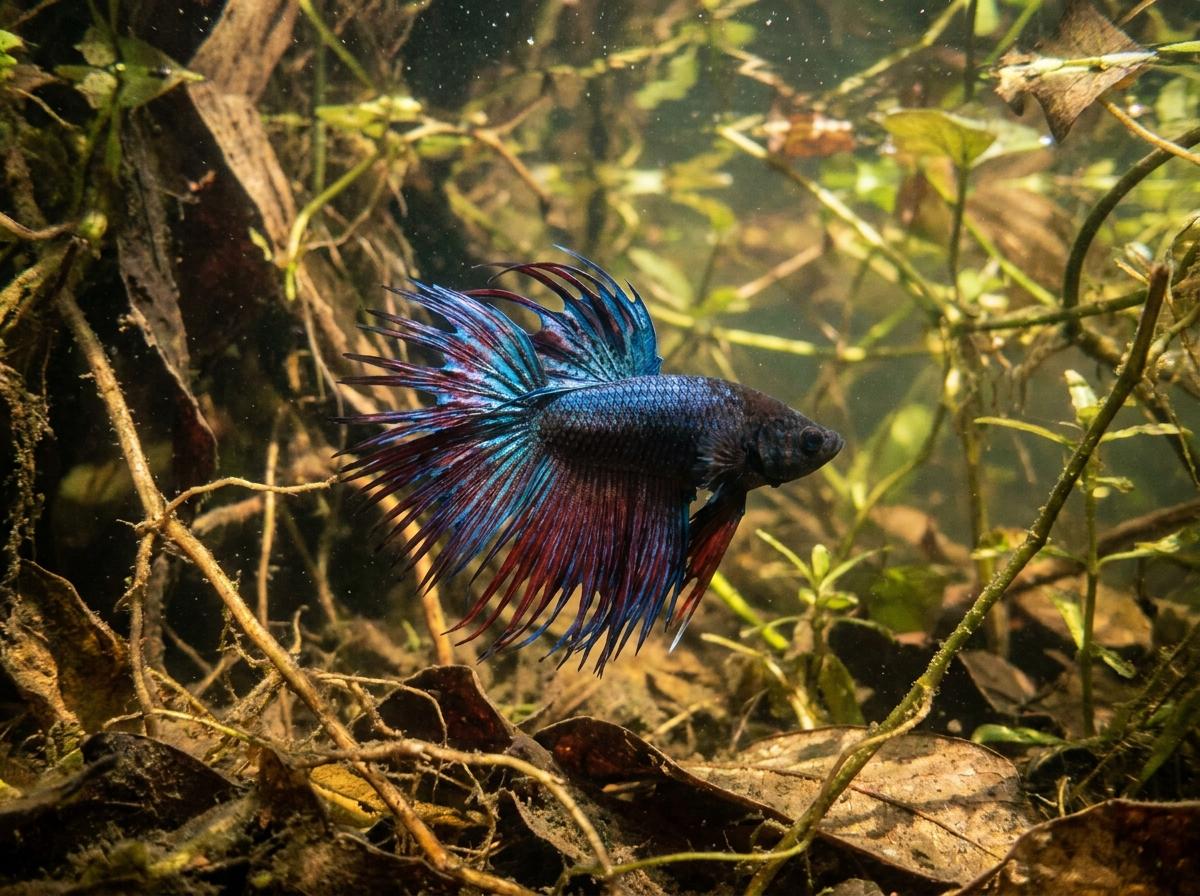
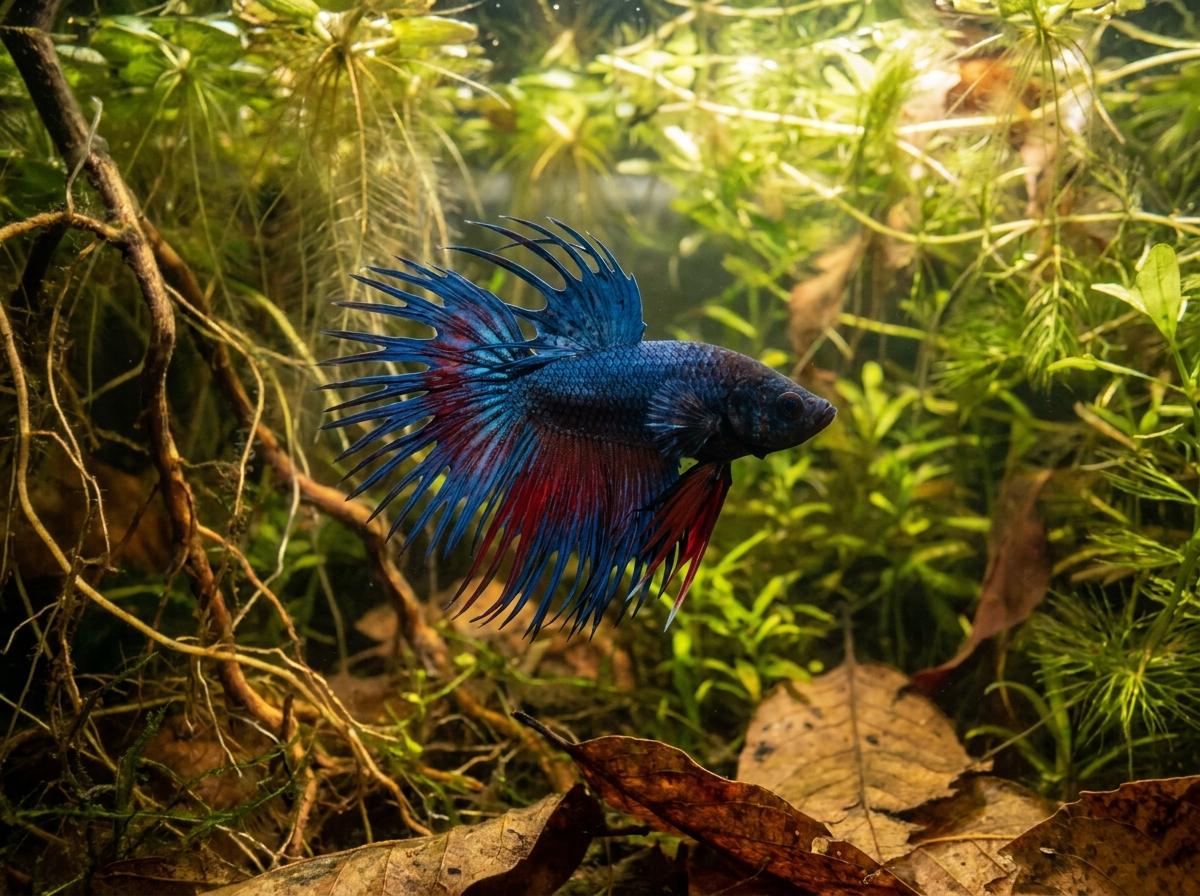
Because these axes are independent, they stack. Trade listings recorded in the same federal screening document include a Cambodian crowntail and a Cambodian veiltail: one color pattern, two different fin types, two very different looking fish. When you read a name like that, split it into its parts: each part describes a different trait axis, and neither part on its own tells you the fish’s full genotype.

Where the pattern came from
Siamese fighting fish are one of the oldest domesticated fishes. Genomic work published in Science Advances by Kwon and colleagues in 2022 notes reports of selective breeding for fighting in Thailand as early as the 14th century, with breeding for ornamental purposes beginning in the early 20th century. Everything a modern hobbyist recognizes as a betta variety, Cambodian included, comes out of that second, much shorter ornamental period.
The wild starting point is a dark fish. Regan’s original 1910 description, reproduced in the federal screening summary, records a dark greenish olive back, red below, and every scale edged with black. Later descriptions of wild stock call them brown and green. Against that baseline, the Cambodian look is best understood as a subtraction: the dark pigment that normally covers the body is largely gone, while color in the fins remains.
How well is that understood genetically? Honestly, partly. Color inheritance in this species has been studied since at least Wallbrunn’s 1958 breeding study in Genetics, and the hobby has treated Cambodian as a simple recessive for decades, which is why breeders talk about pairing two Cambodians and expecting Cambodian fry. Treat that as working convention rather than a documented molecular fact.
What the modern genomic work does show is that betta color is built from several loci of large effect. Kwon and colleagues mapped a locus overlapping the gene slc2a15b that strongly affected the saturation of red in the fins but not on the body or head, and wrote that intense color on the fins relative to the body is the phenotype breeders call the Cambodian variety, which their results suggest slc2a15b contributes to. Other peaks in the same study sit near genes affecting the proportion of black and blue. A separate mapping study of fin shapes and colors in the fighting fish traced albinism, defined there as a total lack of black pigment in fins and body except the eyes, to a single recessive locus, which is a different trait from Cambodian and worth keeping distinct.
So: the pattern has a name in the standards, a defined phenotype for judging, a long history in breeding practice, and a candidate gene with published support. It does not yet have a tidy, fully described molecular mechanism, and anyone selling you one is going beyond the evidence.
Telling a Cambodian from its lookalikes
Pale bodied bettas are easy to mix up. Four checks separate most of them.
- Look at the fins. A Cambodian has colored fins. A cellophane, which the standards describe as a colorless flesh colored body with transparent fins and dark eyes, has fins you can see through. Fin color is the line between the two.
- Look at the eyes. An albino has no color in body or fins and no pigment in the eyes either. A Cambodian has a normal dark eye. If the eye is unpigmented, the word you want is not Cambodian.
- Look for patchiness. Marble is described in the standards as a transposon driven effect, a jumping gene that removes pigment from areas of the body and fins and leaves an irregular pattern in patches, flecks, dots or streaks. Marbled fish are famous among breeders for shifting as they grow, so a pale patch today is not proof of a pale bodied line.
- Look at the head. The standards note that red strains developed out of light bodied Cambodian lines lack the dark undercolor and often show cream or flesh on the head, while a dark bodied red shows dark or olive there. That single detail is often how a judge separates a light bodied red from a dark bodied one.
None of these are moral judgments about a fish. A pretty marble is a pretty fish. They matter when you are paying a premium for a named pattern, or when you are planning a pairing and need to know what you actually have.
Care: what a Cambodian betta actually needs
The pattern changes nothing about husbandry. A Cambodian betta needs exactly what any Betta splendens needs, and the reason this section is long is that the default cultural picture of the species, a fish in a small unheated bowl or a vase on a desk, is a welfare failure rather than a style choice.
A real tank, planted and furnished
The strongest evidence available is a controlled behavioral study. Clark-Shen and colleagues, publishing in Animal Welfare in 2024, rotated male Siamese fighting fish through five housing conditions ranging from a 1.5 liter jar up to 19.3 liter tanks, and found the fish were significantly more active and spent significantly less time resting and performing abnormal behaviors, described as hovering and stereotypic swimming, in the large tank than in the smaller ones. Fish in a large but barren tank performed more abnormal behavior than fish in a large tank with furnishings. Their recommendation is a minimum of 5.6 liters for display and sale, larger tanks for keeping one at home, and gravel, live plants and refuges in every tank. The full paper is open access.
Veterinary guidance lands in the same place with a rounder number. The University of Illinois College of Veterinary Medicine states in its pet health column on bettas that they should not live in bowls and should ideally be in a five gallon tank or larger, with decorations that leave open swimming space and no sharp edges that could tear fins. Five US gallons is about 19 liters, which is roughly the volume that produced the best behavior in the study above. Treat that as the working floor for a single betta at home.
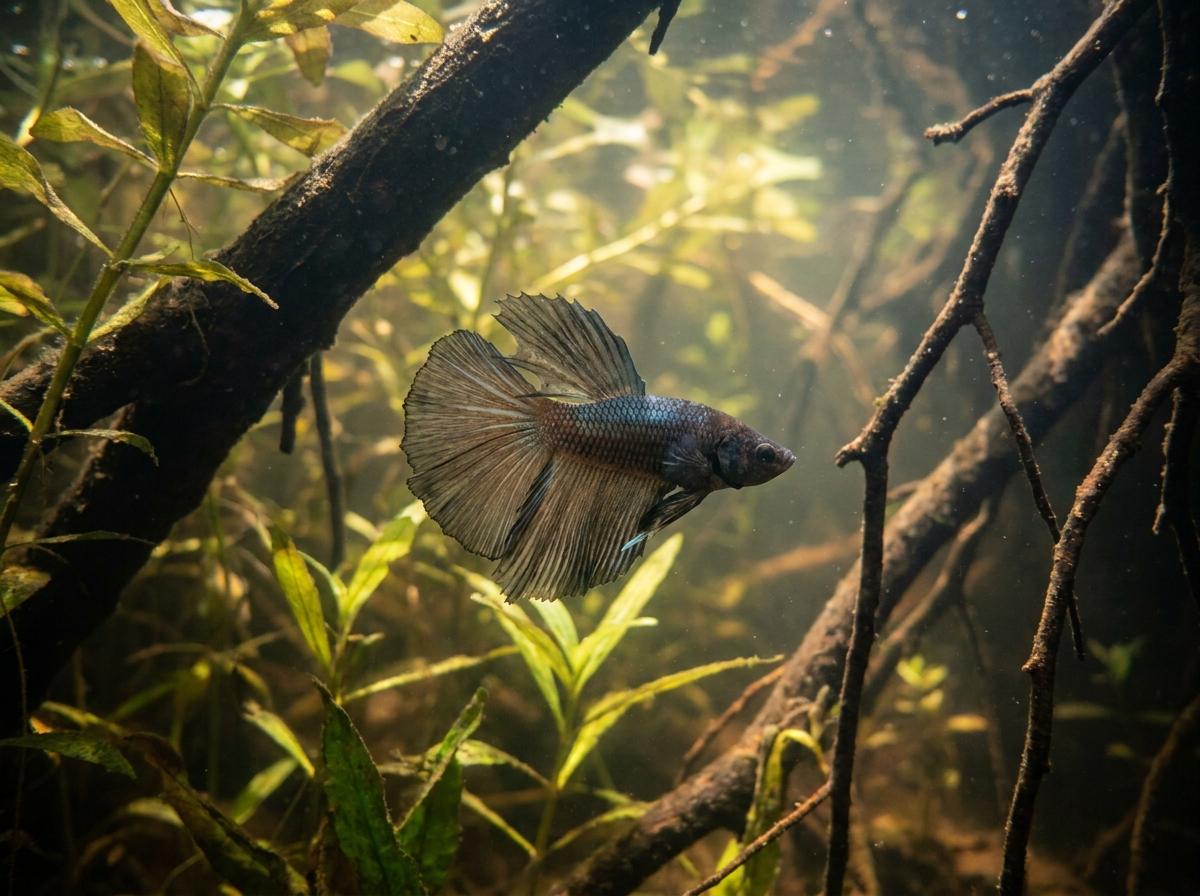
Furnish it. Wild bettas live in shallow ponds and rice paddies with heavy vegetation that gives them cover from fish eating birds, so plants, a cave and broad leaves to rest on are not decoration, they are the structure the animal is built to use.
Heat, and a heater
This is a tropical fish and it does not do well at room temperature. The Illinois column gives a range of 76 to 81 degrees Fahrenheit, about 24 to 27 Celsius, and says directly that an in-tank heater will be needed because most homes are cooler. Reference compilations quoted in the federal screening summary put the aquarium range at 24 to 30 Celsius, and field measurements of natural habitats during the breeding season averaged close to 30 Celsius. Stability matters as much as the number: an unheated tank tracks the room, so the fish rides a temperature swing every day and night.
Filtration, gentle flow, and a cycled tank
Bettas need clean water, but they are poor swimmers in current, particularly the long finned varieties. The Illinois guidance is a low flow filtration system, which both prevents toxin build up and avoids fin damage from strong suction.
Cycling is the part most new keepers skip. The Merck Veterinary Manual’s page on the management of aquarium fish notes that total ammonia nitrogen or nitrite, or both, are often high enough in aquariums to cause toxicity, that a biofilter in a tropical tank can take up to eight weeks to establish, and that with fishless cycling the fish can be added safely once no ammonia or nitrite is present. Plan the tank several weeks before the fish. Tap water also needs treating first, because it carries chlorine and chloramine and sometimes heavy metals.
Surface access and a lid
Bettas belong to the labyrinth fishes. The labyrinth organ is a pharyngeal diverticulum that lets them take oxygen directly from the air, and it is also what produces the bubbles a male uses to build a nest. Practically, that means the water surface is part of the habitat: keep it calm, keep it reachable, and leave a layer of warm humid air between the water and the cover. Keeping a lid on the tank is standard keeper practice, since a startled fish can leave the water. The IBC show rules make that explicit for wild type and giant bettas, which they describe as prone to jumping when disturbed and require to be shown under a secure cover, and a home tank is easier to jump out of than a show jar.
One male, one tank
Male bettas defend territories and display and fight aggressively toward other males, an aggression that centuries of selective breeding for fighting deliberately intensified. The Illinois veterinary guidance is blunt: they should not be housed with any other betta fish, because they will fight and injure each other. Two males in one tank is not a risk to manage, it is an injury waiting to happen.
Visual access counts too. In the tank size study, researchers taped the ends of every tank so fish in neighboring tanks could not see each other, which tells you how researchers treat the sight of a rival. Provoking display at a mirror or a neighbor for entertainment is not enrichment.
Feeding
Bettas are carnivores. In the wild they eat mosquito larvae and other aquatic insects. In a tank, the veterinary guidance is a balanced pelleted or flaked food daily, offered in the amount the fish can eat within three to five minutes with nothing left over, with high protein treats such as bloodworms or brine shrimp given occasionally rather than as the diet. Uneaten food is a water quality problem as much as a nutrition one.
Health, and when to call a vet
The conditions listed for the species in the federal summary are the familiar aquarium ones: fin rot, columnaris, which shows as cotton wool like lesions, white spot and velvet. Most of them track back to water quality, temperature and injury rather than bad luck. Long finned fish snag on sharp decor, so smooth ornaments and soft plants earn their place.
Watch for clamped fins, loss of appetite, labored breathing at the surface, white patches or ragged fin edges, and treat a change in behavior as a reason to test the water first. Medical decisions belong to a veterinarian, ideally one who sees fish or zoological companion animals, and the Illinois column points owners in exactly that direction.
Never release one
If keeping the fish stops working, rehome it. Betta splendens has escaped and been released in several countries, and the federal screening summary records a large and persistent invasion of the Adelaide River floodplain near Darwin in northern Australia, first verified in 2010 and expanding after flood years. A tropical fish tipped into a warm waterway is not a rescue.

Buying a Cambodian betta
Named patterns attract a premium, which is a reason to check what you are getting.
- Look at how the fish is being kept right now. A seller who keeps stock in heated, filtered water is telling you something a photograph cannot. Cups and unheated jars on a shelf tell you something too.
- Check the fish, not the name. Fins intact and carried loosely rather than clamped, clear dark eyes, an even pale body, no white cottony patches, active response when you approach. Fin damage in a long finned fish takes weeks to grow back.
- Ask what the pattern actually is. A pale bodied fish may be Cambodian, cellophane, marble or a light bodied red. If you are buying for breeding, ask about the parents and whether the line throws marbles.
- Ask the age. Males are usually several months old by the time they are sold, which matters, because published compilations list a maximum reported age of about two years for the species, and most keepers see two to three years from a healthy adult.
- Write it down. Pattern, fin type, seller, arrival date, water parameters, treatments. It is a small animal with a short life and no paperwork tradition, and the record is the only memory you will have.
You can browse bettas listed on the Creatures marketplace and look for breeders and shops in the Creatures breeder directory.
Frequently asked questions
Is a Cambodian betta a different species from a normal betta?
No. It is Betta splendens, the same species as every other domestic betta. Cambodian names a color pattern, a pale flesh or cream body with contrasting fins.
Does a Cambodian betta come from Cambodia?
Not in any meaningful sense. The species range as usually given includes Cambodia, Thailand, Laos and southern Vietnam, and one of the authorities quoted in the federal screening summary treats it as endemic to Thailand. The pattern name is hobby shorthand for the look, and the fish in shops are domesticated ornamental stock.
What is the difference between Cambodian and cellophane?
Fin color. Both have a pale flesh colored body. A cellophane has transparent fins, a Cambodian has fins in a color, and the traditional version has red ones.
Are Cambodian bettas rare or expensive?
Cambodian is one of the older named patterns and it is widely bred, so it usually sits with ordinary stock rather than at rarity prices. Actual asking prices vary with fin type, breeder and country, and there is no reliable public price series for betta varieties, so treat any confident single number with suspicion.
Do Cambodian bettas need different care?
No. The pattern is a difference in pigment, not in physiology. Every requirement in the care section applies identically to a Cambodian, a marble and a wild type.
Can two Cambodian males share a tank if it is big enough?
No. Male bettas fight and injure each other, and veterinary guidance is that they should not be housed with other bettas at all. One male per tank.
Can a Cambodian betta change color?
A Cambodian body color is generally stable, but pale patches on a young fish can also come from marble genes, which breeders widely report shifting as the fish matures. If a fish was sold pale and darkened later, marble is the usual explanation.
Do this next on Creatures
Whether you are researching the pattern, hunting for a specific fish, or already keeping bettas, Creatures is the records, marketplace and directory layer to do it in one place.
Compare the varieties. Start from the betta fish species page, then read across the axes: the super delta page for fin shape and the samurai page for heavy metallic scaling.
Find a fish. Browse Cambodian bettas on the marketplace and search trusted breeders and shops in the Creatures directory. New to the marketplace? See saving searches and using your watchlist.
Get alerted. Named patterns appear and sell quickly, so set a free Cambodian betta listing alert and we will tell you when one is posted. No account needed to start.
Add your betta. Already keeping one? Create a free animal profile in a few minutes, no account needed to start. The walkthrough is in adding an animal to Creatures.
Track water, feeding and health. Add a record for a water change, a temperature reading or a treatment. The record sheet opens for any visitor to look around, and a free account saves what you enter. See adding a record and health and medical records for the how-to, and reminders and upcoming care to put the next water test on a schedule.
List your fishroom. Breeding bettas or running a shop? Create an organization profile, no account needed to start, then read getting listed in the breeder directory so buyers looking for a specific pattern can find you.