

La Fleche
The La Fleche is a rare French chicken best known for one unmistakable feature: a V-shaped comb of two upright red spikes that look like small horns, which earned the black, glossy bird its old nickname of “the devil’s bird.” Behind that striking look is a serious, centuries-old breed. In France it was prized as one of the country’s premier table birds, producing the fattened capons and poulardes that were sought after in the markets of Paris and Anjou. Today it is a critically rare heritage breed, active and heat-tolerant, laying good numbers of white eggs, and kept mostly by conservation-minded breeders and enthusiasts. This page explains what the La Fleche is, where it came from, how to recognize it, what it produces, and what to know before you take one on.

Browse listings, public profiles, breeders, or add your animal.
What is a La Fleche chicken?
The La Fleche is a rare French breed of dual-purpose chicken that takes its name from the town of La Fleche, in the Sarthe department of the Pays de la Loire region in northwest France, not far from Le Mans. The Livestock Conservancy, the leading heritage-breed organization in the United States, lists it as a distinct standardized breed with black plumage as its only color variety.
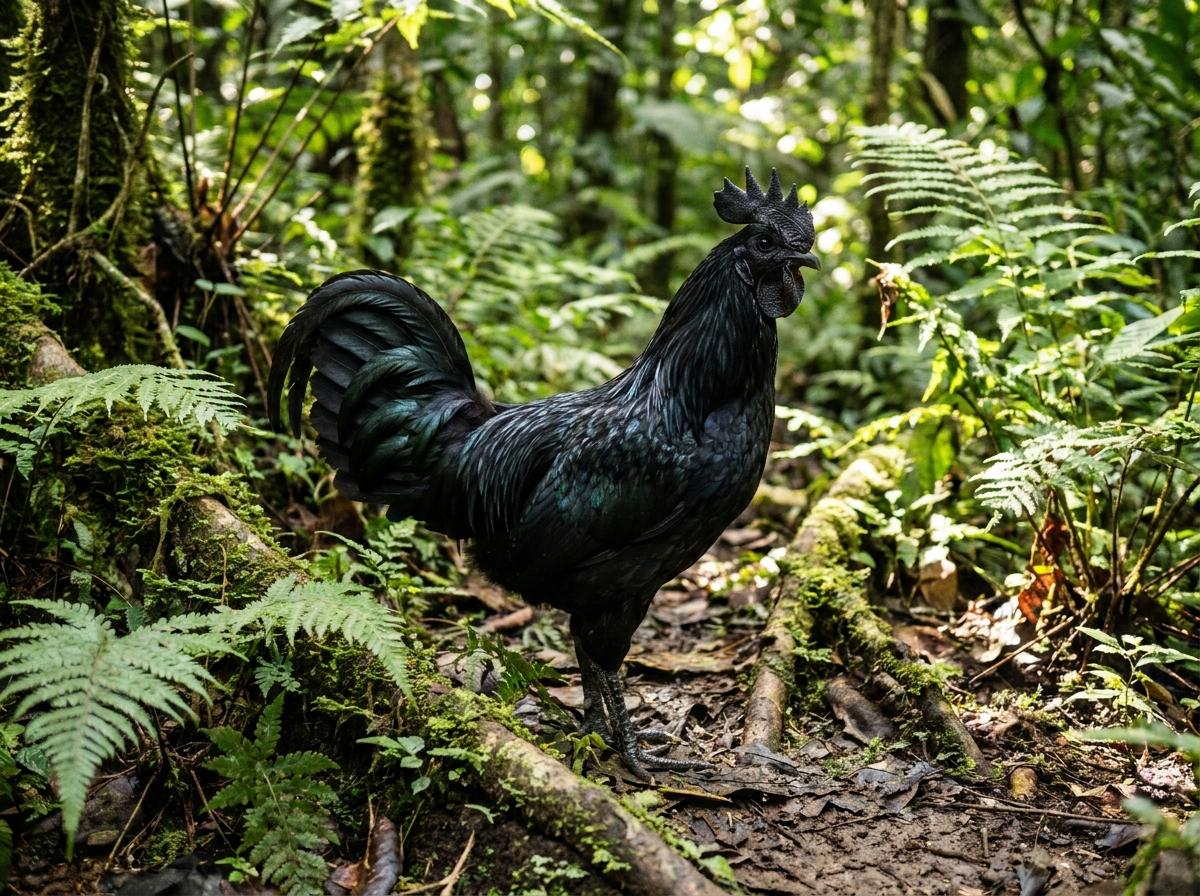
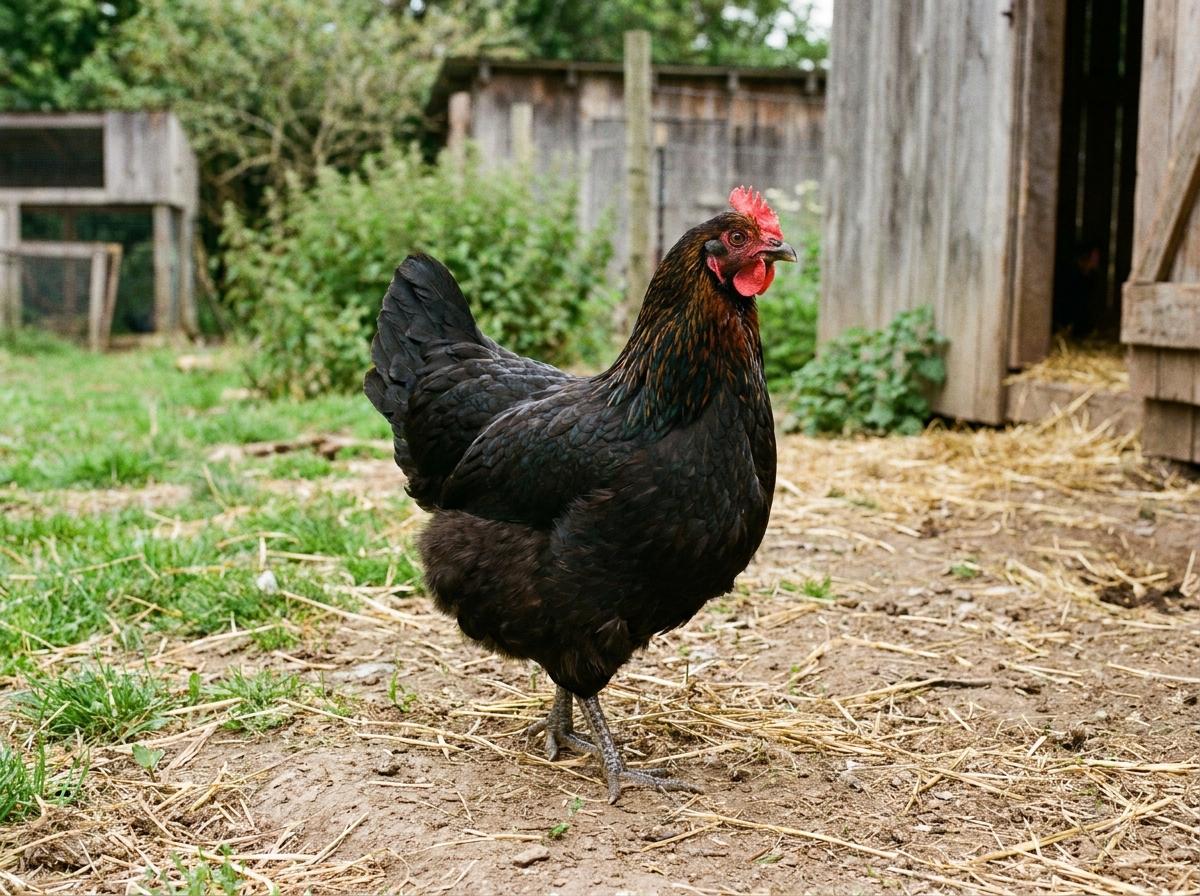
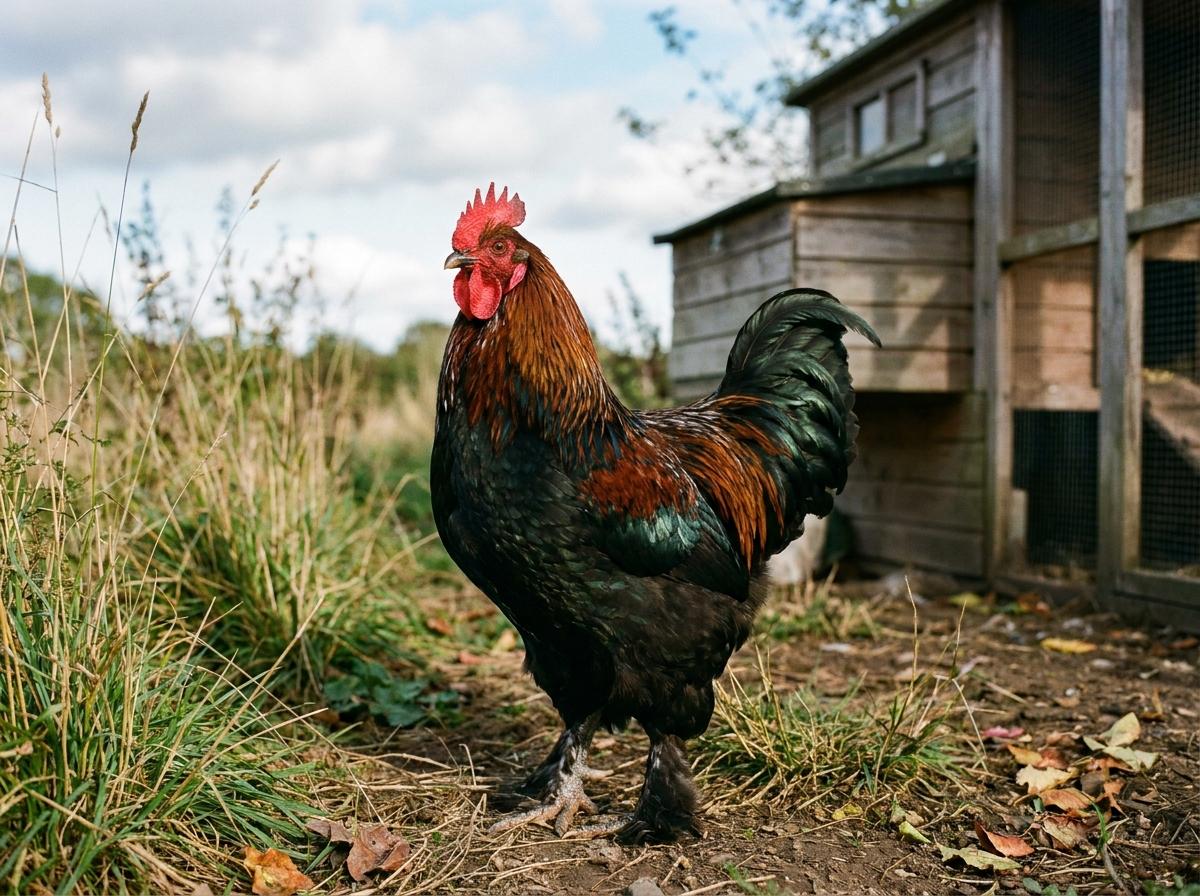
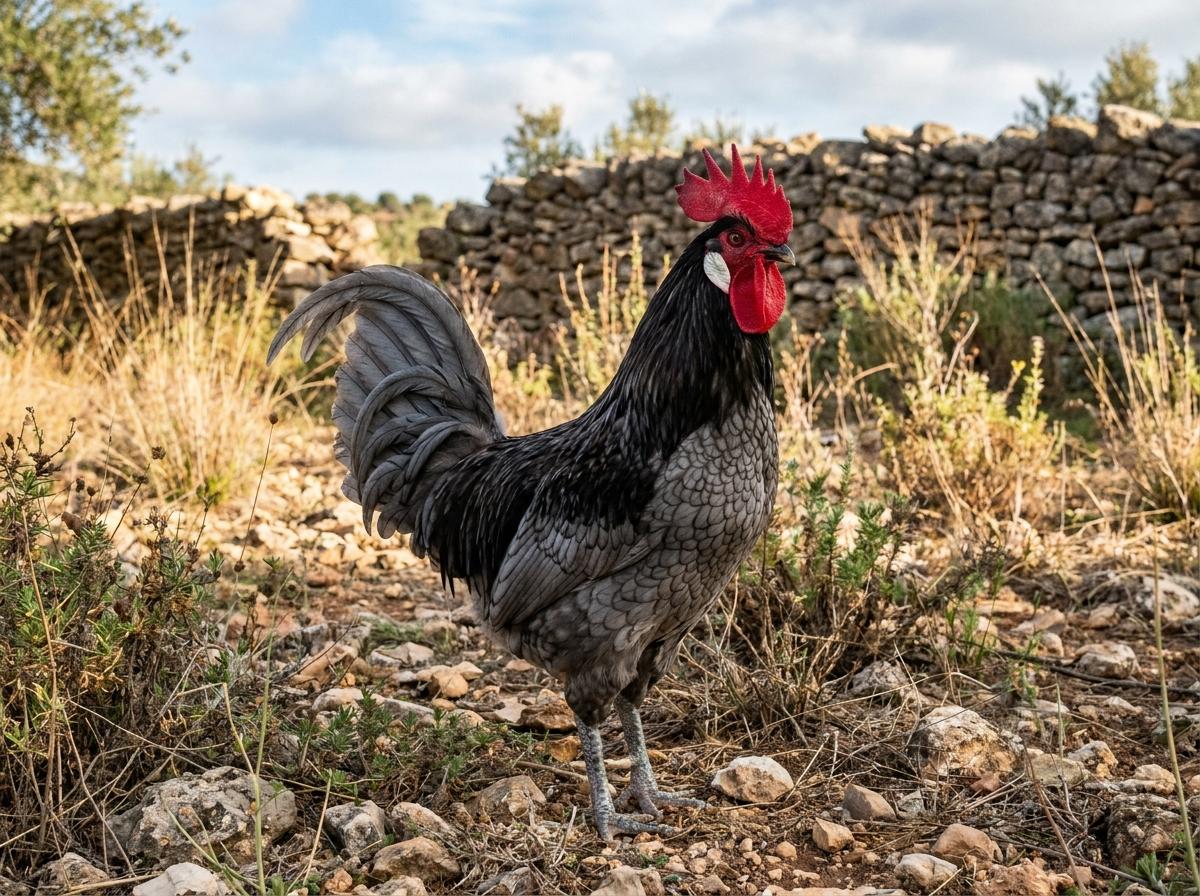
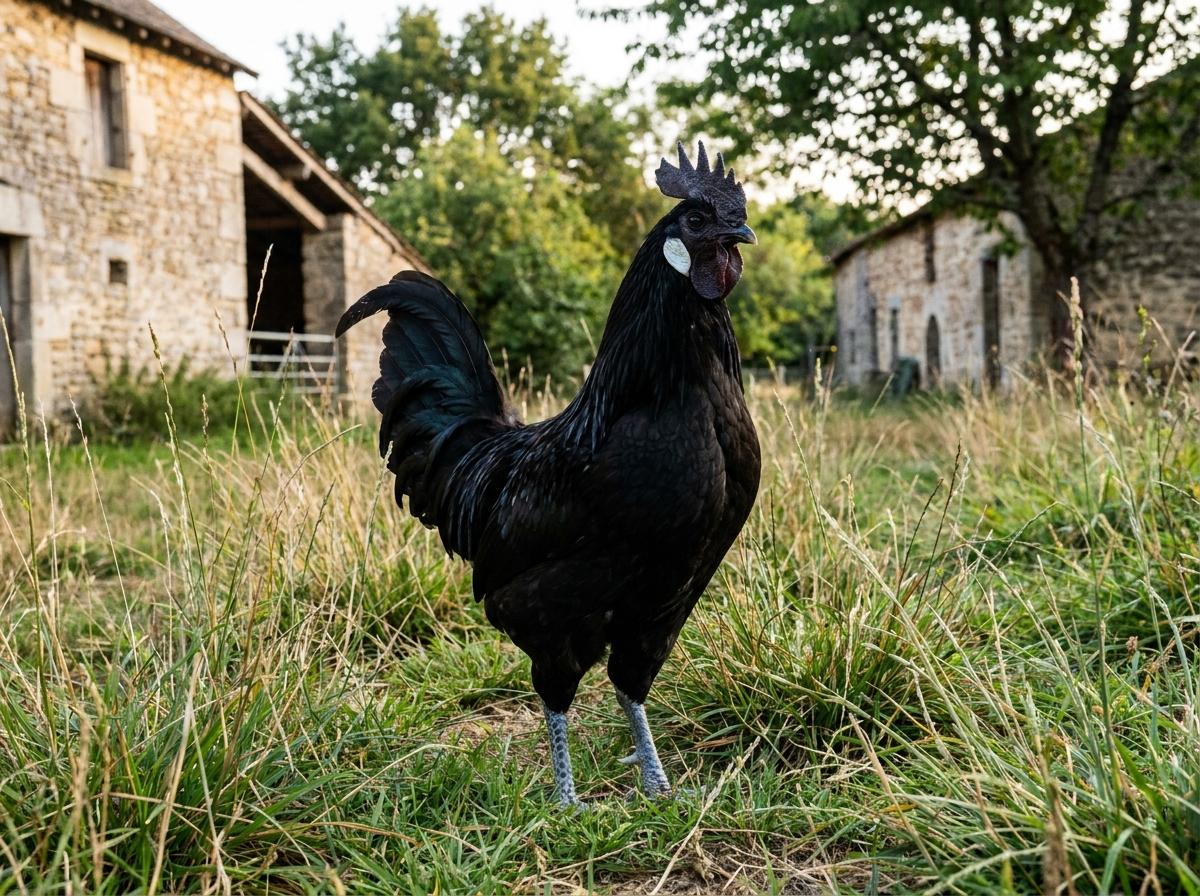
What sets it apart on sight is the comb. Instead of the single upright comb most people picture on a rooster, the La Fleche carries a V-shaped comb of two separate, upright, red points. They look like a small pair of horns, and on a jet-black bird the effect is dramatic enough that the breed has long been called the devil’s bird. The comb is also the likely source of the breed name, since the two points resemble the head of an arrow, and “la fleche” is French for “the arrow.”
Do not let the folklore distract from what the breed actually is. This is a hard-working farm chicken with a long and respected history as a table bird, and a solid white-egg layer on top of that. If you are still deciding which chicken suits you, the broader Creatures chicken species page is a good place to compare the La Fleche against other breeds.
Origin and history
La Fleche is one of the classic old breeds of northwest France. Its recorded history reaches back centuries, and while the finer points of its early development are hard to pin down, the tradition holds that the fowl was developed first around Le Mans, then at Mizeray, and finally at La Fleche, the town that gave it its name. To this day birds of this type are sometimes still sold at the local farmers market as the Fowl of Le Mans.
The breed did not appear in isolation. It belongs to a family of northern French fowl, and breeds involved in shaping it are generally said to include the Crevecoeur, the Breda, and other fowl native to Normandy. That places the La Fleche among the crested and unusual-combed French breeds that share a common regional ancestry.
For most of its history the La Fleche was a market bird first. It was famous for producing exceptional capons (castrated cockerels) and poulardes (fattened pullets) whose meat was celebrated in the markets of Paris and the Anjou region. Among French breeds, the La Fleche was often held up as one of the finest for the table.
The breed reached the United States in real numbers in the 1850s, and it was recognized by the American Poultry Association in 1874, in its single black variety. It never became common in America, though, and its delicate constitution as a young bird worked against it. In France, La Fleche numbers were hit hard by the twentieth century and the Second World War, and the breed has never fully recovered. That history is exactly why it is a conservation priority today.
What a La Fleche chicken looks like
The La Fleche is a tall, upright, active bird that is heavier and more substantial than its tight, close-fitting feathers suggest. Several features together make it hard to confuse with common backyard breeds.
- The V-shaped comb. This is the signature trait. Two upright red points rise from the front of the head in a V, with no single blade and no crest between them. On the black bird they read as a pair of horns, which is where the devil’s-bird nickname comes from.
- Lustrous black plumage. The plumage is black with a distinct green sheen in good light, and black is the only recognized color for the breed. The tail is full and well curved.
- White earlobes. Set against the red face and wattles, the clean white earlobes are a clear identifying mark.
- Red face and long wattles, dark legs. The face is red, the wattles are large and red, the eyes are bright red, and the shanks are a dark slate. The breed also has notably large nostrils.
Adult cocks weigh around 8 lb and hens around 6.5 lb, which makes this a medium to large fowl rather than a bantam-scale bird. Because the feathering is so close and tight, a La Fleche in hand often feels heavier than it looks.

Why “the devil bird”
The nickname is pure appearance, not behavior. A large black chicken carrying two red horns where you expect a normal comb is unusual enough that the folklore practically wrote itself. It is worth being clear that the horns are simply the breed’s comb type. There is nothing sinister about the bird, and the name is affectionate shorthand among keepers rather than any comment on temperament. If anything, the striking looks are part of why a small but committed group of breeders keeps the La Fleche going.
How productive is the breed?
For a heritage breed, the La Fleche earns its keep on two fronts.
Eggs. Hens lay roughly 140 to 220 large to extra-large white eggs, with the bulk of production running from spring into fall (broadly March through October), according to The Livestock Conservancy. That is a respectable output for a heritage dual-purpose breed, and the white shell is a nice contrast to the brown eggs of many common backyard hens. La Fleche hens are generally not broody and are not considered attentive mothers, so if you want to hatch chicks, plan on an incubator or a broody hen of another breed.
Meat. This is the breed’s historic claim to fame. La Fleche were prized in France for producing capons and poulardes with fine, tender, close-grained flesh and well-developed breast meat, sold into the top Paris and Anjou markets. The catch for a modern keeper is patience: La Fleche chicks grow fairly slowly, so this is not a fast table bird in the way a modern meat hybrid is. The reward historically was quality, not speed.

Temperament and behavior
La Fleche are active, alert, and independent birds. They are strong foragers and generally do best with room to range, where they can cover ground and find much of their own food. Keepers commonly describe them as flighty and inclined to keep their distance from people, so they are not the lap-chicken breed some backyard owners are looking for. They are not noted as aggressive toward other birds of similar size.
Two practical points follow from that temperament. First, they can and will fly well, so tall fencing or a covered run is worth planning for if you need to keep them in a defined area. Second, while they tolerate confinement, they are happier and calmer with space, so a cramped setup tends to bring out the restless side of the breed. As with any chicken, how much time you spend around them from a young age affects how tame they become.
Husbandry and care
The La Fleche is a hardy heritage breed in the right climate, but it has a couple of specific needs. The notes below cover the shape of good management. Always defer medical decisions to a veterinarian who can examine your birds.
Climate
This is the single most important care point for the breed. The La Fleche prefers warm climates and generally does not do well in the cold. Its large V-shaped comb of two upright points and its long wattles have a lot of exposed surface area, which makes them vulnerable to frostbite in hard winters. If you keep La Fleche in a cold-winter region, plan for a dry, draft-free but well-ventilated coop, and take the usual frostbite precautions for large-combed breeds. In hot, dry conditions the breed is in its element.
Housing and space
Give La Fleche secure housing and, ideally, generous space to range. Because they fly well and are naturally flighty, secure fencing or a covered run keeps them safe from predators and stops them from roaming. Dry footing and clean, dry bedding matter as much for this breed as any other, and good ventilation without cold drafts helps protect that large comb in winter.
Feeding
Feed a complete, balanced poultry ration appropriate to the birds’ age and stage, with constant access to clean water and grit. Active foragers like the La Fleche will supplement a good ration with insects and forage when allowed to range, but the base diet should still be a balanced feed rather than relying on pasture alone, especially for growing birds and laying hens.
Health and records
Routine poultry health management applies: a parasite plan suited to your climate, clean coop hygiene, biosecurity to reduce disease risk, and prompt attention to anything that looks off. The breed-specific watch points are winter comb and wattle care in cold regions and the slow growth of young birds, which historically came with a somewhat delicate early constitution. Keep clear records of hatch dates, lay, treatments, and any health events so you can make breeding and culling decisions on evidence rather than memory. For heritage-breed conservation, good records also help you track bloodlines and avoid inbreeding.

Conservation status and rarity
The La Fleche is genuinely rare. The Livestock Conservancy lists the breed as Critical, its highest level of conservation concern. In the Conservancy’s system, Critical breeds are those with very few annual registrations in the United States and a small estimated global population. In plain terms, this is a breed you are helping to preserve when you keep it well and breed it responsibly, not a bird you will find at every feed store.
That rarity shapes the whole ownership picture. There is no single reliable public price for a La Fleche, and we will not invent one. Expect a small pool of dedicated breeders rather than mass availability, expect to pay a premium relative to common backyard breeds, and expect to do some verification. Because the breed is uncommon and its features are distinctive, ask to see the parent stock, confirm the black plumage and the correct two-point V comb, and be clear about the bird’s health and hatch history before you commit.
If you are set on this breed, the most practical approach is usually to line up a source in advance and be ready to act when birds or hatching eggs become available, since supply is limited and seasonal.
Buying considerations
Because the La Fleche is rare and its look is so specific, buy on evidence rather than on the novelty of the horns.
- Confirm the breed type in person. Look for the clean two-point V comb with no crest, solid black plumage with a green sheen, and white earlobes. These traits together are what identify a correct La Fleche.
- Ask about health and growth. Given the breed’s historically delicate youngstock, ask how the breeder raises chicks and what losses they see. Slow, steady growth is normal for this breed, but you still want vigorous, healthy birds.
- Think about your climate first. If you are in a cold-winter area, go in with a plan for comb and wattle protection, because this is a warm-climate breed by nature.
- Support conservation breeding. For a Critical breed, buying from breeders who keep records and manage bloodlines helps the breed as a whole, not just your own flock.
You can browse current La Fleche listings on the Creatures marketplace and look for breeders and farms in the Creatures directory. Because genuine stock is scarce, a saved listing alert (below) is often the most practical way to catch birds or hatching eggs when they appear. If you are weighing the La Fleche against another hard-to-find heritage layer, our guide to the Iowa Blue chicken covers a comparably rare American breed, and the Egyptian Fayoumi is another active, heat-hardy heritage bird worth a look.
Frequently asked questions
Why is the La Fleche called the devil bird?
Because of its comb. Instead of a normal single comb, the La Fleche has a V-shaped comb of two upright red points that look like small horns. On a glossy black bird the effect is striking, which earned the breed the devil’s-bird nickname. It is about appearance only, not behavior.
What color eggs do La Fleche hens lay, and how many?
White eggs. A hen lays roughly 140 to 220 large to extra-large white eggs, mostly from spring into fall, according to The Livestock Conservancy. They are generally not broody, so hatching usually means using an incubator or another broody hen.
Are La Fleche chickens good for beginners?
They can be kept by a beginner who does some homework, but they are not the easiest first breed. They are flighty and standoffish rather than cuddly, they fly well and need secure fencing, they do poorly in cold weather, and they are hard to find. A keeper who wants an active, striking heritage bird and can meet those needs will do fine.
Are La Fleche chickens cold hardy?
No, cold is their weak point. The breed prefers warm climates and generally does not do well in the cold, and its large two-point comb and long wattles are prone to frostbite. In cold regions, plan for a dry, draft-free coop and frostbite precautions.
Is the La Fleche recognized by a breed standard?
Yes. It was recognized by the American Poultry Association in 1874 in its black variety, and The Livestock Conservancy tracks it as a distinct heritage breed. Black is the only recognized color.
How rare is the La Fleche chicken?
Very rare. The Livestock Conservancy lists it as Critical, its highest conservation concern, meaning very low registrations and a small global population. Keeping and responsibly breeding La Fleche helps preserve the breed.
Do this next on Creatures
Whether you are researching the breed, hunting for genuine stock, or already keeping La Fleche, Creatures is the records, marketplace, and directory layer to do it in one place.
Find stock. Browse La Fleche on the marketplace and search trusted breeders and farms in the Creatures directory. New to searching? See saving searches and using your watchlist.
Get alerted. Genuine La Fleche stock is scarce, so set a free La Fleche listing alert and we will tell you when birds or hatching eggs are posted. No account needed to start.
Add your bird. Already keeping La Fleche? Create a free animal profile in a few minutes, no account needed to start. The walkthrough is in adding an animal to Creatures.
Track eggs and health. Track lay, weight, and health records on Creatures. The record sheet opens for any visitor to look around, and you will need a free account to save what you enter. See adding a record for the full how-to.
List your flock. Breeding this Critical heritage breed? Create a breeder or farm profile (no account needed to start) and get listed in the breeder directory so buyers searching for this hard-to-find breed can reach you.
Sell with confidence. Planning to sell birds or hatching eggs? Learn how seller payout works before you list.