Palfrey
A palfrey was not a breed. It was a job description. In medieval Europe the word named a good riding horse kept for travel, hunting, ceremony, and ordinary daily use, valued above everything else for a smooth ambling gait that let a rider cover long distances without being pounded by a trot. There is no palfrey studbook, no palfrey breed standard, no palfrey height range, and no living population of palfreys, because there was never a palfrey breed for a studbook to close around. What survived is the ride, not the label, and you can still buy it: the gaited breeds carry it, and the Icelandic Horse carries a version of it that ancient DNA has traced back to the same medieval centuries. Below is what the word actually meant, how the gait works, where it came from, what a palfrey cost, why the type faded out, and which horses give you that ride now.

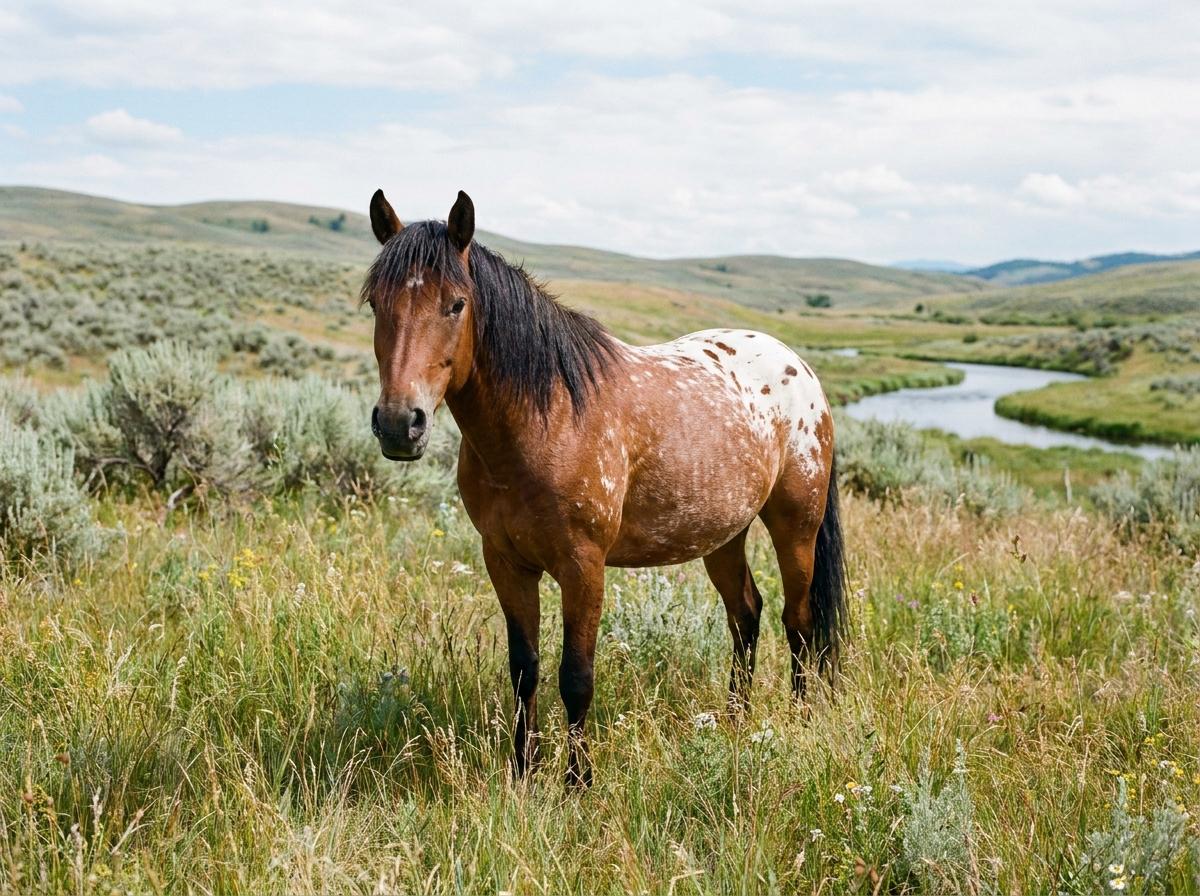
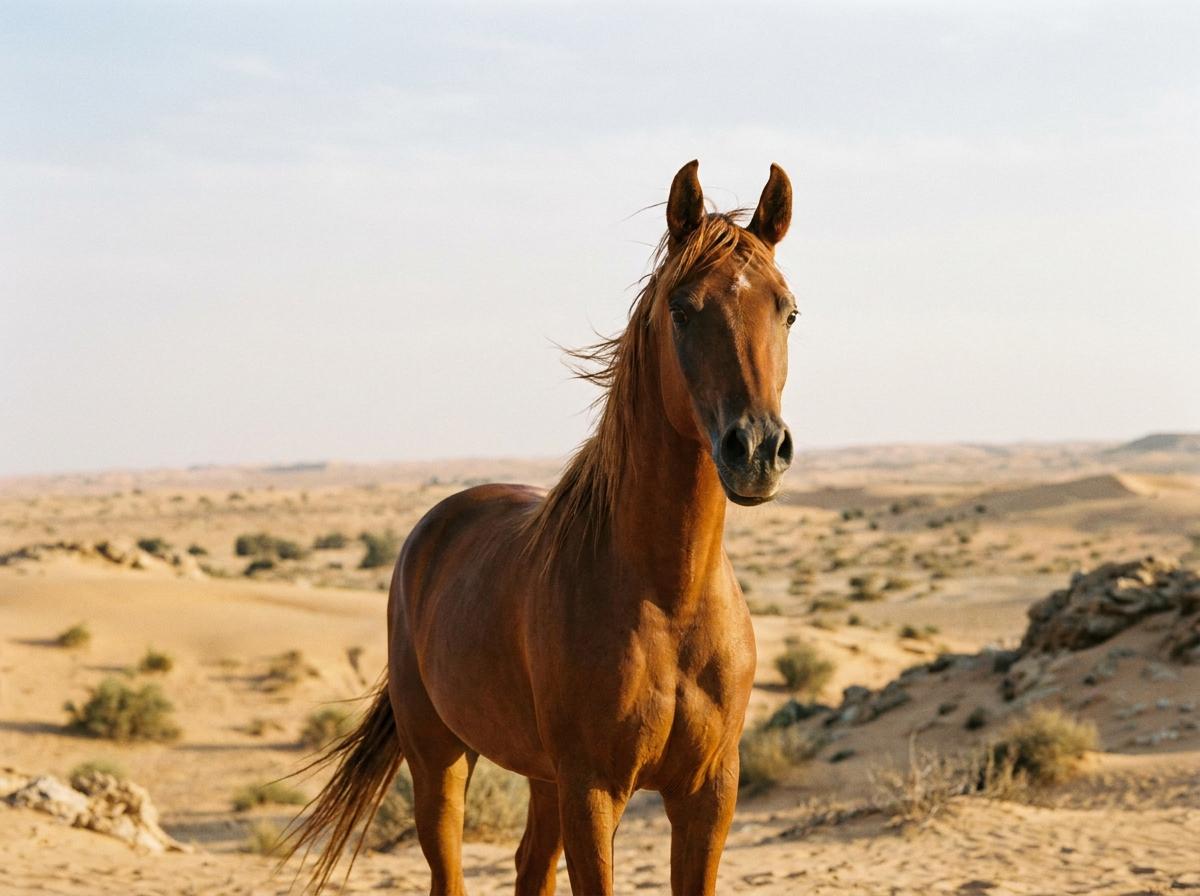
Illustrated reconstruction of a medieval traveller on an ambling saddle horse, generated for this page in a period painting style. It is not a photograph and it is not a surviving historical artwork. Nobody has ever photographed a palfrey, so an image of one can only be a reconstruction, and this page says so rather than passing a render off as evidence.
Browse listings, public profiles, breeders, or add your animal.
What a palfrey actually was
Strip away the fantasy-novel associations and a palfrey is a very practical idea. Before the railway, a person with business to do rode, often for days at a stretch. A trot is a two beat diagonal gait with a moment of suspension in it, which is why it throws a rider up out of the saddle. Over eight hours that is exhausting for the rider and hard on the back of anyone who cannot post to it in a medieval saddle. A horse that could move at travelling speed in a smooth, level, unbroken rhythm was therefore worth real money, and the word for that horse in England and France was palfrey.
Jordan Claridge’s study of the late medieval English horse trade, based on a national sample of manorial accounts from around 1300, describes palfreys plainly as “riding horses, desired for their gentle gait which was easy on riders”. That is the whole definition. Not a colour, not a height, not a bloodline. A gentle gait, and a horse that was pleasant to sit on all day.
The English word arrived through Old French palefroi, from the Medieval Latin palafredus, which standard etymological dictionaries derive in turn from the Late Latin paraveredus, roughly a spare or extra post horse. The ancestry of the word is a courier animal, which fits: the palfrey was the horse you used to get somewhere.
Why it is a type and not a breed
This is the question most people arrive with, so it is worth answering carefully rather than just asserting it.
Medieval record-keepers did not classify horses the way a modern registry does. They classified them by what the animal was for. Claridge’s analysis of the stock accounts found that horses “were most often delineated by the jobs that they performed,” and that by 1300 English estates held “an array of specialized agricultural horses distinguished by occupation, age and sex.” The categories in those accounts are things like equus carectarius (cart horse), affrus and stottus (all purpose plough and haulage horses), runcinus (rouncey, a riding or pack horse), and mill horses. Chaucer’s Reeve, in the General Prologue to the Canterbury Tales, “sat upon a ful good stot,” which tells you the word described the animal’s role well enough that a reader would picture it.
None of that is breed language. It is closer to how we still talk about a “cow pony” or a “hunter” or a “family horse”: useful, precise about the job, and silent about pedigree.
The machinery that makes a breed a breed came much later. A closed studbook, a written standard, a governing body that decides which animals count, and an inspection system to enforce it are institutions of the eighteenth and nineteenth centuries, not the thirteenth. By the time anyone was writing breed standards, the palfrey as a working category had already been obsolete for generations. So the honest answer to “what does a palfrey look like” is that the question does not have an answer, and any page that gives you a height range, a colour list, or a temperament score for a palfrey has invented it.
If you want the same distinction drawn on a page next door, the courser is the other medieval horse word people search for, and it has exactly the same shape of answer: a role in the documents, not a stud book. For a contrasting case where the name covers a deliberate hybrid rather than a breed at all, look at the zubron, a Polish cross between domestic cattle and the European bison. Names travel; the animals behind them do not always follow.
The ambling gait, and why it was worth paying for
An amble is not one gait but a family of them. What they share is a footfall pattern that is lateral rather than diagonal, and four separate beats rather than two, with at least one foot on the ground at all times. The rider gets no moment of suspension, so there is nothing to be thrown up by. The back stays level under the saddle. The horse can hold it for miles at speeds well above a walk. Not every smooth alternative gait is a lateral amble, though. Some are broken-diagonal instead, and they buy the rider the same steadiness by a different footfall.
Modern gaited breeds each have their own version and their own name for it. Icelandic Horses tolt. Tennessee Walking Horses do the running walk, in which the hind foot reaches past the print the front foot has just left. Paso Finos have the paso corto and paso largo. Missouri Fox Trotters fox trot, which is the broken-diagonal case rather than a lateral amble: the horse walks in front and trots behind. They are not identical, and they are not all ambles, but they solve the same problem the palfrey solved.

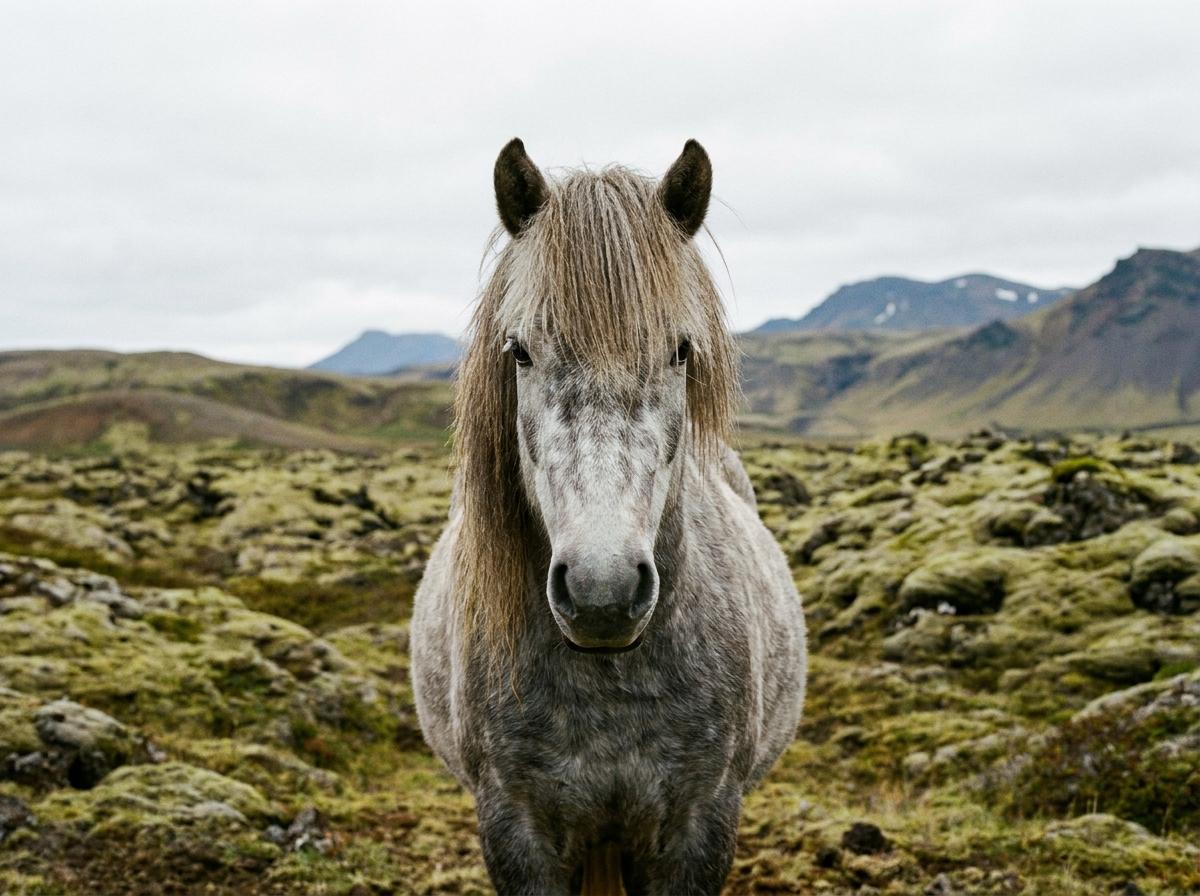
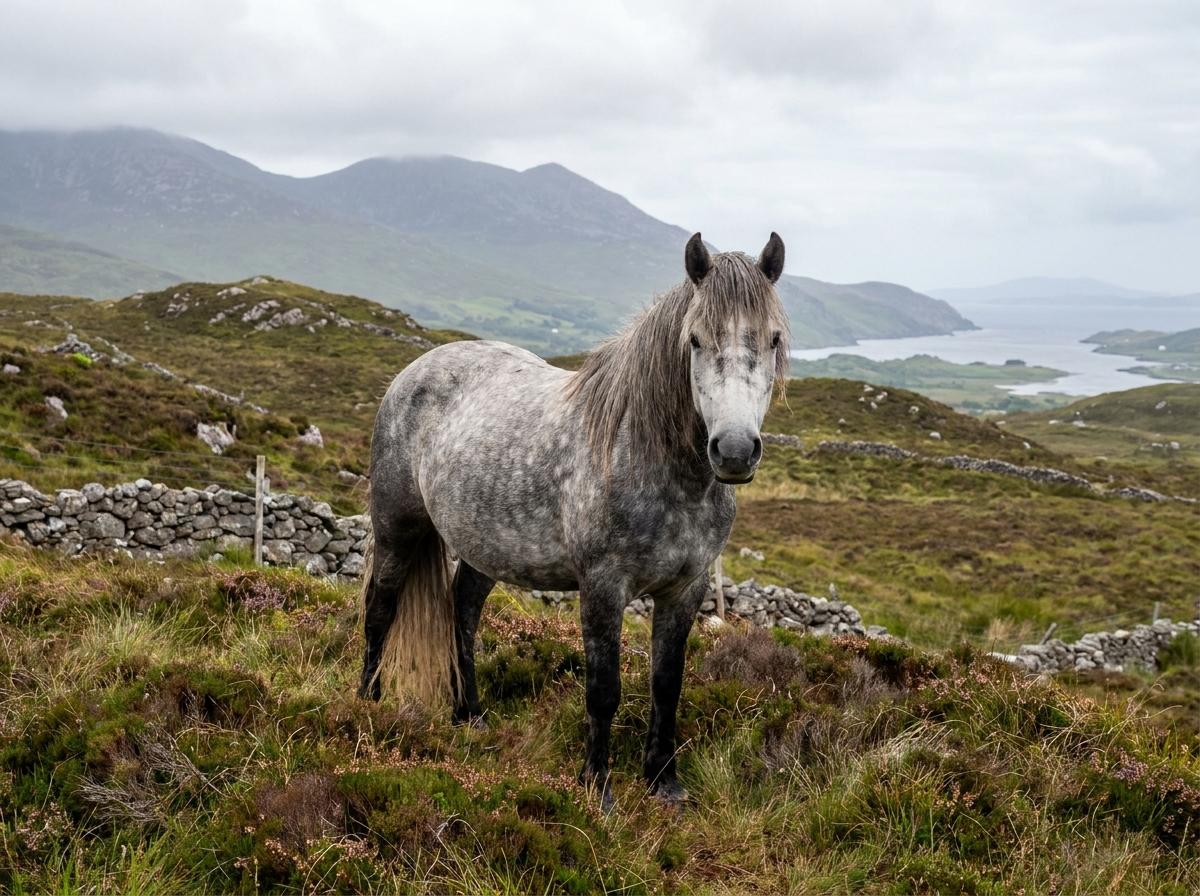
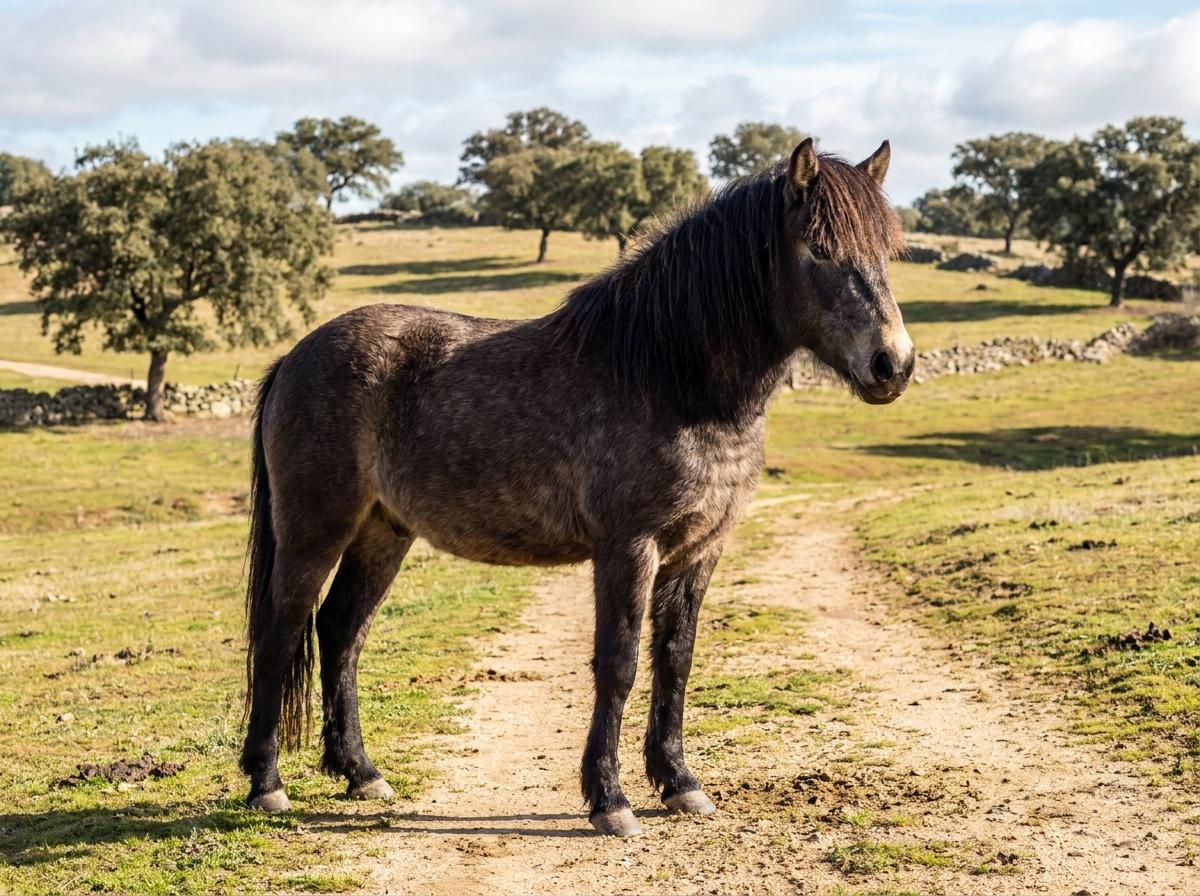
A modern Icelandic Horse, photographed as itself. This is not a palfrey and it is not a reconstruction of one. It is what the ride a palfrey was bought for looks like on a living animal you could actually go and buy.
The gene behind the smooth ride
The best evidence that ambling is an inherited ability rather than only a training trick came out of genetics in 2012. A team led by Leif Andersson reported in Nature that a premature stop codon in the DMRT3 gene “has a major effect on the pattern of locomotion in horses”, that it is permissive for the ability to perform alternate gaits, and that it has a favourable effect on harness racing performance. In mice, the same gene turned out to be expressed in a set of spinal cord neurons that are critical to the normal development of the network coordinating limb movement. The variant has been nicknamed the “gait keeper” ever since, and it is a routine commercial DNA test today.
A later survey genotyped 4,396 modern horses from 141 breeds and found the mutated allele distributed worldwide, at especially high frequency in gaited horses and in breeds used for harness racing.
Then the ancient DNA arrived, and this is the part that connects directly to the palfrey. In 2016 a team led by Saskia Wutke tested historic horse remains for the same variant and published the result in Current Biology under the title The origin of ambling horses. They detected it in two English horses dated to 850 to 900 AD, and in 10 of 13 individuals from Iceland dated to the ninth to eleventh century, while it was absent from the mainland European samples of the same period, including ten from Denmark and Sweden. Their reading is that Norse settlers met ambling horses in the British Isles, took them to Iceland, and selected hard for the comfortable ride soon after they arrived.
That is a genuinely striking finding, and it deserves an honest caveat rather than a clean story. A follow-up study led by Elizabeth Staiger, published in Animal Genetics in 2017, sequenced the region in detail and concluded that chromosomes carrying the mutation “must have diverged from a common ancestral sequence within the last 10 000 years”, which puts its origin just before domestication or, more likely in the authors’ view, some time after it. The ancient samples show where the allele demonstrably was in the early medieval period. They do not settle where it started, partly because the sampling for the relevant centuries was thin outside northern Europe. So the defensible claim is this: the smooth-gaited horse the word palfrey described was already established in early medieval England and Iceland, and its ability was heritable rather than purely trained. Where the variant first arose is still an open question.
Palfrey, destrier, courser, rouncey: how the words divided up
Medieval writers used several horse words, and they are frequently muddled together in modern retellings. The distinctions are functional, and they overlap at the edges, which is normal for job titles.
- Palfrey. A good riding horse valued for a comfortable gait, used for travel, hunting, ceremony, and daily riding. Expensive when it was good.
- Destrier. The warhorse proper, the animal ridden in battle and the tournament, trained for it and priced accordingly. Not a breed either, and not the cart-horse-sized giant of popular imagination.
- Courser. A swift horse. Claridge’s account describes coursers as “swift horses, most often used for hunting,” and the Creatures courser page goes into the documentary problem in more detail.
- Rouncey (Latin runcinus). The ordinary, cheaper riding or pack horse. In the manorial accounts, rounceys turn up as riding and pack animals kept in the lord’s stable rather than as field stock.
- Affer and stott. The workaday farm horses, ploughing, harrowing and carting. These are the animals most medieval people actually had.
A useful way to hold it: destrier, courser and palfrey are what a wealthy household kept for fighting, chasing and travelling. Affers, stotts and cart horses are what fed everybody.
What a palfrey cost
Prices are where the medieval evidence is unusually good, because English estates kept careful accounts.
Claridge’s work separates the market into two segments that barely touched each other. Ordinary agricultural horses could be bought “for very little,” from around five or six shillings, and even the most expensive farm animal in his national sample, a horse bought by the Peterborough Abbey estate at Oundle in Northamptonshire, came to £2 6s. 8d. The expensive animals, which he groups as “elite” horses and which explicitly include palfreys alongside warhorses and coursers, ran from about £5 to well over £50. Across ninety-five recorded elite horse prices the range was roughly £2 to £40, with an average near £20.
To make that concrete, Claridge anchors it against grain: a quarter of wheat between 1290 and 1300 cost about 6.46 shillings. On that basis an ordinary farm horse cost roughly what a quarter of wheat cost, while a £20 elite riding horse cost on the order of sixty times as much. A good palfrey was not a pony for the children. It was a serious capital purchase, and the reason was the gait.
The other thing the accounts tell you is that these two markets had different buyers, different sellers and different venues. Elite horses changed hands at fairs and through networks of people who could judge and afford them, which is very close to how a specialist gaited horse is bought today.
Where the palfrey went
The specialist ambler did not die out so much as lose its job.
Once wheeled vehicles and better roads took over long-distance travel in early modern Europe, the horse that mattered most for getting somewhere was one that pulled well, and the prestige riding horse became one bred for the trot and, later, for the racecourse. The ambling saddle horse kept its value longest where people still had to ride long distances daily over ground a carriage could not use: the Americas, and the Icelandic uplands. That is why so many of today’s gaited breeds are American or Icelandic rather than English or French.
The vocabulary drifted too, and one case is worth flagging because it trips people up. The medieval English word hakeney also meant an ordinary ambling road horse, and it is the ancestor of “hackney carriage.” But the modern Hackney Horse is a different animal: a British light harness breed built on fast trotting road horses such as the Norfolk Trotter and Yorkshire Roadster, known for high knee and hock action and seen today mostly in driving and show rings. The name carried over; the gait did not.
The living heirs: gaited breeds that give you the palfrey ride
If you came here because you want the thing rather than the word, this is the practical answer. These are real, current breeds with real registries, and each has a page with listings, profiles and breeders on Creatures.
- Icelandic Horse. The closest documented link to the medieval ambler, given the ancient DNA. Compact, hardy, famously sure-footed, and the tolt is the reason people keep them.
- Tennessee Walking Horse. The registry describes three distinct gaits, the flat foot walk, running walk and canter, with the running walk as “an inherited, natural gait unique to this breed,” and pairs “naturally smooth and easy gaits” with a calm temperament.
- Paso Fino. Bred in Latin America for an exceptionally smooth, rapid, even four beat gait at several speeds.
- Peruvian Paso. The other great Latin American gaited horse, developed for long days covering ground.
- Missouri Fox Trotter. The fox trot is a broken diagonal gait: the horse walks in front and trots behind, which keeps the rider still.
- Rocky Mountain Horse. A four beat single-foot gait, bred in Kentucky for hill country.
- American Saddlebred. Some individuals are five gaited, adding the slow gait and rack to the walk, trot and canter.
Any of these will do what a palfrey did. Which one suits you is a question about size, temperament, climate, availability near you, and what the horse will actually be asked to do.

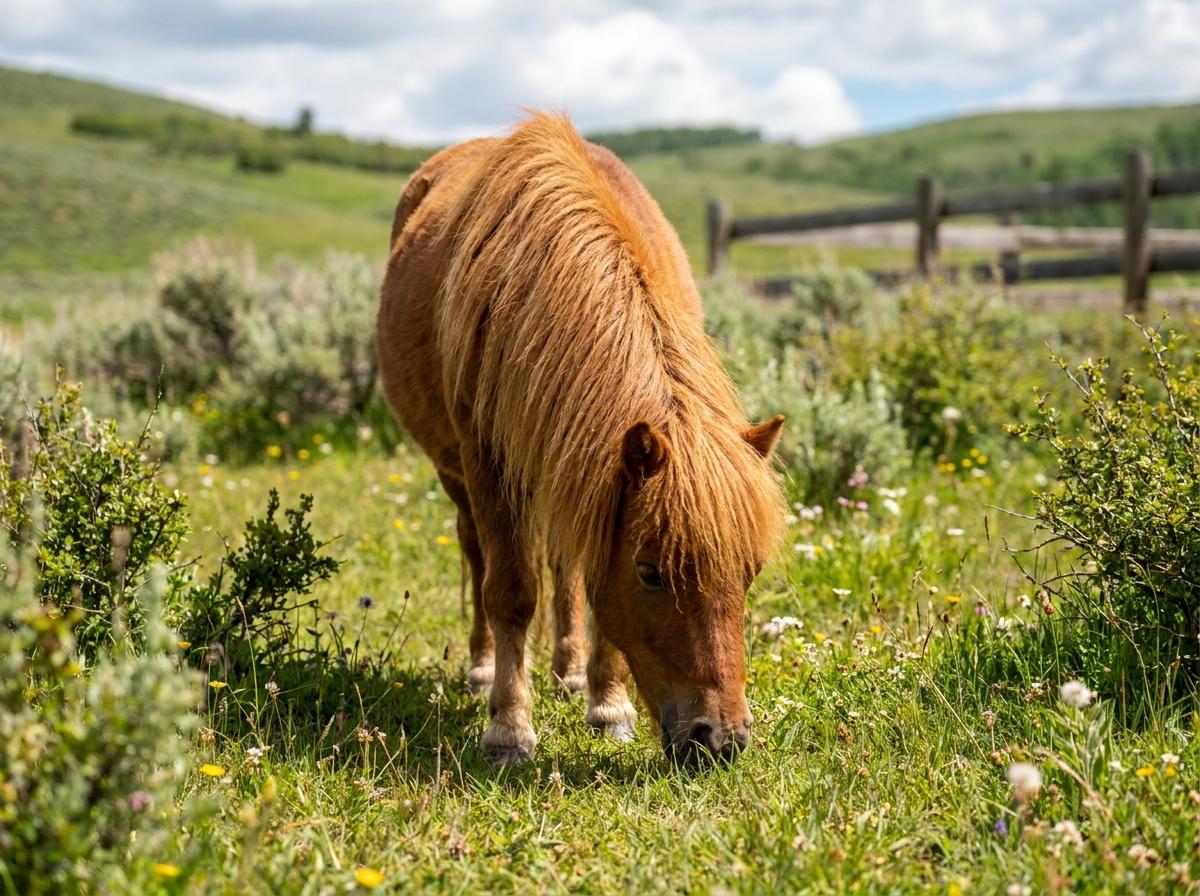
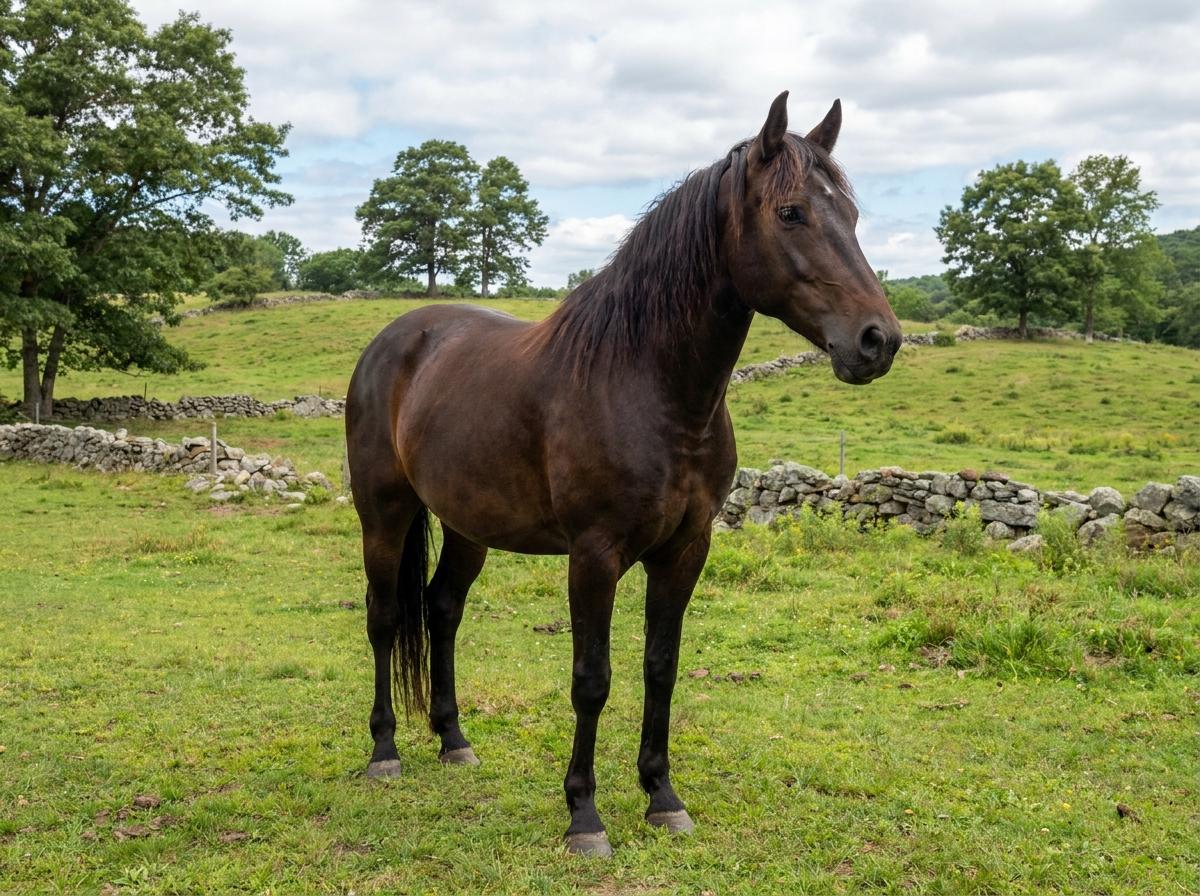
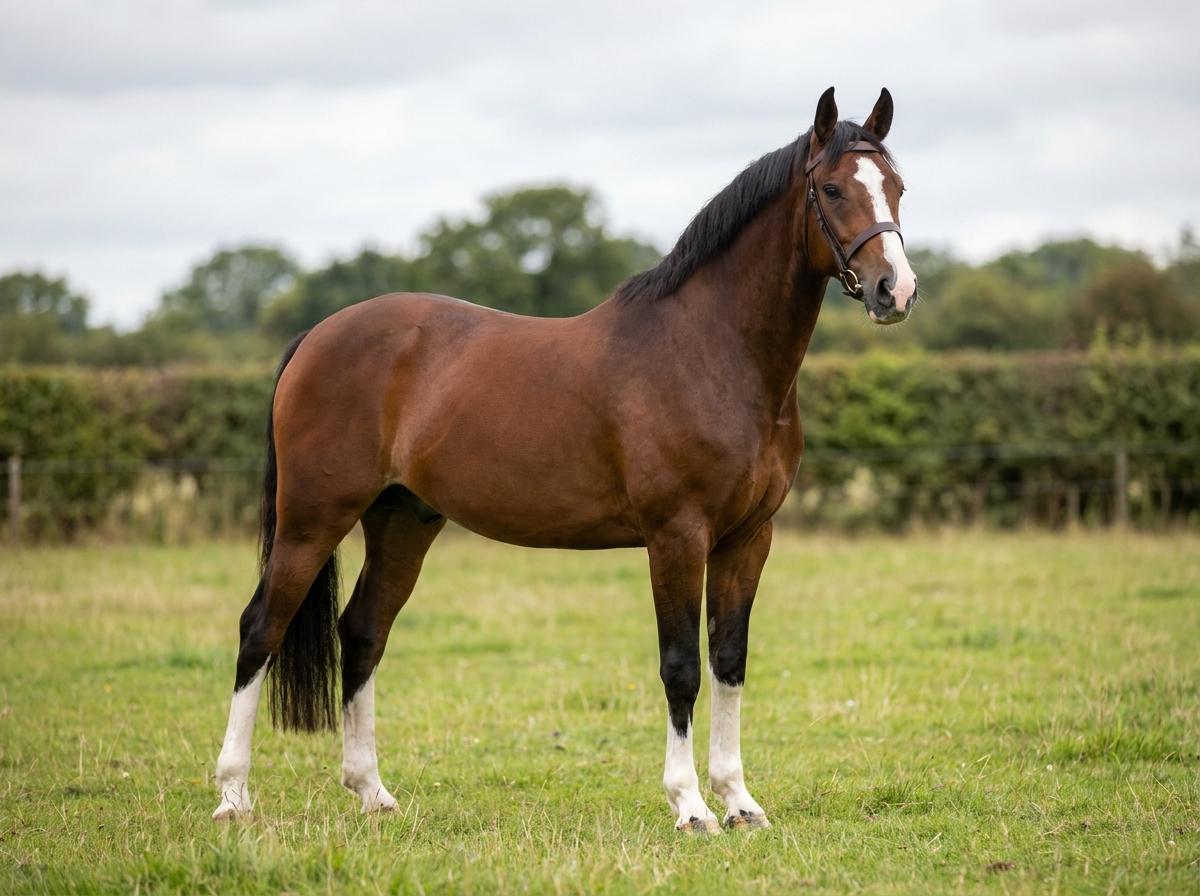
A gaited horse doing the job a palfrey was bought for: covering ground comfortably. Note the plain flat shoeing and the loose rein. That is deliberate, and the next paragraph explains why it matters.
One thing to be honest about before you shop
Some of the show world attached to gaited breeds has a serious welfare problem, and it would be dishonest to route you toward these horses without saying so.
Soring is the deliberate infliction of pain on a horse’s legs or feet to force a higher, flashier step. The USDA defines it as the application of a chemical, mechanical agent, or practice to a limb “that can cause or be expected to cause the horse to suffer physical pain or distress when moving,” with mustard oil, diesel fuel, overweight chains and trimming a hoof into the sensitive tissue given as examples. The federal Horse Protection Act of 1970 prohibits showing, selling, auctioning, exhibiting or transporting a sored horse, and the statutory definition covers irritating or blistering agents, burns, cuts and lacerations, and tacks, nails or screws, with an exception for genuine veterinary treatment.
The regulations that implement the Act have been revised and litigated repeatedly in recent years, so if this matters to your buying decision, check the current position with USDA rather than relying on a summary. What does not change is the practical advice: the vast majority of gaited horses are ordinary trail and pleasure animals kept by ordinary people, the natural gait needs no devices at all, and a horse whose gait depends on stacked pads, chains or anything applied to its legs is not showing you what it can do. Look at the legs and pasterns, look at the shoeing, and walk away from anything that makes you uneasy.
What to check if you want a smooth-gaited horse
- Ride it, at length. Gait quality varies enormously between individuals inside every gaited breed. A pedigree does not guarantee a comfortable ride, and a smooth horse is obvious within ten minutes in the saddle.
- Ask about the DMRT3 test. The gait keeper variant is a standard commercial DNA test. It is permissive rather than deterministic, so a result is one input and not a promise, but for a breeding decision it is genuinely informative and many sellers will already have it.
- Get your own vet exam. A pre-purchase examination by a veterinarian you chose, not one the seller chose, is the single highest-value thing you can buy in this process. Defer every medical judgement to them.
- Look hard at feet and legs. Short, natural trims and plain shoeing. No stacked pads, no chains, no action devices. Scarring or thickened skin around the pasterns is a reason to ask direct questions.
- Ask for the paperwork. Registration, parentage, vaccination and worming history, hoof care records, any lameness workups. A seller who keeps records is telling you something about how the horse has been managed.
- Match the horse to the ground. A hardy Icelandic and a fine-boned Paso Fino want different climates, different footing and different workloads.

What good keeping looks like: room to move, sound fencing, clean water and shade. Whatever breed you land on, this is the standard the horse is entitled to.
Frequently asked questions
Is a palfrey a breed of horse?
No. It is a medieval category describing a riding horse kept for a smooth ambling gait and pleasant manners. There is no palfrey studbook, no breed standard and no registry, and there never was one.
What is the difference between a palfrey and a destrier?
Job. A destrier was the trained warhorse ridden in battle and the tournament. A palfrey was the comfortable travelling and riding horse. A wealthy household might own both and use them for completely different things.
Do palfreys still exist?
Not as palfreys, because the word describes a role that no longer exists. The ability the word was really about, a smooth ambling gait, is alive and well in gaited breeds such as the Icelandic Horse, Paso Fino, Peruvian Paso, Tennessee Walking Horse, Missouri Fox Trotter and Rocky Mountain Horse.
How big was a palfrey?
There is no answer, because there is no standard. Medieval horses in general were smaller than most modern riding horses, but a specific height range for palfreys would be invented. Treat any page that gives you one with suspicion.
Was a palfrey a woman’s horse?
It was often ridden by women, and by clergy, older riders and anyone who spent long hours in the saddle, which is exactly the point: the gait suited people who needed to arrive able to walk. It was not restricted to women, and plenty of men rode them by preference.
Can I register a horse as a palfrey on Creatures?
You should not, and for the same reason you would not register one as a “hunter.” Create the profile under the breed the horse actually is, or as a grade or unregistered horse if that is the truth, and record its real gaits, measurements and pedigree. That record stays useful; a historical label does not.
Is ambling trained or inherited?
Both matter, but the inherited part is real and measurable. The DMRT3 variant described above is permissive for alternate gaits, and it is testable. Training and shoeing then shape how well a horse expresses what it has.
Do this next on Creatures
Whether you got here writing a novel, checking a crossword, or actually shopping for a horse that will not jar your back, here is where to go next.
Compare the real breeds. Start at the Creatures horse species page and work through the gaited hubs: Icelandic Horse, Tennessee Walking Horse, Paso Fino, Missouri Fox Trotter. Reading about another medieval horse word instead? The courser page is next door.
See what is for sale. Browse horses on the marketplace and narrow it to the breed you have settled on, then find farms and programmes in the Creatures directory of trusted breeders.
Get told when one appears. Good gaited horses sell locally and quietly, so set a free listing alert and let it do the watching. No account needed to start, and saving searches and using your watchlist explains how to tune it.
Add the horse you actually have. If a historical word led you here while researching a living animal, create a free horse profile under its real breed rather than a label no registry recognises. The walkthrough is adding an animal to Creatures, and your animal’s profile page covers what each tab does. No account needed to start.
Keep the record that matters. Gait quality, farrier visits, saddle fit changes and lameness workups are the history a gaited horse should carry with it, so add a record as you go. The sheet opens for any visitor to look around, and a free account is what saves what you enter. See adding a record and health and medical records.
Breeding or selling gaited stock? Create a free organisation page so buyers looking for a smooth-gaited horse can find you, then read getting listed in the breeder directory and creating an organization and adding your team. No account needed to start.