


Blondinette
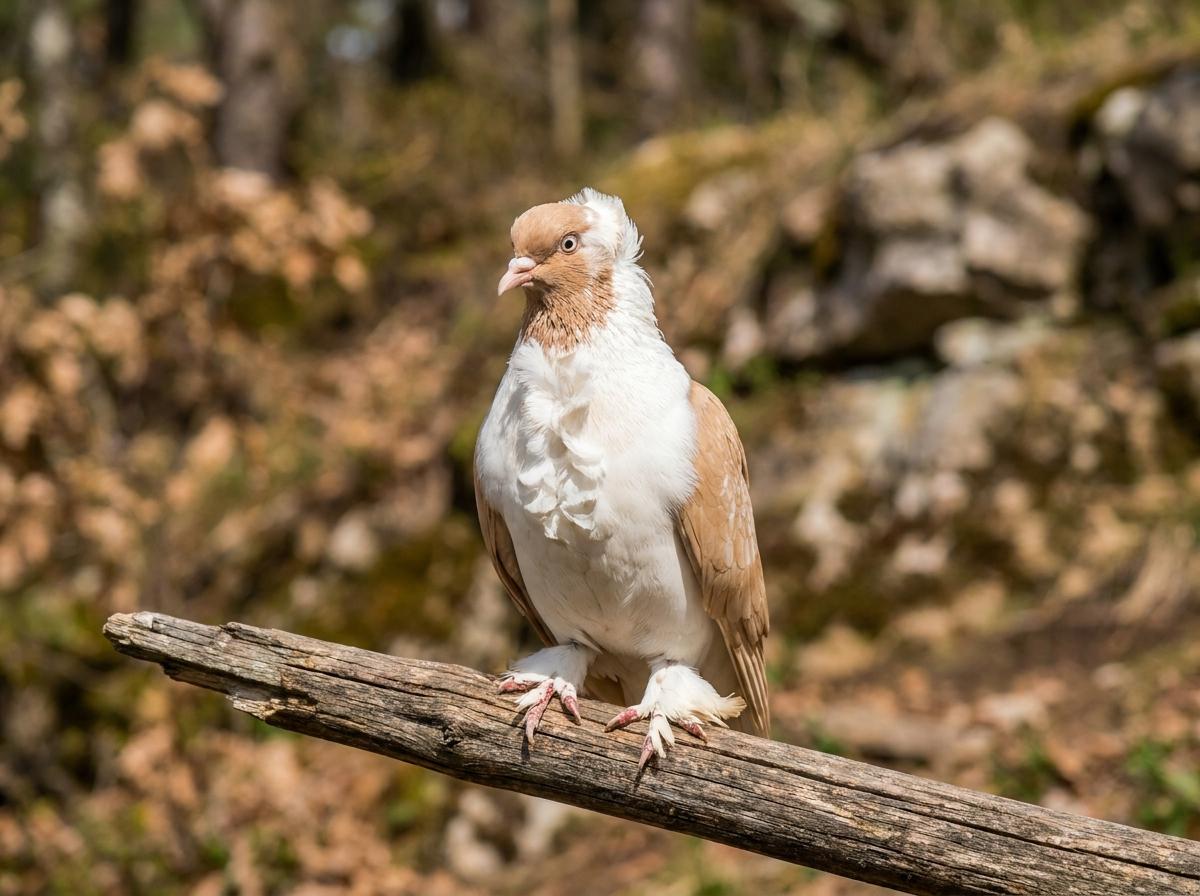
The Blondinette is one of the two classic varieties of the Oriental Frill, a small ornamental show pigeon that originated around Izmir (historically Smyrna) in what is now Turkey. Where its white-bodied sibling the Satinette carries color only on the wing shield and tail, the Blondinette is the colored version: the whole bird is colored, and its wing shield, and often its entire body, is covered in fine laced or spangled patterning that looks like feather lacework. Add a needle point peak crest, a ruffled chest frill, grouse-muffed legs, and a short owl-type beak, and you have one of the most decorative pigeons in the entire fancy. Below you will find what the variety actually is, where it comes from, how to read its markings, the honest welfare story behind modern short beaks, how to keep the birds well, and what to check before you buy.

Browse listings, public profiles, breeders, or add your animal.
What is a Blondinette pigeon?
The Blondinette is not a standalone breed but the best-known colored variety of the Oriental Frill, a fancy pigeon from the owl and frill family. Like every domestic pigeon, from racing homers to the most extreme show breed, it descends from the wild rock pigeon, Columba livia. What sets the Oriental Frill apart within the owl family is its ornament stack: a peak crest at the back of the head supported by a mane of feathers down the neck, a frill of reversed feathers down the chest, feathered legs ending in grouse muffs, and a short owl-type beak.
Within that breed, two classic varieties carry the famous markings. The Satinette is a white-bodied bird whose color sits only on the wing shield and tail. The Blondinette is the whole-colored counterpart: it has no standard white areas at all, with every feather either solid colored or laced in the same base color, so the lacing spreads across the wings and, in the laced tail varieties, over the entire bird (National Classic Frill Club standard). If a frilled, crested bird has a white body with colored wings and tail, you are looking at a Satinette; if the whole bird is colored and laced, it is a Blondinette.
If you are comparing frilled and ornamental breeds generally, the broader Creatures pigeon species page shows the Blondinette alongside the other fancy breeds, and the Oriental Frill page covers the parent breed the Blondinette belongs to.
Origin and history
The Oriental Frill is an old Anatolian breed. Fancier and club histories trace it around Smyrna, the Aegean port city known today as Izmir, back to roughly 1740, which makes it one of the older documented ornamental pigeons of the region (National Classic Frill Club breed history).
The romantic part of the story is its court connection. In Turkey the breed is known as the Hünkari, “the bird of the sultans,” and tradition holds that it was developed for the Ottoman sultans at the palace in Manisa, an old Ottoman city in western Turkey, with the round white “moon” spots on the tail called the Seal of the Sultan. That account is repeated consistently across the breed’s hobby literature and by Turkish fanciers, but it comes down to us through fancier tradition rather than surviving court records, so treat the sultan story as well-loved breed heritage rather than verified archival fact. What is not in doubt is that the breed was developed in Ottoman Anatolia and was already a refined, distinctive show pigeon when Europeans first encountered it.
The documented chapter begins in 1864, when H. P. Caridia, a Greek merchant from Smyrna, introduced the breed to England, where it quickly caught on among fanciers as one of the “Gems of the Orient.” The birds crossed the Atlantic soon after: Oriental Frills were first exhibited in the United States in 1879 at a New York show, then under the name “Crested Turbiteens,” and an American Oriental Frill club followed in 1893 (National Classic Frill Club breed history).
The twentieth century then split the breed in two, which is the single most important piece of history for a modern buyer to understand. American and European show breeders progressively shortened the beak and reshaped the head, producing the Modern Oriental Frill, while the original medium-beaked form fell so far out of favor that by the middle of the 1900s it had been essentially abandoned in the United States. It survived, was revived by preservation breeders, and is maintained today as the Classic Old Frill (also called the Old Fashioned or Old Style Oriental Frill) with its own club and standard. Both types come in Blondinette and Satinette markings, and the practical differences between them are covered below.
What a Blondinette looks like
The Blondinette is a small, cobby, jaunty pigeon whose whole impression is built from feather ornaments layered on a compact body. The classic type weighs roughly 11 to 12 ounces (about 310 to 340 grams), which puts it firmly in the small to medium bracket of fancy pigeons (National Classic Frill Club standard).

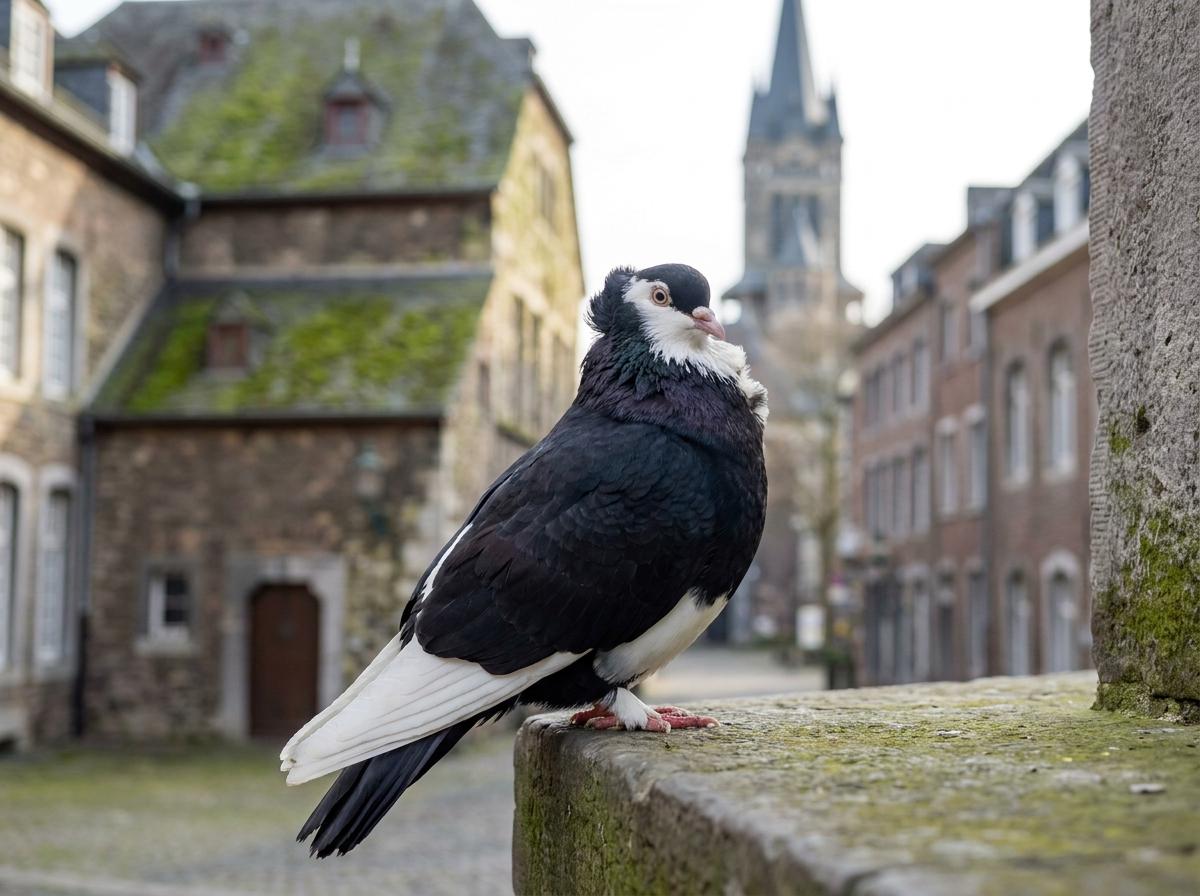
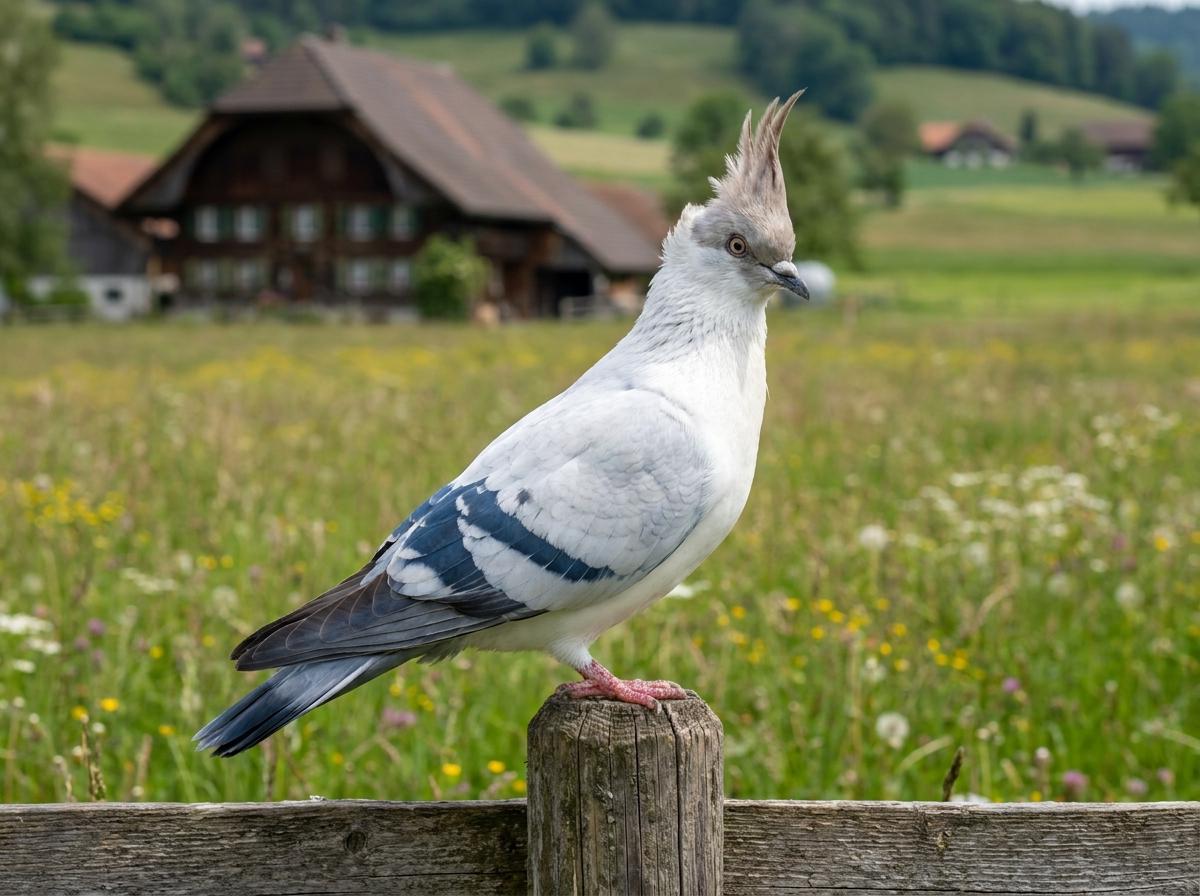
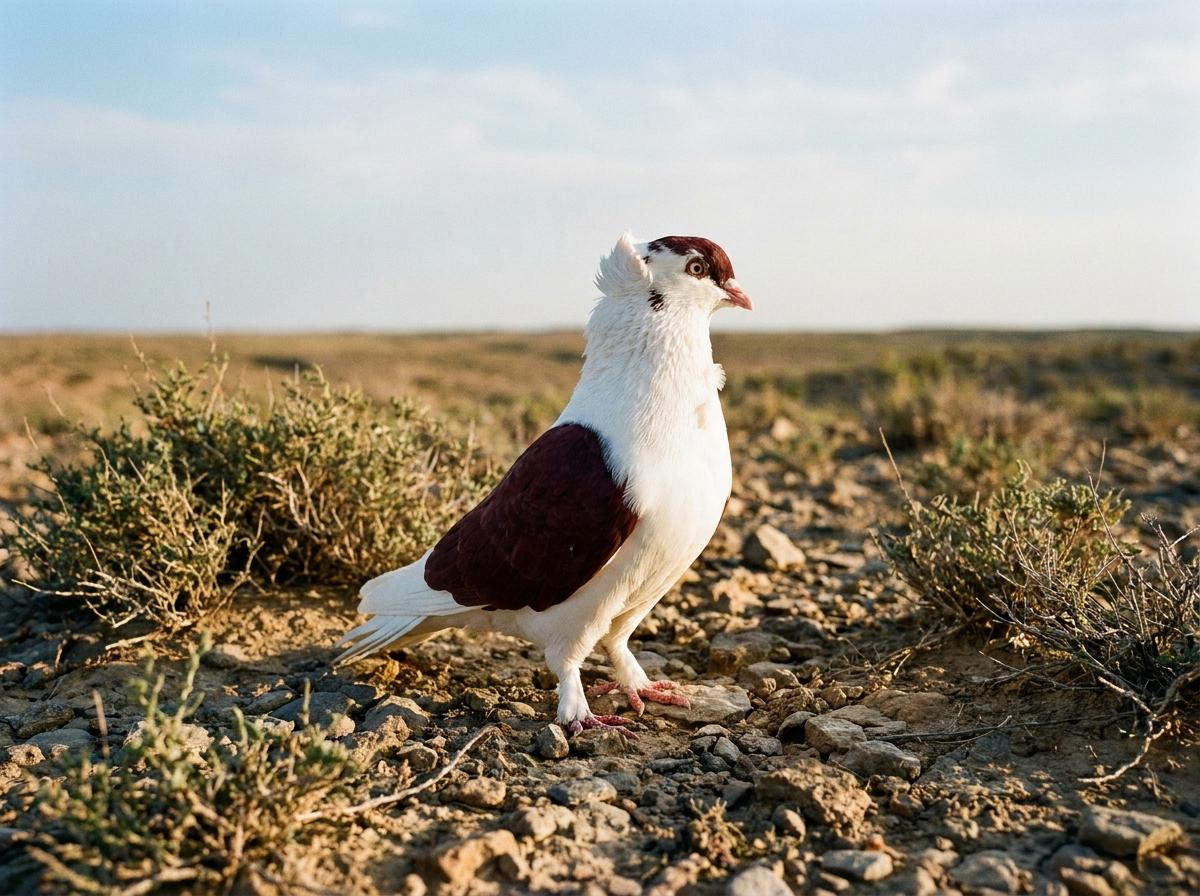
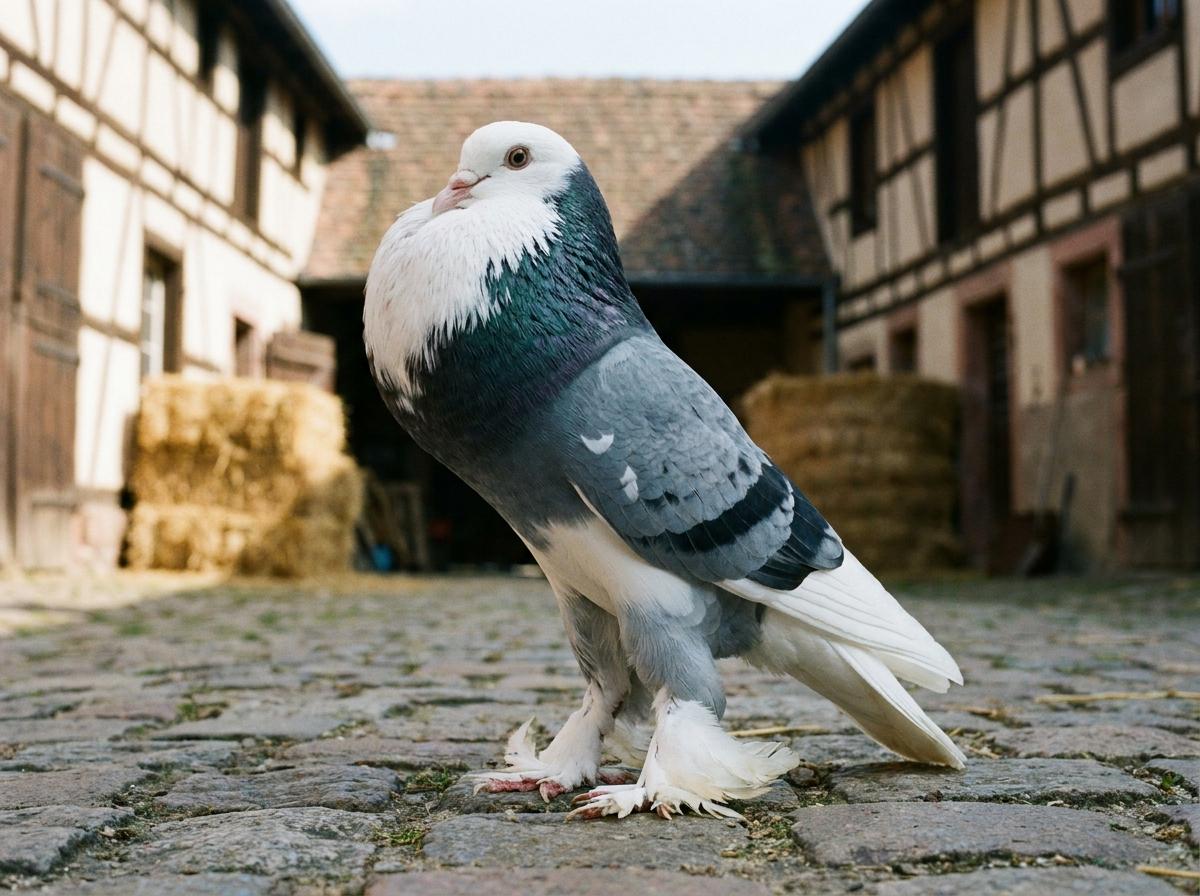
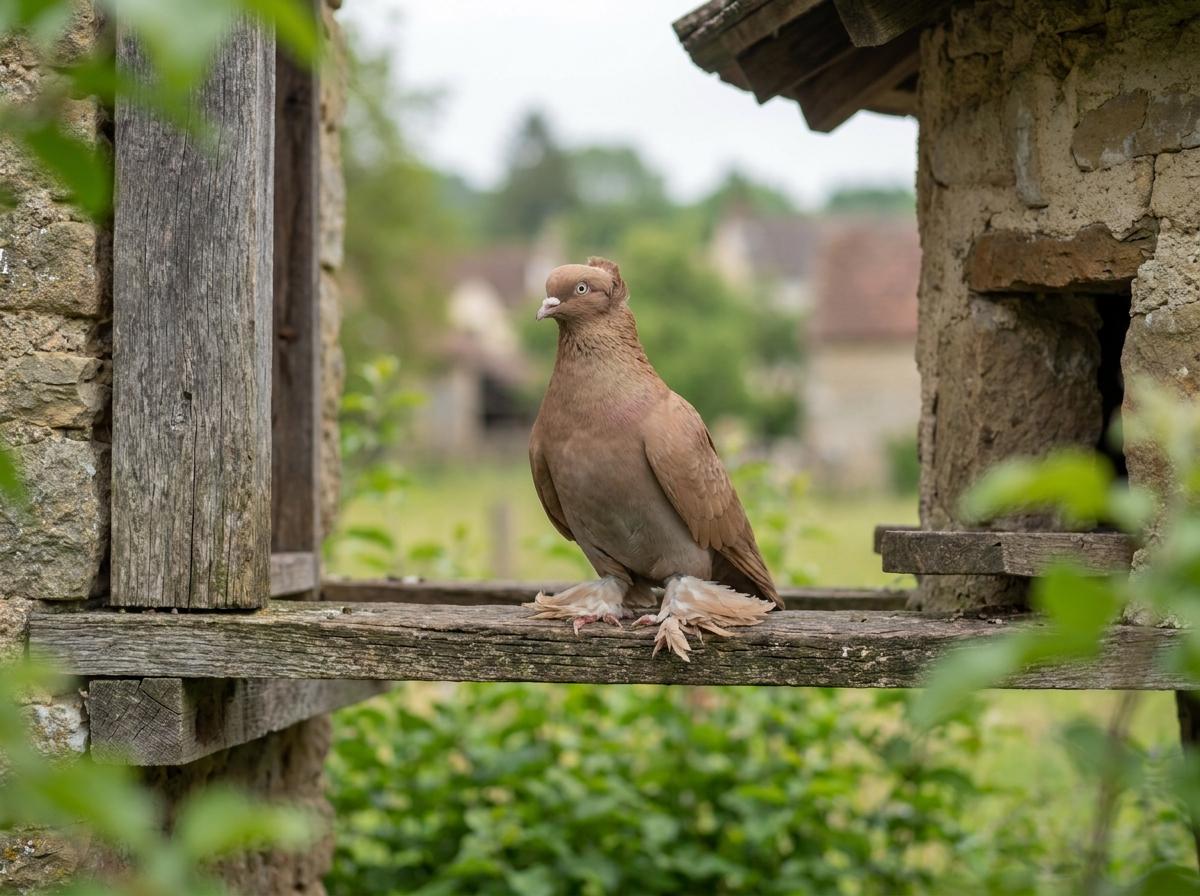
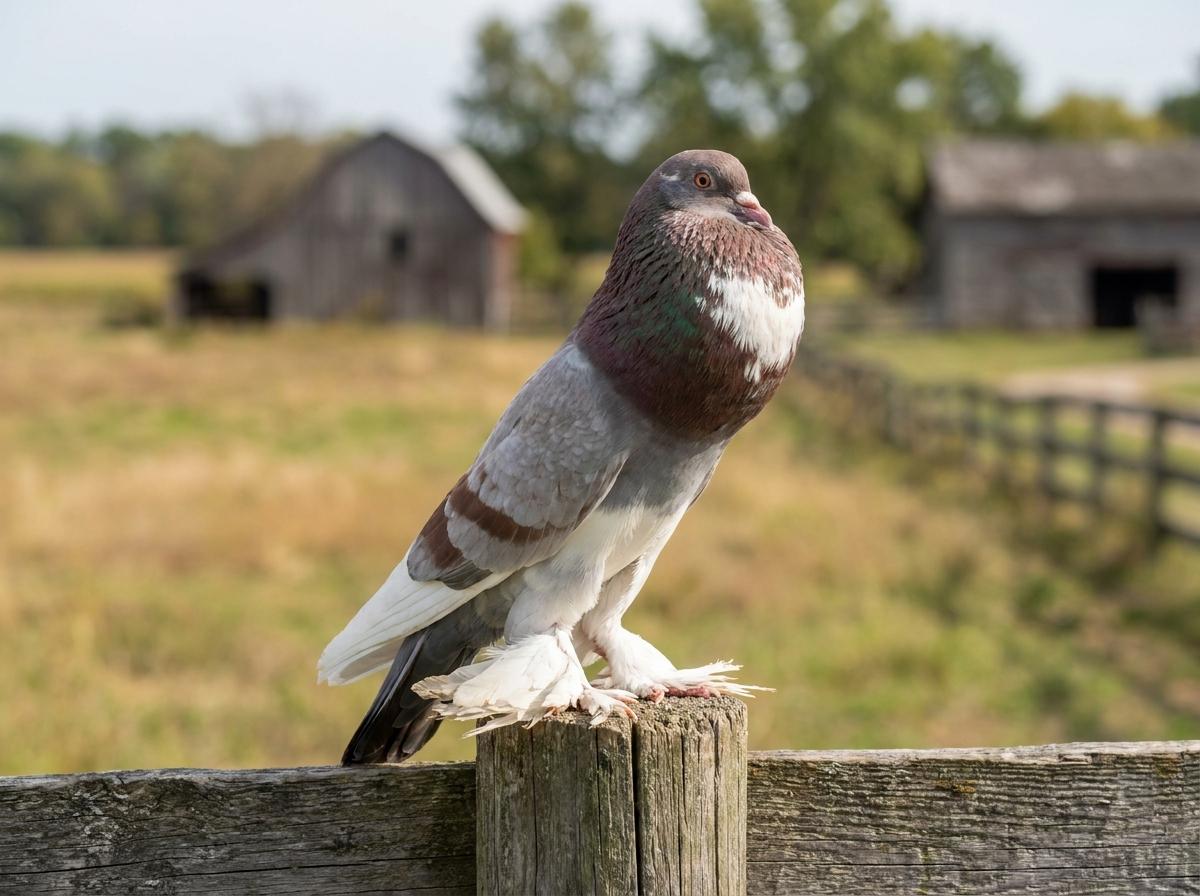
- Peak crest and mane. At the back of the head sits a pointed peak crest, ideally rising to a fine needle point, supported by a continuous mane of feathers running down the back of the neck. This back-of-neck mane and crest are what most quickly separate an Oriental Frill from the front-frilled owl breeds.
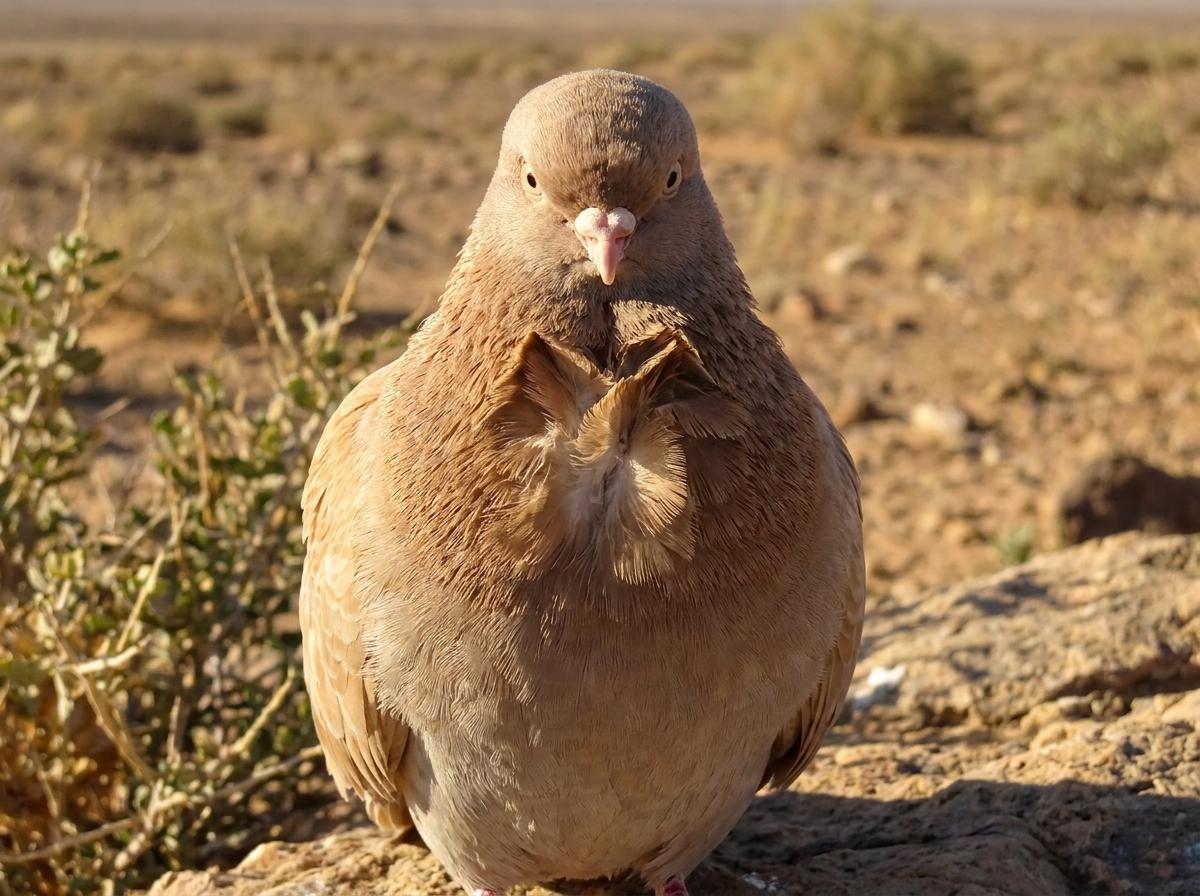
- Chest frill (the jabot). Down the center of the breast runs a frill of reversed, ruffled feathers, in the classic standard about one to two inches across. It is less voluminous than the huge frill of a Chinese Owl but is a required, defining ornament.
- Short owl beak. The beak is short and set into a rounded head. How short depends on the type: medium and functional in the Classic Old Frill, dramatically short and blunt in the Modern Oriental Frill.
- Grouse muffs. The legs and feet are covered in feathering that ends in neat grouse muffs, giving the bird a bell-bottom flare over the feet rather than long stiff foot feathers.
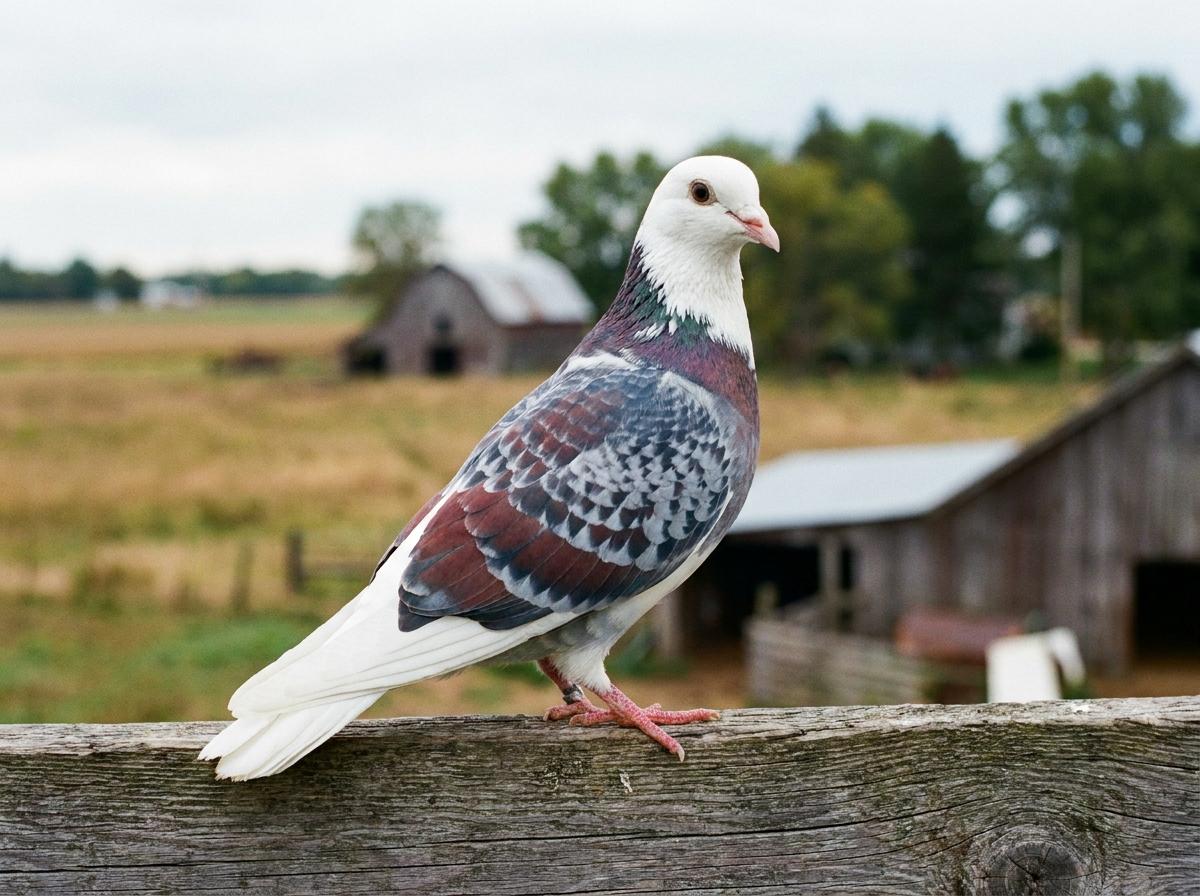
- Laced plumage. The signature of the Blondinette specifically: wing shield feathers with pale centers, each edged in the base color, producing a crisp scaled or laced pattern, with the lacing extending over the whole body in the laced tail varieties.
Carriage is upright, alert, and a little theatrical, which is exactly what the show pen rewards. Nothing about the bird is built for distance flying, and the breed is kept and judged as an ornamental exhibition pigeon, not a performer.
Blondinette vs Satinette, in one minute
Both varieties share every structural feature: crest, mane, frill, muffs, beak, size, and carriage. The difference is where the color sits. The Satinette is white over the head, body, and underparts, with the color confined to the wing shield and tail, classically with white “moon” spots or lacing on the tail. The Blondinette carries the same shield and tail markings but on a fully colored bird, with no standard white areas anywhere (National Classic Frill Club standard). Blondinettes read as darker, richer birds; Satinettes read as white birds wearing a colored saddle. Neither is more “correct” than the other, and serious lofts usually keep both.
Colors and patterns
For one variety of one breed, the Blondinette comes in a remarkable spread of colors. The National Classic Frill Club standard recognizes, among others, black laced, dun laced, blue laced, silver laced, brown laced, khaki laced, red laced, yellow laced, and sulphur, plus ash-red and ash-yellow versions, and the modern wing of the breed shows a comparable range.

The patterns organize into two families:
- Spot tail (moon tail) varieties. The lacing is concentrated on the wing shield, the rest of the bird is solid base color, and each tail feather ends with a clear round white spot, the “moon.” In blue laced birds, the classic and most iconic Blondinette color, that means a slate-blue bird with a finely laced shield and a row of white moons across the end of the dark tail.
- Laced tail varieties. Here the lacing does not stop at the shield: every feather across the body, wings, and tail is edged in the base color, so the entire bird looks like it is dressed in lace. Black laced and dun laced Blondinettes are the best-known examples, and a well-marked black laced bird is one of the most striking pigeons at any show.
Judges want the lacing distinct, even, regular, and well defined, whatever the color. In practice that means pattern quality beats color novelty on the bench: a cleanly and evenly laced bird in a common color will place above a rare color with muddy, uneven edging. If you are buying for show, learn to read lacing quality first and treat the specific color as the tiebreaker.
Classic vs modern, and the short-beak welfare question
Anyone shopping for Blondinettes today is really choosing between two versions of the Oriental Frill, and the difference is not cosmetic.
The Modern Oriental Frill is the type you will most often see winning at large US shows under the NPA. Compared with the original, it is somewhat larger, with a rounder, more massive head and a beak bred down to an extremely short, blunt stub. That beak is the breed’s show signature, and it comes with a real husbandry consequence: many modern Oriental Frills cannot reliably feed their own squabs, because the parents’ beaks are too short to deliver food effectively, so serious breeders routinely transfer eggs or young to foster parents, called feeders, usually plainer breeds with normal beaks (Classic and modern breed club literature both state this plainly). If you breed the modern type, a set of feeder pairs is part of the plan, not an optional extra.
The Classic Old Frill (Old Fashioned Oriental Frill) is the preservation of the original Smyrna-type bird: slightly smaller, with a medium-length beak that lets pairs hatch and rear their own young without help. It was nearly lost in the United States by the mid-1900s, was revived by dedicated breeders, and now has its own standard and club support (National Classic Frill Club).
It is worth being honest about what this split means. Very short beaks are a human show preference, and they move the work of raising the next generation from the birds to the keeper’s management system. That is an accepted, well-understood practice inside the fancy, but it is a genuine welfare and workload consideration for a newcomer. If you want Blondinettes that live as self-sufficient pairs and raise their own babies, seek out classic, old-style stock. If you are drawn to the extreme modern show head, go in with your eyes open about foster feeders, and ideally learn the system from an experienced breeder first.
Temperament and what they are kept for
Blondinettes are exhibition and ornamental birds, full stop. Keepers consistently describe Oriental Frills as calm, gentle, and easy to tame, which fits a breed selected for generations for the show pen and close handling rather than for flying performance. Treat that as the broad consensus of fanciers rather than a formally studied trait, and expect individual temperament to track how much early, calm handling a bird gets.
Their job is to be beautiful and to be enjoyed: shown at fancy pigeon exhibitions, kept as living ornaments in a garden loft, and increasingly kept simply as tame pet pigeons. They are not free-flying birds; the ornament-heavy body and short beak are not built for evading hawks, so they belong in a secure loft and aviary, not on open loft flight.
Keeping Blondinettes: housing, feeding, and care
A Blondinette needs the same core husbandry as any loft pigeon, plus a few points that follow directly from its small size, ornamental feathering, and short beak. None of this replaces an avian veterinarian, who should make any actual medical decision.

Housing
House them in a clean, dry, draft-free loft or aviary with secure protection from predators (hawks, cats, rats, raccoons) and from damp. Provide perches, nest boxes for pairs, and good ventilation without direct drafts. Because so much of the bird’s value is in fine feather detail, hygiene does double duty here: wet or dirty bedding spoils the frill, muffs, and lacing at the same time as it invites disease. Keep the muffed feet in mind too, since caked droppings or mud cling to foot feathering, so dry floors and clean perches matter more than they would for a clean-legged breed.
Feeding
Feed a quality pigeon grain and seed mix with constant access to clean water, grit, and a mineral supplement for calcium and trace elements. The short beak is the breed-specific wrinkle: small-beaked owl breeds handle small seeds far more easily than large grains like whole corn or peas, so most keepers use a finer small-grain mix the birds can pick up cleanly. Step the ration up around breeding and the molt, when energy and protein needs climb.
Breeding and foster feeders
Classic, medium-beaked Blondinettes generally pair, hatch, and rear their own squabs like any other pigeon. With modern short-beaked stock, plan for foster parents: many breeders set eggs under feeder pairs (often utility or homer types) synchronized to lay at the same time, and let the feeders raise the Oriental Frill squabs. Whichever type you keep, hatch date, parentage, and pairing records are the backbone of a breeding loft, and they are exactly what a buyer should later ask you to show.
Health and records
Routine pigeon health management applies: keep the loft clean and dry, quarantine new birds, watch for the common pigeon problems (canker, coccidiosis, worms, respiratory disease, and external parasites), offer a bath pan so the birds can maintain that ornamental plumage, and build a relationship with an avian or exotics veterinarian for diagnosis, medication, and a sensible parasite and vaccination plan for your area. Keep clear records of each bird’s hatch date, parentage, molts, treatments, and show results so breeding and culling decisions run on evidence rather than memory. Defer all medical decisions to a veterinarian who can examine the bird.
A note on lifespan
There is no authoritative breed-specific lifespan study for the Oriental Frill or the Blondinette. Well-kept fancy pigeons commonly live somewhere around 7 to 10 years, and domestic pigeons as a group can exceed that with excellent care and good genetics, so treat those figures as a planning expectation rather than a guarantee.
Cost and availability
Blondinettes are an established, internationally recognized show variety, so they are not rare in the way a lost landrace is, but they are specialty birds sold through the fancy: breed clubs, shows, and breeder lofts rather than pet shops. Prices vary widely with quality and type. Pet-quality or surplus young birds change hands for a modest amount, while well-laced show-quality birds from a respected loft, and proven breeding pairs, command a real premium. There is no single reliable public price for the variety, and we will not invent one; compare a few sellers and judge the bird in front of you on lacing, ornament quality, and condition rather than on a headline number.
Availability is patchy in the way most fancy breeds are: a region with an active Oriental Frill or classic frill breeder will have birds every season, and everywhere else you wait for shipped birds or a show weekend. You can browse current Blondinette listings on the Creatures marketplace and look for lofts in the Creatures breeder directory; if nothing is listed today, a saved listing alert (below) is the most practical way to catch birds when they appear.
What to check before you buy
Because the variety’s value lives in fine feather detail and in the classic-versus-modern split, buy on specifics.
- Know which type you are buying. Ask directly whether the birds are modern (very short beak, will likely need foster feeders to breed) or classic old-style (medium beak, self-rearing). This one answer changes your entire management plan.
- Judge the lacing. Look for distinct, even, well-defined edging on the shield, clean moon spots or tail lacing, and no muddy or broken patterning. Lacing quality is the variety’s whole point.
- Check the ornaments. A good bird shows a clear needle point peak crest with a continuous mane, a distinct chest frill, and tidy grouse muffs. Thin frills and weak, off-center crests are common faults.
- Confirm the variety. A white-bodied bird with colored shield and tail is a Satinette, not a Blondinette. Whole-colored and laced means Blondinette. Sellers occasionally mislabel the two.
- Check health and condition. Bright clear eyes, clean nostrils and vent, smooth feathering, sound feet under the muffs, and an alert carriage. Avoid listless or scruffy birds and dirty lofts.
- Ask for records. Hatch dates, parentage, pairings, how the young were reared (parents or feeders), and any show results tell you far more than photos. A serious breeder will have them.
Frequently asked questions
Is the Blondinette a separate breed from the Oriental Frill?
No. The Blondinette is a variety of the Oriental Frill, the whole-colored, laced one. The white-bodied variety with colored wings and tail is the Satinette. Both share the same structure: peak crest, mane, chest frill, short beak, and grouse muffs.
Where do Blondinette pigeons come from?
From Asia Minor. The Oriental Frill is traceable around Smyrna (modern Izmir) to about 1740, and tradition holds it was bred for the Ottoman sultans, who knew it as the Hünkari. A Smyrna merchant, H. P. Caridia, introduced the breed to England in 1864, and it reached American shows by 1879.
Do Blondinettes really need foster parents to breed?
Modern short-beaked Oriental Frills often do: the show beak is too short for parents to feed squabs reliably, so breeders use feeder pairs. Classic old-style birds with medium beaks hatch and rear their own young normally. Ask which type you are buying before you plan a breeding loft.
What colors do Blondinettes come in?
Black, dun, blue, silver, brown, khaki, red, yellow, and sulphur among others, in two pattern families: spot tail birds with laced shields and white tail moons, and laced tail birds whose entire body is edged in lace. Blue laced with tail moons is the iconic classic color.
Are Blondinettes good for beginners?
A classic, self-rearing pair in a clean secure loft is a very manageable first fancy pigeon: small, calm, and tame. The modern short-beaked type is better treated as an intermediate project because of the foster-feeder system. Either way they are loft and aviary birds, not free flyers.
How is a Blondinette different from a Chinese Owl?
Both are frilled owl-family breeds, but the Blondinette (Oriental Frill) carries a peak crest with a mane down the back of the neck, grouse muffs, and laced color patterns, while the Chinese Owl is clean-headed and bare-legged with a far more profuse front frill. A back-of-neck mane and crest points you to the Oriental Frill.
Do this next on Creatures
Whether you are researching the variety, hunting for a well-laced show bird, or already breeding Oriental Frills, Creatures is the records, marketplace, and directory layer to do it in one place. You can also compare the Blondinette with other ornamental breeds like the Old German Owl, Germany’s crested owl-family cousin, and the Damascus pigeon, another ancient breed from the same corner of the world.
Find a bird. Browse Blondinettes on the marketplace and search trusted breeders and lofts in the Creatures directory. New to the marketplace? See saving searches and using your watchlist.
Get alerted. Well-laced show and breeding birds turn up irregularly, so set a free Blondinette listing alert and we will tell you when one is posted. No account needed to start.
Add your pigeon. Already keeping Blondinettes or Satinettes? Create a free animal profile in a few minutes. No account needed to start, and the walkthrough is in adding an animal to Creatures.
Track pairings and health. Keep hatch, pairing, foster, molt, and health records on Creatures. The record sheet opens for any visitor to look around, and you will need a free account to save what you enter. See adding a record and your animal’s profile page for the full how-to.
List your loft. Breed Oriental Frills? Create a free loft or breeder profile so buyers searching for the variety can reach you. No account needed to start, and getting listed in the breeder directory walks you through it.
Compare the breed. See the Blondinette alongside other ornamental pigeons on the Creatures pigeon species page and next to its parent breed on the Oriental Frill page.