



Chinese Owl
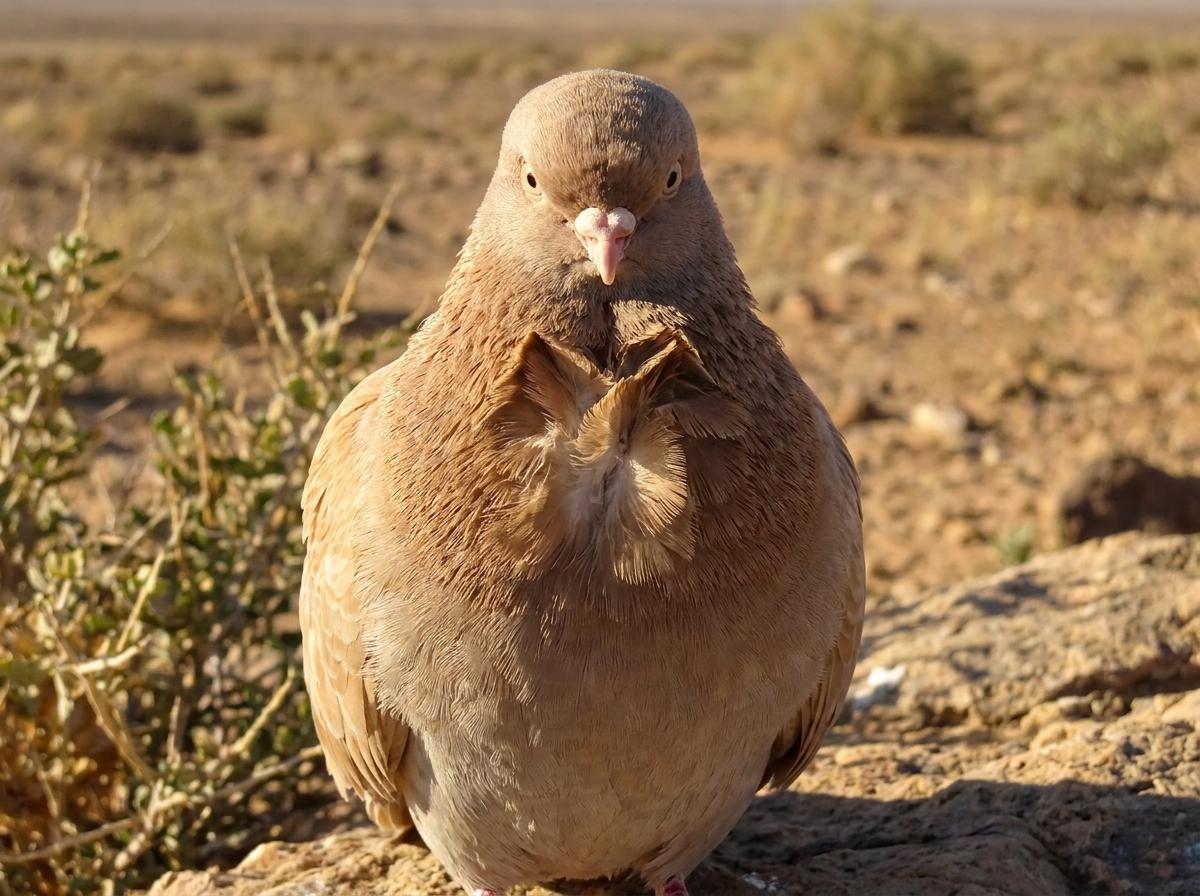
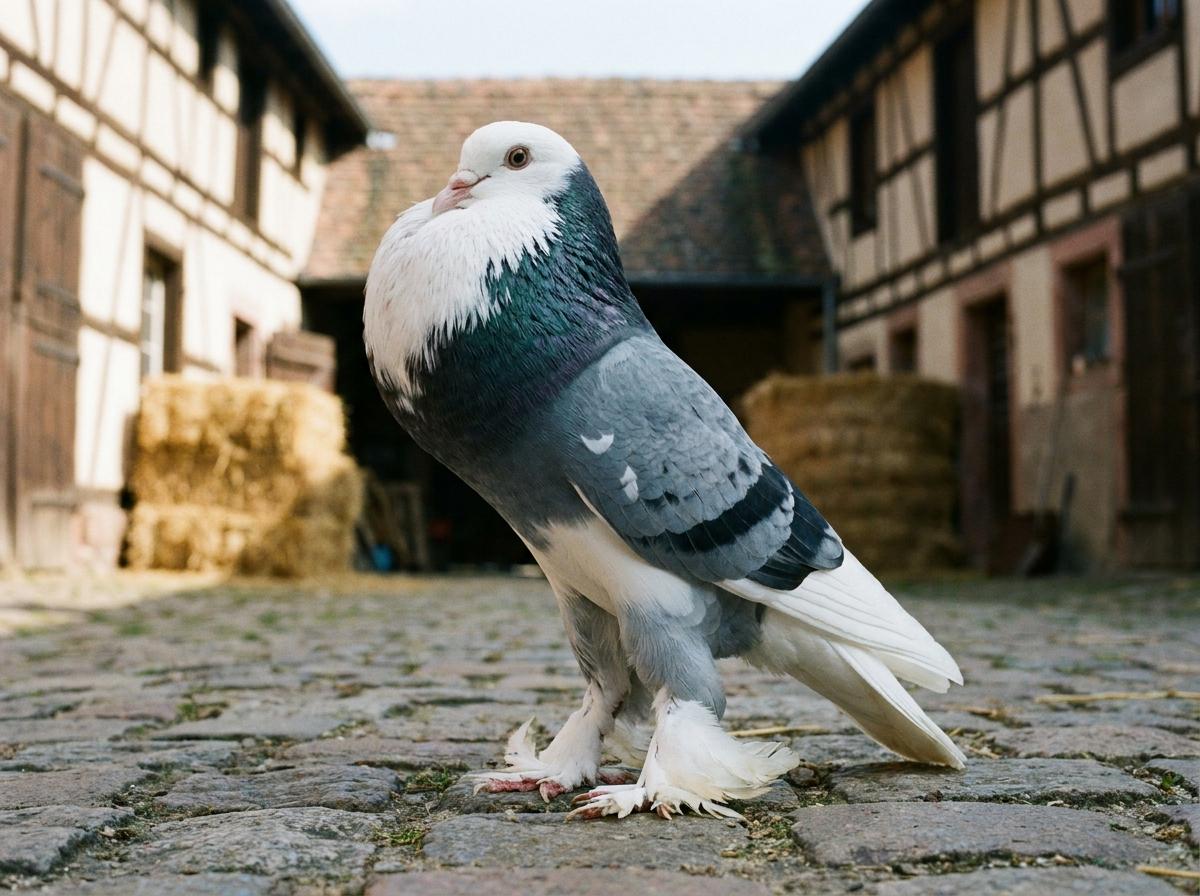
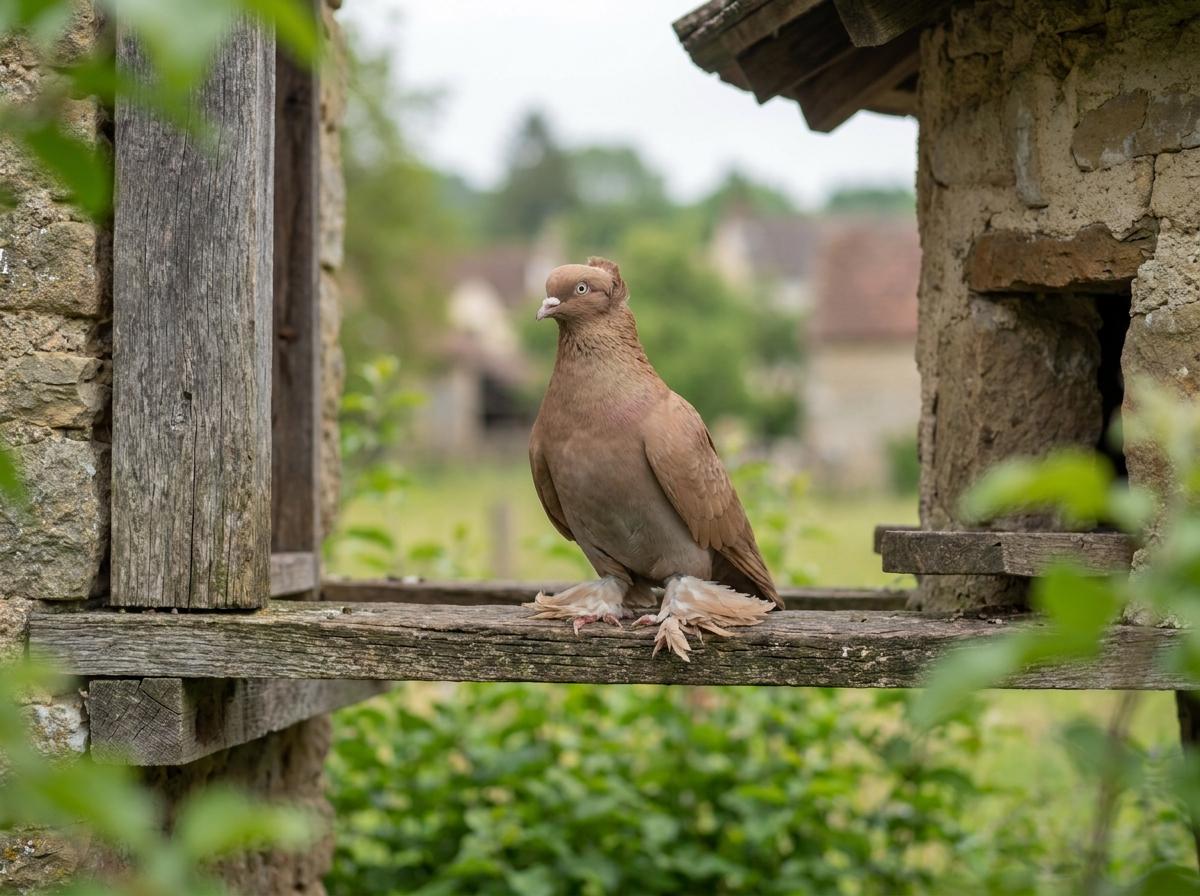
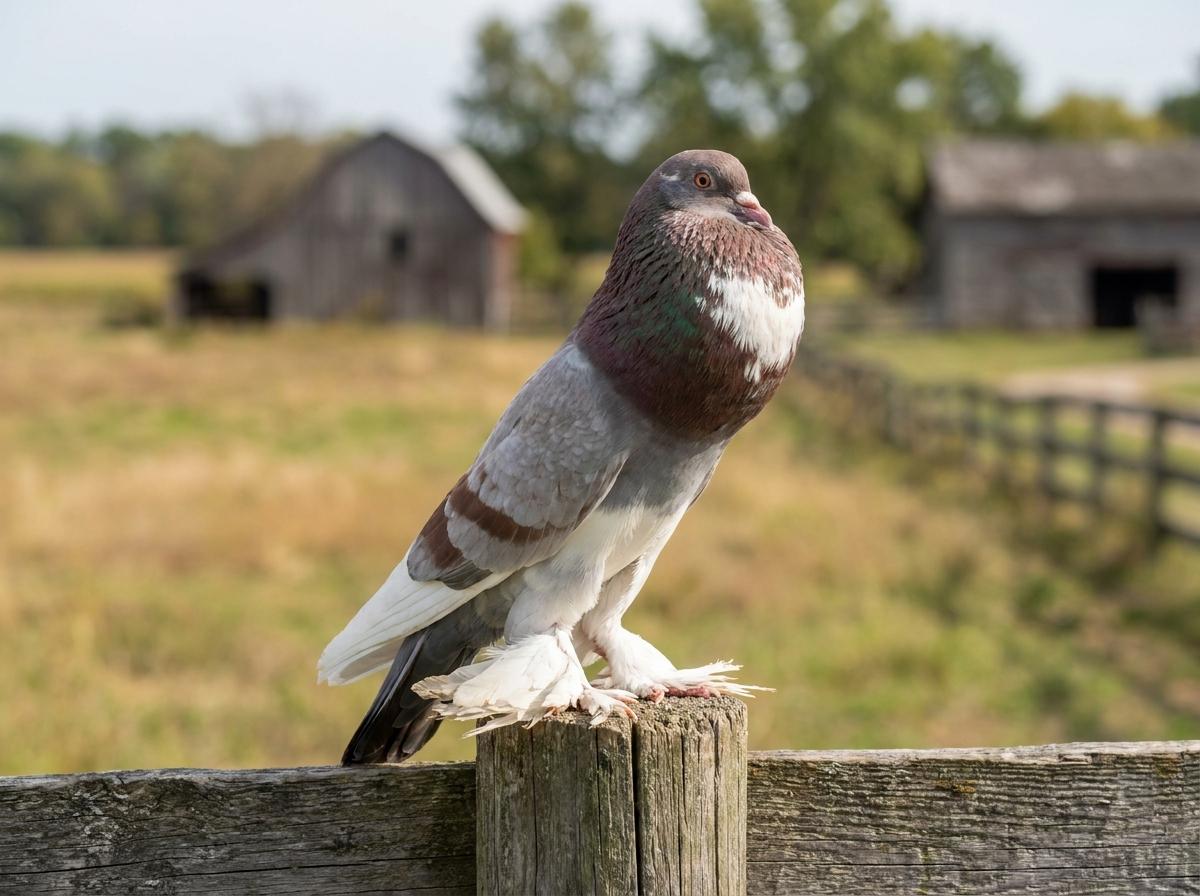
The Chinese Owl is a small ornamental (toy) pigeon kept almost entirely for show and as a pet, and it is one of the most heavily frilled breeds in the whole pigeon fancy. Its signature is a dense rosette of reversed, ruffled feathers down the breast, called the jabot or frill, paired with a frilled collar around the front of the neck, two puffy feathered “pantaloons” at the lower breast, a small rounded head, and a short owl-type beak. Despite the name, the breed almost certainly did not come from China, and it is not related to owls. Below you will find what the breed really is, where the name came from, how to read its show points, what colors it comes in, how to keep one well, and what to check before you buy, with the breed sources cited so you can tell verified facts from fancier lore.

Browse listings, public profiles, breeders, or add your animal.
What is a Chinese Owl pigeon?
The Chinese Owl is a breed of fancy pigeon, meaning a domestic pigeon selectively bred for appearance and shown for its looks rather than flown for racing or aerial performance. Like every domestic pigeon, from racing homers to the most extreme show breed, it descends from the wild rock pigeon, Columba livia. What makes this one stand out is its frilling. It carries reversed, ruffled feathers more profusely than most owl breeds, and that dense chest frill is the whole point of the bird.
The breed sits in the “owl and frill” family of show pigeons. The “owl” label comes from the short, stubby beak and small rounded head shared by owl breeds such as the African Owl and the English Owl, a head shape that gives the face a vaguely owl-like look (it has nothing to do with actual owls). If you are comparing toy and frilled pigeons generally, the broader Creatures pigeon species page is a good place to see the Chinese Owl alongside other ornamental breeds.
One thing to set straight up front: the name is misleading. The breed is widely described as a misnomer, because it almost certainly did not originate in China. We cover where the name actually came from next.
Where the name and the breed come from
The honest answer is that the breed’s deep origin is uncertain. The most commonly cited account is that the Chinese Owl is probably descended from the Spanish Chorrera, an old frilled breed, with the modern bird shaped by generations of European fanciers. So the “Chinese” in the name does not reflect a real Chinese origin.
The name itself traces to a 19th century French pigeon dealer named Destriveaux, who is credited with coining “Chinese Owl” and introducing the birds in France. In 1865 he is reported to have sold some to a German fancier named Prosche, who bred them and helped develop the breed into the form fanciers recognize today (pigeonmate.com; pigeontype.info). Treat the personal-name details as fancier history passed down through the hobby literature rather than peer-reviewed fact, but the broad picture, a European-developed frilled show breed with a misleading name, is consistent across sources.
The practical takeaway for a buyer or new keeper is simple. This is an established, long-standardized exhibition breed with European roots, not a rare landrace and not anything exotic from Asia. When you read “Chinese Owl,” read “small, heavily frilled European show pigeon.”
What a Chinese Owl looks like
The Chinese Owl is a small, compact, upright little pigeon whose entire impression is built around feather frills. The diagnostic features below come from the National Pigeon Association (NPA) breed standard, the document US judges actually score the bird against.

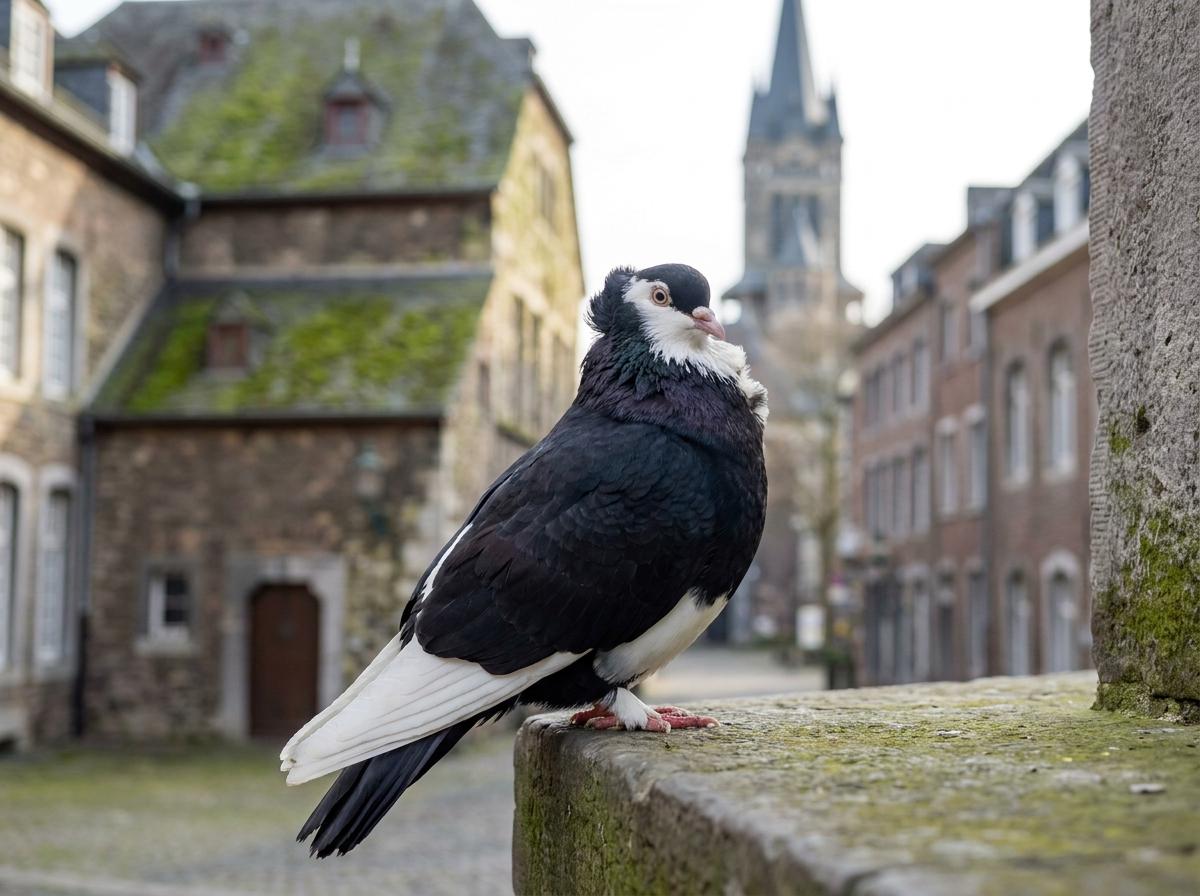
- Breast frill (the jabot). This is the headline trait: a profuse display of reversed feathers completely covering the breast, with a horizontal “part” down the center so the feathers above point up toward the neck and the feathers below point down. In the Chinese Owl this frill is full enough to spread forward over the wing butts, which is part of why the breed looks so heavily ruffled (NPA Chinese Owl standard, 1993). It is one of the three most heavily weighted features on the score card, tied with the neck frill and the pantaloons at 17 points each.
- Neck frill. A smooth, even collar of reversed feathers sitting loosely around the neck and breaking behind the head in a vertical line, leaving a small gap (no less than a quarter inch) at the back of the head (NPA standard, 1993). Importantly, the frill is at the front and sides of the neck; it does not wrap into a mane down the back of the neck. That back mane belongs to a different breed, the Oriental Frill, and confusing the two is a common mistake.
- Pantaloons. Two distinct puffs of fine feathers protruding from the lower breast in front of the legs, like little feathered trousers (NPA standard, 1993).
- Head and beak. A bold, rounded head with a smoothly arched profile, and a short “owl” beak. In the standard the beak is described as dainty but still large enough to tell the Chinese Owl apart from the even shorter-beaked African Owl (NPA standard, 1993).
- Eye. Alert and clear, with a fine cere; white-flighted and self-white birds carry a dark “bull” eye, while colored birds carry a red or red-orange eye (NPA standard, 1993).
In size it is a genuinely small pigeon. The standard pictures a show cock at roughly 10 inches from beak to tail, about 8 inches from floor to crown, and around 10 ounces in weight, with hens a little smaller (NPA standard, 1993). Carriage is upright and bold rather than long and racy.
Chinese Owl vs Oriental Frill (and the other owls)
Because so many frilled and short-beaked breeds look superficially similar, it is worth being precise. The Chinese Owl’s frilling is concentrated on the front: a frilled neck collar that breaks at the back of the head, a very profuse breast frill, and pantaloons. The Oriental Frill, by contrast, carries a mane at the back of the neck supporting a peak crest, plus grouse muffs on the feet, so a continuous back-of-neck mane points you to an Oriental Frill, not a Chinese Owl. The African and English Owls share the short owl beak and a breast frill but are far less profusely frilled overall. When a bird’s whole body looks awash in reversed feathers from the breast outward, you are most likely looking at a Chinese Owl.
Colors and varieties
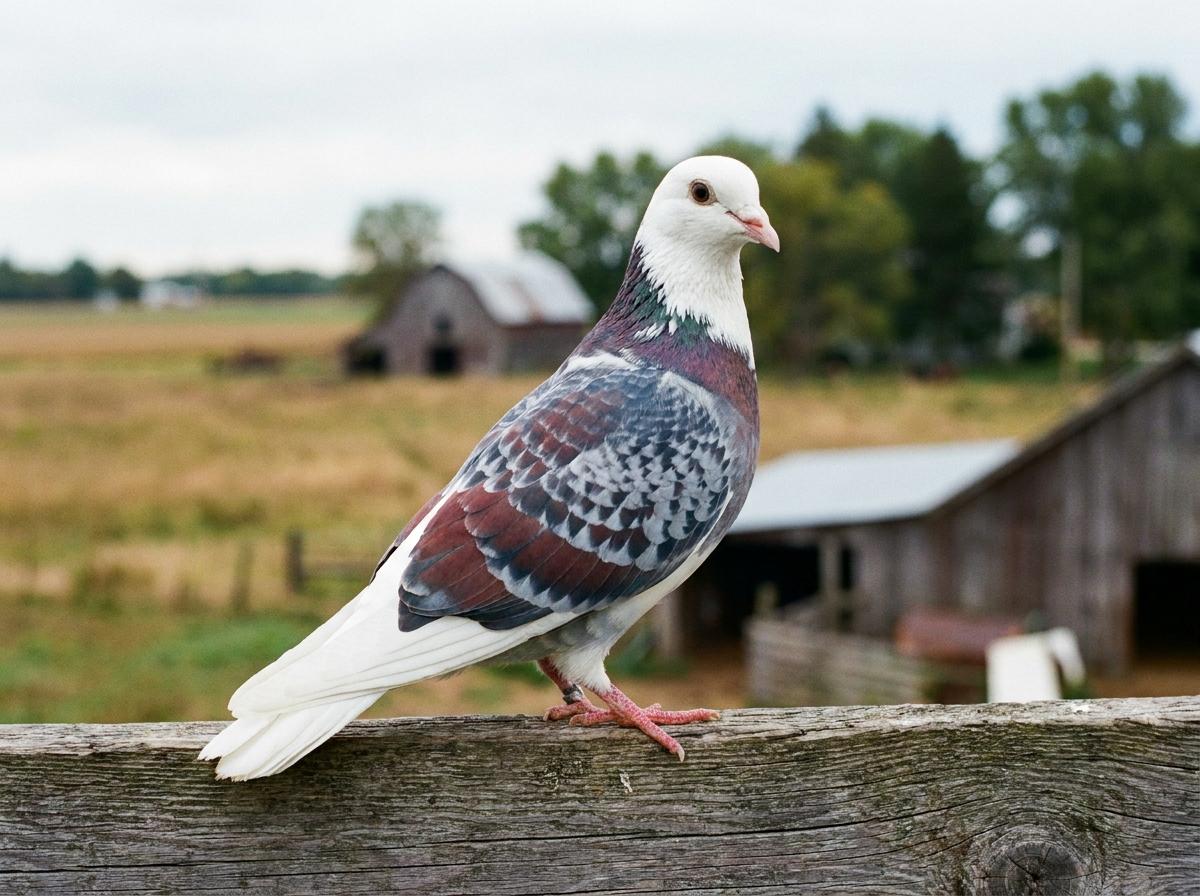
For a small breed, the Chinese Owl comes in a wide spread of colors. Commonly exhibited colors include white, black, red, yellow, dun, and the blue series (blue bar and blue checker), and the NPA standard also describes a range of further pattern and pigment varieties such as brown, khaki, indigo, ice, and grizzle or pattern combinations (NPA Chinese Owl standard, 1993). Whatever the color, the standard asks for it to be sound, clear, and even across the body, including the rump, thighs, and belly.

In practice, color is secondary to frill quality and type on the show bench. A correctly built bird with a full, well-parted breast frill and a clean neck frill will beat a more brilliantly colored bird with a thin or untidy frill. If you are buying for show, learn the frill points first and treat color as the tiebreaker, which is the reverse of how many newcomers shop.
Temperament and what they are kept for
The Chinese Owl is an exhibition and pet breed, full stop. It is not a flying or racing pigeon, and that frilled, somewhat feather-burdened body is not built for sustained free flight the way a homer’s is. Keepers consistently describe the breed as calm, gentle, and easy to tame, which fits a bird selected for the show pen and close handling rather than performance. We flag the temperament as the broad consensus of fanciers and breed write-ups rather than a formally studied trait, and as with any pigeon, how tame an individual becomes depends heavily on early handling and daily contact.
Their main “job,” then, is to be looked at and enjoyed: shown at fancy-pigeon exhibitions, kept as ornamental loft birds, and increasingly kept simply as gentle pets. They are also reported to breed readily and to raise their own young well, which makes them a manageable choice for someone new to keeping fancy pigeons.
Keeping a Chinese Owl: housing, feeding, and care
A Chinese Owl needs the same core husbandry as any loft pigeon, with a few points that follow directly from its small size, heavy frill, and short beak. None of this replaces advice from an avian veterinarian, who should handle any actual medical decision.
Housing
House them in a clean, dry, draft-free loft or aviary with secure protection from predators (cats, hawks, rats) and from damp. Provide perches and nest boxes, good ventilation without a direct draft, and enough space per pair to avoid crowding and squabbling. Because the breed’s value is in its feather frills, dry bedding and clean perches matter more than usual, since caked or wet conditions spoil the breast and neck frill and the pantaloons in front of the legs. Dirty, cramped quarters are the fastest way to ruin a show bird’s appearance and its health at the same time.
Feeding
Feed a standard pigeon grain and seed mix with constant access to clean water, grit, and a mineral or pick supplement for calcium and trace minerals, the same basics any fancy pigeon needs. The one breed-specific wrinkle is the short owl beak: small-beaked breeds handle small seeds more easily than large grains, so a finer “tumbler” or small-grain mix is often preferred so the birds can pick it up cleanly and waste less. Breeding pairs feeding squabs need extra energy and protein, so step up the ration around breeding and molt.
Health and records
Routine pigeon health care applies: keep the loft clean and dry, watch for the common pigeon problems (canker, coccidiosis, worms, respiratory illness, and external parasites), provide a bath pan so the birds can keep their plumage in order, and work with an avian or exotics veterinarian for diagnosis, medication, and a sensible vaccination or parasite plan for your area and flock size. Keep clear records of each bird’s hatch date, parentage, pairings, molts, treatments, and any show results, so you can make breeding and culling decisions on evidence rather than memory. Defer all medical decisions to a veterinarian who can examine the bird.

A note on lifespan
You will often see a Chinese Owl lifespan quoted at roughly 7 to 10 years. Treat that as a typical, well-kept-pet figure rather than a hard breed rule. Domestic pigeons as a group can live longer than that with excellent care and good genetics, and there is no authoritative breed-specific longevity study for the Chinese Owl, so think of 7 to 10 years as a reasonable planning expectation, not a guarantee or a ceiling.
Cost and where they are kept
Chinese Owls are a well-established show breed, so they are not rare in the way an obscure landrace is, but they are a specialty bird sold through the fancy rather than through general pet shops. Prices vary widely with quality: ordinary pet-grade birds change hands for a modest amount, while top show-quality birds with excellent frill and type from a respected loft command a premium. There is no single reliable public price for the breed, and we will not invent one. The sensible approach is to compare a few sellers and judge the bird in front of you on frill, type, and condition rather than on a headline number.
The usual ways to find them are fancy-pigeon shows and clubs, breeder listings, and breeder directories. Because supply is specialist and seasonal, it often pays to line up a source and then wait for the right bird rather than expecting to buy on demand. You can browse current Chinese Owl listings on the Creatures marketplace and look for breeders in the Creatures breeder directory; if nothing is listed today, a saved listing alert (below) is the most practical way to catch one when it appears.
What to check before you buy
Because so much of this breed’s value lives in fine feather detail, buy on the bird, not on the breed name.
- Judge the frill first. A correct Chinese Owl has a full, evenly parted breast frill, a clean neck frill that breaks behind the head, and distinct pantaloons. A thin, lopsided, or sparse frill is the most common fault.
- Confirm it is actually a Chinese Owl. Check that the neck frill stays at the front and does not become a back-of-neck mane (that would point to an Oriental Frill), and that the beak is short but not as extreme as an African Owl’s.
- Check overall health and condition. Look for a bright clear eye, clean nostrils and vent, smooth feathering, sound feet and legs, and an alert, lively bird. Avoid birds that are listless, scruffy, or kept in dirty conditions.
- Ask for records and history. Hatch date, parentage, pairings, and any show placings tell you far more than a photo. A serious breeder should be able to give you a bird’s background.
- Buy from someone who keeps clean lofts. Frill quality and disease risk both track loft hygiene, so the condition of the seller’s setup is itself a signal.
Frequently asked questions
Is the Chinese Owl pigeon actually from China?
No. The name is widely described as a misnomer. The breed almost certainly did not originate in China and is thought to descend from the Spanish Chorrera, with the modern bird developed by European fanciers after a French dealer coined the name in the 1800s.
Why is it called an “Owl”?
For the head, not for any link to owls. Owl pigeons share a short, stubby beak and a small rounded head, which gives the face a slightly owl-like look. The Chinese Owl, African Owl, and English Owl are all “owl” breeds by that head type.
What is the difference between a Chinese Owl and an Oriental Frill?
Both are heavily frilled, but the Chinese Owl’s frilling is on the front (neck collar plus a very profuse breast frill), and its neck frill breaks behind the head. The Oriental Frill carries a mane at the back of the neck supporting a peak crest, plus feathered foot muffs. A back-of-neck mane means Oriental Frill, not Chinese Owl.
Are Chinese Owls good pets for beginners?
Generally yes, within reason. They are small, usually calm and tame, and are reported to breed and parent well, which suits a newcomer to fancy pigeons. They still need a clean dry loft, daily care, predator protection, and a veterinarian relationship, and their heavy frill means hygiene matters more than with a plain-feathered bird.
What do Chinese Owls eat?
A standard pigeon grain and seed mix with clean water, grit, and a mineral supplement. Because of the short owl beak, a smaller-grain or tumbler-type mix is often easier for them to eat than large grains.
How long do Chinese Owls live?
Commonly around 7 to 10 years in good care. Pigeons as a group can live longer with excellent husbandry, but there is no authoritative breed-specific lifespan figure, so treat that range as a planning expectation rather than a rule.
Do this next on Creatures
Whether you are researching the breed, hunting for a good show bird, or already keeping Chinese Owls, Creatures is the records, marketplace, and directory layer to do it in one place. You can also compare it with related frilled and ornamental breeds like the Nun pigeon, the Damascus pigeon, and the larger French Mondain.
Find a bird. Browse Chinese Owls on the marketplace and search trusted breeders and lofts in the Creatures directory. New to the marketplace? See saving searches and using your watchlist.
Get alerted. Good show-quality Chinese Owls come and go, so set a free Chinese Owl listing alert and we will tell you when one is posted. No account needed to start.
Add your pigeon. Already keeping Chinese Owls? Create a free animal profile in a few minutes. No account needed to start, and the walkthrough is in adding an animal to Creatures.
Track health and show records. Keep health, molt, and show records on Creatures. The record sheet opens for any visitor to look around, and you will need a free account to save what you enter. See adding a record and your animal’s profile page for the full how-to.
List your loft. Breed Chinese Owls? Create a free loft or breeder profile so buyers searching for the breed can reach you. No account needed to start, and getting listed in the breeder directory walks you through it.
Compare the breed. See the Chinese Owl alongside other ornamental pigeons on the Creatures pigeon species page.