King
The King pigeon is a large, heavy, stocky American breed developed in the late 1800s primarily for meat, meaning squab production, and later refined into one of the most popular show pigeons in the world. It is a cobby, deep-bodied bird with a broad full chest, a short tail, a thick short neck, short smooth clean (unfeathered) legs, and an upright, alert stance. It is most familiar as the pure white utility King, though it also comes in silver, red, dun, blue, and other colors. If you have landed here because you have seen a big white pigeon and wondered what it is, or you are deciding whether to keep Kings for the table or the show bench, this page separates the two very different types of King, covers where the breed came from, what it looks like, how big it really gets, what it is used for, and what to check before you buy a pair.

Browse listings, public profiles, breeders, or add your animal.
What is a King pigeon?
The King is a breed of domestic pigeon (descended, like all domestic pigeons, from the rock pigeon, Columba livia) developed in the United States as a utility bird, which in pigeon keeping means a bird raised for meat. Its young, called squabs, are the product utility keepers are after, and the adults are large and productive enough to raise plump, fast-growing youngsters. Over the twentieth century the breed was also developed into a leading exhibition pigeon, so today you will find Kings both in working squab lofts and on the show bench. It sits among the classic utility pigeons, alongside breeds like the Carneau, the French Mondain, the Strasser, and the Giant Runt.
The single most important thing to understand about the King is that the name now covers two quite different birds. The Utility King is bred for productivity and squab yield. The Show King is bred for size, form, and a bold upright station to win in the exhibition hall, and it is judged against a written standard rather than by how many squabs it raises. Both are Kings, both trace back to the same root, and a serious loft can keep either, but they are not selected for the same things, so it matters which one you are buying into. We come back to that distinction throughout this page.
If you are weighing the King against other breeds, the broader Creatures pigeon species page is a good place to compare it with the rest of the family.
Origin and history
The King is an American breed, and unlike many old European pigeons that emerged gradually in a region, it was made on purpose. According to breed histories, Kings were developed during the 1890s by crossing four established breeds, each chosen for a specific quality: the Duchess for grace, the Homer for alertness, the Maltese for compactness and style, and the Runt for body and size. The goal was a single productive bird that combined the Runt’s bulk with the vigor and shape of the other three, and the result was a large, heavy pigeon well suited to raising meaty squabs.
That timing is not an accident. The late nineteenth and early twentieth centuries, before broiler chickens made cheap poultry meat universal, were the heyday of commercial squab raising in North America, and large utility breeds were the workhorses of that trade. The King quickly became one of the leading commercial squabbing pigeons in the United States, and the White King in particular came to dominate commercial squab operations because a white-feathered bird yields the clean, pale, pink-skinned carcass that squab buyers prefer.
From there the breed split down its two tracks. The commercial White King stayed in the squab lofts. At the same time, fanciers pulled the King toward exhibition, breeding for still greater size, a rounder body, and a bold upright carriage, and the Show King became one of the most successful show pigeons around. The American Pigeon Journal thought enough of the Show King to devote special issues to it across the middle of the twentieth century, in 1938, 1959, 1964, and 1970, which gives a sense of how established the show variety became.
What a King pigeon looks like
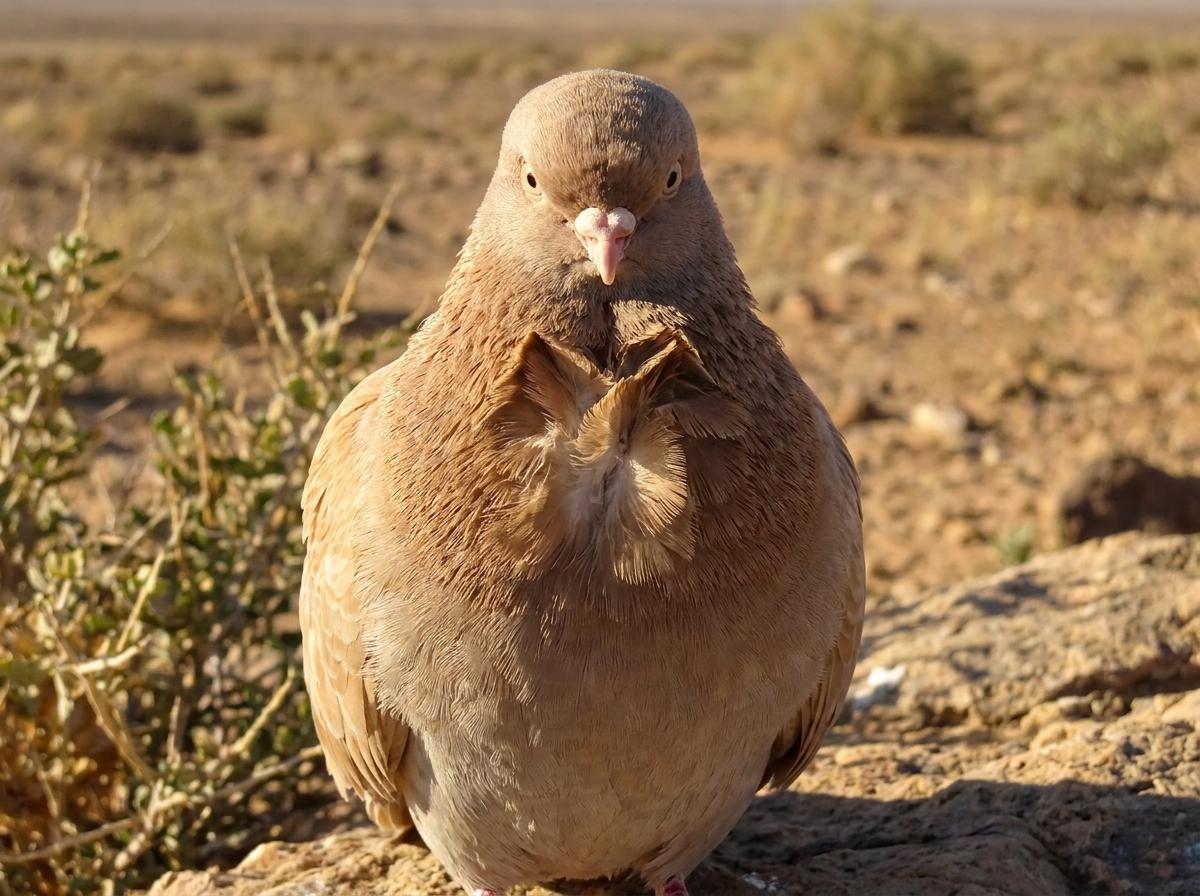
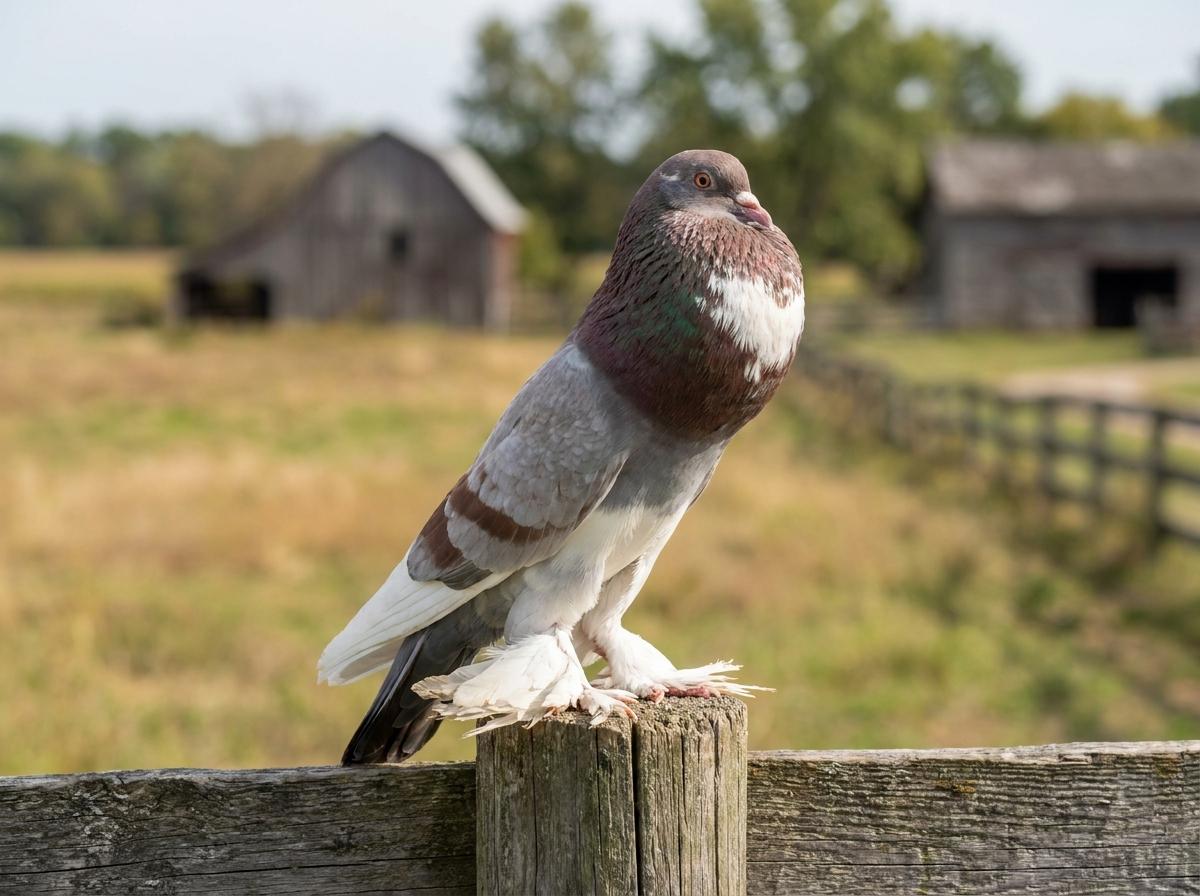
The King is built for substance. The overall impression is of a large, cobby (compact and rounded) pigeon that stands upright and looks solid and muscular rather than sleek.

- Broad, deep body. The chest is broad and the body deep and full, giving the bird its heavy, rounded look. This is the trait that made it a meat breed, since a big frame raises big squabs, and it is also what the show standard rewards.
- Short tail, thick neck, small head. The tail is short, the neck short and thick, and the head neat and well rounded for the size of the bird. The beak is short and stout rather than long.
- Upright, alert stance. The King carries itself in a bold, erect station, standing tall on its legs rather than crouching low. In the show ring this alert, vital carriage is part of what judges look for.
- Short, clean legs. The legs are short and smooth, clean (unfeathered) rather than muffed.
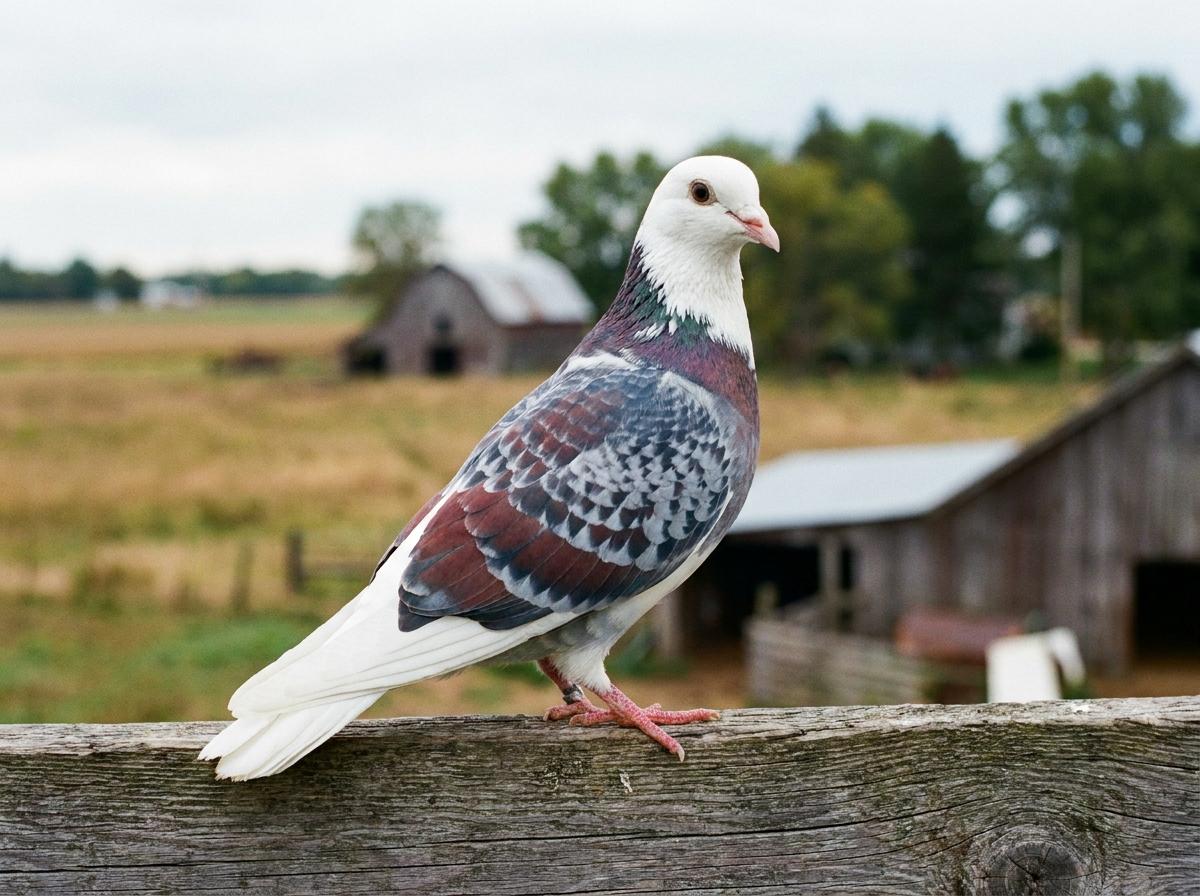
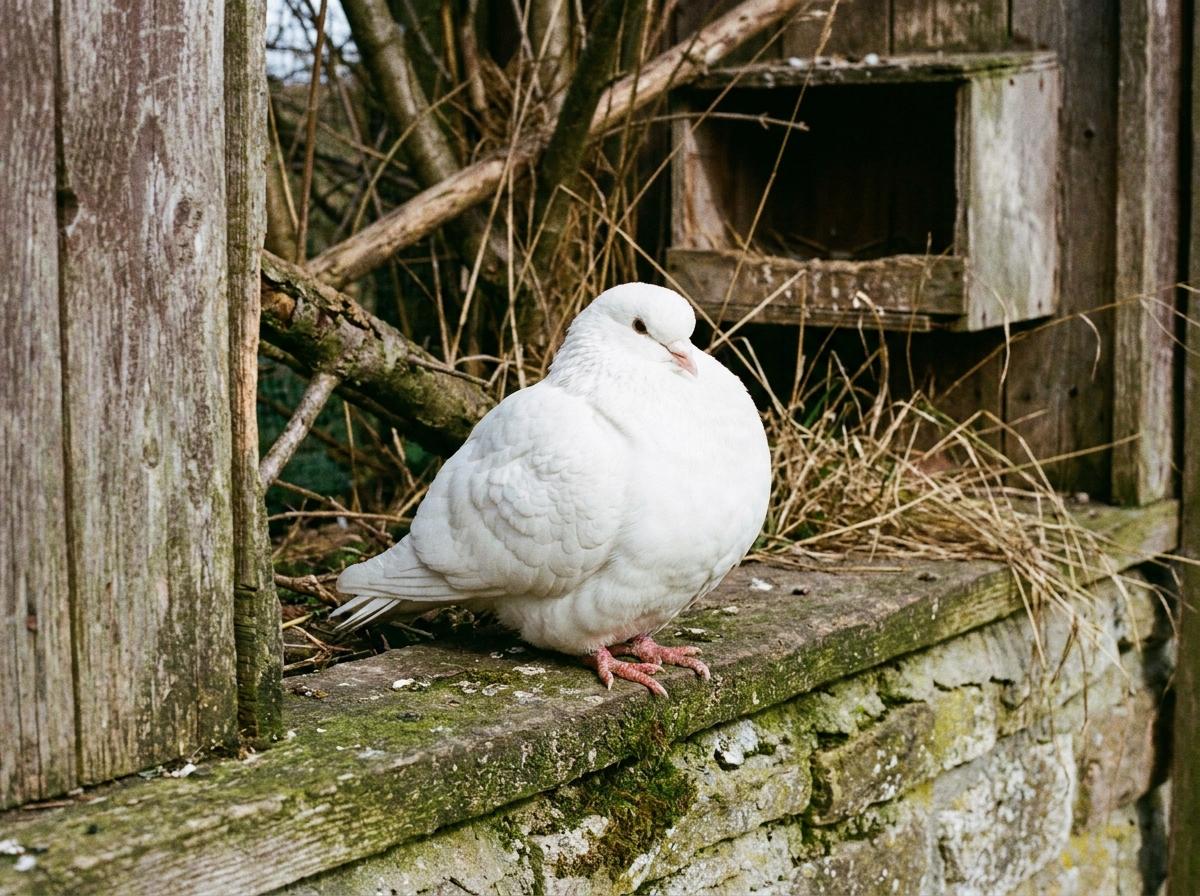
- Many colors, but white is the icon. The utility bird most people picture is pure white, because the White King dominates squab production. Kings also come in silver, red, dun, blue, and other shades, along with patterned varieties such as barred, checked, grizzle, and mottled, which show up more in the exhibition side of the breed.
How big is a King, and is it the biggest pigeon?
The King is a genuinely large pigeon, several times the heft of an ordinary feral street bird, but it is worth being precise because size gets exaggerated in sales talk. Show Kings are commonly cited at around 30 to 37 ounces (roughly 850 to 1,050 grams), and the show variety is bred deliberately toward the top of that range, with proportions such as a tall, upright station, a broad well-rounded skull, and a deep full chest. Working utility Kings are large too, though a production loft cares more about how well a pair raises squabs than about hitting an exhibition weight.
Large as it is, the King is not the single largest domestic pigeon by weight. That title generally goes to the Giant Runt, which is bred specifically for maximum size and was in fact one of the King’s founding breeds. It is easy to conflate the two because both are heavy utility-type birds, but they are distinct: the Runt is the size record holder, and the King is a large, well-balanced meat-and-show breed with a more refined, upright type. If a seller pitches a King as the biggest pigeon in the world, treat that as marketing rather than breed fact.
What the breed is used for
The King has two honest jobs, and the smart move for any buyer is to be clear about which one they want.
Meat and squab production. This is the breed’s original and defining purpose, and it is where the Utility King, especially the White King, still earns its keep. In squab raising, a pair of pigeons incubates two eggs, both parents produce a protein-rich “crop milk” (also called pigeon milk) to feed the hatchlings for the first days, and the young squabs grow very quickly on that and then on regurgitated grain. Across utility breeds, squabs are taken just before they leave the nest, typically around 26 to 30 days of age, when each squab weighs roughly 500 grams (about 17.6 ounces) live and the meat is at its most tender. The White King was selected precisely because a large-bodied, productive pair raises heavy squabs and a clean white carcass. If you keep Kings for the table, keep it factual and humane: this is meat production, managed like any other livestock, and the birds deserve clean housing and careful handling throughout.
Show and exhibition. Over the decades the King was also developed into a leading show breed. The Show King is judged against a written standard for size, body shape, station, feather quality, and color purity, with recognized varieties in white, blue, red, black, and others evaluated for even, rich color free of foreign markings. Many keepers now raise Kings primarily as calm, handsome loft and show birds rather than for meat. Both roles are legitimate, and the point is simply that show lines and hard-working production lines are not always selected for the same qualities.

A note on white Kings and “dove” releases
Because the White King is the big white pigeon most people encounter, it is often mistaken for the white birds released at weddings and events. It is worth being clear and honest about this, because the confusion can harm birds. The birds properly used for a genuine “white dove release” are trained white racing Homers, which are bred and conditioned to fly home from a distance. King pigeons are bred for meat and body size, not for flight, so they do not have the homing ability or the flying stamina to survive a release. Rescue organizations warn that white Kings (and small white Ringneck doves) let loose outdoors almost always die, because they cannot fend for themselves or find their way back. If you see a lost, tame, heavy white pigeon that lets you walk right up to it, there is a good chance it is a King or a released show or utility bird that needs help rather than a wild bird. The practical takeaway for a keeper is simple: enjoy the White King as a loft and squab bird, and do not use it, or buy it, for outdoor releases.
Temperament and keeping
Kings are generally described by keepers as calm, docile, and easy to handle, which fits a heavy-bodied bird that is not built for fast, agile flight. As a large pigeon, the King is not a strong flyer in the way a racing Homer is, so it is kept in a loft and aviary setup rather than expected to range and return. As with any pigeon, individual temperament varies with how much the birds are handled and how they are housed.
The husbandry is standard pigeon keeping, scaled to a big, productive bird. Pigeons are housed in a dry, draft-free loft with nest boxes for breeding pairs and room to perch and move, and a common rule of thumb from extension guidance is about 27 cubic feet of loft space per pair, so a heavy breed appreciates space rather than crowding. Feed a variety of grains, ideally four or more, from options such as corn, wheat, sorghum, peas, oats, and barley. Because pigeons swallow whole seeds, they need grit to grind their food, plus a calcium source such as oyster shell or crushed eggshell, which matters especially for laying hens and fast-growing squabs. Clean water at all times is essential. Pigeons are generally monogamous and pair for life, and both members of a pair share incubation and feeding, which is exactly why they raise squabs so efficiently.
On health, follow the same basics as for any loft: keep housing clean and dry, watch for the common pigeon parasites and respiratory issues, and work with an avian or poultry veterinarian for anything beyond routine care. Defer medical decisions to a veterinarian who can examine the birds, and keep clear records of pairings, hatch dates, and any treatments so you can make breeding and culling decisions on evidence rather than memory.

Lifespan
There is no special breed-specific lifespan figure for the King, so the sensible expectation is the general one for well-kept domestic pigeons: commonly around 10 to 15 years, with some individuals living longer under excellent care. Birds in a hard-working squab loft are managed differently from a single pet or show pigeon, so treat that range as a general guide rather than a guarantee for any one bird.
Cost and availability
Kings are one of the more obtainable large utility breeds in North America, because both the commercial White King and the exhibition Show King are widely kept. You will generally find them through pigeon clubs, breed exhibitors, squab producers, and dedicated lofts rather than in a general pet store. Utility White Kings are also sold as production stock in some quantity, since they underpin much of the domestic squab trade.
There is no single reliable published price for a King, and prices vary widely with quality, color, whether the bird is proven production stock or a show-standard individual, and the seller’s region, so we will not invent a precise figure. As a general guide, ordinary utility-quality birds tend to be modest in price, while top show-standard birds and rarer colors command more. The most practical approach is to find active breeders, ask what their birds are selected for (squab production versus show type), and buy a pair matched to your goal. You can look for current listings on the Creatures marketplace and find breeders and lofts in the Creatures directory.
Buying considerations
Because the King spans both working and show purposes, and because its size attracts sales hype, buy with a clear head.
- Decide squab or show first. A line bred hard for squab production and a line bred for the exhibition bench are not the same bird. Tell the seller which you want and buy stock selected for it.
- Match the color to the purpose. If you are raising for the table, the White King is the classic production choice. If you are aiming at the show hall, ask which recognized color and variety the birds are and whether they are bred to the standard.
- Do not overpay for “biggest pigeon” claims. The King is large but is not the Giant Runt. Judge a bird on correct breed type, body depth, upright station, condition, and health, not on a size-record sales pitch.
- Buy a sound, healthy pair. For breeding you want a true cock and hen in good condition, with clean feathering, bright eyes, no respiratory signs, and good weight. Pigeons pair for life and work as a team, so a well-matched pair is the foundation of a productive loft.
- Ask for records. Hatch dates, pairings, squab-rearing history, and any health treatments tell you more than appearance alone, especially if you are buying production stock.
If you are comparing the King against other utility and show pigeons, it is worth reading up on the related breeds in the Creatures cluster, including the English Trumpeter, the meat-focused French Mondain, and the Modena, or stepping back to the pigeon species page to see the full range.
Frequently asked questions
Is the King pigeon the biggest pigeon breed?
No. The King is a large, heavy utility and show pigeon, but the largest domestic pigeon by weight is the Giant Runt, a separate breed selected for maximum size (and one of the King’s founding breeds). The King is big and deep-bodied with a more refined, upright type.
What is a King pigeon used for?
Two things. Its original purpose is meat and squab production, where the White King is the classic commercial bird. It has also been developed into a leading exhibition breed, the Show King, kept for its size, form, and bold upright station.
What is the difference between a Utility King and a Show King?
The Utility King is bred for productivity and squab yield, so selection favors birds that raise heavy, fast-growing squabs. The Show King is bred for exhibition, so selection favors size, a rounded body, a bold upright station, and color purity judged against a written standard. Both are Kings from the same root, but they are bred toward different goals.
How big is a King pigeon?
Show Kings are commonly cited at around 30 to 37 ounces (roughly 850 to 1,050 grams), and the breed is bred deliberately for a large, deep-bodied frame. Working utility Kings are also large, though production lofts prioritize squab performance over an exhibition weight.
Can you release white King pigeons at a wedding like doves?
No, and it is dangerous to try. The birds used for genuine white releases are trained white racing Homers that can fly home. Kings are bred for meat and body size, not flight, so released Kings almost always cannot survive on their own. If you find a tame, heavy white pigeon outdoors, it likely needs help rather than being a wild bird.
Are King pigeons good for beginners?
They are generally calm, docile, and straightforward to keep, which makes the King a reasonable larger breed for a careful beginner. As with any pigeon, success comes down to a clean dry loft, a varied grain diet plus grit and calcium, fresh water, and a relationship with an avian veterinarian.
Do this next on Creatures
Whether you are researching the breed, looking for a good pair, or already running a loft, Creatures is the records, marketplace, and directory layer to do it in one place.
Find birds. Browse King pigeons on the marketplace and search trusted breeders and lofts in the Creatures directory.
Get alerted. A good King pair, or a specific show color, is not always listed, so set a free King pigeon listing alert and we will tell you when one is posted. No account needed to start, and the walkthrough is in saving searches and using your watchlist.
Add your pigeon. Already keeping Kings? Create a free pigeon profile in a few minutes. No account needed to start, and the steps are in adding an animal to Creatures.
Track pairings and squabs. Keep breeding and health records on Creatures. The record sheet opens for any visitor to look around, and a free account saves what you enter. See adding a record for the full how-to.
List your loft. Run a breeding loft or squab operation? Create a free breeder profile so buyers searching for this breed can reach you. No account needed to start, and you can read getting listed in the breeder directory first.
Sell with confidence. Planning to sell birds? Learn how seller payout works before you list.
If you keep or breed Kings, you can also list your loft in the Creatures directory so buyers searching for this breed can reach you.