Harlequin
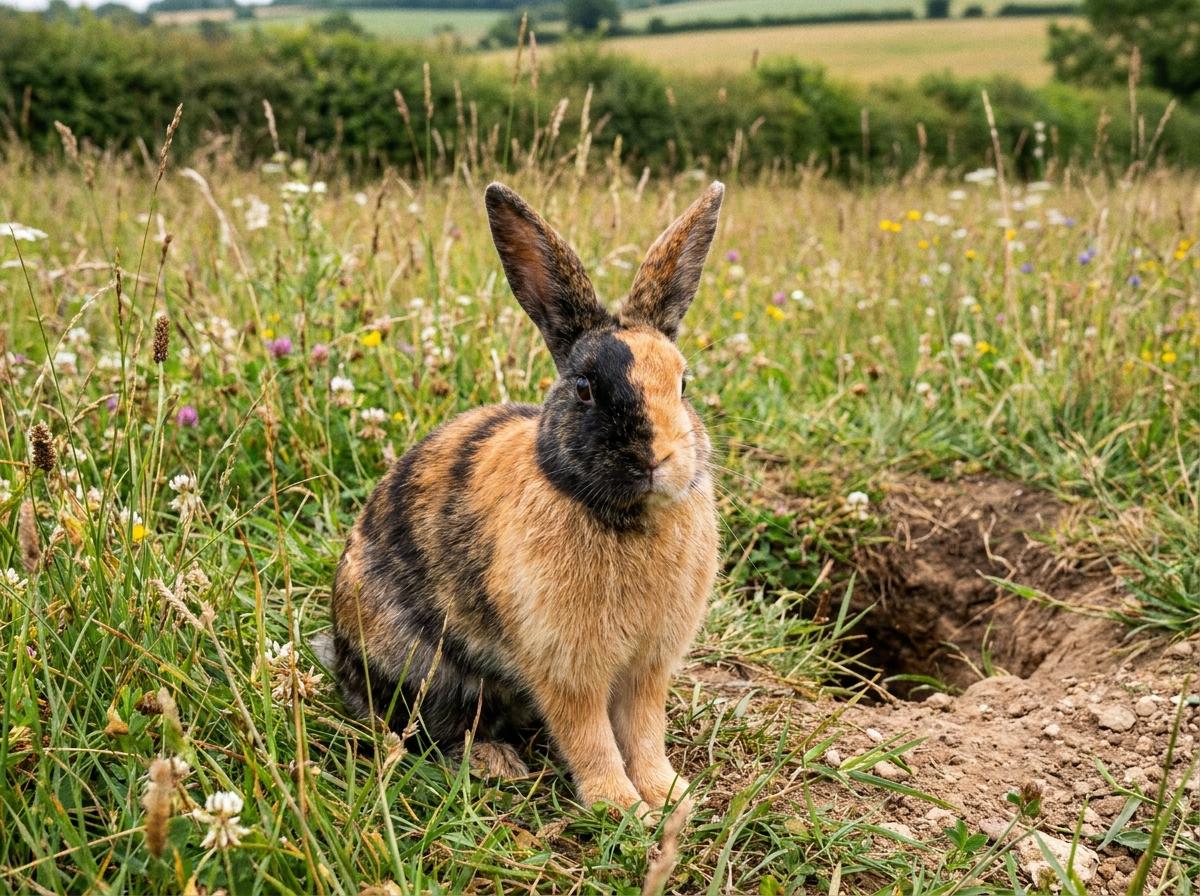
The Harlequin rabbit is a medium, commercial-type breed famous for one thing above all others: its striking two-color coat pattern. Nicknamed “the clown of the rabbits” for markings that look like a court jester’s costume, a good Harlequin has a face split cleanly down the middle into two colors, ears that alternate to the opposite colors, and a body carrying alternating bars and patches on opposite sides. It is, in effect, a color breed rather than a type breed, one of the oldest rabbit breeds in the fancy, and genuinely difficult to breed to standard. Below is what the Harlequin is, where it comes from, how the pattern is supposed to work, how big it gets, what it is like as a pet, and what to check before you buy one.

Browse listings, public profiles, breeders, or add your animal.
What is a Harlequin rabbit?
The Harlequin is a medium-sized domestic rabbit that is defined almost entirely by its coat pattern. Where most breeds are described first by their body type, coat, or size, the Harlequin is a breed built around a color scheme so distinctive that fanciers debate whether it is truly a separate breed or a color type given breed status. Fanciers debate whether the Harlequin is truly a separate breed or a color type given breed status. Either way, in the show world it stands on its own, judged on how cleanly it carries its pattern.
The look is the point. A correctly marked Harlequin has a face divided into two contrasting colors, ears that flip to the opposite colors of the face, and a body carrying alternating bars, bands, and patches so the two colors trade places from one side to the other. That jester-like effect is why the breed picked up its enduring nicknames, the clown of the rabbits and the royal jester. If you want to compare it against other rabbit breeds, the broader Creatures rabbit species page is a good place to start.
The American Rabbit Breeders Association (ARBA), the main governing body for the rabbit fancy in the United States, recognizes the Harlequin and sets a maximum weight of 9.5 pounds for the breed. It is also recognized by the British Rabbit Council in the United Kingdom.
Origin and history
The Harlequin originated in France and was first exhibited in Paris in 1887, which makes it one of the older breeds in the organized rabbit fancy. It is generally described as having been developed from tortoiseshell Dutch rabbits, and its brindled, particolored look was prized from the start.
For much of its early history the breed was known as the Japanese rabbit, a name tied to the coat color rather than to any origin in Japan. That name fell out of use around the Second World War, and the breed came to be called the Harlequin, after the diamond-patterned costume of the Harlequin character from Italian and French theater. The orange-and-colored group still carries “Japanese” as a variety name inside the breed today, a direct echo of that older history.
Because the Harlequin was bred for its pattern rather than for meat production or fur, it has always been more of a fancier’s and exhibitor’s rabbit than a commercial one, even though its body falls into the medium commercial size range. That heritage still shapes the breed: people keep Harlequins because the pattern is fascinating and the rabbits are pleasant, not because they are the most productive animal in the barn.

The two groups: Japanese and Magpie
The Harlequin is divided into two groups that are identical in every way except for one of the two colors in the coat.
- Japanese Harlequin. This is the classic version, combining orange or fawn with a darker color. The dark color can be black, blue, chocolate, or lilac, so a Japanese Harlequin is orange-and-black, orange-and-blue, orange-and-chocolate, or orange-and-lilac. The orange-and-black combination is the one most people picture when they think of the breed.
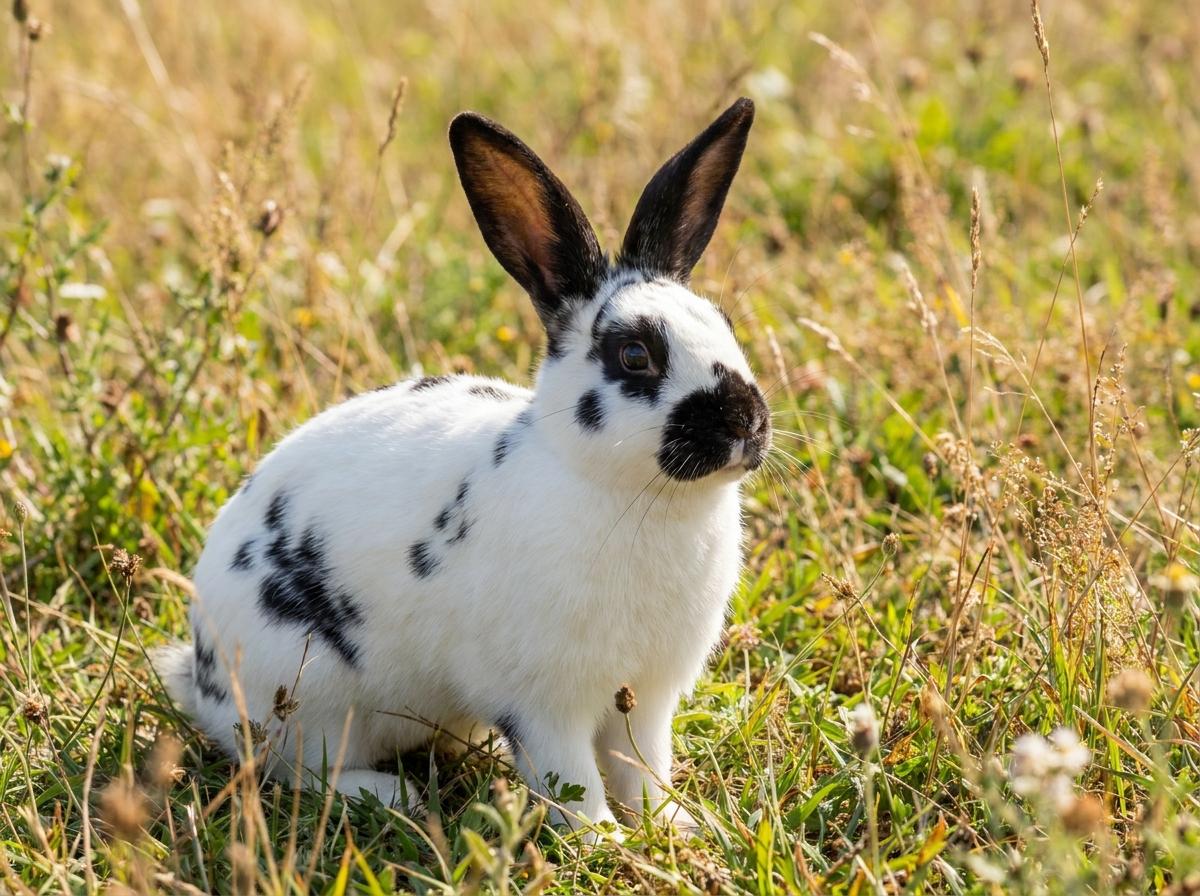
- Magpie Harlequin. The Magpie group swaps the orange or fawn for white. A Magpie Harlequin is therefore white paired with black, blue, chocolate, or lilac. The black-and-white version reads much like a magpie bird, which is where the name comes from.
Both groups follow the same pattern rules. The only difference is whether the “warm” color is orange or fawn (Japanese) or white (Magpie). This split into two color groups is a core part of the breed standard, not an informal distinction.

How the pattern is supposed to work
This is where the Harlequin gets genuinely demanding, and it is worth understanding even if you only ever keep one as a pet, because it explains why well-marked animals are uncommon.
The ARBA Standard of Perfection calls for what breeders describe as a three-part frontal alternation on the front of the rabbit. In plain terms:
- The ears are two different colors, one ear each color.
- The face splits into two colors down the middle, and each side of the face alternates with the ear above it, so the ear and the cheek beneath it are opposite colors.
- The chest and front legs split into two colors that alternate with the face and match the ears.
The body then continues the theme. Ideally a Harlequin carries roughly five to seven body markings, described as bars (a half circle of color running vertically down the side), bands (an unbroken ring of color around the body), or a combination of the two, with the colors trading sides so the pattern alternates cleanly down the length of the rabbit. The feet are also expected to alternate.
Getting all of that to line up on one animal is hard. Color placement in a Harlequin is not something a breeder can dictate; it emerges from genetics and chance, and most rabbits fall short of the ideal in one region or another. That is exactly why a clean, well-balanced Harlequin is prized on the show table and why the breed has a reputation as one of the more challenging to breed to standard.
A note on the genetics
For the curious, the pattern is driven by a specific coat-color gene. Rabbit coat color is controlled by several gene series, and the Harlequin (also called Japanese brindle) pattern comes from an allele at the extension, or E, series that breeders write as ej. In simple terms, the ej allele separates the dark and yellow pigments onto different hair shafts and different areas of the body, which is what produces the banded, particolored effect instead of a single solid color. You do not need to understand the genetics to enjoy a Harlequin, but it is the reason the markings are as unpredictable as they are.
What a Harlequin rabbit looks like beyond the pattern
Set the coloring aside and the Harlequin is a fairly typical medium rabbit. It has a commercial body type, meaning a well-rounded, moderately arched body rather than the compact ball of a dwarf breed or the long frame of a giant. The ears are erect. Adults generally weigh in the range of about 6.5 to 9.5 pounds, with ARBA capping the breed at a maximum of 9.5 pounds, so this is a solid, hold-in-two-hands rabbit, larger than a Netherland Dwarf but nowhere near the scale of a giant breed.
The coat is short, dense, and easy to care for, without the high-maintenance wool of an Angora. In short, if the Harlequin did not carry its remarkable pattern, it would be an unremarkable, easy-keeping medium rabbit, and that ordinary body under an extraordinary coat is part of the appeal.
Temperament
Harlequins are widely described by keepers as docile, friendly, curious, and active. They tend to be sociable rabbits that enjoy interaction and do well with gentle, regular handling, which is a large part of why a breed developed for the show ring also became a popular pet. Many owners describe them as playful and good-natured.
As with any rabbit, temperament is shaped by individual personality, early handling, and how much time the animal spends with people. Rabbits are prey animals and can startle, dislike being scooped up abruptly, and need patient, calm handling to stay confident, and children should always interact with them under supervision. Treat the docile-and-friendly reputation as a helpful general tendency of the breed rather than a guarantee for every rabbit.
Care basics
The Harlequin is not a demanding breed to keep, but rabbits in general need more thoughtful care than their reputation as easy starter pets suggests. The essentials are the same as for any medium rabbit.
- Diet. The foundation of a rabbit’s diet is unlimited grass hay, such as timothy, which keeps the gut moving and wears down teeth that grow continuously. Add a measured amount of quality pellets and a daily portion of suitable leafy greens, with fresh water always available. Sudden diet changes and too many sugary treats are a common cause of digestive trouble.
- Housing. Provide a roomy, secure enclosure that lets the rabbit stretch out, stand up, and move, plus daily time to exercise in a safe space. A short, dense coat like the Harlequin’s needs only routine grooming, more often during a molt.
- Health. Keep an eye on the teeth, appetite, and droppings, since a rabbit that stops eating is a genuine emergency. Find a veterinarian who treats rabbits before you need one, since not every clinic does, and discuss which vaccinations and parasite controls are appropriate in your area. Defer all medical decisions to that veterinarian.
Keeping written records of weight, molts, litters if you breed, and any health events makes it far easier to spot when something is off. You can track health and care records for your rabbit on Creatures once you have a profile set up.

Breeding and the show ring
The Harlequin is where showing and breeding meet, because the whole reason the breed exists is its pattern, and the pattern is judged. Litters commonly run around five to six kits, though rabbit litters can vary widely, and because color placement is largely a matter of chance, a single litter can contain everything from beautifully marked show prospects to plainly brindled animals that would not place.
That unpredictability is the heart of the breed’s appeal to serious fanciers. Breeding a Harlequin that carries the split face, alternating ears, and clean body bars all at once is a real accomplishment, and it keeps experienced breeders engaged for years. If you are drawn to the breed specifically to show it, the ARBA Standard of Perfection is the document to study, and connecting with an established Harlequin breeder or the breed’s specialty club will teach you far more than appearance alone can. You can look for breeders in the Creatures breeder directory.
If your interest is instead a striking, friendly pet, none of the show pressure applies. A pet-quality Harlequin whose markings are a little off standard is exactly as healthy, docile, and rewarding to live with as a show winner, usually more affordable, and still unmistakably a clown of the rabbits.
Cost and where to find one
Harlequins are an established breed but not among the most common in every region, so availability varies. Pet-quality rabbits are generally modest in price, while well-marked show-quality animals from proven lines cost more, reflecting how hard the pattern is to produce. There is no single reliable national price, and it depends heavily on your area, the breeder, and whether you are buying a pet or a show prospect, so we will not invent a precise figure.
The practical path is to buy from a breeder who focuses on the Harlequin and can show you the parents, talk you through the pattern, and be honest about whether a given rabbit is pet or show quality. Rescues and shelters also sometimes have Harlequins or Harlequin-marked mixes looking for homes. You can browse current Harlequin rabbits on the Creatures marketplace, and if you are still weighing where to get one, our guide on where to buy a rabbit walks through the options. If you are comparing similar medium and small breeds, it is worth also looking at the Mini Satin and the Dwarf Hotot.
Frequently asked questions
Why is the Harlequin rabbit called the clown of the rabbits?
Because its two-color, alternating coat pattern looks like the costume of a Harlequin, the diamond-patterned clown or jester character from traditional European theater. The split face, oppositely colored ears, and alternating body bars give it a comic, particolored look, which also earned it the nickname the royal jester.
Is the Harlequin a breed or just a color?
It is recognized as a breed by ARBA and the British Rabbit Council, but it is unusual in being defined by its color pattern rather than its body type, and fanciers genuinely debate whether it is a breed or a color type given breed status. In practice it is judged and shown as its own breed.
What is the difference between a Japanese and a Magpie Harlequin?
Both follow the same pattern rules. A Japanese Harlequin pairs a dark color (black, blue, chocolate, or lilac) with orange or fawn. A Magpie Harlequin pairs the same dark colors with white instead of orange. That single color swap is the only difference between the two groups.
How big does a Harlequin rabbit get?
It is a medium, commercial-type rabbit, generally about 6.5 to 9.5 pounds, with ARBA setting a maximum weight of 9.5 pounds. It is larger than dwarf breeds and much smaller than the giant breeds.
Do Harlequin rabbits make good pets?
Yes. They are widely described as docile, friendly, and active, with an easy-care short coat, which makes them popular pets as well as show animals. Like all rabbits they need proper housing, a hay-based diet, gentle handling, and a rabbit-savvy veterinarian.
Are Harlequin markings hard to breed?
Yes. The show ideal asks for a split face, alternating ears, and clean alternating body bars all on one animal, and because the color placement is largely determined by genetics and chance, most rabbits fall short somewhere. A cleanly marked Harlequin is genuinely difficult to produce, which is part of the breed’s appeal to serious breeders.
Do this next on Creatures
Whether you are researching the breed, hunting for a well-marked rabbit, or already keeping Harlequins, Creatures is the records, marketplace, and directory layer to do it in one place.
Add your rabbit. Already keeping a Harlequin? Create a free animal profile in a few minutes, no account needed to start. The walkthrough is in adding an animal to Creatures.
Track health and care. Add a health or care record. The record sheet opens for any visitor to look around, and you will need a free account to save what you enter. See adding a record and health and medical records for the full how-to.
Find a rabbit. Browse Harlequin rabbits on the marketplace and search trusted breeders and rescues in the Creatures directory. New to searching? See saving searches and using your watchlist.
Get alerted. Well-marked Harlequins are not always easy to find, so set a free Harlequin rabbit listing alert and we will tell you when one is posted. No account needed to start.
List your rabbitry. Breed Harlequins? Create a breeder or rabbitry profile, no account needed to start, so buyers looking for this striking breed can reach you.