





Rat
Rattus norvegicus domestica
Author: Elliott Garber, DVM · Published
Pet rats are domesticated brown rats (Rattus norvegicus), the same species as the wild Norway rat, bred for well over a century into tame, social companions. They do not come in breeds the way dogs or cattle do: the American Fancy Rat and Mouse Association (AFRMA), the main US club, describes its rat varieties as coat, body and ear types, so every pet rat is one combination of a coat, an ear set, a color and a marking. Most live about 1.5 to 3 years, weigh roughly 350 to 650 grams as adults, and need at least one other rat for company every day of that life. If you are looking for rats now, start with the rat breeders and ratteries listed in the Creatures directory.
Below, the varieties come first, sorted trait by trait the way rat keepers pick a pair, followed by prices, lifespan, cage and diet, health, breeding, where to buy and what to write down. Where Creatures has a deeper rat guide, the section hands you to it, and two free rat tools turn up where you need them: the rat gestation calculator when a litter is due and the rat name generator when a new pair needs names.

| Species | Brown or Norway rat, Rattus norvegicus (pet lines are sometimes written R. norvegicus domestica) |
|---|---|
| Main types | Varieties, not breeds: coat (standard, rex, satin, bristle, hairless), ears (top-eared or dumbo), tailed or tailless, plus dozens of colors and 12 AFRMA markings |
| Adult size | Body 9 to 11 in plus a 7 to 9 in tail; does about 350 to 450 g (12 to 16 oz), bucks about 450 to 650 g (16 to 23 oz) |
| Lifespan | Usually 1.5 to 3 years |
| Diet | Omnivore: a complete rat block or pellet, a small daily portion of vegetables, and water from a bottle |
| Social needs | Never alone: same-sex pairs, or groups of three or more |
| Breeding | Gestation 21 to 23 days; litters of 8 to 18 pups; weaned at about 3 weeks |
| Price (2026) | About $12 at a chain pet store, $10 to $30 at the rescue we checked, and $30 to $75 for most varieties at the ratteries we checked |
| Show standards | AFRMA in the United States (founded 1983) and the National Fancy Rat Society in the UK (founded 1976) |
Browse listings, public profiles, breeders, or add your animal.
Rat breeds and types
Search for rat breeds and you will find “dumbo rats”, “rex rats” and “hairless rats” listed as if they were separate breeds. They are not. The AFRMA’s variety guide calls them coat, body and ear types, and its official rat standard shows rats in seven varieties (Standard, Rex, Tailless, Hairless, Satin, Dumbo and Bristle Coat), then groups them by color into six sections: Self, Any Other Color, Any Other Color Pattern, Silvered, Marked and Odd-eye. The traits are inherited separately, so they stack. A dumbo can be rex, a satin can be hooded, a tailless rat can be any color, and most of those labels change nothing about everyday care, though hairless and tailless rats can need adaptations. The useful way to choose is trait by trait.

| Coat | Standard, rex, satin, bristle and hairless are AFRMA standards; double rex, velvet and Harley exist but are not |
|---|---|
| Ears | Top-eared (standard), or dumbo with large round ears set low on the sides of the head |
| Body | Tailed or tailless (manx); dwarf rats have a provisional UK standard |
| Markings | Hooded, bareback, capped, masked, Berkshire, Irish, English Irish, variegated, Dalmatian, blaze, Essex and Down Under |
| Color | Self (one solid color), agouti and other ticked colors, pointed colors such as Siamese and Himalayan, silvered colors, and odd-eye |
Coat types
Standard. The default coat is short, smooth and glossy, and bucks grow slightly longer, coarser hair than does, as the AFRMA standard describes.
Rex. A rex rat has a crimped, plush coat with few long guard hairs and, the quickest giveaway, curly whiskers; the National Fancy Rat Society’s rex standard notes that curly whiskers are normal for rex. One copy of the gene is enough to show it. A Kyoto University team traced rex to a small deletion in the keratin gene Krt71 and found that one copy curls the hair while two copies cause hair loss.
Double rex. That second copy produces the double rex rat, whose sparse, patchy coat thins and regrows in shifting patches. As an AFRMA article on rex and double rex rats explains, pairing two ordinary rex rats gives, on average, a quarter double rex, half rex and a quarter smooth-coated kittens, and a double rex line bred for minimal coat can pass for hairless, though it usually keeps some hair on the face and feet.
Satin. A satin rat has a finer, thinner, longer-looking coat with a lustrous sheen, and its whiskers are normally kinky or wavy. The AFRMA standardized satin in 1995, after the first satins appeared in a breeder’s litter in 1990, and its table of rat coat genes lists satin as recessive, so a rat needs two copies to show it.
Bristle coat. The newest AFRMA coat variety, standardized in 2014, feels like a wire brush: coarse, stiff and standing off the body in adults. Bristle kittens can look like rex, but their whiskers are straighter, and the gene is dominant.
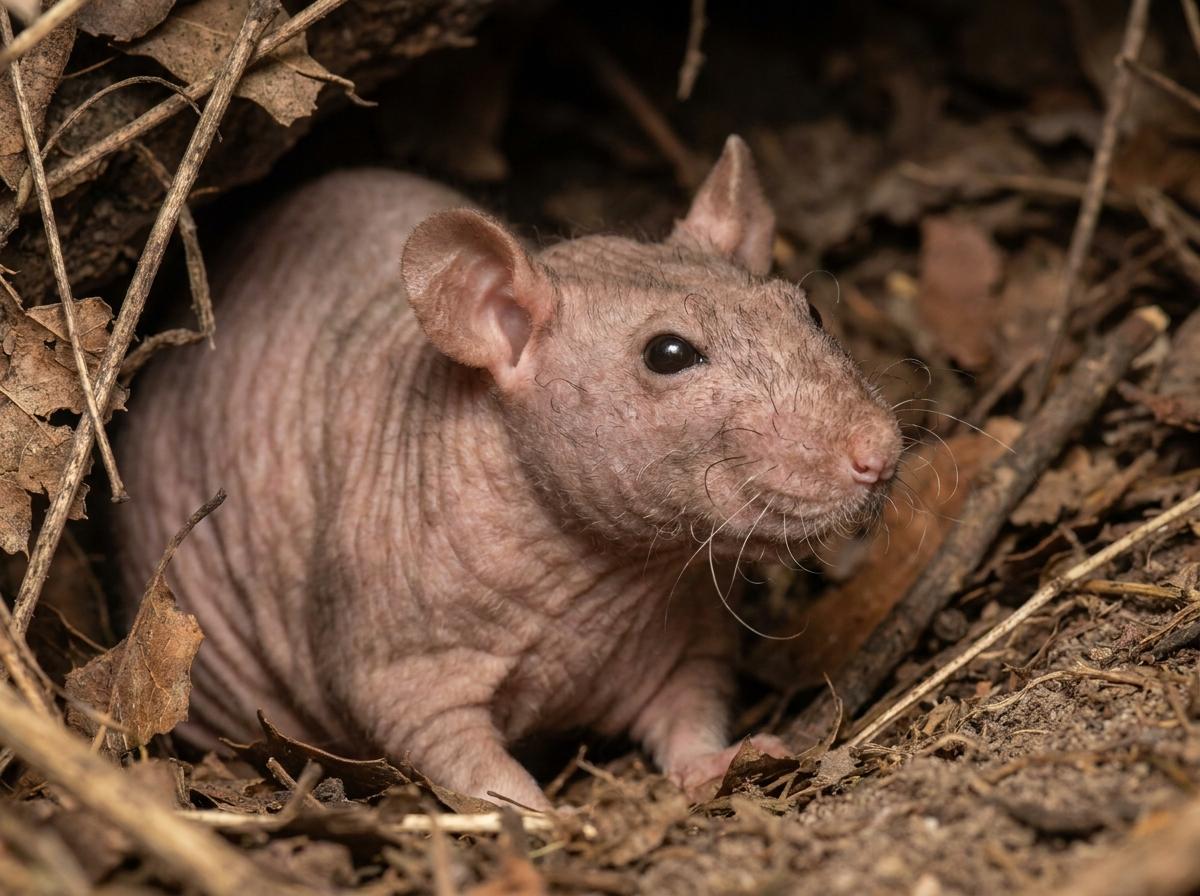
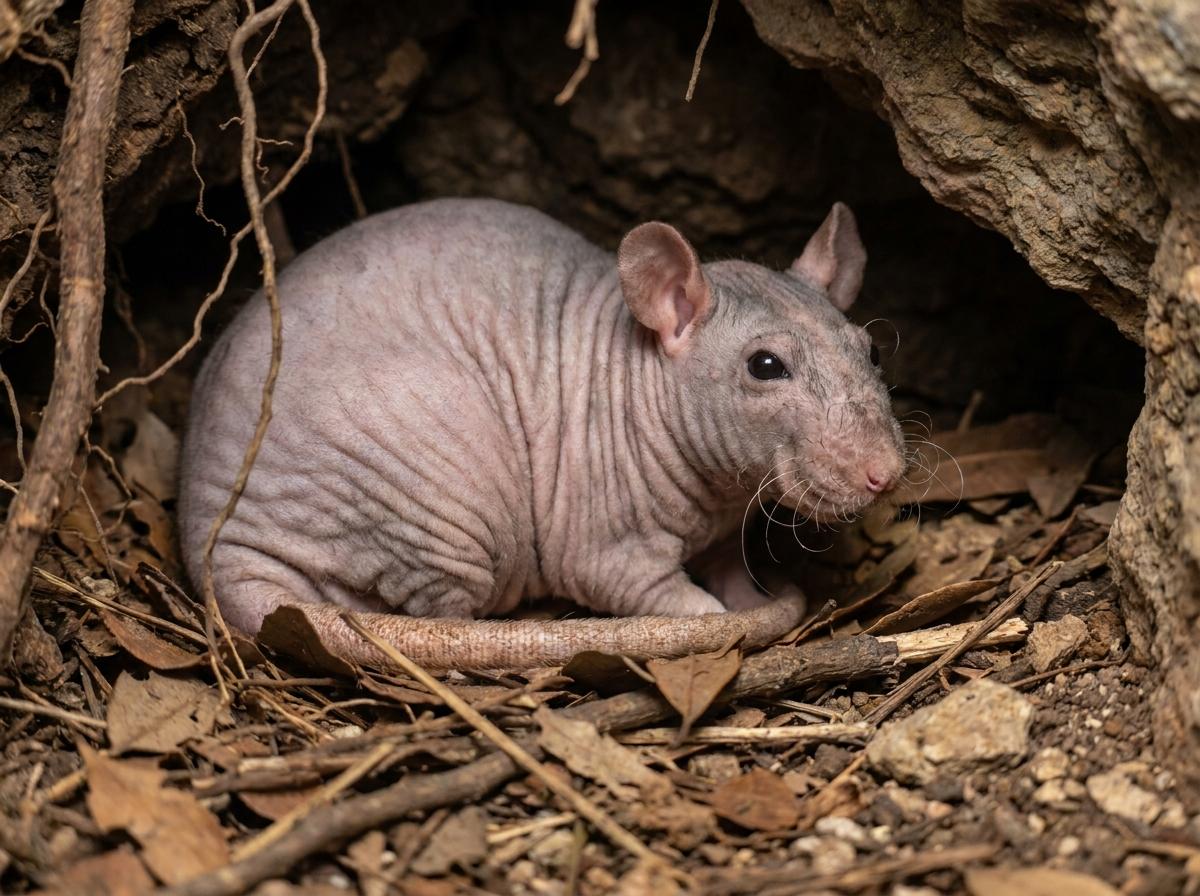
Hairless. A hairless rat should have thin, almost translucent skin and be as hairless as possible, with very large ears and whiskers that are short, curly or missing; the AFRMA has had a hairless standard since 1994. Several different genes cause hairlessness, and a double rex can look much the same. With no coat to hold heat, a hairless rat needs a draft-free room and furred cage mates to sleep against, which the hairless guide covers in detail.
Not standardized: velvet and Harley. Some coats circulate without a show standard. The AFRMA moved velvet, a soft, plush coat, to its non-recognized list in 2012 for lack of entries. Harley rats, first found in a pet shop in 2002, have a sparse, fine, wispy coat with no undercoat that can look long. The AFRMA’s page of non-recognized coats reports that most Harley lines have health or breeding issues and are not likely to be standardized, so if you want one, ask hard questions about the line it comes from.
Ear types: top-eared and dumbo
A standard-eared rat, usually called top-eared, carries good-sized rounded ears set far apart and standing up on top of the head, as the AFRMA standard describes. A dumbo rat has large, round ears set low on the sides of the head. The AFRMA records that dumbos originated in northern California around 1991, and it standardized them in 1998. The trait is recessive: a rat needs two copies to show dumbo ears, two top-eared rats that both carry it can produce dumbo kittens, and two dumbos produce only dumbos. Researchers have since traced it to a missing stretch of DNA that controls the Hmx1 gene in the developing head. Dumbos need exactly the same care as top-eared rats, so choose on health and temperament first and ears second.
Body types: tailless and dwarf
A tailless rat, sold as a manx rat, has no tail at all and a rounder rump, and the AFRMA has had a standard for it since 1993. The missing tail matters more than it sounds. Rats use the tail for balance and to regulate body temperature, as the RSPCA’s rat guide explains, and the AFRMA’s own article on troubles with tailless rats describes hind leg and pelvis abnormalities, and problems with bladder and bowel control, turning up in tailless lines. If you already have a tailless rat, ask a veterinarian who treats small exotic pets to check it, then adapt its care to how well it moves, keeps itself clean and stays warm; breeding them is a different decision, and the manx guide walks through the welfare case honestly.
Dwarf rats are a separate type. The National Fancy Rat Society has a provisional standard for rats less than half the size of a standard fancy rat, and it says a dwarf must be easy to tell apart from a merely small standard rat. Ask a breeder how a dwarf line was established, because a small young rat is not a dwarf.
Markings
Markings describe where the white falls on a rat. The AFRMA standardizes 12 of them on its page of marked varieties:
- Hooded: a colored head, neck and shoulders with an unbroken stripe down the spine to the tail, on a white body. A bareback has the same hood with no stripe.
- Capped: a white body with color on the head only, stopping at the jawline and the ears. A masked rat has color only around the eyes and over the nose.
- Berkshire: a colored top with a completely white belly, white feet and tail, and often a small white spot between the ears. An Irish rat is colored all over except a neat white patch on the belly, four white feet and a white tail tip, and an English Irish carries a white triangle on the chest.
- Variegated and Dalmatian: a variegated rat has a solid head and shoulders, a white spot on the forehead, and patches and flecks of color over the rest of its white body. A Dalmatian is splashed with color evenly all over.
- Blaze: a wedge of white running from the muzzle to the ears, shown on Berkshire and variegated rats.
- Essex: a fading gene, so the color is darkest along the spine and fades to an off-white belly, always with a head spot.
- Down Under: standard markings on top plus a matching stripe or spots on the belly.
The National Fancy Rat Society shares several of these and adds badger, chinchilla, squirrel and roan (also called husky) on its list of marked varieties.
Colors
Color is half of a show rat’s score: the AFRMA standard gives 50 of its 100 points to color. For a pet owner, the colors fall into five families.
- Self: one solid color all over. The AFRMA’s self colors include black, mink, champagne, beige, blue, chocolate, cocoa, lilac, platinum, Russian blue, and pink-eyed and black-eyed white. A pink-eyed white is an albino: genetically it still carries a color and marking, which the albino gene hides.
- Agouti and other ticked colors: agouti is the wild coloring, a rich chestnut over dark slate at the base of the hair, ticked with black guard hairs. Cinnamon, fawn, pearl, lynx and chinchilla sit in the same AFRMA section.
- Pointed colors: the Siamese has a beige body shading to darker points on the nose, ears, feet and tail; the Himalayan has a white body, dark points and red eyes; the Burmese is an even mid-brown with darker points.
- Silvered: silver-white hairs mixed evenly into a base color, as in silver black, silver fawn or amber.
- Odd-eye: one pink eye and one dark eye, in any color, standardized by the AFRMA in 1992.
The clubs that write rat standards
The standards quoted on this page come from two clubs, and the rat fancy behind them began in England: the AFRMA’s history of fancy rats records that the National Mouse Club opened its shows to rats in 1901 at the request of Mary Douglas, remembered as the mother of the rat fancy, and that the National Fancy Rat Society, founded in January 1976, was the first organization for rats alone. The National Fancy Rat Society’s own history dates its inaugural meeting to 13 January 1976. The AFRMA followed in the United States in 1983.
The two standards do not match. The National Fancy Rat Society standards include rex and dumbo but have no hairless or tailless variety, and its dumbo standard treats an equilateral-triangle head as a serious fault, where the AFRMA standard asks for exactly that head shape. Show standards weigh plenty that a pet owner can ignore, but they are the best shared language for describing a rat when you buy one, record a pedigree or fill in a profile.
Pet rats, lab rats and wild rats
Every pet rat descends from the brown rat. Despite the name Norway rat, Rattus norvegicus is native to northern China and spread around the world with trade from the 18th century, according to the Smithsonian’s National Zoo. In Victorian England, rat-catchers who supplied the rat pits kept and bred the oddly colored rats they caught, and the AFRMA history credits the royal rat-catcher Jack Black with producing the first true domestic rats between the 1840s and 1860s. Laboratories did much of the rest. At the Wistar Institute, Helen Dean King bred the Wistar rat, the first standardized laboratory animal, and more than half of all laboratory rats trace their ancestry to it. In the United States, the AFRMA history notes, early pet books told readers to ask a laboratory for a white rat, and scientific laboratories are responsible for most American fancy stock.
Wild rats are a different matter. North America has two introduced pest rats: the Norway rat, also called the brown, sewer or barn rat, and the smaller roof rat (Rattus rattus), also called the black, ship or house rat. They are separate species that cannot interbreed, as the University of California’s integrated pest management program explains, and the native woodrats, or pack rats, belong to another genus and have furry tails. So “what kind of rat is a pet rat” has a short answer: a Norway rat. A “Norway rex dumbo” is that species with a rex coat and dumbo ears. Pet rats behave very differently from wild ones because breeders select for temperament: the AFRMA standard requires every show rat to be tractable and easy to handle, and the National Fancy Rat Society’s selling guidelines warn that temperament problems can be inherited. Do not try to tame a wild rat as a pet; wild rats can carry leptospirosis in their urine, as the society’s hantavirus and leptospirosis guidance notes.
What pet rats cost
A rat is cheap to buy. The cage, the food and the vet are the real budget. Because rats should never live alone, budget for at least two rats, with food and vet care for each, and one cage large enough for the group and its shared equipment. These are the prices we found in October 2026:
- Pet stores: a national pet store chain listed fancy rats at $11.99 each, in store only. Ask what the store knows about each rat’s age and sex, because a young doe kept with bucks past four or five weeks of age may already be pregnant.
- Rescues: one California rat rescue’s published fees are $30 for youngsters, $25 for adults and $10 for seniors or rats with special needs.
- Ratteries: published price lists from two home breeders start at about $30 for common varieties such as rex, run $50 to $75 for types such as double rex, hairless and Siamese, and reach $100 or more for Harley and dwarf rats. In the UK, the National Fancy Rat Society’s selling guidelines put the usual price of a kitten at £10 to £30.
The setup costs more than the rats. A cage tall enough for climbing, with bars no more than half an inch apart and solid shelves, is the largest single purchase, and the UK rehoming charity Woodgreen puts the start-up cost at £150 or more. After that come a complete rat block, paper bedding, chew items and hammocks that get chewed and replaced. The bill that surprises owners is medical. Rats need a veterinarian who treats small exotic pets, respiratory infections need prompt treatment, and tumor surgery is a common expense in older rats; the same California rescue puts the cost of a spay or neuter at about $450 per rat on average. If you are weighing rats against other small pets, the Syrian hamster cost guide breaks down a similar budget, and the gerbil and chinchilla guides cover two other rodents people often compare with rats.
How long do rats live?
Most pet rats live 1.5 to 3 years. The Merck Veterinary Manual’s owner guide to rats gives that range, and the manual’s chapter for vets on mice and rats as pets puts the average at 18 to 36 months. The RSPCA puts a pet rat’s lifespan at around two to three years, with some living longer, and notes that females typically live longer than males. The Smithsonian’s National Zoo puts the upper end at about four years in human care. Pet rats live much longer than their wild cousins, the RSPCA notes, because they have steady food, water and veterinary care and are safe from predators.

A short life is made shorter by a few things an owner can influence:
- Respiratory disease. Merck calls infectious respiratory disease the most common health problem in rats. The chronic form, murine respiratory mycoplasmosis, has no cure, and rats with chronic respiratory disease rarely live longer than two years. Ammonia from dirty bedding makes it worse, which is why clean air is the first lifespan rule.
- Weight. Obesity is common in pet rats, and Merck notes that restricting calories without compromising nutrition increases lifespan.
- Tumors. Mammary fibroadenomas are the most common tumors in rats, and males get them as well as females. Most are benign, but they recur, and pituitary tumors are common in older rats, especially females.
- Old age itself. Spinal cord degeneration can appear in rats older than two years, paralyzing the hind legs, and long-term outlook is very poor.
Keeping rats means losing them more often than with most pets. A group of three or more means nobody is left alone when one dies, which is one of the reasons Woodgreen gives for keeping rats in threes.
Rat care basics
Housing
A rat cage needs height as much as floor space, because rats climb and rear up. Merck recommends a minimum cage height of 30 to 38 cm (12 to 15 inches) for rats, the National Fancy Rat Society’s guide to keeping rats as pets asks for at least 2 by 1 by 1 feet for a pair, and Woodgreen’s minimum for up to four rats is 80 cm wide, 50 cm deep and 80 cm high. Measure the bars first: the AFRMA advises half-inch spacing, because an adult rat can get its head stuck in three-quarter-inch bars, which rules out many rabbit and guinea pig cages.

Inside, floors and shelves should be solid, since Merck warns that wire mesh or grid flooring can damage rats’ feet and legs, and Merck rules out glass aquariums entirely because air does not circulate and ammonia builds up. Use deep paper-based bedding rather than cedar or pine shavings, add hammocks, ropes and shelves at different heights, and give the group more hides than rats, each with two exits. Rat Cage Setup: Size, Height, Bar Spacing, and What Goes Inside goes through every figure and where the sources disagree, plus bedding, cleaning and where the cage should stand.
Feeding
Rats are omnivores. The base of the diet is a complete block or pellet made for rats, because Merck advises against seed mixes: rats pick out the seeds and leave the balanced pellets. Add a small daily portion of vegetables with a little fruit or cooked egg, taken out of the day’s allowance rather than added on top, and keep water available from a bottle. The RSPCA’s list of foods to avoid includes onion, citrus fruit, walnuts, rhubarb, grapes, raisins and chocolate. Weigh each rat once a week, since a diet problem shows on the scale weeks before it shows anywhere else. What Do Pet Rats Eat? covers how to read a food label, how much to feed and how to change a rat from a mix to a block.
Health and the vet
Find a veterinarian who treats rats before you need one. Learn the respiratory signs Merck lists, because they are the ones you will most likely see: sneezing, sniffling, a rough coat, lethargy, labored breathing, weight loss, a head tilt and reddish-brown staining around the eyes and nose. Any of them means a vet visit, not a home remedy. Run your hands over each rat once a week for lumps, since Merck notes that early removal of a tumor gives the best outcome. For does, ask your vet about spaying: Merck’s veterinary chapter reports that spaying before seven months of age lowers the chance of mammary tumors later, but it is surgery, with real cost and risk, and the decision belongs with your vet.
Rats can also pass germs to people. The CDC’s page on small mammals as pets lists Seoul virus, rat-bite fever, Salmonella and lymphocytic choriomeningitis virus, says children younger than 5, adults 65 and older and people with weakened immune systems are more likely to get seriously ill, and advises pregnant women not to handle pet rodents when possible. In 2017, an investigation that began with a Wisconsin in-home rattery found Seoul virus infections in rats or people at 31 facilities in 11 states, the first known spread of the virus from pet rats to people in the United States and Canada. Wash your hands after handling rats or cleaning the cage, and clean any bite or scratch promptly.
Company and daily handling
Never keep one rat. The RSPCA says rats can become depressed and develop abnormal behavior when they live alone, even with plenty of human contact, and that rats kept with other rats are just as friendly with people. Merck’s veterinary chapter describes an isolated-rat stress syndrome that singly housed rats can develop. Keep same-sex pairs or small groups, and if you mix sexes, every male must be neutered. Merck notes that males tend to fight unless they grew up together, while females usually share a cage without trouble, and the RSPCA advises introducing cage mates soon after weaning, when they fight less. Introductions do not always work: if new cage mates keep fighting and one gets hurt, the RSPCA says they may never settle and should not be housed together, so separate them and find each a more compatible companion rather than leaving one alone. Rats are most active at dusk, at night and at dawn, so handle and feed them in the morning and evening, and give them supervised time out of the cage every day, away from cats, dogs, birds and other small rodents.
Breeding rats
Rats breed fast, so for most owners the first breeding question is how to avoid an accidental litter. Merck’s owner guide on breeding and reproduction in rats says males reach sexual maturity at about 6 to 10 weeks and females at 8 to 12 weeks, and the National Fancy Rat Society advises separating doe and buck kittens at four to five weeks old. A doe can also become pregnant again almost as soon as she gives birth, which is why the society says to separate a breeding pair before the doe gives birth.
A rat pregnancy lasts 21 to 23 days, and the free rat gestation calculator turns a mating date into a due date using 22 days and a 21 to 23 day window. Merck gives a usual litter of 8 to 18 pups, while the RSPCA puts the average at 6 to 11. Pups are born deaf and blind; Merck advises leaving the nest undisturbed for at least seven days, especially for a first litter, and pups wean at about 21 days. Give a doe at least two months of rest between litters, as Merck recommends.
If you plan to breed, the National Fancy Rat Society’s guidelines set a sensible frame: choose healthy, friendly parents, never breed from a wheezing or snuffly rat, plan a doe’s first litter between five and seven months of age, never mate a doe over a year old, and line up homes before the pups arrive, selling them in pairs at minimum. A few varieties carry genetic cautions:
- Rex to rex produces about a quarter double rex kittens, while rex to a smooth-coated rat produces none.
- Down Under: in a 2023 laboratory study, rats with one copy of the Down Under gene sometimes had missing or very small eyes, and embryos with two copies died early in development, which is a strong reason not to pair two Down Unders.
- Tailless: the skeletal and continence problems the AFRMA documents in tailless lines make breeding them a job for experienced fanciers only.
- Dalmatian: the AFRMA describes the Dalmatian marking as a dominant lethal gene, so ask a breeder how a Dalmatian line is paired before you breed from one.
- Dumbo is recessive, so a top-eared rat out of dumbo lines can still carry it.
Write down the pairing date, the due date, the litter size, each pup’s sex and markings, and where each one goes; a pedigree you can show a buyer starts with those notes. Recording a breeding and recording births and creating a litter show how they go on a Creatures profile.
Where to find pet rats
Rats come from four places, and the best ones let you see where the rats were raised.
- Ratteries. A rattery is a rat breeder, often a small one working from home. The National Fancy Rat Society’s selling guidelines ask breeders to give buyers each rat’s date of birth, and some add a family tree. Both the AFRMA and the National Fancy Rat Society publish breeder lists, and the society notes that it cannot vouch for every breeder on its list, so ask your own questions. To find ratteries near you, filter the Creatures directory of rat breeders and ratteries by state. Most of those entries were gathered from public sources rather than written by the breeders, so reach out to each one yourself.
- Rescues. Rat rescues and some animal shelters rehome rats, and a good rescue can tell you what it knows of each rat’s history and temperament. The RSPCA rehomes its rats in pairs or trios so they always have a friend.
- Pet stores. The cheapest source. Check every rat in the enclosure for sneezing, and confirm the sex of each rat you take home.
- People rehoming a pair. Sometimes the rats come with their cage, which is the expensive part.
Wherever you buy, ask the same things. How old is each rat, and when did it leave its mother? Has it lived only with rats of the same sex since it was four or five weeks old? How long did the parents live, and has the line had respiratory trouble or tumors? Has the rattery tested its rats for Seoul virus, the hantavirus behind the 2017 outbreak? The National Fancy Rat Society notes that fecal and blood tests exist, and that infected rats are not made ill by the virus, so a healthy-looking colony proves nothing about it. Then look closely: clear eyes and nose with no reddish-brown staining, no sneezing or rattling breath, a smooth coat (unless it is a rex, double rex or Harley), and a calm rat that lets you handle it. Walk away from a seller happy to send a single rat to a home with no other rats, a cage of young bucks and does housed together, or any rat that is sneezing. Have the cage set up before you collect them, and bring them home together.
Records to keep
Rats live fast, so a written record catches changes that memory misses. Keep these from the day each rat arrives:
- date of birth, sex and variety (coat, ears, color and marking), plus the rattery and both parents if you know them;
- a weekly weight for each rat, the earliest warning of illness or weight gain;
- every health event with its date: sneezing spells, lumps with their size and position, vet visits, medications and their doses as your vet prescribed, and any spay or neuter;
- cage mates and introductions, including who did not get along;
- for breeders, pairing dates, due dates, litter sizes, each pup’s sex and markings, and where each pup went.
A pedigree turns those parent names into something you can show. On a Creatures profile you link each rat to its sire and dam, the family tree builds from there, and you can export it as a PDF for a buyer; pedigree, family and lineage explains how, and Understanding Pedigree Charts explains how to read one. If your new rats still need names, the rat name generator has ideas for a matched pair.
A free Creatures profile for each rat can carry all of that: its variety and photos, a weight chart that builds week by week, reminders for checkups and follow-up treatments, the pedigree from its linked parents, and breeding and litter records that keep pairing dates, litter sizes and every pup’s details in one place. If you rehome or sell a rat, its profile can be handed to the new keeper, records and all. Health and medical records and care, growth and identity records walk through it.
Frequently asked questions
How many breeds of rats are there?
None, in the strict sense. Every pet rat is the same species, and the AFRMA states plainly that rats come in varieties rather than breeds. It shows seven of them (standard, rex, tailless, hairless, satin, dumbo and bristle coat) in dozens of colors and 12 markings, and any of them can be combined in one rat.
What is the best type of rat for a pet?
Pick on health and temperament rather than variety, because the core care is the same for every variety. Standard, rex, satin and dumbo rats have no special needs. Hairless and tailless rats have real welfare trade-offs, and the AFRMA reports health or breeding issues in most Harley lines, so research those before you buy.
How long do pet rats live?
Most reach 1.5 to 3 years, the Merck Veterinary Manual says, with does typically outliving bucks according to the RSPCA. Chronic respiratory disease, obesity and tumors are the main things that shorten a rat’s life.
What is a dumbo rat?
A dumbo is an ordinary pet rat with large, round ears set low on the sides of its head instead of on top. The trait is recessive, appeared in northern California around 1991 and was standardized by the AFRMA in 1998. Dumbos need the same care as any other rat.
What is the difference between a pet rat and a wild rat?
They are the same species, the brown or Norway rat, but pet rats come from generations of breeding for calm, easily handled animals, plus laboratory lines such as the Wistar rat. The other common wild rat in North America, the roof rat, is a separate species that cannot interbreed with it.
How much does a pet rat cost?
A rat costs little: $11.99 at a national pet store chain in October 2026, $10 to $30 at a California rescue, and $30 to $75 for most varieties at the ratteries we checked, with Harley and dwarf rats at $100 or more. You need at least two, and the cage and vet care cost far more than the rats.
Can you keep just one rat?
No. The RSPCA says rats can become depressed and develop abnormal behavior when they live alone, even with plenty of human contact. Keep a same-sex pair or a group of three or more.
Do male or female rats make better pets?
Both make good pets, the National Fancy Rat Society says. Bucks are bigger, around 500 grams against 300 for does by the society’s figures, and the AFRMA notes that does tend to be more active and keener to explore than to sit in a lap. Females typically live longer, according to the RSPCA.
How long are rats pregnant?
About 21 to 23 days. Merck gives a usual litter of 8 to 18 pups, and the young wean at about three weeks, so separate bucks from does at four to five weeks old.
Do this next on Creatures
Whether you are still choosing your first pair, bringing rats home this week or breeding your own line, these are the useful next steps, in the order most readers need them.
Get told when rats are listed. Rats rarely appear on the Creatures marketplace yet, so set a free rat listing alert and an email arrives when one does, no account needed to start. Here is how saved searches work.
Find a rattery. Search the Creatures breeder directory, or go straight to rat breeders and ratteries, then ask each one about age, parents and health before you visit.
Brought your rats home? Create a free profile for each rat with its birth date, variety and photos, no account needed to start. The walkthrough is in adding an animal to Creatures.
Start the weight log. Weekly weights, vet visits, lumps and medications all go in one place: add a record. The record sheet opens for any visitor to look around, and a free account saves what you enter. See adding a record and reminders and upcoming care for checkups and follow-up doses.
Breed or rescue rats? Ratteries and rat rescues can create a free breeder or rescue profile so people looking for rats can find you, no account needed to start. See getting listed in the breeder directory.
Check what is for sale. Browse rats on the Creatures marketplace; listings are few, so the alert above is usually the faster route.
Use the free rat tools. Work out a due date with the rat gestation calculator, or find names for a new pair in the rat name generator.