




Copper
Variety
Author: Elliott Garber, DVM · Published
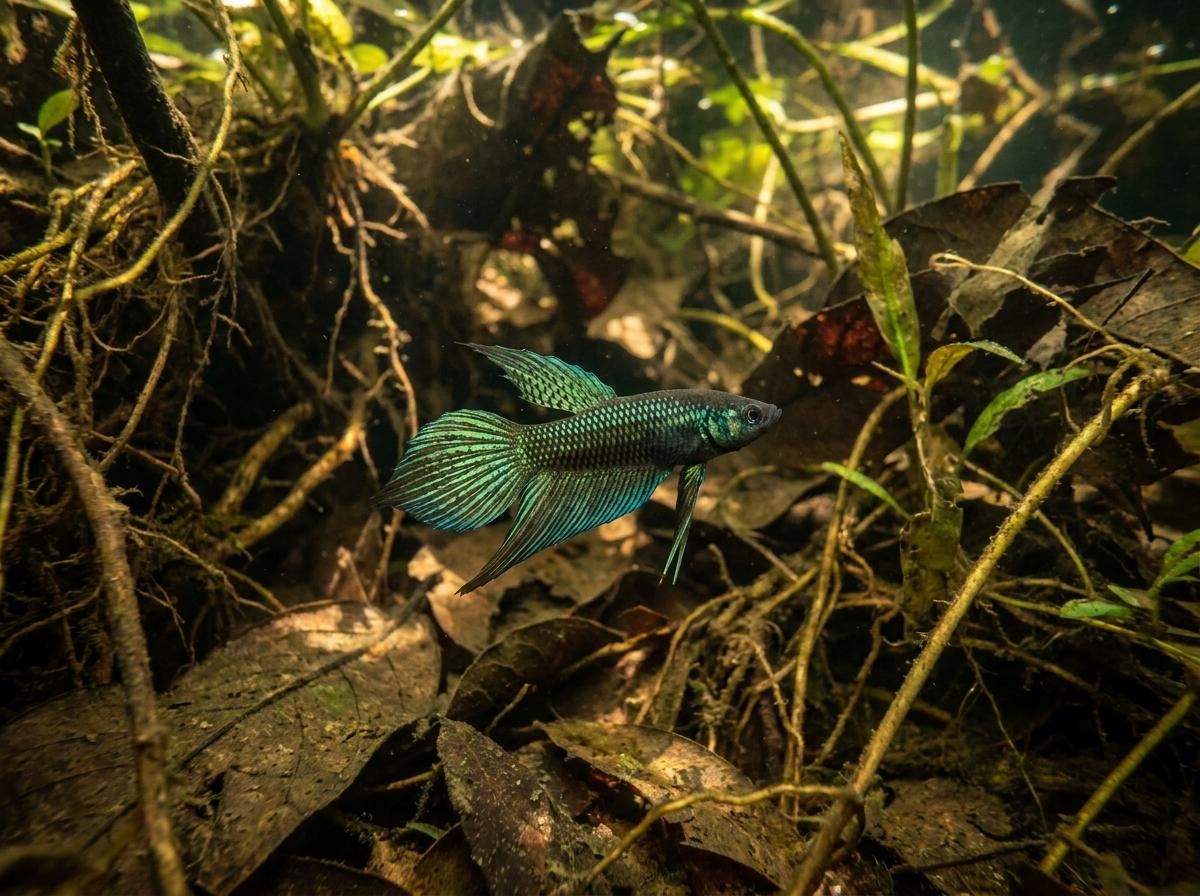
Copper describes a metallic color in domestic bettas, not a separate species or a particular tail shape. A copper fish can have long fins or the shorter fins associated with a plakat. Its reflective appearance can shift from warm bronze toward purple, blue or other cooler highlights as the lighting and viewing angle change.
When comparing fish, separate color from fin form, health and the seller’s breeding claims. A polished photograph may show an attractive instant, but it cannot establish the fish’s full identity, comfort in swimming or future breeding results.

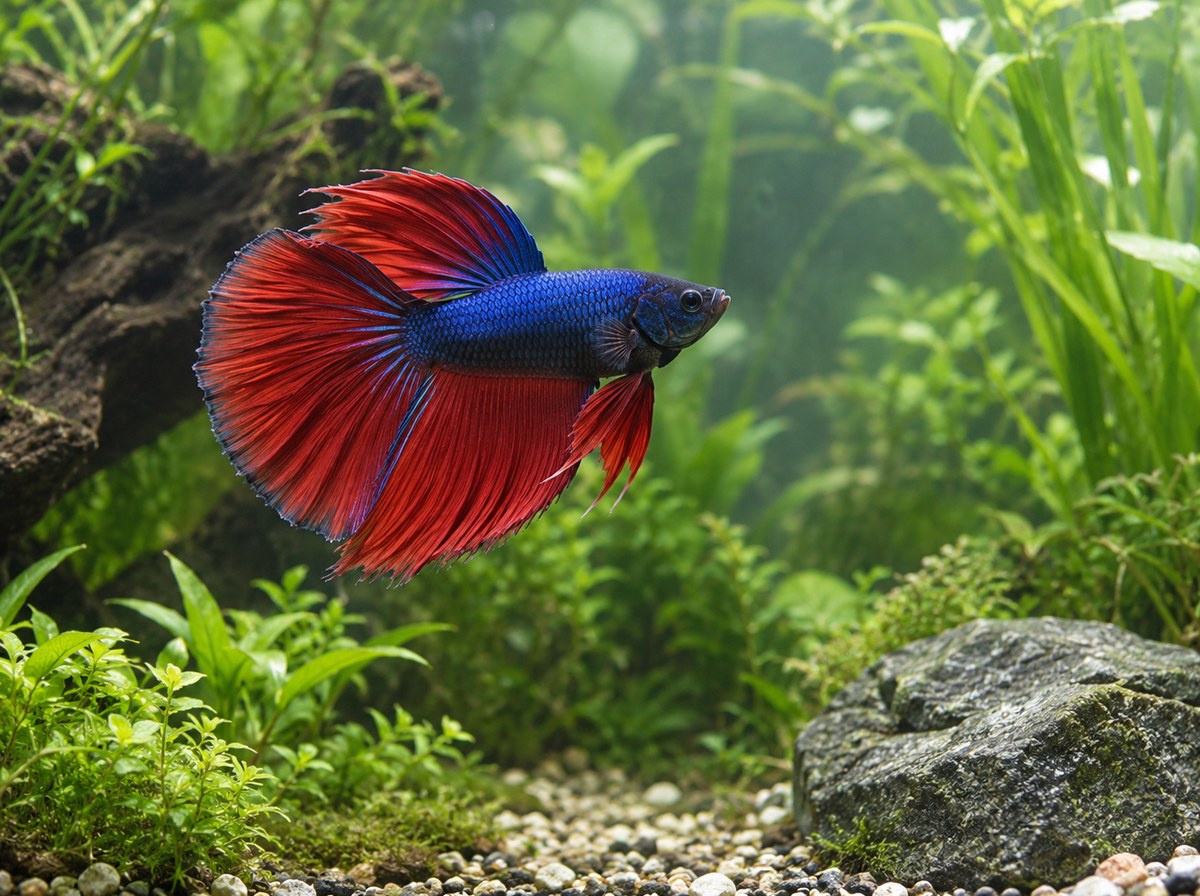
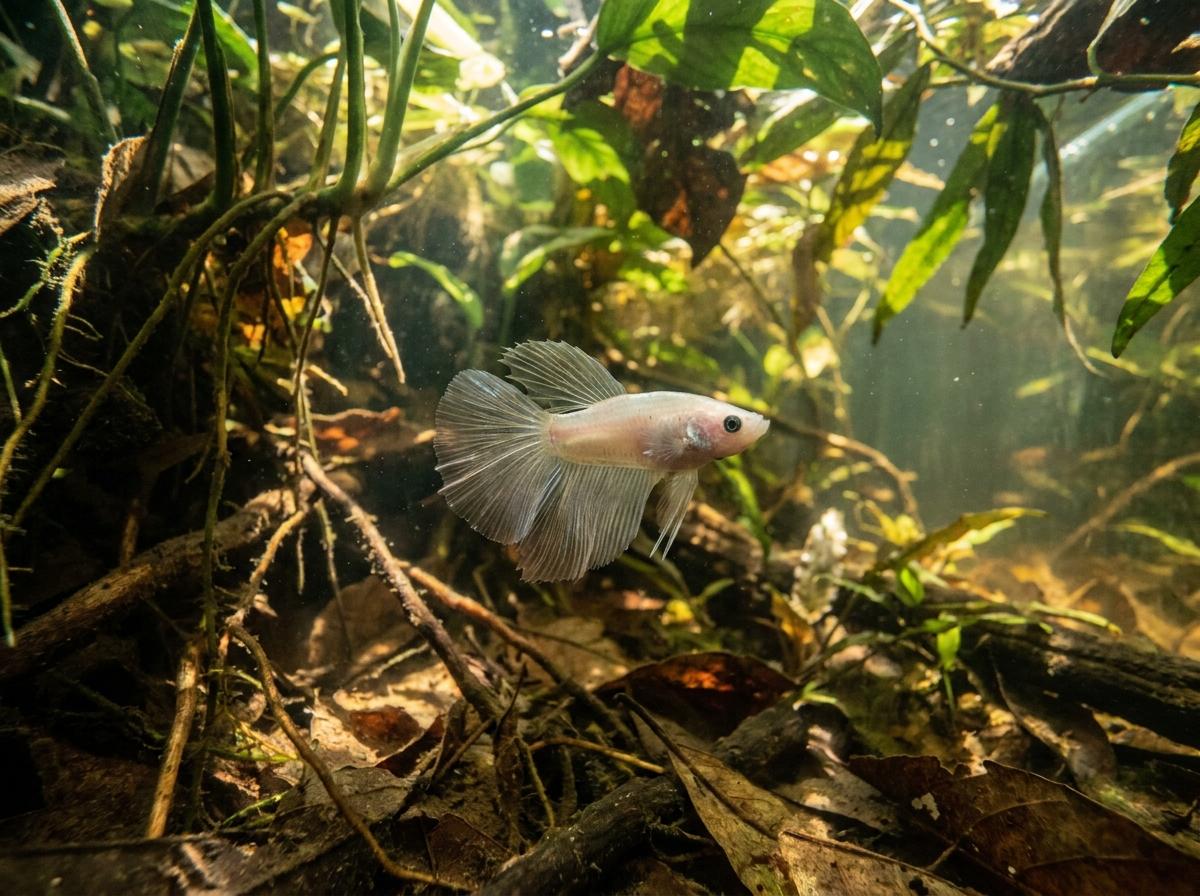
AI-generated illustration of a copper betta appearance. It is not an available fish, a certified show specimen or a complete aquarium view.
| Animal | Domestic Betta splendens |
|---|---|
| Copper means | Metallic color, independent of tail form |
| Visual clue | Deep reflective sheen with changing highlights |
| Home | Heated, filtered aquarium with cover and surface access |
| First viewing check | Comfortable swimming without forced display |
Browse listings, public profiles, breeders, or add your animal.
What the show standard means by copper
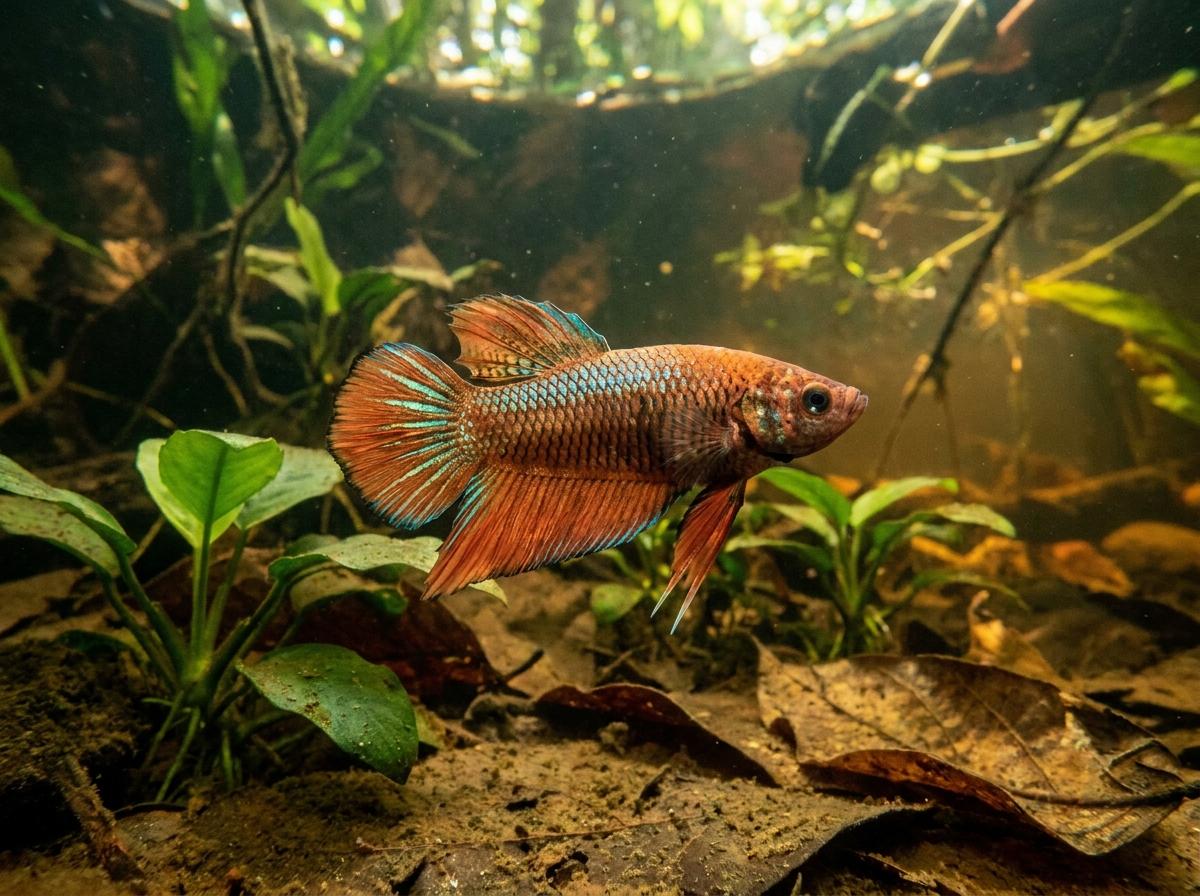
The International Betta Congress’s 2025 exhibition standard names the type Metallic Copper (Steel Blue), connecting copper with its steel-blue background. It calls for a deep metallic sheen, with copper tones and shifting purple, blue or turquoise reflections. For this type, all opaque coloration must be absent; it is an essential requirement, not simply a preference.
That description helps explain why two photographs can make the same fish look different. It does not mean any brown fish is Copper, or that bright reflected highlights prove a pedigree. Ask to see a neutral-light video from more than one angle, without filters or strong colored lighting.
Show standards describe an ideal against which fish are judged. They are not a health certificate. A companion fish can be attractive without meeting every show criterion, while a uniform metallic coat tells you little about how easily the fish swims or whether its aquarium is suitable.

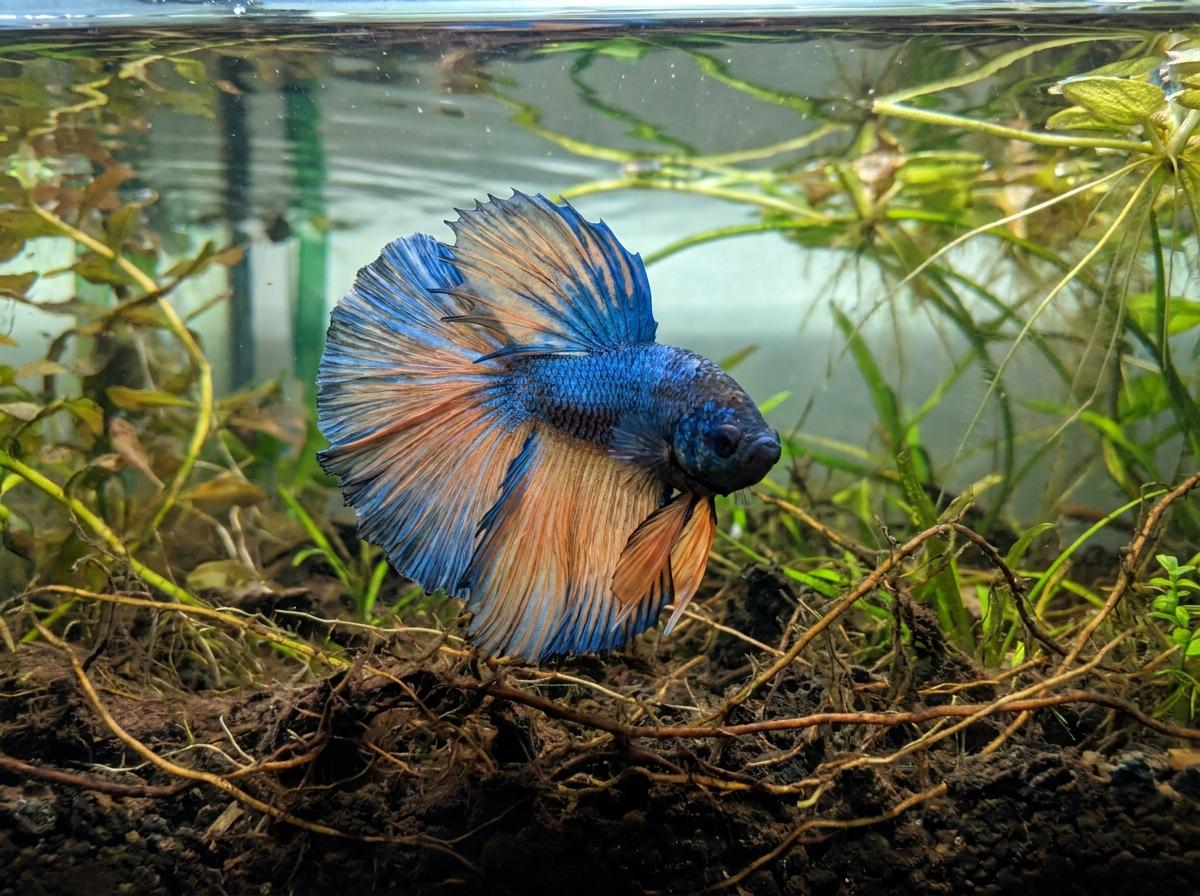
AI-generated detail of metallic color. Reflections are illustrative and do not demonstrate a genetic test or a health finding.
Color, fins and breeding claims are separate
Terms such as Halfmoon and Plakat describe different aspects of a betta from Copper. Ask a seller to state the color and fin form separately rather than treating a string of trade names as self-explanatory. A short-finned copper fish is not a different species from a long-finned copper fish.
The IBC discussion connects metallic color with layers of reflective pigmentation, but a color name alone is not enough to predict every offspring. Do not assume that two copper-looking parents will produce a uniform batch with identical color and fins. If breeding is your purpose, ask for the actual line records and the basis for any prediction.
For a companion, favor a fish that can move comfortably and use its environment. Request a video of ordinary swimming and resting rather than a display sustained with a mirror or another male. The goal is to understand its everyday behavior, not merely to see its widest fin spread.
Set up the aquarium before choosing the fish
RSPCA Australia’s veterinary-authored betta guidance recommends an aquarium of at least about 5.3 US gallons (20 liters) as the preferred starting size. It also calls for stable heated water, suitable filtration, cover and access to air above the water. Its temperature guidance is about 75 to 79°F (24 to 26°C). A small display cup or unheated bowl is not an appropriate permanent home.
Provide gentle water movement, plants or suitable resting cover, and smooth furnishings that do not snag fins. Establish biological filtration and test water quality before and after arrival. The fish’s ability to breathe air does not make clean, well-maintained water optional.
Do not house two males together. Color has no bearing on that incompatibility. A first betta is easiest to plan for in a suitable individual aquarium rather than an improvised community. Arrange safe transport and acclimation with the seller, and have the destination ready before collection.

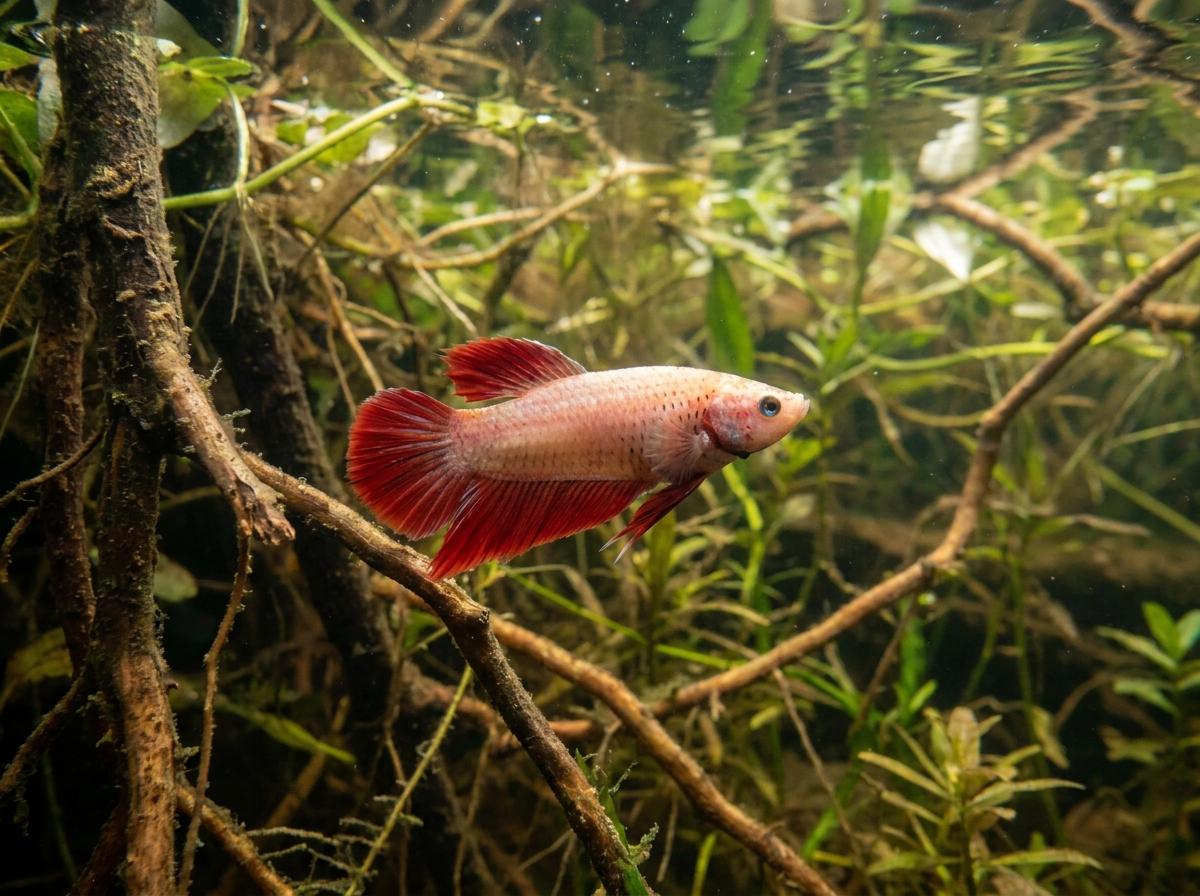
AI-generated illustration of a shorter-finned copper appearance. The underwater portrait is a crop, not a complete aquarium setup.
Health checks and honest price comparisons
Ask how long the seller has kept the fish, what it eats, and whether it has had illness or treatment. Look for ease of swimming, ordinary resting behavior and fins that are not persistently clamped. A fish struggling to maintain position, showing wounds or appearing unwell deserves expert assessment; a metallic sheen should not distract from those concerns.
There is no single reliable Copper price across markets. Obtain a current individual quote and separate the fish price from transport, import arrangements if relevant, and the equipment needed at home. “Rare” and “show quality” should lead to questions about evidence, not an automatic premium.
Confirm that the video and photographs show the exact fish being offered. Establish its approximate age, stated sex, fin form, color description and any uncertainty. For an exhibition purchase, check the current event’s classes and standard. For a companion, a suitable aquarium and a healthy, comfortable individual are the priorities.
Common questions
Is Copper a tail type?
No. It is a color description. Long-finned and shorter-finned bettas can both show copper color.
Why does a copper fish look purple in a video?
Metallic color reflects light differently as the angle changes. Compare neutral-light views before assuming the label is wrong or the image accurately captures every shade.
Does Copper mean the fish needs a special diet?
No special “copper diet” follows from the color name. Ask about its established suitable betta food and maintain water quality while feeding appropriately.
Do this next on Creatures
Use the betta fish hub to keep color, fin form and care needs distinct as you compare individual fish.