

Żubroń
A zubron is not a cattle breed. It is a hybrid, the offspring of a European bison (the wisent, Bison bonasus) crossed with domestic cattle (Bos taurus), made deliberately in Poland as a research animal rather than built up as a farm breed. The Polish spelling is żubroń, from żubr, the Polish word for the European bison. First crosses are big, front-heavy animals that grow fast and hang leaner meat than beef, and they carry one defect that no amount of selection got past: the males do not reproduce. Across the whole Białowieża experiment, 31 male hybrids from half-bison down to one-sixteenth-bison were raised and mated, and not one of them sired a calf.
That single fact explains almost everything else on this page. It is why the zubron never got a herd book, why it has no registry and no market, and why a searcher who arrives hoping to price one is asking a question with no honest answer. What follows is what the Polish scientific record actually documents: where the animal came from, what it looks like, what the crosses were genuinely good at, what the fertility results showed generation by generation, and why crossing a wisent with a cow is not a neutral act for a species that came back from the edge of extinction. If you keep cattle and are here out of curiosity about crossbreeding, the Creatures cattle species page is the better place to start on breeds you can actually buy.

Browse listings, public profiles, breeders, or add your animal.
Hybrid, not breed: why the distinction matters here
A breed is a population that reproduces itself. It has a written standard, a herd book that records parentage, and enough breeding animals of both sexes that the next generation comes from within the group. The American Yorkshire pig is the ordinary version of that: a registry, recorded parentage, and animals you can go and buy, because the pigs make more of themselves. Being deliberately made is not what puts the zubron outside that definition. The Karan Swiss was engineered too, at India’s national dairy institute, by crossing Brown Swiss bulls onto zebu cows, and it still ended up a population that maintains itself: its crosses bred on in both sexes, so the programme could close them into a single breeding group and hold them there.
The zubron has none of that, and the reason is biological rather than administrative. A first cross zubron cow can breed. A first cross zubron bull cannot. So a zubron herd cannot close its own loop. Hybrid cows were mated back to cattle bulls at Białowieża, generation after generation, so later hybrids did come from hybrid dams rather than from a fresh bison mating. But that is dilution rather than reproduction: every backcross calf carries less bison than its dam, and no documented hybrid male ever closed the loop. Every new first cross still has to be produced from a European bison on one side and a cow on the other, which means the supply of genuinely bison-heavy animals is capped by access to wisent genetics rather than by demand.
This is why you will see the animal described as an experiment rather than a breed in the Polish literature that created it, and why treating it as “a Polish cattle breed” gets the story backwards. It is closer in kind to the beefalo (American bison crossed with cattle) or the dzo (yak crossed with cattle) than to any breed of Bos taurus, and it shares their central problem.
Where the zubron came from
Crossing European bison with cattle is not new. The Polish research group dated the world record of such hybrids to 1847, and counted 244 animals produced worldwide across the 130 years to 1977. For most of that period the crosses were curiosities made in ones and twos.
Systematic work began in 1958, when the Mammal Research Institute of the Polish Academy of Sciences at Białowieża started a controlled breeding experiment. The aim was practical: find out whether the wisent’s hardiness and growth could be moved into a farm animal. First crosses were produced from European bison of both sexes mated with two Polish cattle breeds, the black and white lowland (a Holstein type) and the red Polish. Hybrid cows were then mated back to black and white lowland bulls, generation after generation, to see what happened as the cattle fraction rose.
The first hybrids were born in 1960. By the time the zoological phase closed in the middle of 1976, Białowieża had produced 71 hybrids (31 males and 40 females) of every degree from half-bison to one-sixteenth-bison. That was 29 percent of every European bison hybrid recorded anywhere in the world up to that point, which tells you how small the global effort was.
The second phase moved the work out of the forest and onto a farm. In April 1973 the State Farm at Łękno, in the Poznań region, began producing hybrids by inseminating cattle cows with frozen European bison semen. By April 1977 it had produced 114 hybrids, and by 1976 it had inseminated 147 cows. The stated aim there was blunt and commercial: young hybrids of 350 to 500 kg, grown on pasture that was not good enough for anything else.
Two details from that farm phase are worth carrying forward. The insemination itself worked well, and the highest fertility index of the breeds tried, 96 percent, was recorded on the black and white lowland and Charolais cross cows. But only two of the seven European bison bulls tested could produce semen all year round in a state suitable for freezing. Even the raw material was awkward.
The most extensive crossing studies ran through the 1980s, and the cross was never established as a breed. Crosses are still made occasionally for research: a 2017 study at the Warsaw University of Life Sciences compared beef, zubron and European bison meat using nine zubron bulls produced by inseminating Holstein Friesian cows with European bison semen, and described the crossbreeding research as continuing.
What a zubron looks like
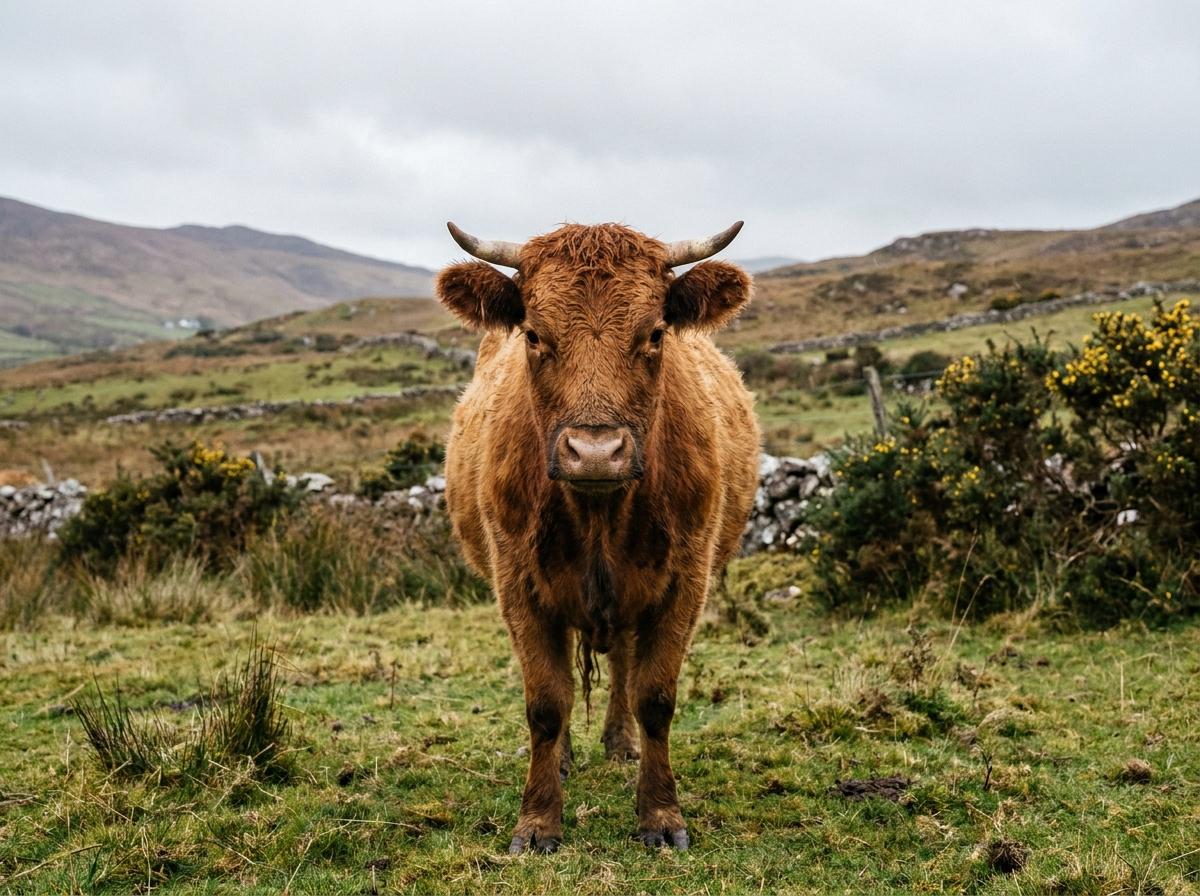
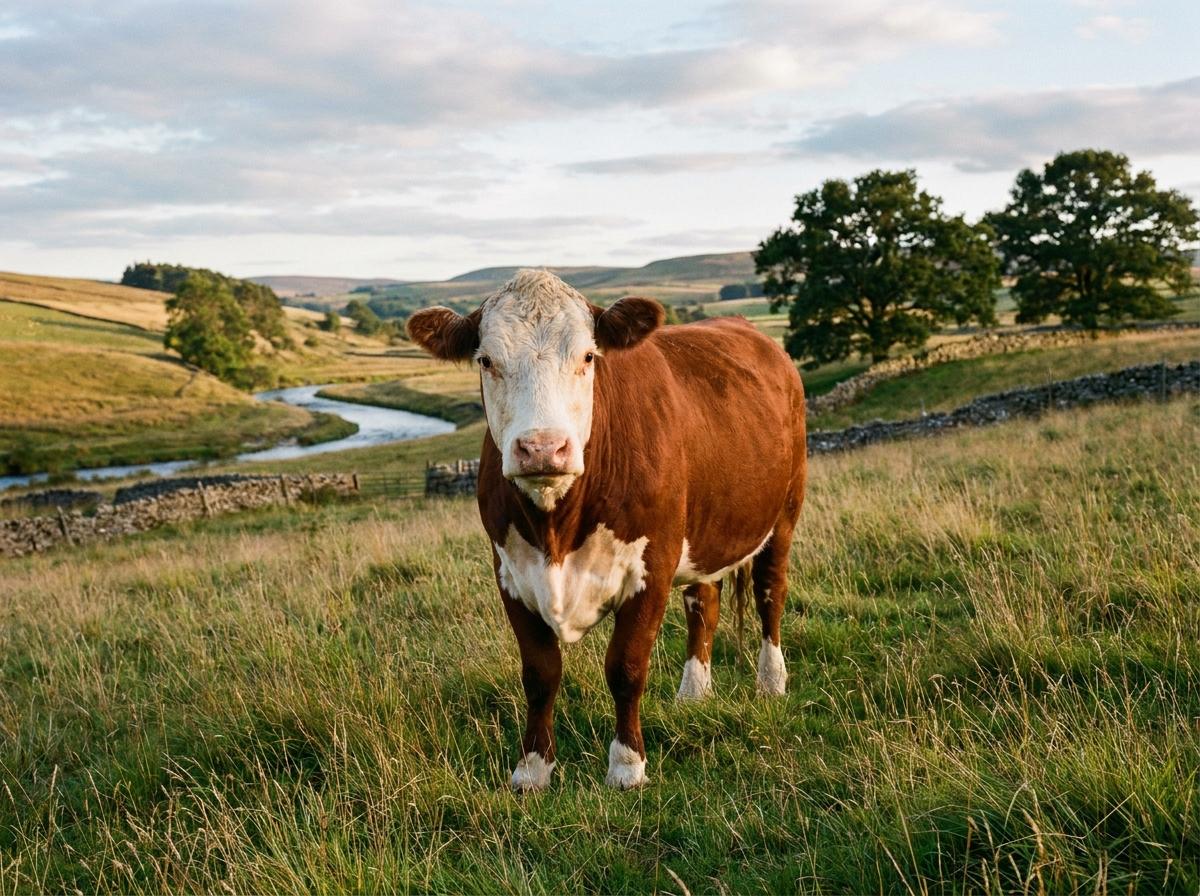
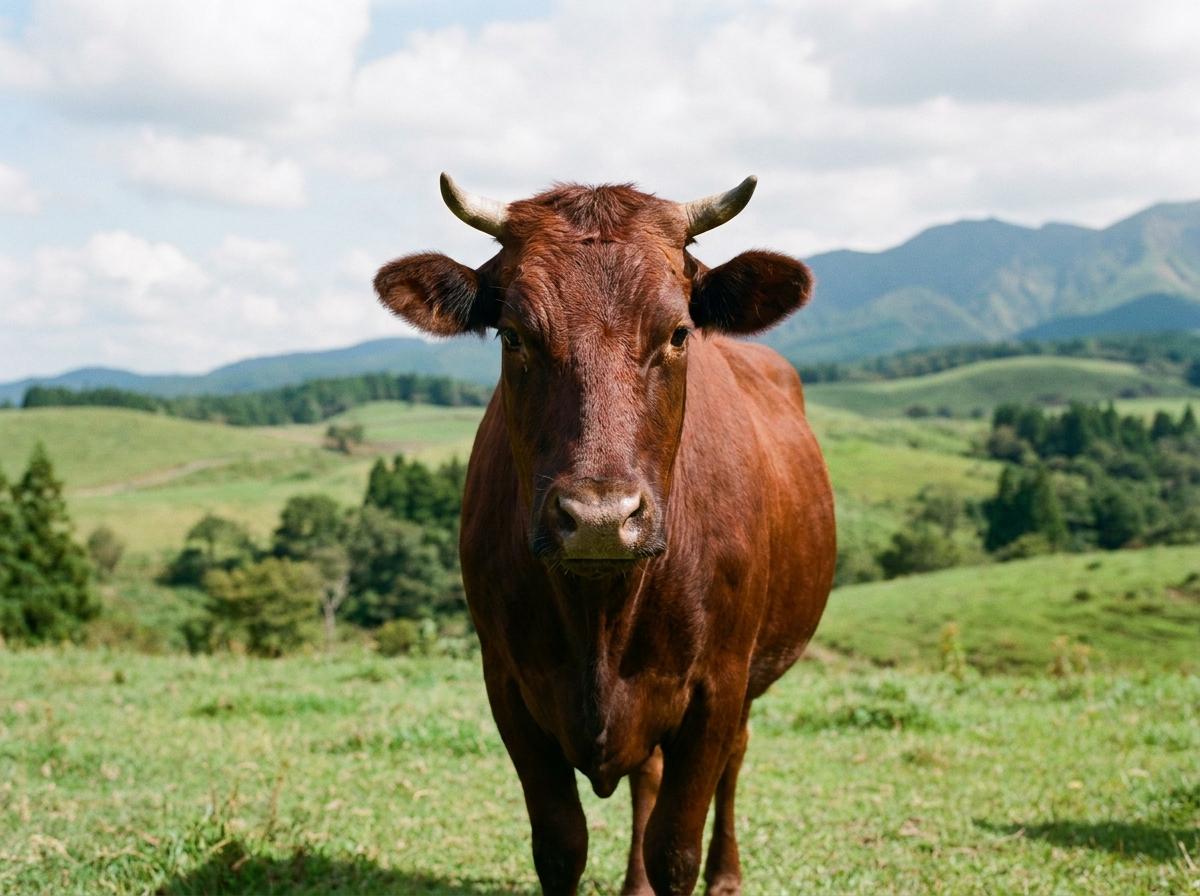
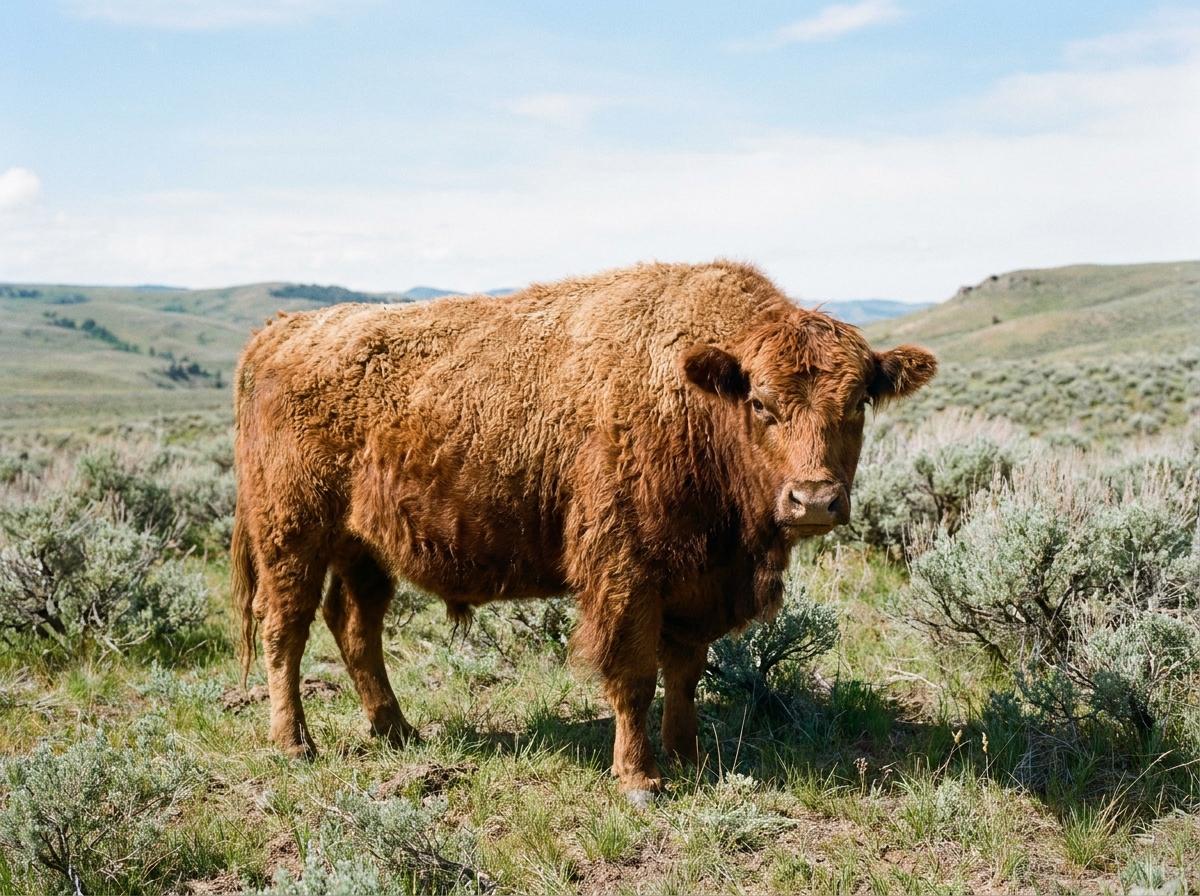
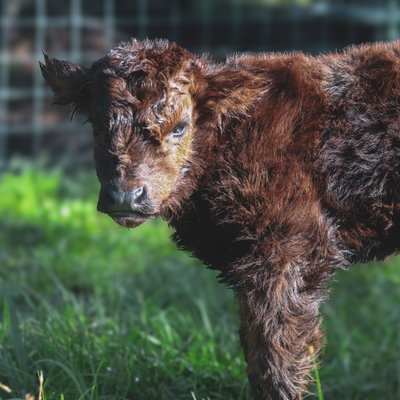
The honest summary is that a first cross reads as a cattle body with a bison front end. The Polish groups measured coat colour and carcass shape carefully, so those two are on the record; the rest of the description below is the general picture of the animal rather than a published measurement, and it varies with which cattle breed sits on the other side of the cross.
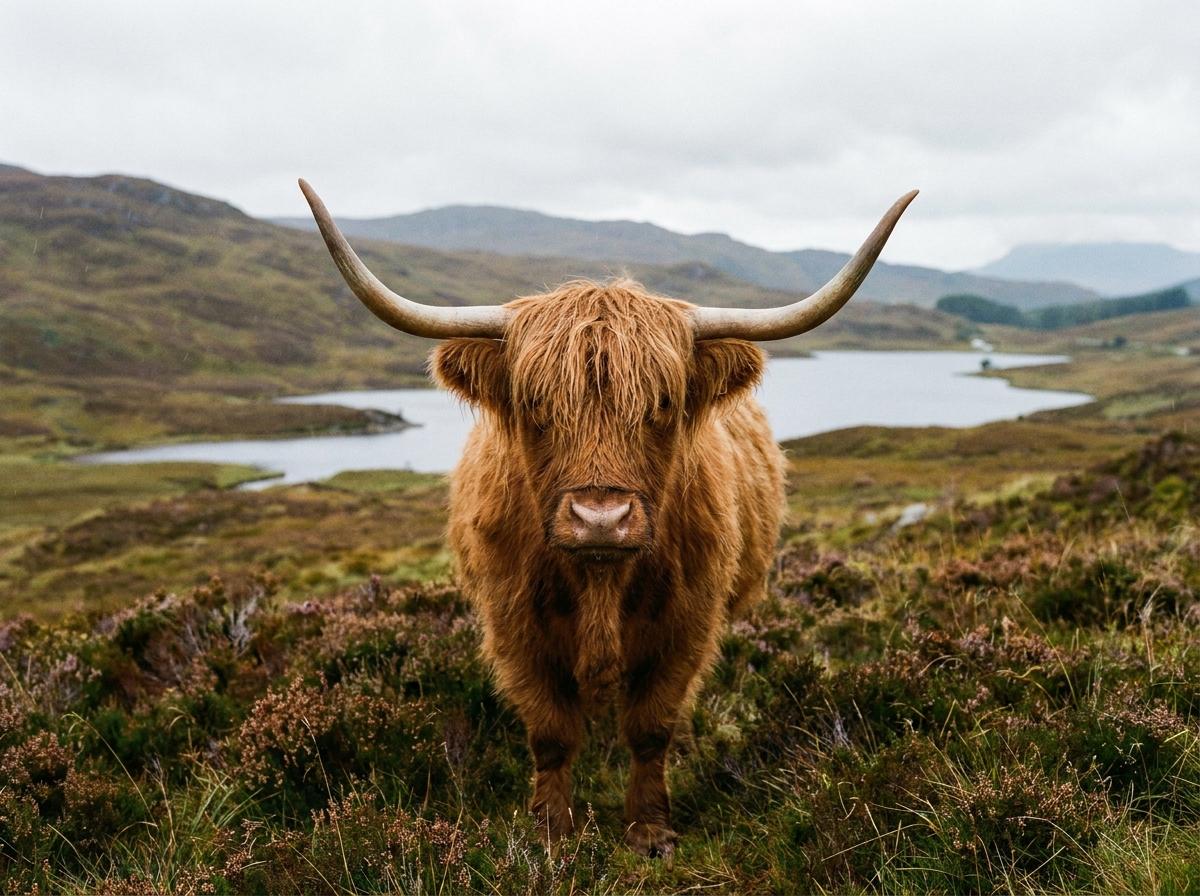
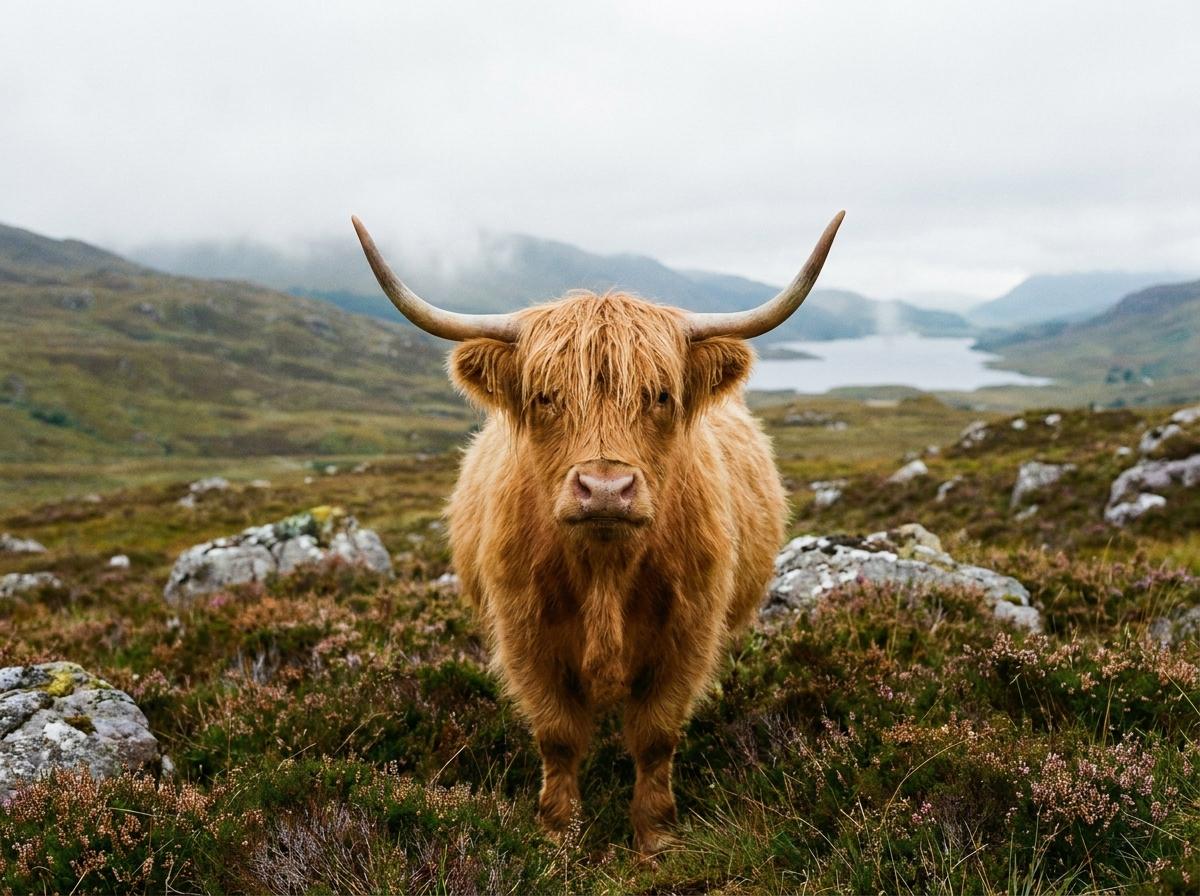
- A rounded shoulder hump. The forequarters carry a heavy muscular rise over the withers that sits above the line of the back. It is a smooth dome rather than the tall, sharply peaked hump of a pure wisent.
- Front heavy proportions. Carcass work on 21 hybrids found the forequarters heavier than the hindquarters, and the difference larger than in domestic cattle. You can see that imbalance in a standing animal.
- A cattle head and cattle ears. The head is broad with a straight profile and a wide blunt muzzle, and the ears stand out clearly at the sides, which they do not on a wisent buried in woolly head hair.
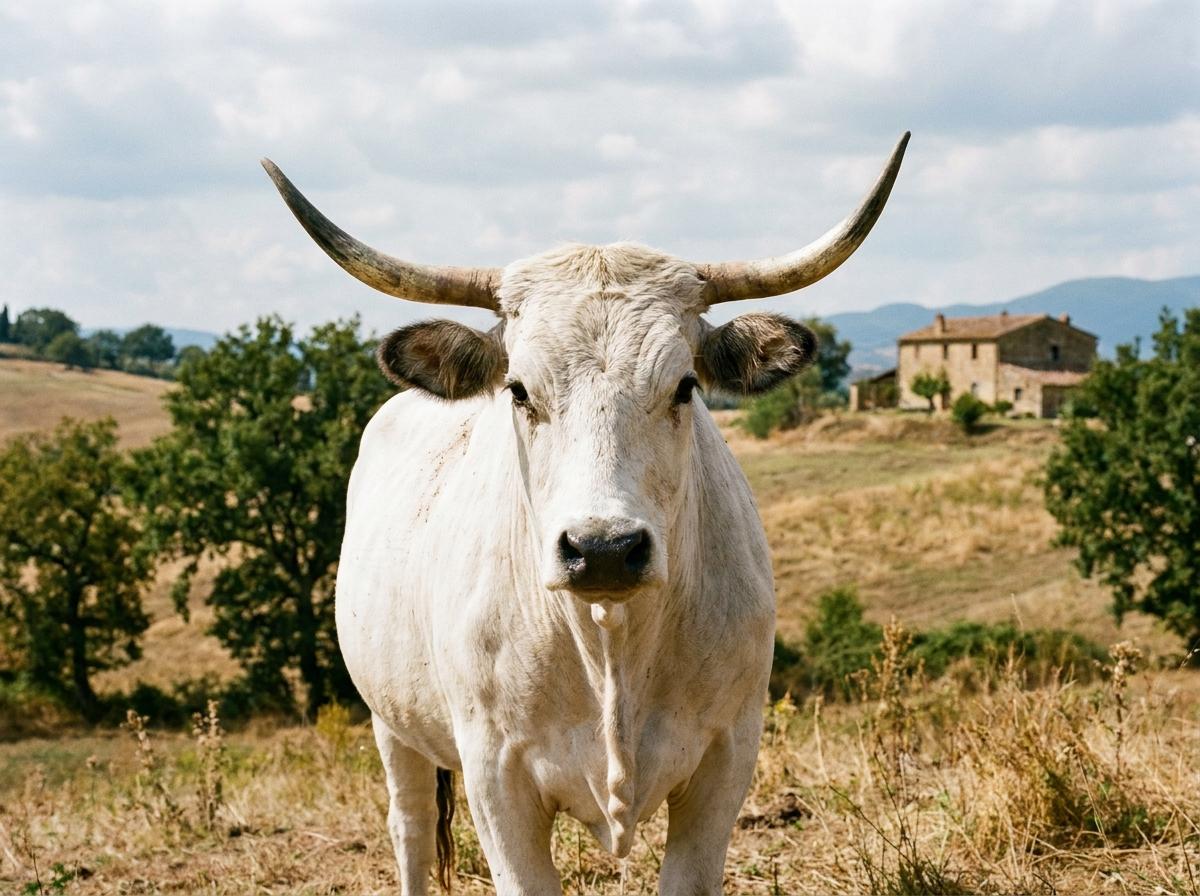
- Horns set wide on the sides of the head. They sweep outward and up rather than up and inward like a wisent’s. Length is not a reliable marker: it follows the cattle parent, so crosses run from short stubs to a wide ordinary cattle set.
- Short hair on the body. Denser hair over the hump, neck and poll, then short sleek hair over the ribs and hindquarters. No hanging mane, no chin beard, no floor length skirt of hair.
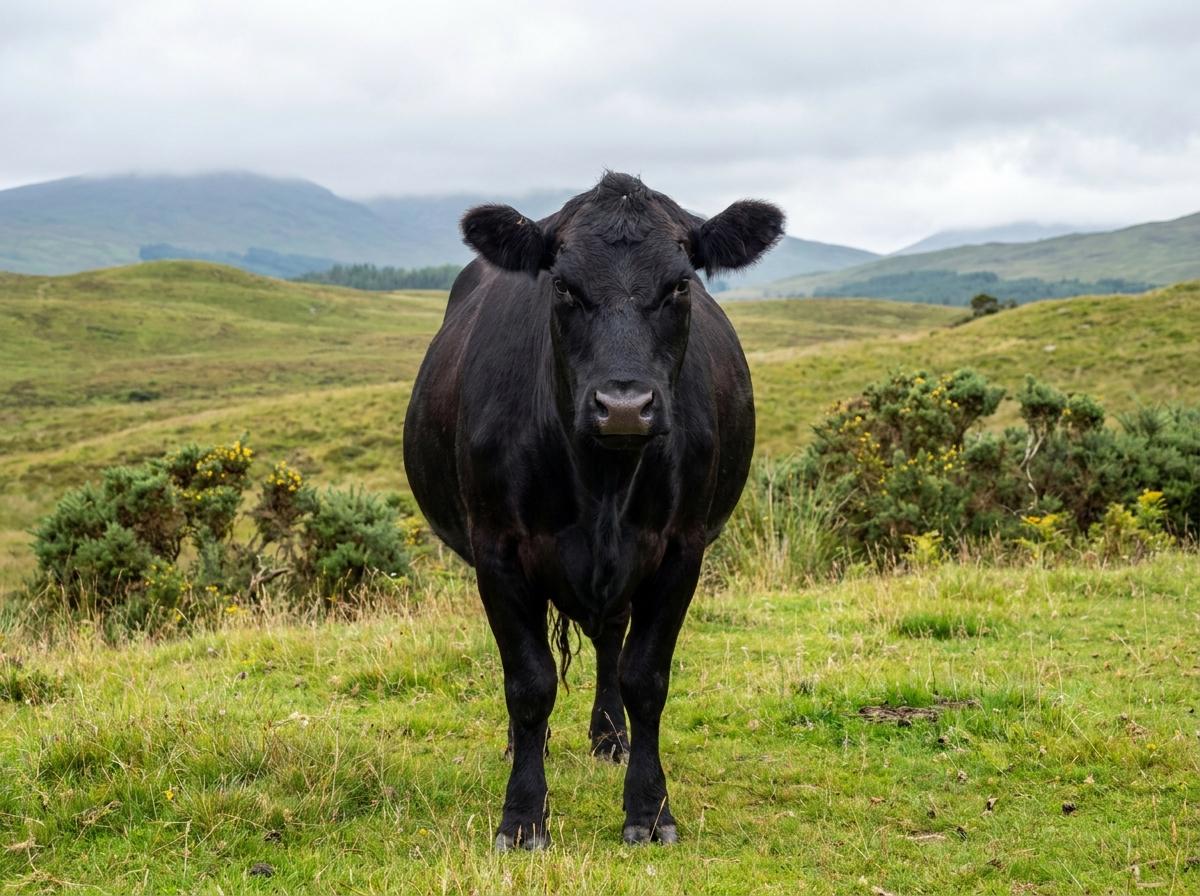
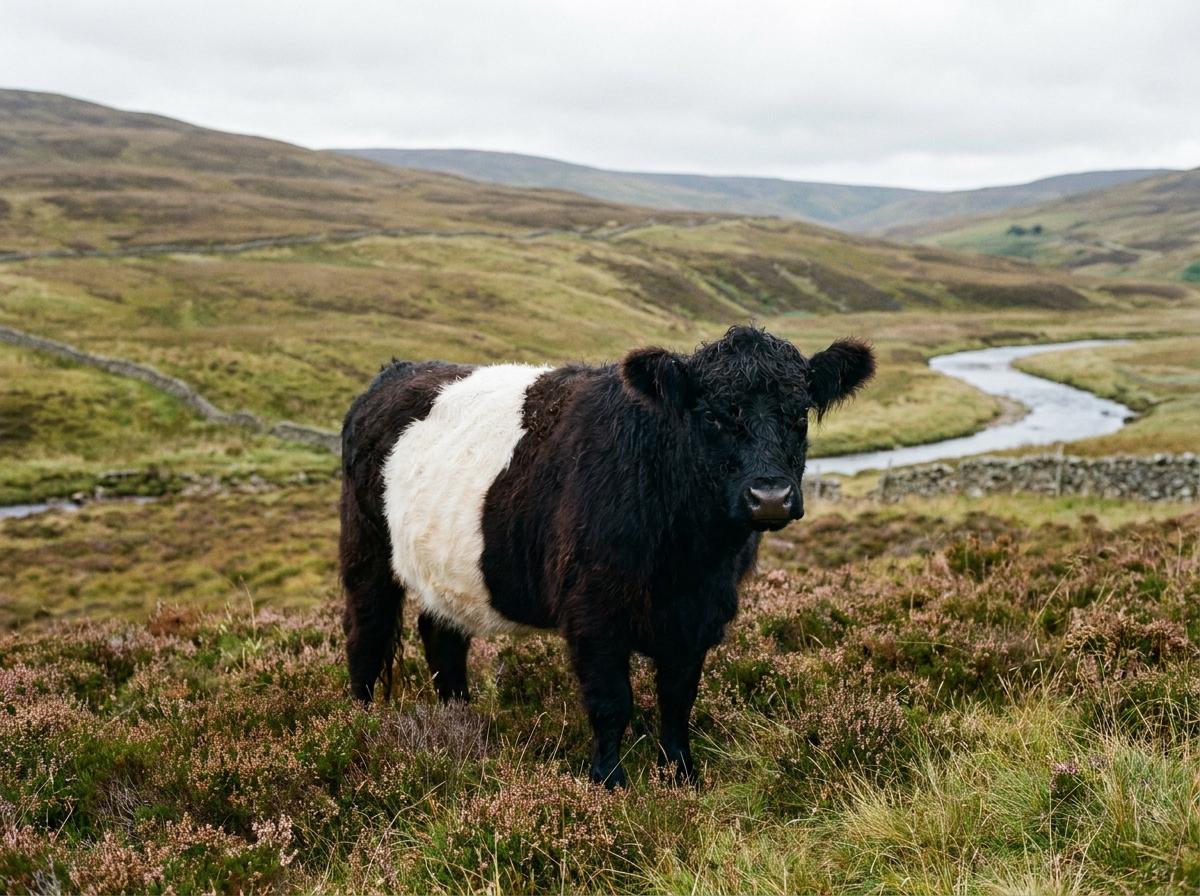
Colour is the part most people get wrong, and it follows the cattle parent rather than the bison. In a study of 203 hybrids from both Polish herds, 88 percent of the 89 animals out of black and white lowland cows were black, with the remaining 12 percent dark or blackish brown. Most of those black first crosses also carried small white markings, typically on the forehead, the hocks and the tip of the tail. Crosses involving red Polish or Charolais blood produced reds, browns and diluted shades instead. So there is no single zubron colour, and a brown one and a black one can be equally correct.

On size, be careful with the numbers that circulate. The Białowieża record does contain a 1,200 kg first cross bull, an animal called Facet, but that figure comes from a case report describing him as a mature 12 year old that had become dangerous and had to be immobilised, not from a table of breed averages. The modern research crosses are a better guide to ordinary growth: fattened on a mixed ration, they reached 600 to 650 kg at 17 to 19 months of age.
The fertility results, generation by generation
This is the part the popular accounts flatten, and it is worth getting right, because the detail is more interesting than the summary.
Hybrid females bred. Every first backcross cow at Białowieża was fertile, reaching sexual maturity at an average of 13.4 months and carrying calves for an average of 278.7 days. Later generations were less reliable: of nine sexually mature second backcross cows, only five produced young. Fertility on the female side was real but it degraded.
First cross males were sterile, and the failure is visible under a microscope. Histological work on hybrid testes found that in first cross males spermatogenesis stopped at the spermatogonia stage, the very beginning of sperm production. A later study confirmed the same picture and added that hybrid testes developed more slowly than cattle testes and stopped developing before 18 months of age, with first cross males blocked at spermatogoniogenesis and backcross males blocked a stage later.
Backcrossing partly repaired the machinery, and still did not produce a calf. As the cattle fraction rose, the process ran further. In animals that were one eighth bison, three of six examined showed complete spermatogenesis, with sperm present in the epididymis, and the single one sixteenth bison animal did too. Those were the first Białowieża hybrids in which sperm were found at all. And yet, in the researchers’ own words, progeny was still not obtained from those males by natural mating. Nobody established why. The authors floated poor sperm viability or abnormal forms, and were careful to add that with only seven animals in the final backcross generations the sample was too small to prove that a fertile male could never occur.
So the accurate statement is narrower and stronger than the usual one. It is not simply that first cross males are sterile. It is that in the one sustained, documented programme, no hybrid male of any generation ever sired a calf, and that is the wall the project hit.

What the crosses were actually good at
The programme was not a failure on every axis, which is why it ran for decades.
Carcass yield. Dressing percentage across 21 hybrids of three generations averaged 56.0 percent, ranging from 48.5 to 60.7 percent, which the authors noted exceeded the figures then published for first class domestic beef cattle. First cross carcasses carried more meat tissue and less bone than the first backcross generation, consistent with hybrid vigour in that first generation.
Meat composition. The 2017 comparison found zubron meat sat between beef and European bison meat on most measures. Zubron and bison meat both carried significantly less saturated fat and more than three times the polyunsaturated fatty acids of beef, and less crude fat overall (15.6 g/kg for zubron against 21.3 g/kg for beef). Both were also significantly tougher than beef by shear force. The 1971 taste panel had reached a compatible verdict: hybrid meat was rated similar in quality to prime beef, better in flavour, and more tender than European bison meat.
Hardiness and growth. The Polish literature credits the hybrids with good adaptation to harsh conditions, good feed conversion and fast weight gain. Treat that as the summary of a working programme rather than a controlled comparison. The 2017 animals were fed a full mixed ration of maize silage, hay and concentrate, so nothing in that trial tests how a zubron performs on rough grazing.
None of this was ever enough. A meat animal whose males cannot breed leaves two options and neither one pays: go back to a protected wild species for every new first cross, or backcross the hybrid cows to cattle bulls until the bison share, and the hybrid vigour with it, has been bred away. The Polish programme did both, and the economics never worked.
The conservation half of the story
The other parent here is not a farm animal. The European bison went extinct in the wild after the First World War in Białowieża, and the last free population in the Caucasus survived only until 1927. Every pure European bison alive descends from a founding group of 13 animals representing just 12 sets of genes, which is one of the tightest genetic bottlenecks any large mammal has come through.
The species has recovered, and it is a genuine conservation success. IUCN moved it from Vulnerable to Near Threatened in December 2020, noting that the wild population had grown from around 1,800 in 2003 to over 6,200 in 2019. It also remains one of Europe’s most strictly protected mammals: Bison bonasus is listed as a priority species on Annex II of the EU Habitats Directive and again on Annex IV, which requires member states to maintain a strict protection regime.
Against that background, deliberate hybridisation is not a neutral hobby. Keeping the species genetically clean has been part of its rescue from the start: the European Bison Pedigree Book was created precisely to guard the species’ genetic purity in a period when hybrids with North American bison and with cattle were being produced in various zoos, and its first editors eliminated all crossbred animals from breeding with pureblood European bison. The pedigree book remains the only official register of pure European bison.
There is also a cautionary example next door. In North America, historical crossing of bison with cattle left a genetic signature that is still being traced: a survey of 11 United States federal bison populations found evidence of nuclear cattle introgression in seven of them. Once cattle genes enter a wild bison population, they are extremely difficult to get out. Nothing in the Polish record suggests zubron were ever released into wisent range, but the risk is the reason conservation managers treat hybrid animals as a management problem rather than a novelty.

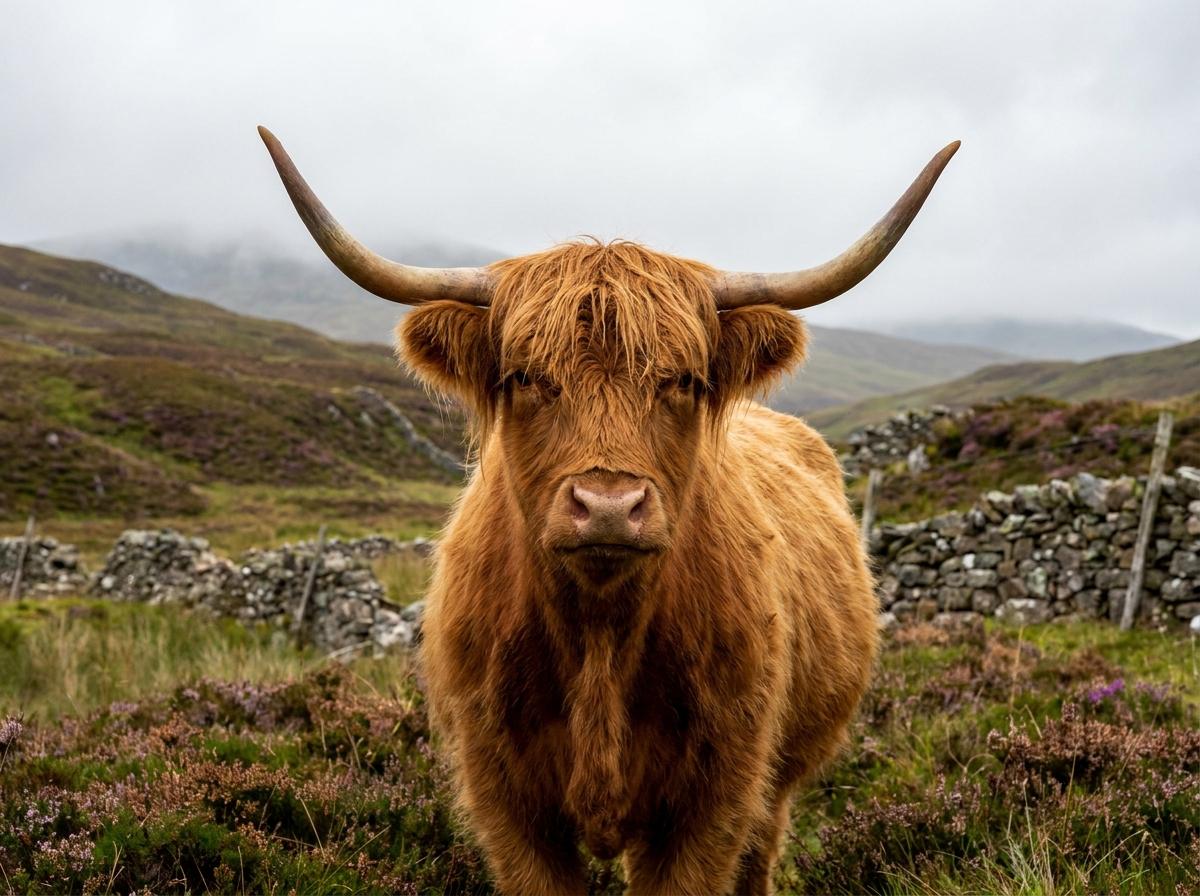
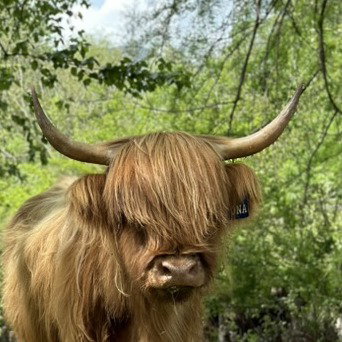
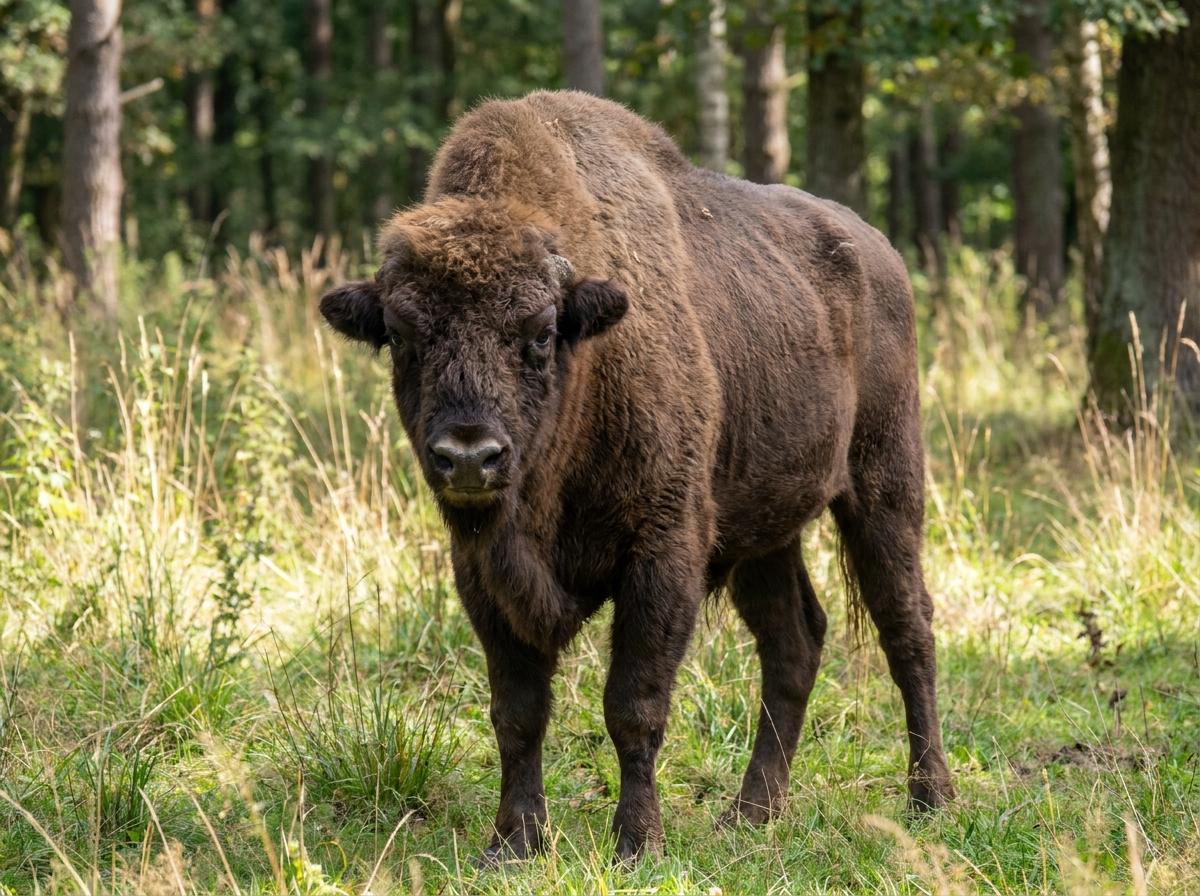
That photograph is the other parent, not a zubron. Put it beside the animals above and the differences are easy to read: the wisent’s shaggy head and neck, the ears hidden in hair, the darker upcurved horns, the steeper drop from shoulder to rump, and the plumed tail.
Can you buy a zubron?
No, and we are not going to imply otherwise.
There is no zubron herd book, no breed association, and no market in the animal. Because hybrid males do not reproduce, no seller can offer you breeding stock that will make more zubron: mate a hybrid cow to a cattle bull and you get a backcross calf that is mostly cattle, and a first cross needs a European bison on one side and a cow on the other, which in practice means an institution with access to both. The wisent side of that equation is a strictly protected species in the European Union, which is the opposite of an over the counter transaction.
If you see a zubron offered for sale online, the sensible assumptions are that the animal is something else, that the seller is using the word loosely for any heavy dark crossbred, or that the listing is not real. There is no price to quote, and inventing one would be worse than saying so.
What does exist, and what is worth your attention if the crossbreeding side of this interested you, is a large and well documented world of cattle breeds that do reproduce themselves. You can browse cattle listings on the Creatures marketplace and look up farms and breeders in the Creatures directory.
What the zubron story is useful for if you keep cattle
The programme is a long, careful record of something every cattle breeder eventually runs into: a cross that looks brilliant in the first generation and then gives that advantage back as soon as you breed on from it.
Three practical points survive from it. First, the first cross was the best animal on the carcass measures, and the backcross generations were not as good, so hybrid vigour was doing the work rather than a heritable improvement. Second, the trait that killed the project was invisible at weaning and only showed up when the males were mated, which is an argument for recording breeding outcomes rather than appearance. Third, the researchers only knew any of this because they wrote down every mating, every birth date, every stillbirth and every failure to conceive, animal by animal, for eighteen years. Their published tables are essentially a herd book.
That is the same job Creatures does for ordinary herds. A profile per animal, parentage, and a dated record of services, calvings, treatments and weights turns “this cross seemed to work” into something you can check. If you run a crossbreeding programme of your own, the records are the experiment.
Frequently asked questions
Is a zubron the same thing as a beefalo?
No, though they are the same idea. A beefalo is American bison (Bison bison) crossed with domestic cattle. A zubron is European bison (Bison bonasus) crossed with domestic cattle. Different bison species, different continents, different breeding histories.
Are all zubron sterile?
No. The females breed. Hybrid cows were fertile from the first cross onward and were mated back to cattle bulls for several generations. It is the males that fail: first cross males stop making sperm at the earliest stage, and although some later backcross males did produce sperm, no hybrid male in the Białowieża programme ever sired a calf.
How big does a zubron get?
The largest documented individual is a first cross bull at Białowieża recorded at 1,200 kg at 12 years old, which is exceptional rather than typical. Research crosses fattened on a mixed ration reached 600 to 650 kg by 17 to 19 months.
What colour is a zubron?
It depends on the cattle parent. Out of black and white Holstein type cows, 88 percent of first crosses were black and the rest dark or blackish brown, usually with small white marks on the forehead, hocks and tail tip. Crosses involving red Polish or Charolais cattle gave reds, browns and diluted shades.
Why did the Polish programme stop?
The published record shows the zoological phase at Białowieża closing in mid 1976 and the farm phase at Łękno running from 1973 into the 1980s, without the cross ever becoming self sustaining. Male infertility is the failure the papers themselves keep returning to. You will also see it claimed online that the work was cancelled in the late 1980s over fears of contaminating the wild wisent gene pool; that specific account traces to encyclopaedia entries rather than to the scientific literature, so treat it as unconfirmed.
Is the zubron a threat to European bison?
Deliberate hybridisation is treated as a genetic risk to the species, which is why the European Bison Pedigree Book excludes crossbred animals from breeding with pureblood wisent. The North American experience shows why: cattle genes introduced into bison herds a century ago are still detectable in most surveyed federal herds today.
Can I keep a zubron?
Realistically, no. There is no supply, no registry, and one parent species is strictly protected across the European Union. If the appeal is a large, hardy, forage efficient bovine, that is a question about cattle breeds, and there are plenty that will actually give you a calf crop.
Do this next on Creatures
The zubron itself is not something you can buy, keep or breed, so nothing below is pointed at it. These are the cattle tools, aimed at the readers this page realistically serves: people who keep cattle, buy cattle, or are working out a crossbreeding plan of their own.
Start with the species page. Compare real, purchasable breeds on the Creatures cattle species page, then browse what is currently listed in the cattle marketplace.
Add your cattle. Keeping cattle already? Create a free animal profile for each one in a few minutes. No account needed to start. The walkthrough is in adding an animal to Creatures.
Record the matings, not just the animals. The zubron programme only knew what it knew because every service, birth and failure was written down. Add a record on Creatures to do the same for your herd. The record sheet opens for any visitor to look around, and a free account is what saves what you enter. See adding a record for the full how-to.
Get told when stock appears. Looking for a particular breed or line? Set a free cattle listing alert and we will tell you when one is posted. No account needed to start, and saving searches and using your watchlist explains how it works.
List your farm. Run a cattle operation? Create a free breeder or farm profile so buyers can find you, and read getting listed in the breeder directory and creating an organization and adding your team if you run it with other people.
Find trusted farms and breeders. Search the Creatures breeder and farm directory for cattle operations near you.
Selling stock? Read how seller payout works before you list.